There’s a fascinating world of swarm robotics that taps into collective intelligence to efficiently tackle large-scale tasks. By mimicking the behavior of social insects, these robotic systems can collaborate and adapt to complex environments, offering innovative solutions across various industries. You will discover how decentralized coordination and simple individual behaviors can lead to impressive outcomes when harnessed in groups, making swarm robotics a powerful tool for enhancing productivity and resilience in complex operations.

Fundamentals of Swarm Robotics
Your understanding of swarm robotics begins with grasping its basic principles, which emulate natural systems, such as ant colonies or bee swarms. The key idea is to enable multiple autonomous agents to collaborate in performing tasks that are often too complex for a single robot. This collective behavior arises from simple rules, local interactions, and a decentralized control structure, resulting in emergent intelligence that enhances task efficiency and robustness.
Definition and Key Concepts
Swarm robotics is defined as the study and design of systems composed of many simple robots that work together to achieve a common goal. Central concepts include self-organization, where agents coordinate without centralized control, and scalability, allowing the system to adapt seamlessly to varying numbers of robots. This approach leverages the power of collaboration and redundancy, making systems resilient and efficient.
Historical Development
The field of swarm robotics gained momentum in the late 20th century, particularly with advances in artificial intelligence and robotics. Initial inspirations came from biological systems, leading to foundational models that focused on collective behavior. Landmark projects, like the RoboCup Soccer initiative in 1997, showcased robots competing in teams, laying the groundwork for future research and applications.
In 1990, the concept of swarm intelligence was popularized by researchers like Eric Bonabeau and Marco Dorigo, who drew parallels between ecological systems and robotic applications. The early 2000s saw significant advancements with multi-robot systems being deployed in real-world scenarios, such as exploration, search-and-rescue missions, and agricultural tasks. By integrating algorithms inspired by nature, such as ant foraging and particle swarm optimization, these robots started to exhibit complex behaviors. As research evolved, notable projects like Swarmanoid and Kilobot pushed boundaries in communication and efficiency, demonstrating the potential for swarm robotics in various fields, including environmental monitoring, military operations, and even space exploration.
Collective Intelligence in Swarm Systems
Harnessing collective intelligence allows swarm systems to perform complex tasks with impressive efficiency. Each agent contributes to a greater goal, often leading to outcomes that surpass individual capabilities. For instance, researchers at Harvard demonstrated how a swarm of tiny robots could assemble structures autonomously, adapting their methods based on environmental feedback. This not only increases productivity but also enhances adaptability in dynamic settings, emphasizing the power of decentralized decision-making processes.
Mechanisms of Coordination
Coordination in swarm systems typically relies on simple local rules guiding individual agents. These rules facilitate effective task distribution and synchronization, enabling the group to respond collectively to changing environmental conditions. For example, in a foraging scenario, agents may follow gradients of food sources, adjusting their paths based on the actions of nearby agents, leading to optimized resource gathering.
Communication Strategies
Effective communication strategies are fundamental to swarm intelligence, as they enable agents to share information and coordinate actions. You might observe ants using pheromones to relay information about food sources or threats; similarly, robotic swarms utilize a range of communication methods, including signals, visual cues, and sound. These strategies allow agents to inform one another about their status and environmental changes, fostering cooperation.
In robotic swarms, communication strategies can involve various techniques such as direct signaling, where robots send messages through light or sound, and indirect signaling, mimicking natural behaviors seen in animal swarms. This can be exemplified by the “waggle dance” of honeybees, which effectively communicates distance and direction to food sources. Advanced simulations have shown that by implementing these communication strategies, robotic swarms can enhance their efficiency significantly-up to 30% faster in collective transport tasks compared to uncommunicative groups. Such examples highlight the potential for engineered communication systems to replicate and harness the natural coordination found in biological swarms.
Applications of Swarm Robotics
Swarm robotics has gained traction across various sectors, enabling innovative solutions for complex challenges. You can find these systems utilized in industrial automation, environmental monitoring, search and rescue operations, and agricultural technology, all showcasing their adaptability and efficiency. By leveraging collective intelligence, you can optimize processes while achieving unparalleled precision and scalability in large-scale tasks.
Industrial Automation
In industrial automation, swarm robotics streamlines production processes, enhancing efficiency and flexibility. You may encounter robotic systems operating in tandem, working on assembly lines or material handling, where their synchronized movements reduce downtime and increase throughput. By employing such technology, you can anticipate significant labor savings and improved safety in manufacturing environments.
Environmental Monitoring
Environmental monitoring with swarm robotics allows you to gather real-time data across vast areas, facilitating more informed decision-making. Robotic swarms can continuously assess air and water quality, track wildlife populations, or monitor ecosystems for changes, significantly enhancing traditional methods of data collection.
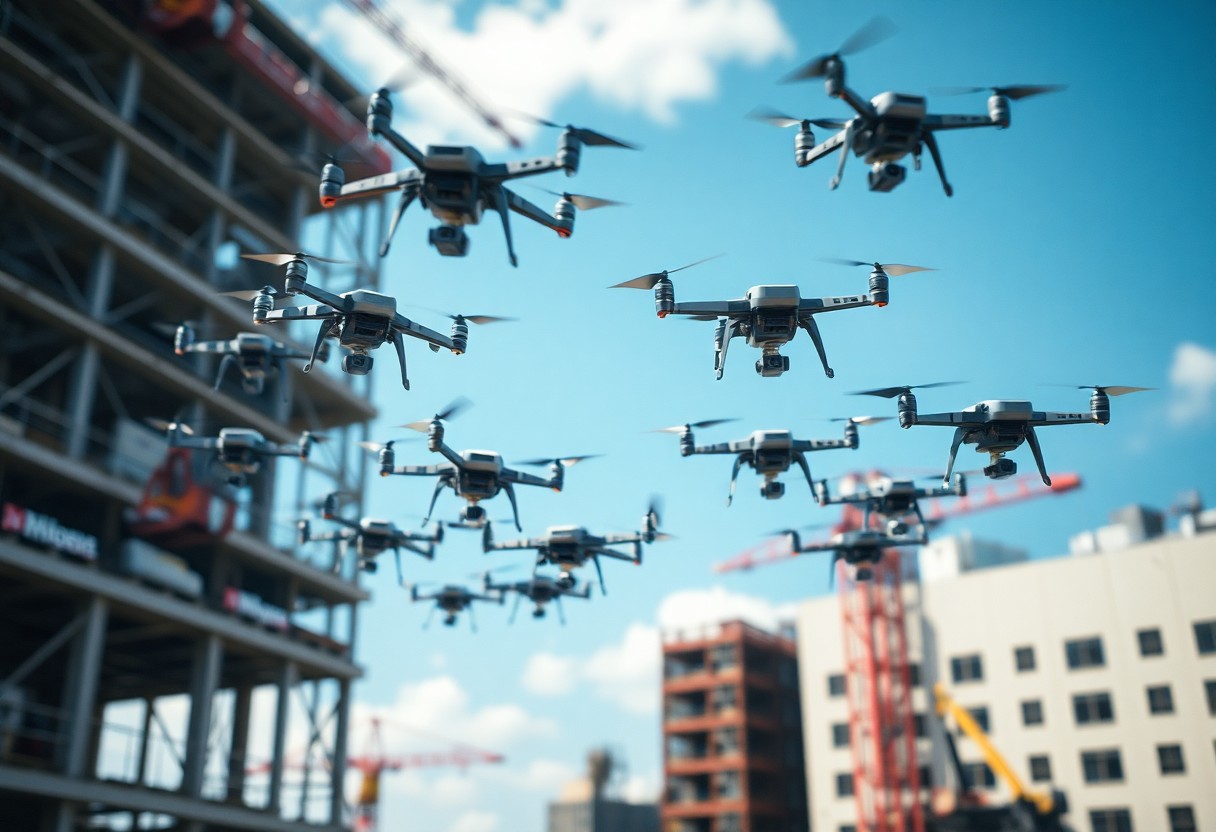
For instance, deploying a swarm of drones equipped with environmental sensors enables you to cover large terrains more efficiently than individual drones could. Research has shown that these swarms can collect several terabytes of data within hours, providing comprehensive insights into environmental health. This approach not only enhances data accuracy but also reduces the time and cost associated with manual monitoring methods. Moreover, adaptive algorithms allow these robotic swarms to adjust their strategies based on real-time findings, ensuring the most pressing environmental issues receive immediate attention.
Challenges and Limitations
While swarm robotics presents vast potential, several challenges and limitations must be addressed. Coordinating numerous agents can lead to failures in task execution due to environmental uncertainties or communication breakdowns. Moreover, the complexity of algorithms required for effective navigation and decision-making often increases the difficulty of implementation. For deeper insights, explore Swarm Robotics: The Future of Collective Intelligence in….
Scalability Issues
As you scale up the number of robots in a swarm, managing coordination and communication becomes exponentially more challenging. Each additional agent requires more robust algorithms to maintain efficiency without sacrificing performance. Furthermore, resource allocation may become problematic, leading to underutilization or overutilization of specific robots.
Interference and Collisions
The risk of collisions and interference increases as the size of the swarm grows. With many robots operating in close proximity, the likelihood of unintended interactions can disrupt tasks and cause delays. Effective strategies must be developed to enhance spatial awareness among agents.
Interference and collisions not only slow down overall efficiency but can also result in damage to the robots themselves. Implementing obstacle avoidance algorithms and spatial partitioning techniques is vital to mitigate risks. Additionally, swarm robotics systems may require real-time monitoring and adjustments, which adds to their complexity and operational demands. Balancing the swarm’s density with task requirements is vital to ensure system integrity and performance.
Future Trends in Swarm Robotics
Emerging advancements in swarm robotics promise to enhance efficiency and scalability in various sectors, from agriculture to disaster response. As you observe these developments, consider how the integration of improved communication protocols and swarm behaviors can facilitate real-time decision-making, allowing systems to adapt seamlessly to dynamic environments. Research initiatives are focusing on developing versatile swarm systems that work cooperatively, advancing the potential for significant breakthroughs in collaborative tasks.
Advancements in Algorithms
You can anticipate advancements in algorithms that enable swarms to self-organize more effectively. Recent studies demonstrate how optimized pathfinding algorithms reduce energy consumption and increase task completion speed. By leveraging decentralized decision-making, these algorithms allow individual agents to contribute uniquely to the common goal, fostering resilience in unpredictable conditions.
Integration with AI and Machine Learning
The integration of AI and machine learning techniques into swarm robotics enhances task execution and adaptability. With machine learning algorithms analyzing data from previous missions, your swarm robots can refine their strategies, improving performance in real-time. This evolution allows for smarter swarm behaviors, enabling them to tackle highly complex tasks with minimal human intervention.
The synergy of AI and swarm robotics opens up a realm of possibilities. You can see applications like predictive maintenance in industrial settings where swarms monitor equipment health and autonomously optimize performance. These systems also benefit from reinforcement learning, where agents learn from their successes and failures, cultivating adaptive strategies. As AI algorithms evolve, expect a surge in applications across domains, including environmental monitoring and search-and-rescue operations, showcasing a future where swarm intelligence is the backbone of innovative solutions.
Case Studies
Numerous case studies illustrate the effectiveness of swarm robotics in real-world applications, showcasing impressive results and innovative approaches.
- Harvard’s Programmable Robot Swarms demonstrated swarm coordination with 50 robots completing complex tasks with over 90% efficiency.
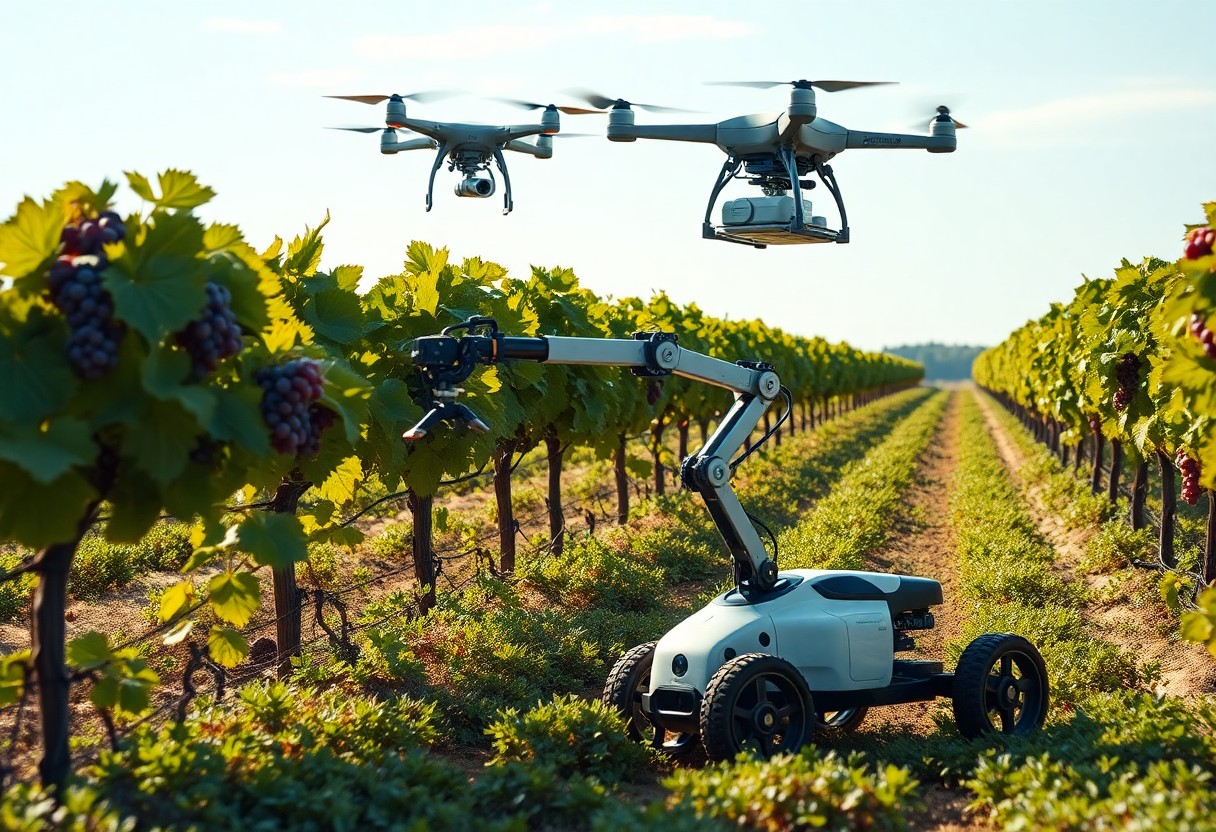
- In precision agriculture, a swarm of 100 drones increased crop monitoring speed by 70%, identifying issues across 500 acres.
- A search and rescue operation utilized 30 robots to cover 1 square kilometer, decreasing search time by 50% compared to traditional methods.
- Swarm robotic systems in environmental monitoring provided real-time data across a 100-mile coastal area, improving response times to changing conditions.
Successful Implementations
You can find numerous successful implementations of swarm robotics across various sectors proving their viability. For instance, a study on swarm drones showed they could collaboratively map terrains at a rate three times faster than single units. Additionally, swarm robots have been employed in disaster response scenarios, effectively locating victims in less time than conventional methods.
Lessons Learned
A wealth of insights emerges from studying swarm robotics applications. You gain valuable learning points about the importance of robust communication protocols and the need for adaptability in unpredictable environments.
As you analyze these lessons, key takeaways include the significance of decentralized control in ensuring responsiveness and the necessity for scalable algorithms to handle larger swarms effectively. Furthermore, understanding environmental factors, like terrain and weather conditions, is vital for optimizing swarm performance. Incorporating feedback mechanisms allows for continuous learning and improvement in swarm behavior, ultimately enhancing task execution.
To wrap up
So, as you explore the landscape of swarm robotics, you will find that these systems exemplify the power of collective intelligence for executing large-scale tasks efficiently. By leveraging the inherent strengths of decentralized decision-making and adaptability, you can harness the potential of numerous agents working together to achieve complex objectives. This approach not only enhances efficiency and resilience but also opens doors to innovative applications across various fields. Embracing swarm robotics can significantly transform how you tackle challenging projects and improve outcomes in your endeavors.