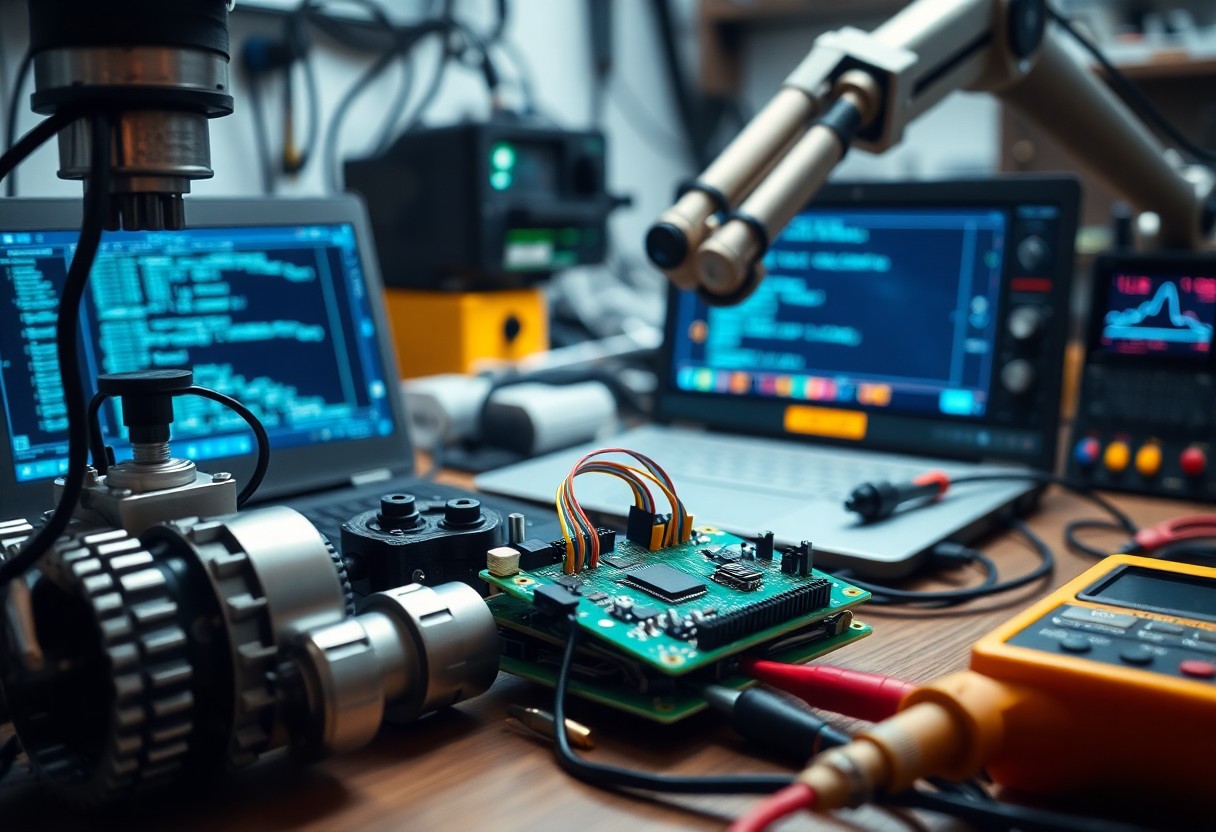
Electrical, mechanical, and software teams must coordinate requirements, interfaces, and verification so you deliver predictable performance, mitigate failure modes, and simplify maintenance across product lifecycle.
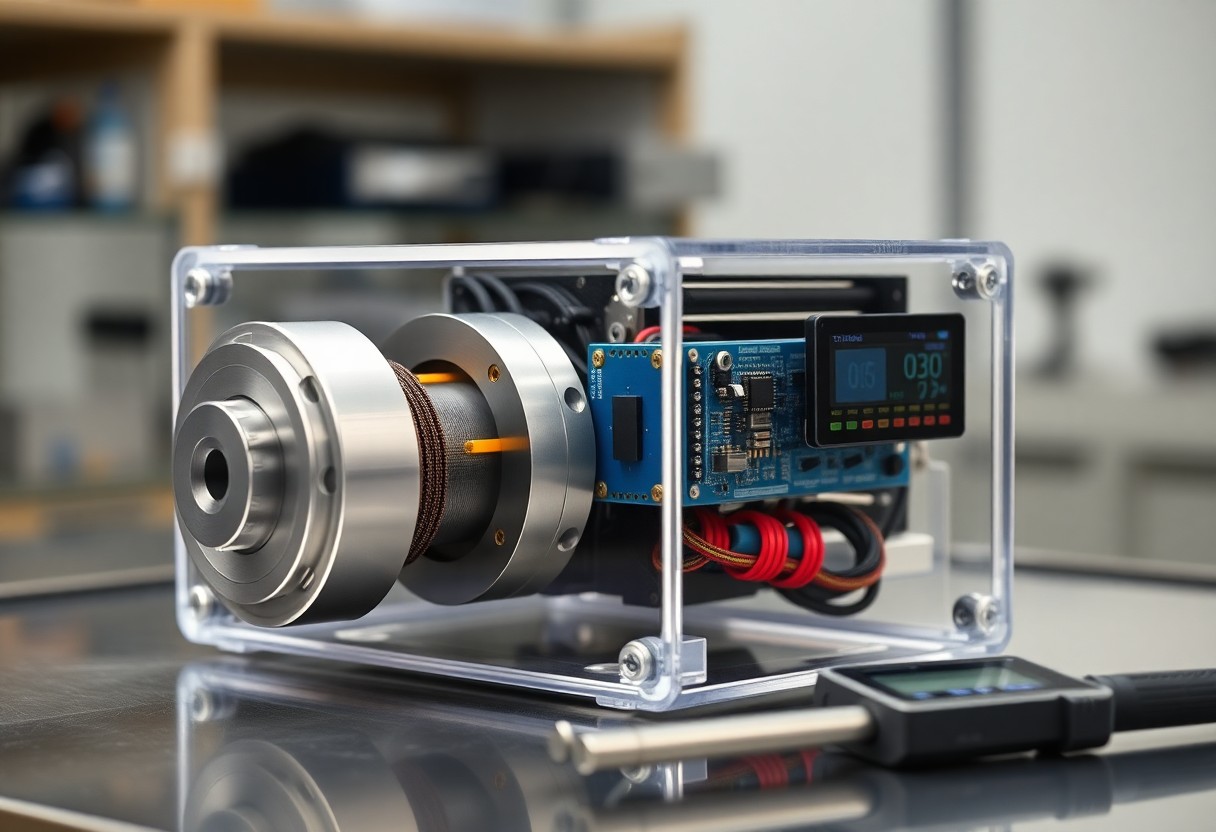
Fundamentals of Mechatronic Synergy
Systems thinking helps you align actuators, sensors, and controllers to meet performance and safety targets while respecting physical and budgetary constraints.
Holistic Design Philosophy
Design integration compels you to balance mechanical tolerances, electrical margins, and software timing so subsystem choices support overall predictability and maintainability.
Cross-Disciplinary Requirements Analysis
Requirements mapping makes you convert stakeholder goals into testable specifications across mechanics, electronics, and firmware to avoid late-stage integration conflicts.
You should establish measurable acceptance criteria, prioritize conflicting requirements with weighted trade-offs, and define interface contracts for timing, voltage, and data semantics to streamline verification and reduce risk.
Mechanical Frameworks and Kinematics
Kinematic modeling helps you match mechanism geometry to task trajectories, balancing link lengths, joint types, and clearance to minimize singularities and optimize reach. You will use forward and inverse kinematics to predict motion and integrate with control loops for reliable system behavior.
Structural Rigidity and Precision Actuation
Frame stiffness determines positional accuracy under load; you should quantify deflection, joint compliance, and resonant modes so actuators maintain setpoints. You can specify bearings and preload to reduce backlash and design for repeatable motion under expected disturbances.
Material Selection for Dynamic Environments
Materials selection affects wear, weight, and thermal expansion; you must trade stiffness against mass and fatigue life to ensure consistent kinematic behavior across temperatures and duty cycles.
Selecting materials for dynamic environments requires you to evaluate mechanical, chemical, and thermal properties against the expected duty profile: fatigue S‑N curves, yield and ultimate strengths, hardness for wear resistance, coefficient of thermal expansion relative to mating components, and corrosion resistance for exposure conditions. You should plan accelerated testing, specify surface treatments or lubricants, and consider composite layups when mass reduction and damping are priorities.
Electrical Architecture and Power Distribution
Electrical design must align with mechanical constraints so you can optimize wiring, grounding, and load balancing; see Integrating Electrical and Mechanical Design and Process … for integration strategies that reduce failures and simplify assembly.
Signal Conditioning and EMI Mitigation
Signal conditioning and filtering help you keep measurement accuracy while EMI mitigation prevents interference that can corrupt sensors or communications, protecting diagnostics and control integrity.
Intelligent Power Management Systems
Power management systems let you prioritize loads, implement safe shutdowns, and extend battery life through dynamic control and telemetry to maintain uptime.
Adaptive power managers let you implement predictive load scheduling, granular load shedding, and health monitoring to prevent brownouts; they use CAN, PMBus, or SMBus so you can integrate telemetry into diagnostics and enforce safe state transitions with firmware-controlled governors.
Embedded Software and Control Logic
Your embedded software coordinates sensors, actuators, and motion control, enforcing deterministic loops, safety interlocks, and timestamped logging so you can maintain predictable behavior, simplify troubleshooting, and ensure consistent interaction between mechanical and electrical domains.
Deterministic Real-Time Execution
You schedule precise deadlines, handle priority inversion, and use low-jitter timers so control loops meet real-time constraints and actuators respond predictably under varying load.
Modular Firmware Architecture
Design firmware as layered modules with clear interfaces, separating device drivers, control algorithms, and communication stacks so you can update components independently and reduce integration risk.
Structure your modules around well-defined APIs, versioned interfaces, and automated test harnesses that let you swap drivers or controllers without rewriting higher-level logic. Include hardware abstraction layers, clear error semantics, and configuration management so you can run unit tests, perform simulated hardware-in-the-loop, and roll back faulty deployments quickly.
Inter-system Communication Protocols
Protocols define message formats, timing, and error handling so you can coordinate mechanical, electrical, and software subsystems with predictable behavior and deterministic timing, enabling system-level testing and simplified debugging.
High-Speed Data Bus Standards
Standards such as CAN-FD, PCIe, and Gigabit Ethernet let you move high-throughput telemetry and control data between domains while meeting latency and determinism requirements.
Sensor Fusion and Data Acquisition
Sensors feed synchronized streams that you must timestamp, filter, and align so fusion algorithms produce coherent state estimates for control and diagnostics.
Fusion requires sensor characterization, calibration routines, and adaptive filtering to handle varying noise, latency, and failure modes; you should implement sensor health metrics, outlier rejection, and time-synchronization across buses to maintain estimator accuracy under changing operational conditions.
System Validation and Optimization
Testing helps you validate integrated performance across mechanical, electrical, and software domains, guiding iterative optimization based on measured metrics and realistic scenarios.
Hardware-in-the-Loop (HiL) Testing
HiL lets you run real-time simulations with actual controllers, exposing timing and interface issues before full deployment.
Failure Mode and Effects Analysis (FMEA)
FMEA guides you to identify failure modes, assess severity and occurrence, and prioritize mitigation actions to reduce system risk.
You should map functions to hardware and software, document failure causes and effects, estimate severity, likelihood, and detectability, compute risk priority numbers, and assign corrective tasks; involve cross-disciplinary teams so design and software changes are verified through tests and traced back to requirements.
To wrap up
From above you see that integrating mechanical, electrical, and software systems demands clear interfaces, rigorous testing, synchronized timelines, and cross-disciplinary standards so you can deliver reliable, maintainable products that meet performance and safety requirements.