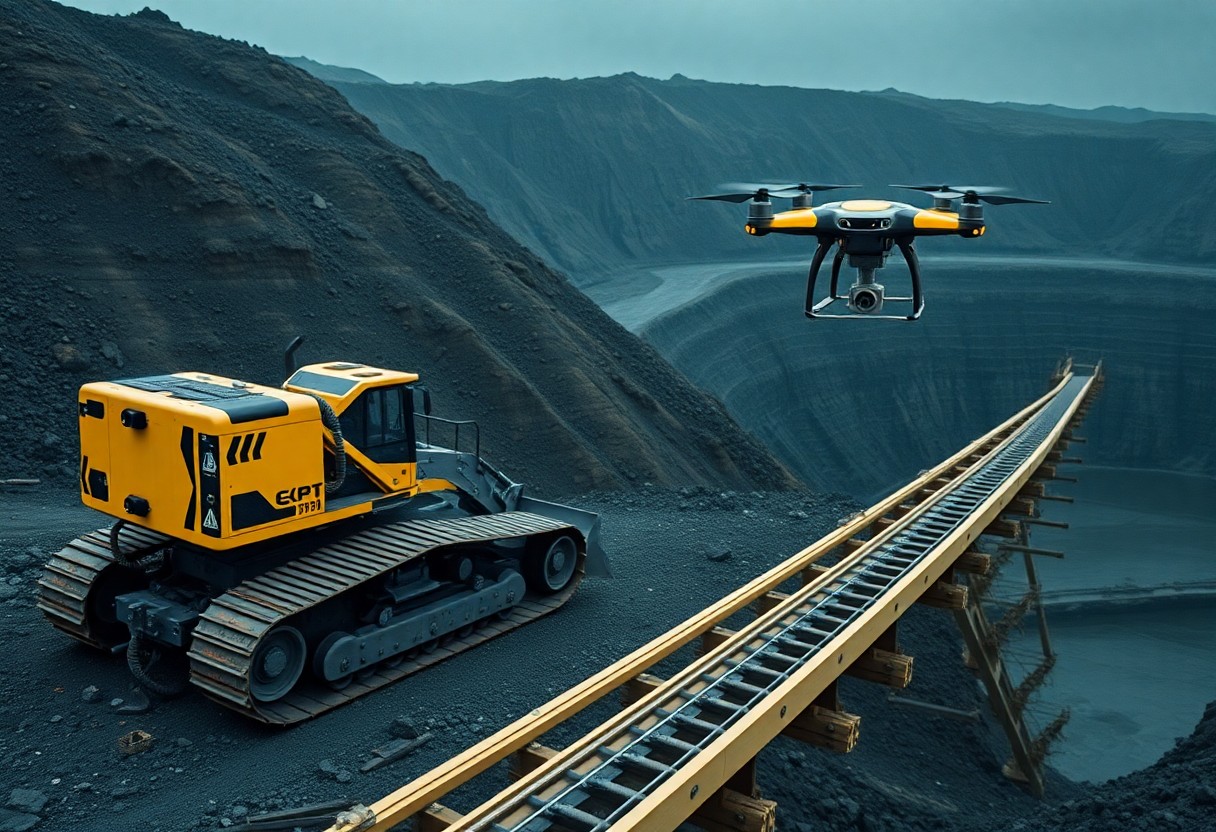
Over the past decade, autonomous mining robots have revolutionized the extraction and management of mineral resources. By combining advanced sensing, AI navigation, and remote operation, these systems improve safety, productivity, and environmental compliance. Deployments require careful evaluation of performance data, regulatory frameworks, and integration with human teams. Adopting autonomous solutions reshapes operational planning, capital allocation, and workforce skills, keeping your organization competitive while minimizing risk and footprint.
Evolution of Mining Technology
Mining technology has shifted from manual labor to fully integrated autonomy over the decades. Key milestones include:
- 19th Century: Steam shovels.
- Post-WWII: Diesel haul trucks.
- 1990s: Sensor-driven equipment and GPS-guided dozers.
- 2010s: Autonomous trucks and Rio Tinto’s AutoHaul rail automation.
These layered innovations set the foundation for today’s AI-coordinated fleets.
Historical Overview of Autonomous Mining
Major milestones in mining automation:
- Mid-1800s: Steam excavation.
- Post-1945: Dieselization of haulage.
- 1970s: Conveyor and crusher scale-up.
- 1990s: GPS and fleet telematics.
- 2010-2015: Driverless haul truck trials.
Fleet management platforms like Caterpillar MineStar and Komatsu AHS pilots reduced human error and paved the way for modern autonomy at sites such as Pilbara.
Advancements in Robotics for Mining
Modern robotics leverage LiDAR, radar, GNSS RTK, and edge AI for centimeter-level positioning and obstacle avoidance. Leading companies like Epiroc, Sandvik, Caterpillar, and Komatsu deploy autonomous loaders, drill rigs, and haul trucks capable of 24/7 operation.
Key innovations include:
- Multi-agent coordination algorithms.
- SLAM-based localization for optimized haul routes.
- Reinforcement-learning planners adapting to pit geometries.
- Digital twins for predictive maintenance, reducing unplanned downtime by 20–40%.
Operational benefits include longer equipment life, fewer stoppages, and tighter cycle times.
Types of Autonomous Mining Robots
1. Drilling Robots
Automated long‑hole and blasthole rigs (e.g., Sandvik, Epiroc) deliver precise hole patterns, improving fragmentation and throughput. Continuous operation can increase meters drilled per shift by up to 30%.
2. Transportation Robots
Driverless haul trucks and AHS fleets (e.g., Rio Tinto, Caterpillar, Komatsu) leverage RTK-GPS and LiDAR for 24/7 hauling. Integration with fleet-management systems optimizes dispatch, load balancing, and refueling schedules.
3. Loaders & LHDs
Autonomous loaders reduce cycle times in stoping and stockpile reclaim, especially in underground operations.
4. Inspection Drones
Aerial and ground drones equipped with thermal, LiDAR, and photogrammetry sensors monitor belts, map sites, and inspect blast houses.
5. Maintenance Robots
Mobile manipulators handle belt repairs, battery swaps, and confined-space interventions.
Benefits of Autonomous Mining Robots
Efficiency and Productivity
Autonomous systems increase equipment utilization from ~60% to over 80%. Pilbara’s AHS deployments show double-digit productivity gains, while automated drills improve cycle times and accuracy.
Safety Improvements
By removing personnel from high-risk zones, autonomous fleets reduce exposure to blasting, vehicle accidents, and fatigue. Advanced sensors enable automated emergency braking and collision avoidance.
Environmental Impact
Optimized routing and energy-efficient electric LHDs or loaders reduce fuel consumption and emissions.
Challenges and Limitations
- Technical Issues: Sensor degradation, GNSS denial underground, low-latency constraints, and battery limitations.
- Economic Considerations: High upfront CapEx, recurring software, and infrastructure costs. ROI typically ranges from 2–6 years depending on fleet size and site scale.
- Operational Hurdles: Regulatory approval, worker displacement, and harsh environmental conditions.
Case Studies of Successful Implementation
- Company A (2021-2024): 24 autonomous trucks, 28% throughput increase, 15% diesel savings, $12M annual OPEX reduction.
- Company B (2022-2025): 12 electric LHDs + 8 drilling robots, 18% ore recovery boost, 62% fewer safety incidents.
- Rio Tinto Block Cave Trial: 35% increase in uptime, 92% fleet utilization.
- BHP Remote Integration: 22% faster cycle time, 40% reduction in unplanned downtime.
These examples highlight measurable productivity, safety, and cost benefits of autonomous mining.
The Future of Autonomous Mining
The next phase involves whole-site orchestration using digital twins, edge AI, and low-latency connectivity to coordinate drills, trucks, and processing plants.
Emerging Technologies
- Edge AI and LiDAR perception.
- 5G/TSN low-latency networks.
- Electric powertrains and in-pit crushing conveyors (IPCC).
- Swarm robotics for multi-robot coordination.
Industry Predictions
- Autonomy-as-a-service models.
- Standardized interoperability across OEMs.
- Workforce transition to remote operations, predictive maintenance, and data specialists.
- ROI improvements and mid-teens percent reductions in operating costs.
Conclusion
Autonomous mining robots are reshaping the industry with safer, more efficient, and data-driven operations. By integrating robotics, AI, and remote operations, mining organizations can achieve higher yields, lower costs, and reduced environmental impact, while transitioning workforce roles toward strategic supervision and systems integration.