Cable Management Best Practices in Robotics
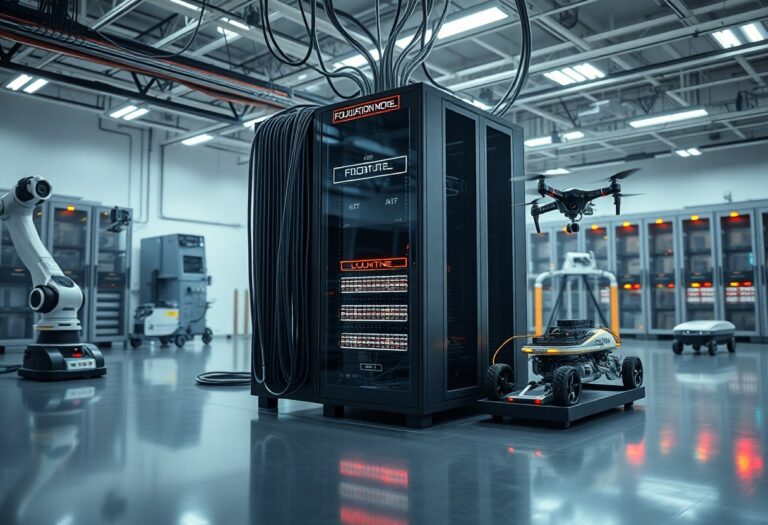
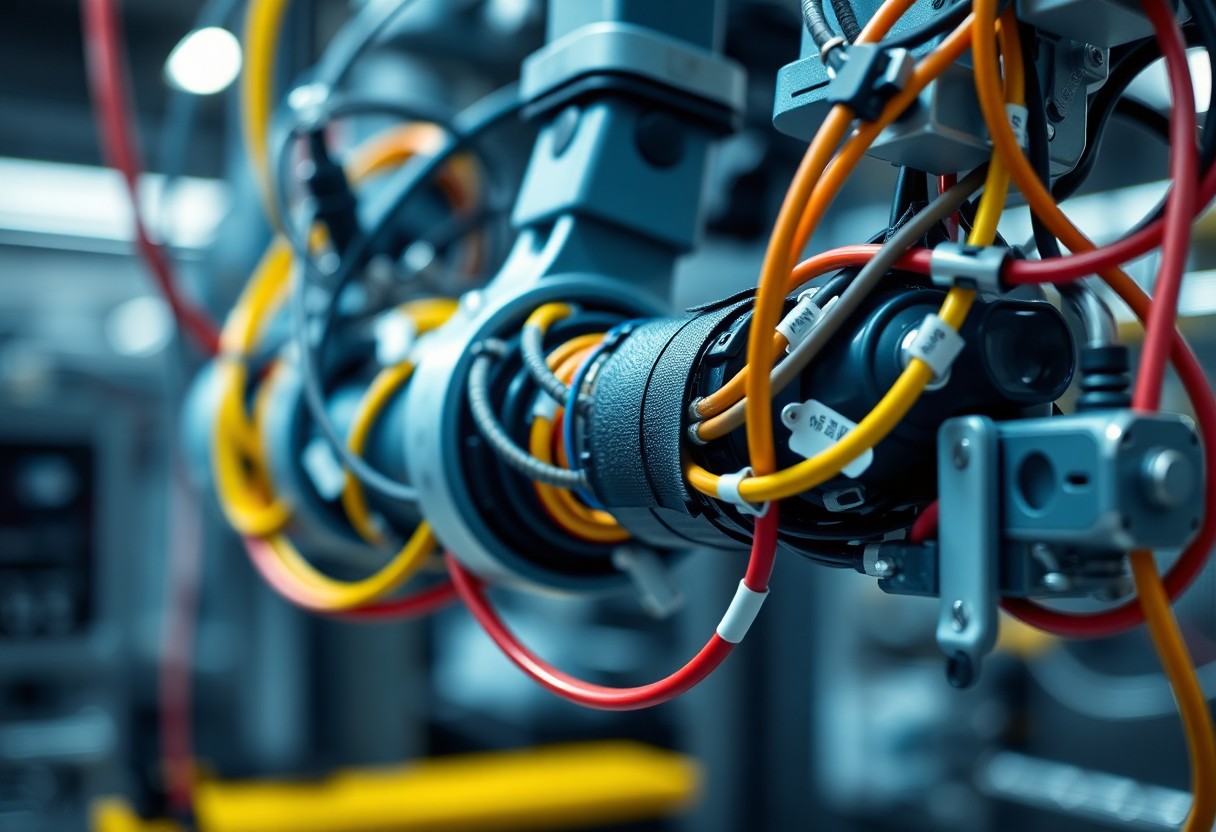
Robotics systems require disciplined cable routing so you avoid interference, reduce wear, and simplify maintenance; you should use proper strain relief, color-coded labeling, secured cable channels, and regular inspections to maintain performance and safety.
Dynamic Motion and Bend Radius Requirements
Motion profiles determine minimum bend radii and dynamic fatigue factors you must plan for to preserve cable life during repetitive cycles.
Calculating Minimum Bend Radii for Flexing Applications
Calculate minimum bend radius from cable datasheets, multiply the static radius by the manufacturer’s flex factor, and factor motion frequency and travel length so you avoid conductor and insulation failure.
Managing Torsional Stress in Multi-Axis Articulation
Assess torsional loads across joints so you route twisted pairs and shielded bundles to minimize cumulative rotation, and specify cables rated for continuous torsion where you expect multi-axis articulation.
When you detail torsion mitigation, specify cables with percent-rotation ratings and reinforce routing with dedicated strain-relief and twist limiters; place neutral bend points near joints, use helical-lay or ribbon constructions for lower torque, and consider slip rings or rotary connectors when rotation exceeds cable ratings. Test assemblies with duty-cycle profiles to validate expected cycle life before deployment.
Material Selection for Robotics Environments
Material choices dictate jacket flexibility, temperature rating, and connector compatibility; you should consult standards and practical guides like Lean Robotics MT: Cable Management Best Practices when specifying cables for articulated arms and end-effectors.
High-Flex Jacket Compounds and Durability Standards
Choose high-flex compounds such as TPU or specially formulated PUR to withstand millions of flex cycles and meet industry durability standards you set for motion systems.
Resistance to Chemical Exposure, Heat, and Abrasion
Select materials with proven resistance to oils, coolants, heat, and abrasion so you reduce failures and shorten maintenance windows in harsh production cells.
You should require manufacturer compatibility charts, temperature and chemical resistance test data, and abrasion ratings when approving cables; prefer fluoropolymer or specially compounded PUR jackets for solvent and high-heat environments, add external sleeves or stainless conduits at spray and drip zones, and implement scheduled inspections with replacement criteria based on cycle count and observed insulation degradation.
Strategic Routing and Mounting Techniques
Route primary bundles along protected chassis lines and keep your power and data separated to minimize interference; secure with low-profile clips so you maintain smooth motion and accessibility for service.
Optimizing Cable Length and Service Loop Dimensions
Trim excess length, plan service loops for predictable motion arcs, and size loops so you avoid snagging while ensuring quick access during maintenance.
Precision Strain Relief and Anchor Point Placement
Anchor cables near connectors and at high-stress bends using molded clamps or polymer anchors so you reduce flex fatigue and maintain signal integrity.
Detailed placement of strain relief determines connector life and serviceability: you should place anchors immediately adjacent to connector shells, at directional changes, and at fixed mounting slots to intercept loads before they reach terminations. Use low-profile clamps, overmold boots, or cable saddles sized to the cable diameter; pad sharp edges and allow slight movement to prevent stress concentration, and inspect anchors during scheduled maintenance to replace worn ties.
Implementing Protective Management Systems
Implementing protective systems helps you route, shield, and monitor cables to reduce wear and electrical hazards; plan mounting points, strain relief, and inspection access to maximize uptime.
Selection and Sizing of Energy Chains and Cable Carriers
Select energy chains sized for bend radius, cable fill, cycle rate, and environmental exposure so you avoid pinching, overheating, and premature fatigue; allow for service loops and easy replacement.
Utilizing Corrugated Tubing and Specialist Braided Sleeving
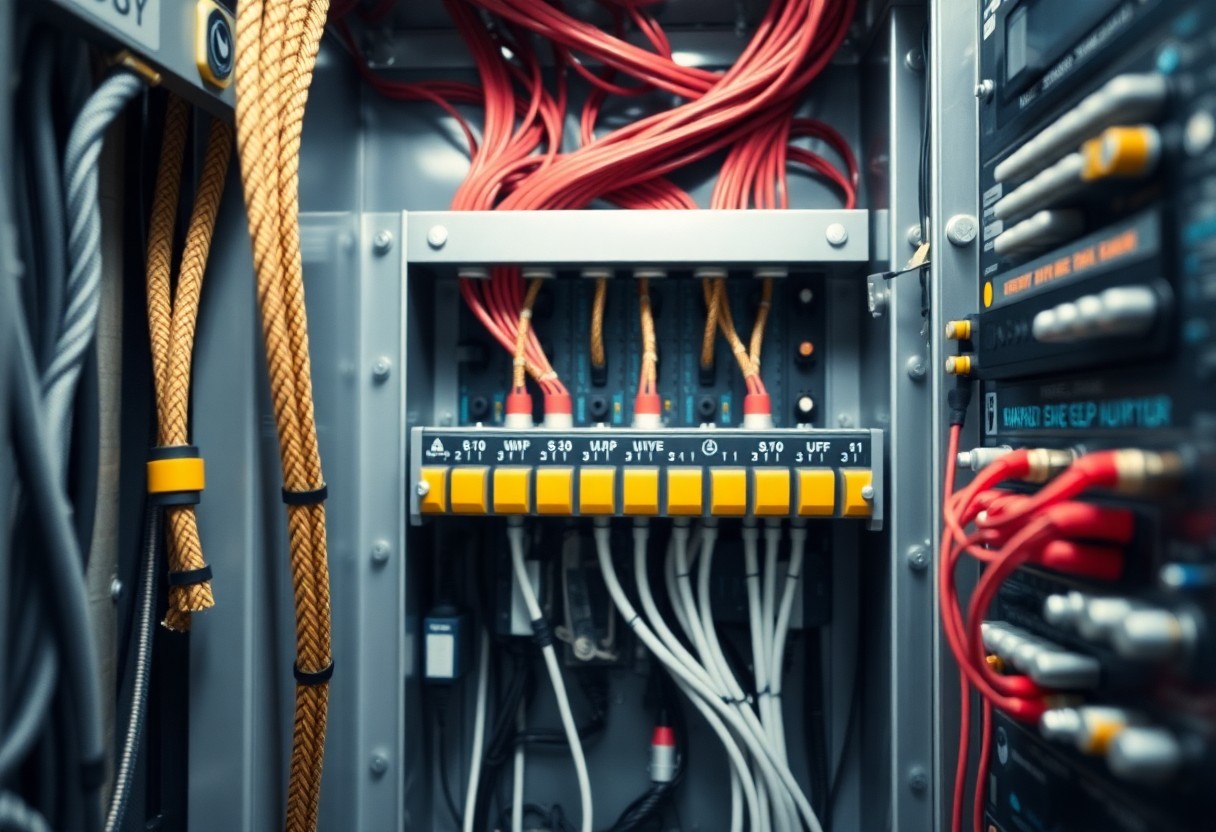
Use corrugated tubing and specialist braided sleeving to shield your cables from abrasion, chemicals, and EMI while preserving flexibility; choose materials rated for your operating temperature and solvent exposure.
Consider installation tips: cut sleeves slightly long, secure ends with heat-shrink or clamps, stagger layers so you prevent chafing, ground braided EMI sleeving, and inspect regularly for wear and contamination.
Electromagnetic Interference (EMI) Mitigation
EMI poses interference risks; you should route signal cables away from high-current paths, use twisted-pair wiring, and prefer shielded cables to maintain signal integrity.
Physical Separation of Power and Signal Conductors
Segregate power and signal conductors into separate bundles and trays so you reduce crosstalk; keep minimum separation distances and avoid long parallel runs.
Advanced Shielding and Grounding Protocols
Shielding and proper grounding let you confine emissions; select braided or foil shields, terminate shields correctly, and avoid ground loops for predictable performance.
- You should use continuous shields and ensure proper termination at connectors.
- You should route signal pairs in twisted-pair form to cancel induced noise.
- You should separate high-current bus runs from low-level signals in conduit or trays.
- You should cross power and signal cables at right angles when routing intersections.
Shielding Techniques
| Technique | Benefit |
|---|---|
| Foil shield | High-frequency coverage with low profile |
| Braided shield | Better low-frequency rejection and mechanical strength |
| Twisted pair | Common-mode noise cancellation for differential signals |
Grounding schemes require you to choose single-point or multi-point methods based on frequency; you should bond shields and chassis and verify continuity to prevent loop currents.
- You should implement single-point ground for low-frequency control systems.
- You should consider multi-point grounding for high-frequency RF paths.
- You should use shield drains and chassis bonding to maintain low impedance paths.
- You should perform continuity and loop-resistance tests after installation.
Grounding and Verification
| Action | Purpose |
|---|---|
| Single-point bonding | Prevents ground loops at low frequencies |
| Multi-point bonding | Reduces impedance at high frequencies |
| Continuity testing | Confirms effective shield and chassis connections |
Maintenance and Lifecycle Management
Maintenance and lifecycle planning ensure your cable routes remain accessible, documented, and replaced on schedule to prevent unexpected downtime and preserve robot performance.
Establishing Preventative Inspection Schedules
Scheduled inspections help you detect abrasion, loose terminations, and strain early; define intervals based on duty cycles, environmental stress, and historical failure data.
Predictive Failure Analysis and Component Replacement
Predictive analytics uses sensor and operation data to forecast cable degradation so you can plan timely replacements and minimize unplanned stops.
Using machine-learning models you can correlate vibration, current draw, and temperature trends with past incidents to generate accurate risk scores. You should schedule replacements based on those scores, spare-part lead times, and low-production windows to avoid emergency repairs and extend service life.
To wrap up
Now you prioritize labeled, secured, and routed cables to reduce wear, simplify maintenance, and prevent signal interference; you implement strain relief, proper bend radii, and EMI shielding, and you document layouts and test regularly so your robotic systems remain reliable and safe.