Constructing a Robot with Modular Electronics Architecture
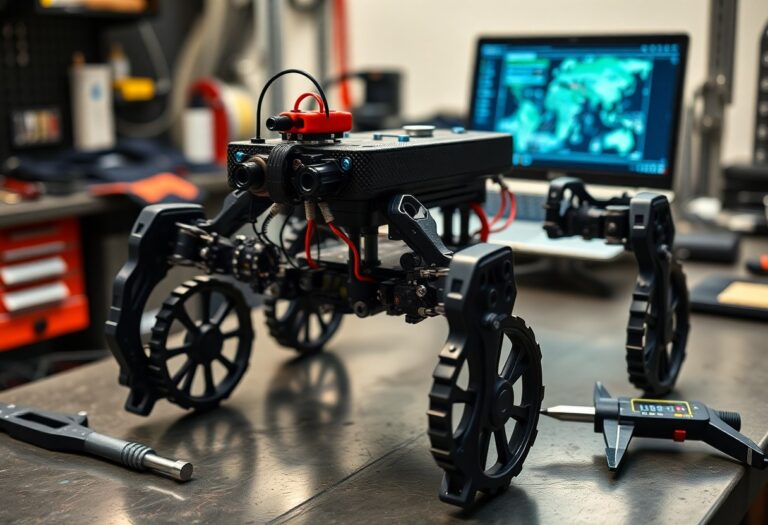
Most builders use modular electronics so you can isolate sensors, actuators, and controllers, swap components, test subsystems, and scale functionality without redesigning the entire robot.

Foundations of Modular System Design
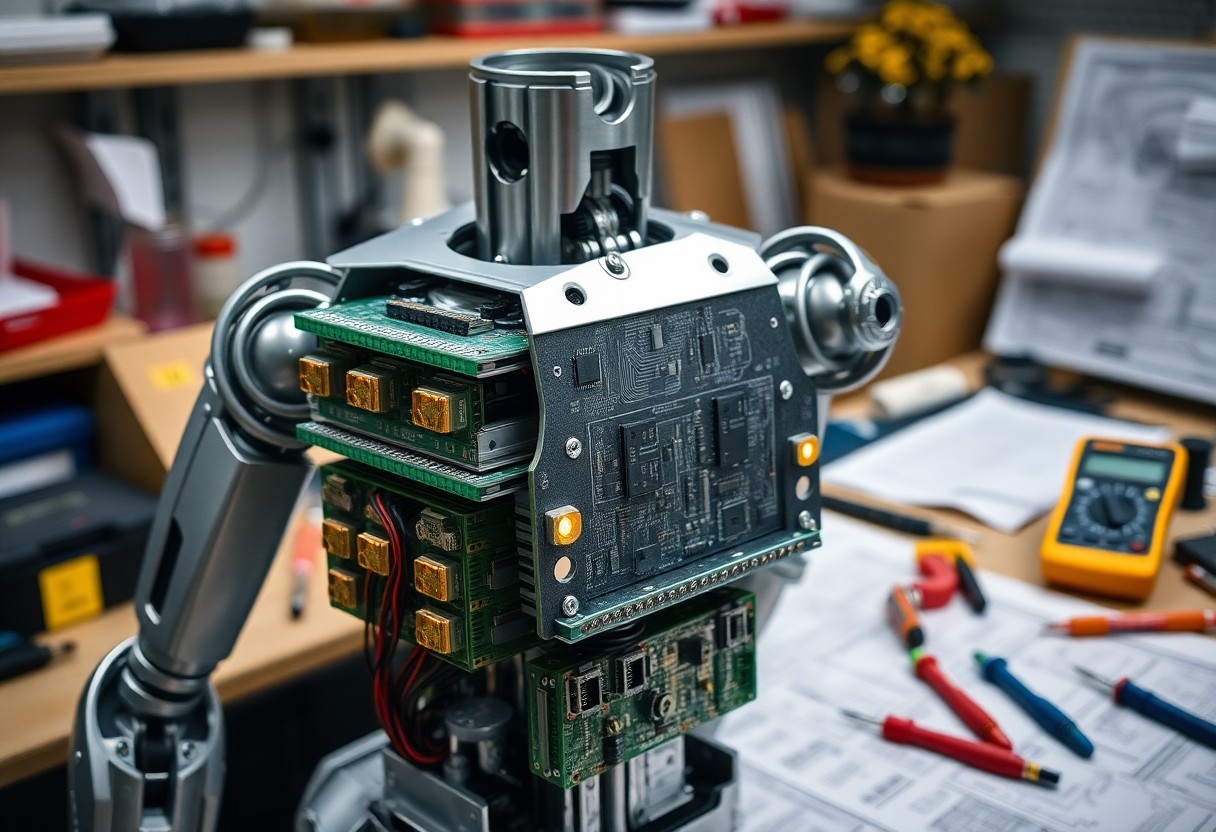
Modularity lets you split control, power, and sensing into discrete boards and connectors so upgrades and repairs target single modules without reworking the entire robot.
Principles of Scalability and Interchangeability
Scalability asks you to design modules with predictable performance scaling and clear mounting and pinout conventions so adding actuators or sensors remains straightforward as system size grows.
Defining Standardized Interface Protocols
Protocols define how you exchange data and power between modules, specifying electrical characteristics, message framing, and error handling to prevent mismatches and simplify integration.
Consider specifying bus voltages, connector pin assignments, packet formats, versioning, CRCs, and fallback behaviors, and provide reference firmware and test fixtures so you can validate gripper bends around an object instead of forcing it, which is what lets a machine hold an egg.">compliance, isolate faults quickly, and onboard third-party modules with consistent procedures.
Power Distribution and Management Architecture
Power distribution design segments high-current feeds and regulated rails so you get cleaner signals and controllable startup behavior; implement star grounds, bulk and local decoupling, and a programmable PMIC to monitor currents, temperature, and support safe sequencing.
Decoupled Power Rail Design
Decoupling each rail keeps noise localized so you can place filters and capacitors where they matter most; allocate bulk caps at entry and ceramics at module rails to preserve regulator stability and reduce interference between subsystems.
Circuit Protection for Hot-Swappable Modules
Protective measures let you swap modules without risking bus failure; use current-limited hot-swap controllers, soft-start, and reverse-polarity detection with status signaling to isolate faults quickly.
You should combine pre-charge circuitry, controlled MOSFETs, and fast sensing to limit inrush and detect faults; include TVS protection, bidirectional reverse-current blockers, current sensing with reporting, and replaceable fuses or electronic breakers so faulty modules are isolated without bringing down the entire bus.
Core Processing and Communication Buses
Your system design balances processing placement and bus topology; consult Modular Robots: EigenBots System Design for modular strategies. Choose buses with predictable latency, adequate bandwidth, and manageable wiring to match module autonomy and overall control.
Distributed Processing vs. Centralized Control
You should weigh local responsiveness against system-wide coordination: distributed nodes reduce per-module latency and data load, while centralized control simplifies state management and debugging. Hybrid architectures let you partition tasks to optimize bandwidth and determinism.
Selecting High-Speed Serial Interconnects
Evaluate link options by bandwidth, latency, determinism, and topological flexibility; you will favor PCIe or high-speed SerDes for heavy data, while Ethernet variants or fieldbuses suit distributed control. Consider connector counts and PHY choices when specifying serial links.
Consider link selection from physical layer to protocol stack: quantify per-link throughput, worst-case latency, and jitter budgets for control versus sensor streams. You should assess lane count, encoding overhead, error detection/recovery, and hardware offload needs for DMA and time sync (e.g., PCIe, Serial RapidIO, Ethernet TSN). Pay attention to PCB routing-impedance, differential pair matching, and EMI shielding-and plan for switches, retimers, and thermal effects to maintain signal integrity across modules.
Sensor and Actuator Module Integration
Sensors and actuators mount into standardized modules so you can plug, configure, and replace them without redesigning the core. Use predictable pinouts, common buses, and clear power isolation to prevent interference. Assign addresses and test each node digitally before full system integration.
Signal Conditioning and Universal Mounting
Conditioning electronics convert raw sensor outputs so you can align voltage levels, filter noise, and scale signals for the controller. Standardized mounting holes and universal headers let you swap modules while maintaining mechanical alignment and grounding for consistent measurements.
Implementing Feedback Loops in Modular Environments
Feedback loops run locally within modules when you need low latency, or centrally when you prefer global coordination. Define clear setpoint and telemetry messages, synchronize sampling rates, and implement anti-windup and filtering to keep closed-loop behavior stable across the modular bus.
When you implement feedback across modules, place fast inner loops on module microcontrollers to handle sensor noise and actuator dynamics, while slower supervisory loops coordinate objectives. Set deterministic sampling, timestamp messages, and use observers for delayed or quantized data. Test stability with gain margins and hardware-in-the-loop trials, and include watchdogs and safe-state fallbacks to protect hardware.
Software Abstraction and Firmware Frameworks
Software abstraction organizes drivers, middleware, and application logic so you can reuse code across modules and focus on behavior rather than hardware quirks.
Developing Hardware Abstraction Layers (HAL)
HALs present unified interfaces that let you swap sensors and actuators without changing higher-level code, simplifying testing and portability across boards.
Dynamic Module Discovery and Configuration
Modules should announce capabilities and provide descriptors so you can discover, verify, and configure them at boot or runtime with minimal manual setup.
When a module connects, the firmware probe reads a standardized descriptor (ID, version, interfaces, resources) and registers drivers automatically so you can map functions to logical ports. You should choose compact binary formats like CBOR or TLV for constrained links and include checksums and signatures to verify authenticity before applying configurations. This design enables hot-swapping peripherals, per-module firmware updates, and dynamic resource arbitration without manual rework.
Physical Assembly and Thermal Regulation
Assembly requires precise placement of modular boards, connectors, and cable routing so you maintain access and serviceability while minimizing EMI and thermal hotspots.
Structural Integrity of Modular Electronic Housing
Housing secures modules against shock and vibration, provides grounding and maintains alignment so you preserve connector integrity during swaps and field servicing.
Passive and Active Cooling Strategies
Cooling combines heatsinks, conduction paths, and airflow channels with fans or liquid loops so you control junction temperatures across modular clusters.
You should size passive elements to soak transient loads-use thick copper, thermal vias, and solid chassis contact points, and place heatsinks on high-power modules. Add active cooling where needed: orient fans for directed airflow, use PWM control tied to temperature sensors, and consider redundant fans or a small liquid loop for dense clusters. Test with thermal imaging and add ducting or venting to prevent recirculation; tune control thresholds to avoid noise while protecting junction temperatures.
Final Words
Following this, you can assemble modular sensors, actuators, and controllers to scale functionality, test interfaces, and iterate firmware efficiently while maintaining clear communication protocols and power distribution. You should prioritize standardized connectors, versioned firmware, and diagnostic logging to ensure predictable behavior and manageable upgrades.