
Over time you prioritize durable materials, modular hardware, redundant power, and maintainable code; you test rigorously and schedule maintenance so your robot remains reliable and serviceable for long-term deployment.
Selecting High-Grade Materials for Longevity
Materials selection affects longevity; choose corrosion-resistant alloys, high-grade composites, and protective coatings so you reduce maintenance and avoid premature failures.
Identifying aerospace-grade alloys and composites
Aerospace-grade titanium and carbon-fiber composites offer exceptional strength-to-weight; you should prioritize fatigue resistance, fracture toughness, and corrosion behavior when specifying structural components.
Evaluating wear-resistant joints and bearings
Bearings and joints determine moving life; you should prefer ceramic-coated bearings, self-lubricating sleeves, hardened shafts, and tight sealing to limit contaminants and abrasion.
Inspection protocols and material pairings extend service life: you should perform periodic wear measurements, monitor lubrication condition, conduct vibration analysis, and choose press fits or compliant bearings to control misalignment; document replacement intervals based on empirical wear rates.
How to Shield Electronics from Environmental Degradation
You protect electronics by combining sealed enclosures, conformal coatings, and desiccants while planning accessible service points and scheduled inspections to prevent moisture, dust, and corrosion.
Utilizing IP-rated enclosures for dust and moisture protection
Use IP-rated enclosures sized to your application, seal cable entries, and add breathable vents or pressure equalizers to block dust and water without creating condensation risks.
Managing thermal dissipation to prevent component overheating
Manage heat with heatsinks, thermal pads, fans, and well-placed ventilation while you monitor temperatures and allow room for component derating under sustained loads.
Design thermal strategies that combine passive and active cooling, place hot components near airflow paths, and use thermal simulation during development so you can size fans and heatsinks correctly. Add temperature sensors, fan control curves, redundant cooling for critical systems, and accessible filters with scheduled maintenance to prevent dust buildup from reducing airflow.
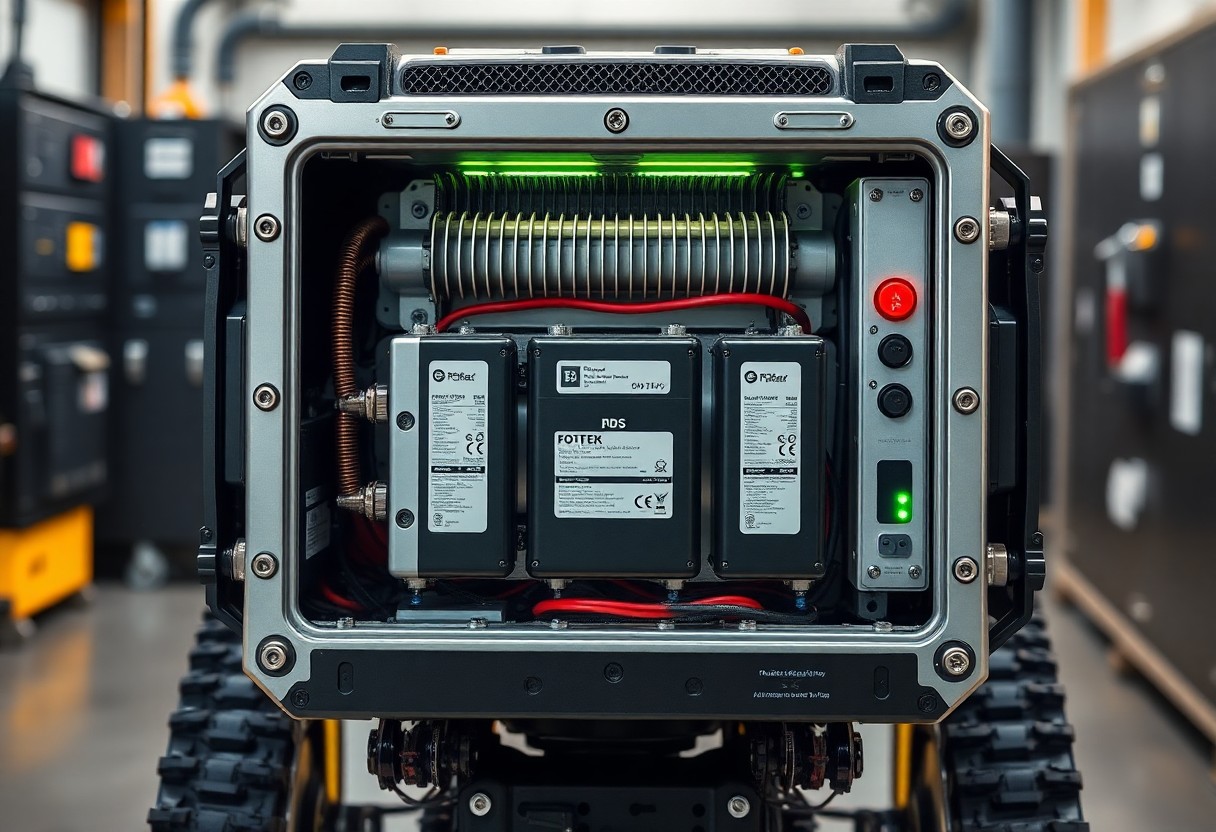
Power Management Factors for Sustained Operation
Manage energy budgets by matching duty cycles, thermal limits, and maintenance windows to extend operational life; use telemetry to detect degradation. Assume that you schedule charging and load balancing to avoid deep discharges and heat spikes.
- Duty cycle tuning
- Thermal control
- Predictive maintenance
Selecting high-cycle life battery chemistries
Choose lithium-titanate or lithium-iron-phosphate cells for extended cycle counts; you will trade energy density for longevity and safer thermal behavior.
Optimizing power distribution efficiency for reduced wear
Balance bus voltages, minimize conversion stages, and right-size fuses so you reduce losses that accelerate component aging while preserving performance.
Implement a layered power architecture: set a higher primary DC bus to reduce current, place a few high-efficiency converters close to loads to cut wiring losses, and include local filtering to damp transients. You should use precision current sensing and controlled soft-start to limit inrush and avoid repetitive stress. You must monitor temperature, voltage ripple, and switching losses so you schedule repairs and adjust setpoints before wear leads to failure.
Tips for Developing Robust Control Software
Software design should include deterministic scheduling, fault containment, and extensive simulation testing so you can validate behavior under stress. Knowing you can trace failures with structured logs and metrics reduces downtime and speeds maintenance.
- Design deterministic control loops
- Contain faults per module
- Instrument telemetry and logging
Integrating self-diagnostic and error-handling routines
Systems should run periodic health checks, validate sensor data against expected ranges, and escalate anomalies through graded responses so you can curb fault propagation and maintain safe operation.
Implementing secure over-the-air updates for long-term stability
Updates must authenticate sources, verify signatures, and allow atomic rollback so you can apply patches without risking device bricking or long outages.
You should sign firmware with strong cryptographic keys, enforce mutual authentication, and use secure boot to verify images before execution. Implement staged rollouts and canary batches, support atomic swaps and verified rollback, and use delta compression to limit bandwidth. Maintain key rotation, audit logs, and a fallback bootloader to ensure recoverability if updates fail.
Testing Protocols to Ensure Field Durability
Testing protocols should mirror mission cycles; run continuous-operation trials, cold/hot soak checks, and component-level endurance runs so you catch failure modes early. See When You Can’t Afford Downtime, Even in Tough Conditions for field-ready methods.
Conducting stress tests under extreme temperature conditions
Temperature Test Matrix
| Parameter | Procedure |
|---|---|
| Range | -40°C to 85°C |
| Cycle | Rapid thermal cycling, 100+ cycles |
| Monitoring | Inspect seals, lubricants, electronics |
Set thermal chambers to cycle between -40°C and 85°C, monitor seals, lubricants, and electronics, and log failures so you can refine material choices and tolerances.
Simulating long-term vibration and impact resistance
Replicate operational vibration spectra and shock pulses with multi-axis shakers so you reveal fatigue points and validate mounting strategies before field deployment.
Implement frequency sweeps, random vibration, and timed shock profiles that mirror transit, operational, and accidental impacts; inspect solder joints, fasteners, bearings, and potting for microcracks, then apply damping, isolation mounts, or increased wall thickness where you record repeatable failure trends to meet lifecycle targets.
Conclusion
Considering all points, you should prioritize durable materials, modular design, redundant critical systems, regular maintenance schedules, and efficient power management to ensure long-term reliability and straightforward upgrades.