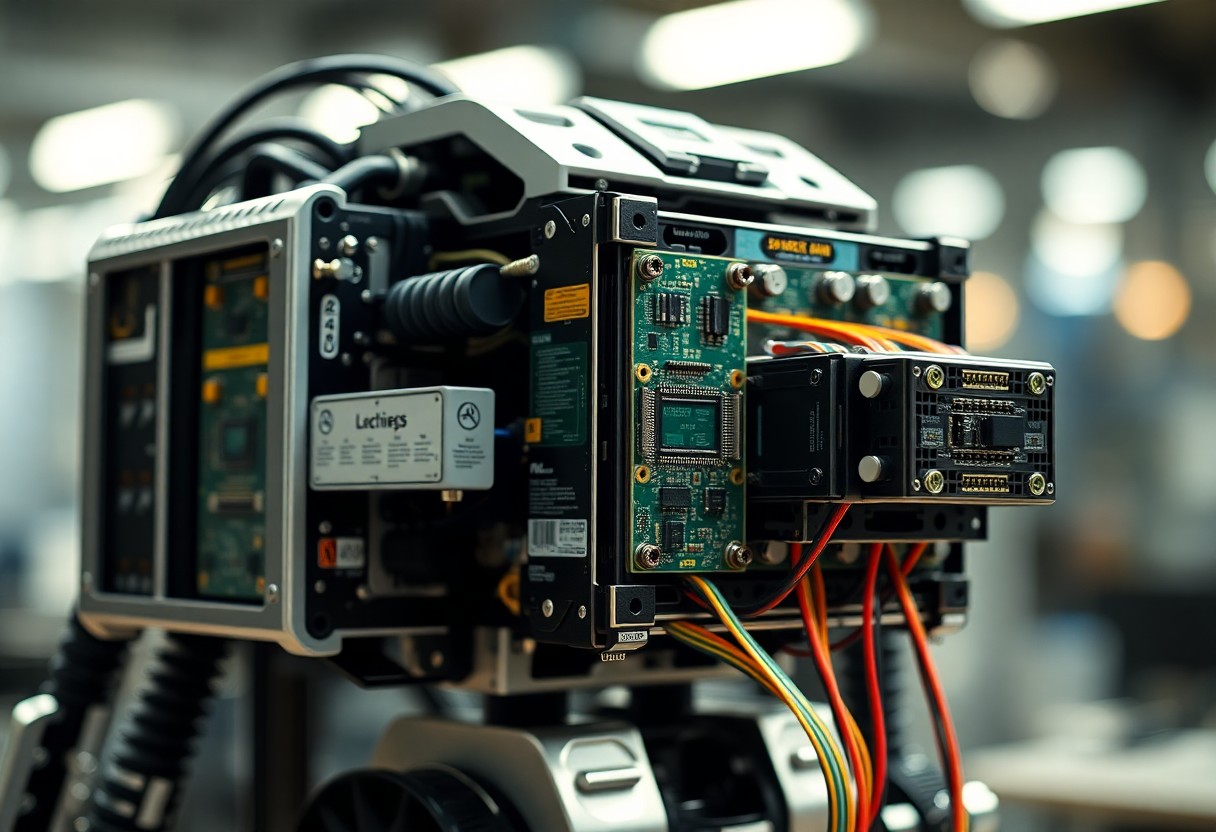
It’s wise to design modular interfaces, standardized mounts, and flexible power and communication buses so you can add sensors, actuators, and controllers without redesigning the core chassis.
Core System Backbone and Power Distribution
Backbone systems should prioritize scalable bus architectures and centralized power management so you can expand modules without rework. Plan high-current traces, common grounding, and hot-swap protection to keep peripherals stable as you add sensors, actuators, and compute nodes.
Selecting High-Bandwidth Central Processors
Choose processors with multiple high-speed PCIe lanes, native Ethernet controllers, and ample memory bandwidth so you can run vision stacks and real-time control concurrently. Evaluate thermal headroom and upgrade paths to avoid bottlenecks as peripherals demand more throughput.
Modular Power Rail Architecture for Peripheral Scaling
Segment power into isolated rails with dedicated converters and monitoring, so you can add high-current motors without affecting sensitive sensors. Include per-rail fusing and telemetry to detect overloads before they cascade and simplify peripheral scaling during development.
Design modular power rails by grouping peripherals into functional domains-sensors, actuators, and compute-and assign dedicated DC‑DC converters with margin for inrush currents. Use per-rail current sensing and PMBus or I2C telemetry so you can monitor consumption and implement dynamic load shedding. Implement power sequencing and remote sense lines to protect sensitive devices. Select connector footprints, trace widths, and thermal solutions to support peak draw and simplify future upgrades.
Standardized Communication Protocols
Standardizing your robot’s communication stack lets you integrate sensors, actuators, and controllers predictably, reduce firmware complexity, and swap components without rewiring.
Implementing High-Speed CAN and I2C Buses
Implementing high-speed CAN for motor and safety traffic alongside I2C for short-range peripherals lets you balance throughput, latency, and wiring density to match each module’s role.
Low-Latency Daisy-Chaining for External Modules
Daisy-chaining external modules over low-latency serial links reduces connector count and helps you keep timing consistent across distributed devices.
Optimize signal integrity with controlled-impedance traces, matched differential pairs, and proper termination while you define addressing and arbitration schemes; this keeps jitter low and end-to-end latency predictable. Test under full-load scenarios, implement error detection and hot-plug handling, and provide graceful fallback so you can add or remove modules without compromising overall system timing.
Modular Sensor Integration Framework
Architecture that standardizes sensor buses, power, and mechanical mounts lets you add or swap modules without rewiring; you can follow patterns from recent research: Designing Expandable-Structure Robots for Human … – PMC for implementation examples and testing protocols.
Universal Plug-and-Play Sensor Interfaces
Interfaces should present consistent electrical, communication, and ID pins so you can hot-swap sensors and let controllers auto-detect capabilities and negotiate sampling rates.
Dynamic Driver Mapping and Data Fusion
Drivers mapping layer assigns appropriate drivers to newly connected sensors via metadata, while fusion algorithms align timestamps and units so you get coherent state estimates across heterogeneous inputs.
Algorithms should support plug-in driver packages, priority arbitration, and on-the-fly calibration so you can resolve conflicts, compensate for latency, and impute missing samples while preserving deterministic timing for control loops.
Scalable Actuator and Motor Control
Scalability in actuator control lets you add motors and modules without redesigning core electronics, using modular drivers, shared power buses, and standardized communication to preserve timing and safety as your robot grows.
Distributed Motor Controller Networking
Modular networks let you place motor controllers near actuators to reduce wiring and latency; you configure nodes over CAN or EtherCAT, assign IDs, and push firmware so you can expand by adding nodes while maintaining deterministic control.
Synchronized Multi-Axis Kinematics Management
Coordinated kinematics engines let you plan trajectories across axes, compensating for coupling and delays so you can maintain smooth motion, precise timing, and collision-free paths using centralized or distributed solvers with state feedback.
When you implement synchronized multi-axis kinematics, adopt a deterministic timebase such as PTP or EtherCAT distributed clocks, time-stamp encoder and IMU feedback, and run a central planner that distributes trajectories with velocity and torque feedforward; include local closed-loop controllers, predictive compensation for coupling, and continuous monitoring to detect drift or missed deadlines.
Mechanical Design for Physical Expansion
Mechanical allowances in your chassis let you add modules without a full redesign by using standardized mounting points, removable panels, and clearance zones to simplify upgrades and maintenance.
Rail-Based Component Mounting Systems
Rails let you slide sensors and actuators into place on adjustable brackets, lock them with T-nuts or clamps, and maintain precise alignment so you can swap or reposition components quickly during development.
Thermal Management for High-Density Payloads
Cooling strategy must scale with payload density: integrate heat pipes, fans, thermal vias, and conductive mounting plates so you can swap high-power modules without creating thermal bottlenecks.
When planning thermal systems for dense payloads, prioritize conductive paths, directed airflow channels, and modular heatsinks that mate to components via spring-loaded thermal interfaces. You should place temperature sensors near hotspots, tie fans into power-control headers for automatic speed scaling, and design service access so you can replace cooling modules without disassembling the robot. Prototype with worst-case heat loads and validate with thermal imaging to confirm airflow and contact resistance under real conditions.
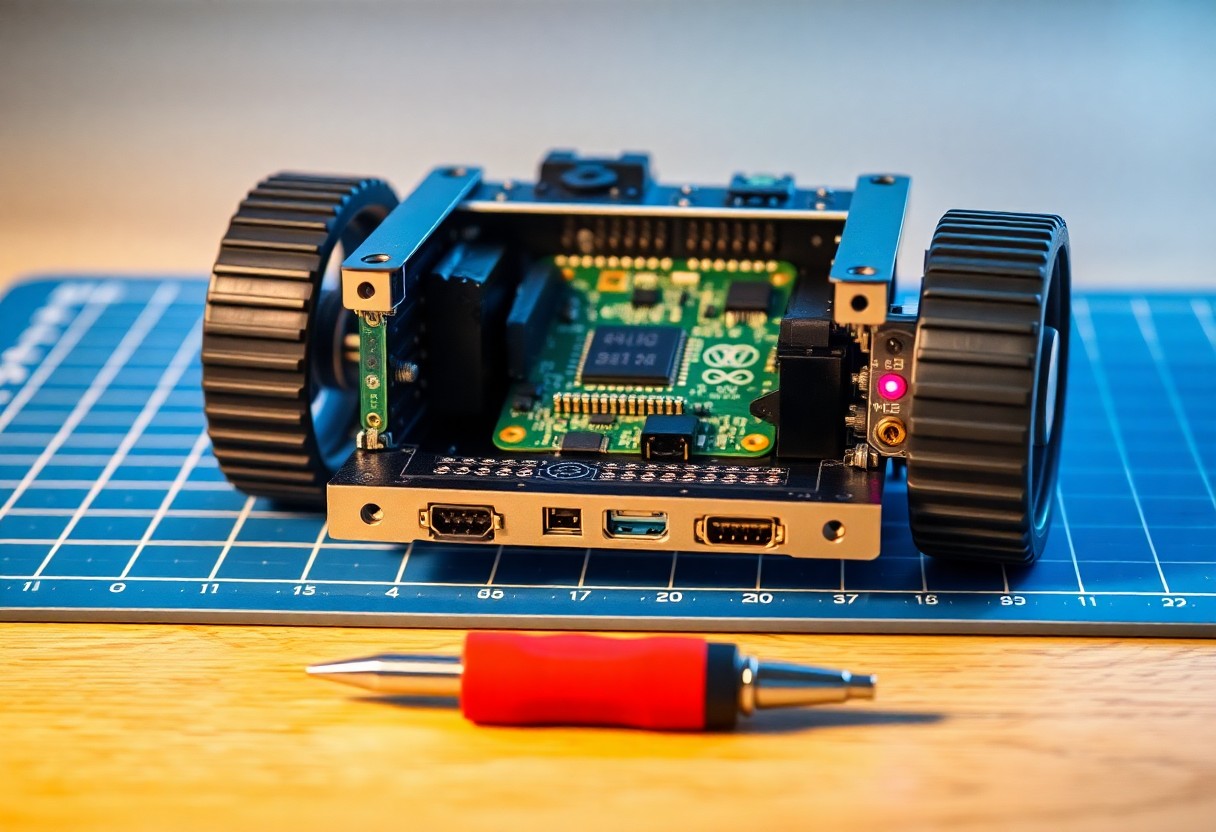
Firmware Strategies for Hardware Abstraction
You should design firmware layers that abstract hardware specifics so drivers stay stable as modules change, exposing consistent APIs and device descriptors for higher-level code.
Automated Hardware Discovery and Enumeration
When you scan buses and probe peripherals, implement a clear enumeration protocol that reads device IDs, negotiates capabilities, and registers drivers dynamically so you can hot-plug or replace boards without firmware rebuilds.
Resource Allocation and Interrupt Priority Mapping
Assign priorities to interrupts based on latency requirements and task criticality, document IRQ ownership, and provide APIs for requesting preemption levels so you can prevent priority inversion and guarantee timely handling.
Consider mapping DMA channels, timers, and shared peripherals in a runtime resource table, implement priority inheritance, and expose reservation APIs so drivers can request IRQs, CPU affinity, and exclusive access to avoid conflicts on mixed-criticality systems.
Conclusion
The modular hardware architecture lets you add sensors, actuators, and controllers, standardize interfaces, and manage power and communication so you can scale capabilities, simplify maintenance, and iterate on designs without redesigning the core system.