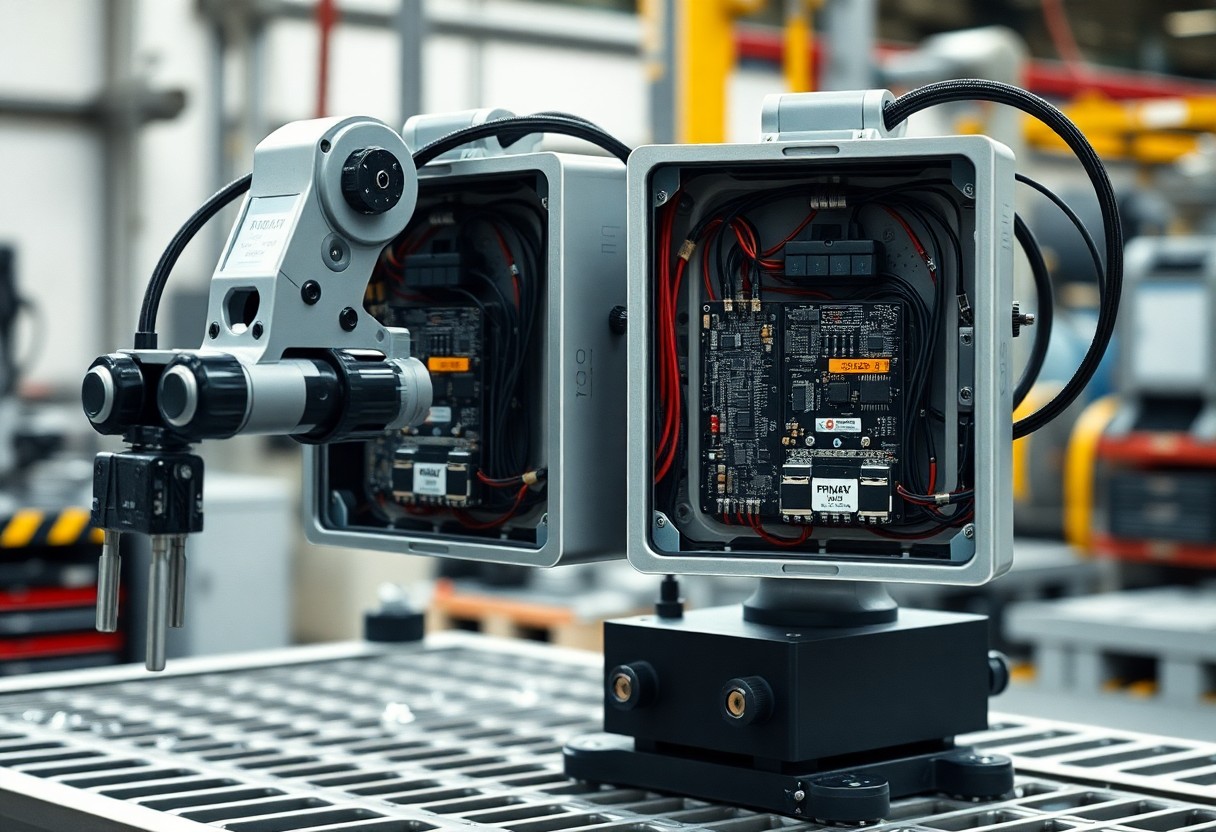
You design systems with redundant sensors, parallel controllers, and independent power paths to sustain operation during failures, applying fault-detection algorithms and graceful degradation to preserve mission objectives.
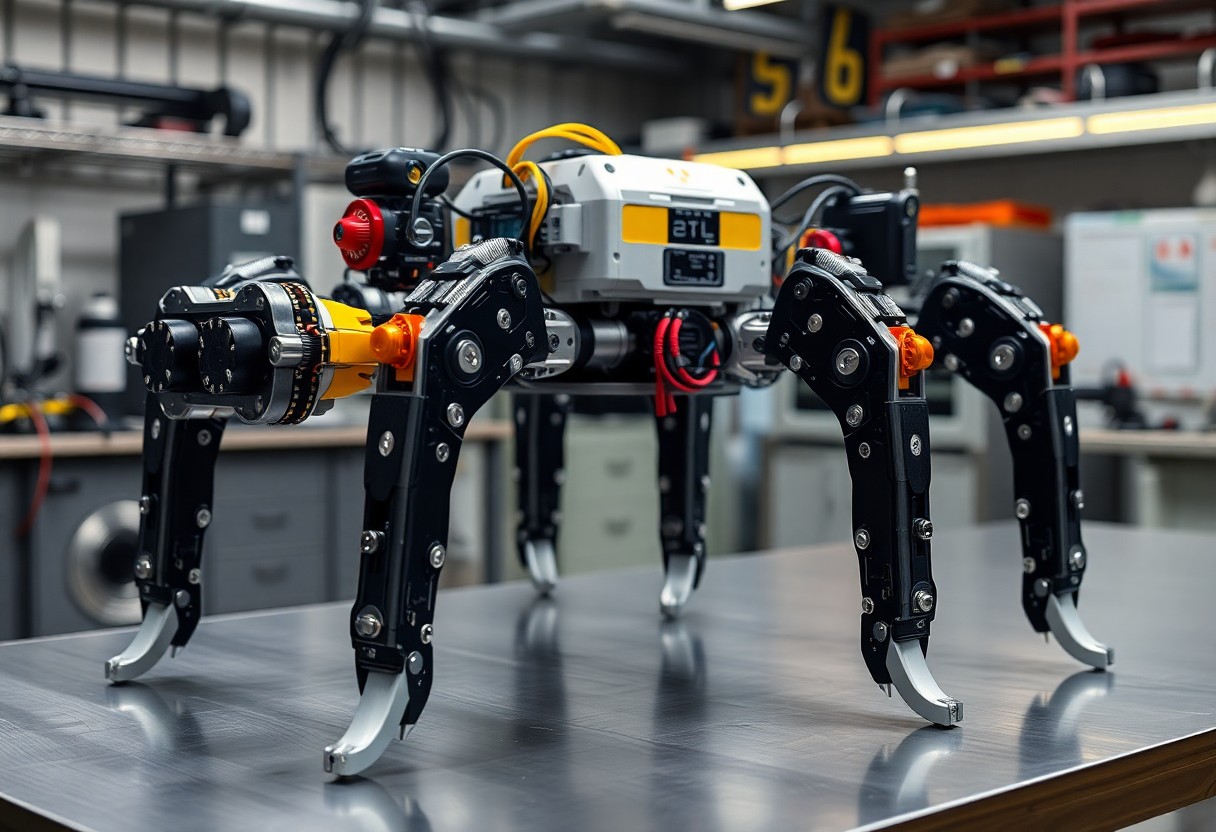
Hardware Redundancy and Mechanical Over-Actuation
You distribute extra actuators and parallel load paths so the robot maintains motion after component failure, enabling graceful degradation and controlled fallback without single-point collapse.
Design Principles for Parallel Kinematic Chains
Consider designing parallel kinematic chains so you gain alternate force paths, improve stiffness, and retain positional control if individual limbs lose function.
Modular Component Duplication in Critical Subsystems
Duplicate sensors, controllers, and power modules so you can switch to backups automatically or manually, minimizing downtime and preserving mission continuity.
Implement duplicate modules with standardized interfaces so you can hot-swap or run redundant units in parallel, reducing repair time and maintaining control fidelity. Design fault-injection tests, heartbeat health checks, and independent power/data routing so a single module fault remains isolated and recovery procedures execute predictably.
Sensor Fusion and Perception Redundancy
Sensor fusion combines overlapping inputs so you maintain perception when individual sensors fail, weighting confidence and temporal consistency to preserve situational awareness and continuity.
Multi-Modal Data Integration for Environmental Awareness
Integrating camera, lidar, radar and IMU streams gives you complementary perspectives, reducing blind spots and improving object detection through synchronized timestamps and shared feature representations.
Cross-Validation Algorithms for Faulty Sensor Identification
Algorithms cross-validate sensor readings against models and peer sensors so you can rapidly flag anomalies, isolate faulty units, and maintain confidence in perception outputs.
By applying statistical consistency tests, ensemble voting, Bayesian inference and learned sensor-check networks, you can detect drift, spike noise, bias, and dropouts; tune confidence thresholds, engage fallback behaviors, and record diagnostic traces for recalibration and corrective maintenance.
Control System Architecture and Fail-Operational Logic
You design redundant control tiers that keep critical functions running when components fail; implement fail-operational logic and watchdogs, and test recovery scenarios. See community experiences at Have you developed and deployed an actual robotic … to inform practical trade-offs.
Distributed Processing and Decentralized Decision Making
Modular node clusters let you isolate faults and continue safe operation, with consensus protocols and heartbeat monitoring distributing authority so single failures don’t halt the system.
Real-Time Error Correction and Adaptive Control Loops
Adaptive control loops let you detect anomalies, adjust gains, and switch to fallback controllers within milliseconds, preserving mission continuity while diagnostics isolate faulty channels.
Tuning control parameters and integrating model-based observers enable you to correct errors before they propagate; implement Kalman or particle filters for sensor fusion, add residual-based fault detection, and design hysteresis to prevent oscillations. You schedule deterministic loops with bounded latency, prioritize safety-critical corrections, and plan explicit transitions to degraded modes so behavior stays predictable and verification remains tractable.
Power Management and Communication Continuity
Design your power and comms so failures trigger automatic handovers, isolated backups, and monitored health reporting that keeps mission-critical actuators and sensors online while you diagnose faults.
Redundant Energy Storage and Distribution Networks
Deploy multiple independent energy stores and segmented distribution paths so you can isolate faults, balance loads, and hot-swap sources without interrupting key functions.
Fault-Tolerant Communication Protocols and Bus Architectures
Adopt redundant buses and protocol fallback mechanisms so you can reroute messages, detect corruption, and maintain control loops during link degradation.
Layered protocol design lets you combine deterministic fieldbuses for real-time control with redundant Ethernet rings for high-bandwidth telemetry. You should implement CRC checks, sequence numbers, and timeout-based failover so controllers can detect and isolate corrupted frames and switch to secondary buses without manual intervention. Diagnostics and graceful degradation strategies keep safe-state behaviors engaged while you recover.
Analytical Redundancy and Virtual Sensing
Analytical redundancy and virtual sensing let you infer inaccessible states from existing measurements, reducing hardware duplicates while maintaining fault detection.
Mathematical Modeling for State Estimation
Modeling system dynamics with observers or Kalman filters gives you continuous state estimates, enabling quick detection of sensor drift and subtle failures.
Software-Defined Reconfiguration During Component Failure
Software-defined controllers let you reroute tasks, switch control modes, and isolate faulty modules without physical intervention.
If a motor fails, you can use software-defined policies to redistribute torque commands to parallel actuators, adjust estimator gains, and engage fallback safety limits while preserving mission goals.
Risk Assessment and Validation Methodologies
You prioritize systematic risk analysis and repeatable validation to ensure redundancy behaves as expected, combining quantitative metrics and acceptance criteria so you can certify failure tolerance without excessive conservatism.
Failure Mode and Effects Analysis (FMEA) in Robotics
FMEA guides you to identify failure modes, estimate effects, and prioritize redundancy designs so you can address single-point failures and quantify residual risk before committing to hardware changes.
Hardware-in-the-Loop (HIL) Testing for Edge Case Scenarios
HIL lets you validate controllers against simulated sensors and actuators under rare conditions, exposing edge cases and timing issues so you can refine failover logic prior to deployment.
Simulators for HIL let you inject timing faults, sensor dropout, communication jitter, and actuator saturation while the real controller runs, enabling you to measure switchover latency, assess watchdog performance, and validate redundancy coordination. You should run randomized, repeatable scenarios with high-fidelity models and thorough logging to capture intermittent races and quantify mean-time-to-recovery for certification.
To wrap up
So you design redundant actuators, duplicate control paths, diverse sensors, and health monitoring to sustain operation, reduce downtime, and simplify maintenance while meeting safety requirements.