
There’s a clear path you can follow to assemble modular robot parts, selecting compatible actuators, sensors, and controllers, testing interfaces, and iterating designs to build reliable, maintainable robots that adapt to evolving tasks.
Architectural Principles of Modular Robotics
You design module hierarchies that isolate power, sensing, and actuation so teams work independently and failures are contained, enabling predictable upgrades and simpler testing.
Interface Standardization
When you define interfaces, use fixed pinouts, agreed data protocols, and keyed mechanical connectors so modules mate reliably and you avoid custom adapters or signal conflicts.
Structural Scalability and Reconfigurability
Scaling your design with repeatable frames, standardized mounting points, and modular joints lets you add or rearrange modules without redesigning core systems and simplifies maintenance.
Ensure you plan mechanical tolerances, load paths, and connector placements so reconfigurations preserve rigidity and balance; incorporate quick‑lock mechanisms, clear indexing features, and accessible wiring channels, and design firmware to detect topology changes, reassign resources, and validate new kinematics automatically.
Core Processing and Logic Modules
Processors coordinate sensor input and actuator output, so you choose modules for the performance, I/O, and power trade-offs you need while planning for cooling and future upgrades.
Centralized vs. Distributed Control
Architecture decisions determine whether you centralize decision-making for simpler debugging or distribute controllers to reduce latency and isolate failures, guided by task parallelism and communication costs.
Communication Bus Protocols
Buses like CAN, SPI, I²C, and Ethernet define how your modules exchange commands and telemetry; you should pick protocols based on bandwidth, determinism, cable length, and node count.
Communication Bus Protocols
Consider bus arbitration, error detection, and physical-layer choices so you can meet real-time deadlines, scale node count, and simplify debugging with tool support and clear message formats.
Power Management and Distribution
Power distribution planning ensures each module receives stable current and minimizes losses so you can maintain performance and flexibility. Design separate rails, prioritize hot-swappable connections, and map peak loads to avoid voltage drop under dynamic operation.
Modular Energy Storage Solutions
You should choose swappable battery modules with standardized connectors, integrated BMS for cell balancing, and clear mechanical guides so you can scale runtime, perform quick replacements, and monitor individual state-of-charge for safe parallel configurations.
Intelligent Voltage Regulation
Voltage regulators with dynamic load sensing let you allocate power per module, protect against surges, and prioritize critical subsystems during peak demand while supporting varying input voltages from different energy modules.
Integrated voltage management combines buck, boost, and buck-boost converters with power-path controllers so you can handle disparate battery voltages and fast transients; local current sharing prevents overloads while telemetry reports health and load trends. Design for thermal limits, low quiescent current, programmable priority rails, and configurable soft-start to keep sensors and actuators stable during brownouts.
Actuation and Kinetic Assemblies
Actuators define your robot’s motion, so you select motors, servos, or pneumatics based on torque, speed, and control precision while designing modular linkages and geartrains that allow quick swaps without chassis redesign.
Interchangeable Drive Mechanisms
Design drive modules with common mounting, electrical connectors, and standardized control interfaces so you can exchange belt, gear, or direct-drive units quickly for testing or repair.
End-Effector Integration
Mounting adapters and keyed plates let you attach grippers, welders, or sensors with predictable alignment, and you should standardize pinouts and pneumatic fittings to minimize setup time.
Ensure your end-effector architecture includes mechanical indexing, unified electrical pinouts, and a shared communication protocol so you can hot-swap tools without extensive recalibration; include sensor feedback and safety interlocks to preserve consistent behavior across modules.
Sensor Integration and Perception
Sensors mounted on modular nodes let you combine cameras, LiDAR, and IMUs rapidly, enabling fused perception for mapping, localization, and object recognition in your robot’s pipeline.
Plug-and-Play Data Acquisition
Modules with standardized interfaces let you hot-swap sensors, start data acquisition quickly, and reduce driver complexity so you can iterate hardware configurations faster.
Signal Processing and Feedback Loops
Signal chains preprocess and timestamp inputs so your control loops receive consistent, low-latency measurements, improving response accuracy and repeatability.
Processing stages include calibration, sensor fusion, and outlier rejection; you should tune filters to match sensor noise, bandwidth, and expected dynamics. Your feedback loops must account for latency and jitter, using predictive filters or state estimators when needed. Testing with recorded logs and hardware-in-the-loop runs helps you validate loop stability and refine controller gains safely.
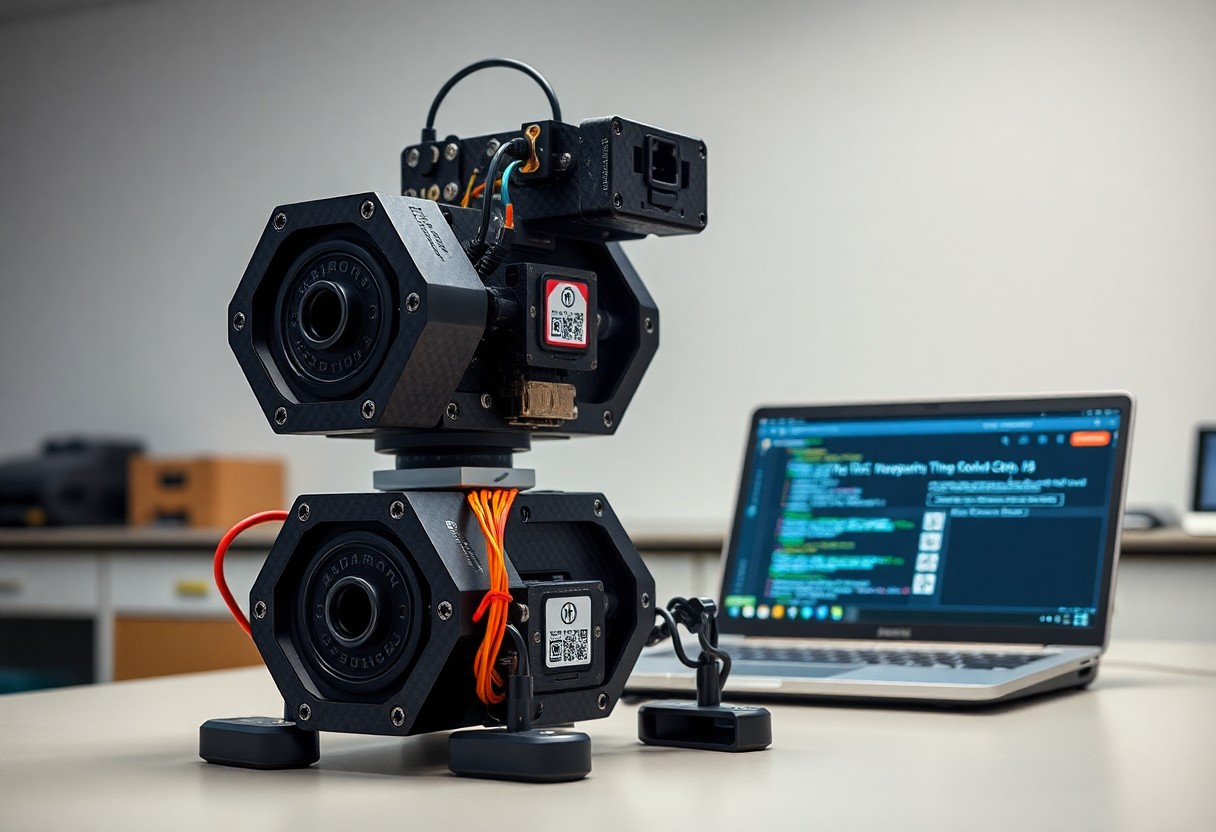
Software Frameworks for Modularity
Software frameworks help you compose modular robot behaviors, coordinate modules, and reuse components. Consult the IEEE paper Holistic Construction Automation With Modular Robots for architecture patterns that simplify integration and lifecycle management across heterogeneous modules.
Hardware Abstraction Layers
Abstraction layers present consistent drivers and interfaces so you can swap sensors, actuators, or compute nodes without rewriting higher-level logic.
Middleware and API Implementation
Middleware brokers messages, schedules tasks, and enforces contracts so you can orchestrate modules and monitor performance across distributed hardware.
Interfaces should define clear data models, versioning, and error semantics so you can maintain backward compatibility while evolving services. Use message schemas, health-check endpoints, and authentication layers; prefer event-driven patterns for loose coupling and REST or gRPC for control planes. Test APIs with simulators and CI pipelines to ensure predictable behavior when modules are reconfigured or scaled.
To wrap up
Taking this into account, you prioritize standardized interfaces, clear documentation, modular testing, and scalable power and control choices so you can iterate designs faster, integrate components smoothly, and deliver reliable robotic systems.