
Protection from dust, water, and shock helps you maintain equipment reliability, extend service life, and meet safety requirements in demanding environments.
Understanding Ingress Protection (IP) Ratings
IP classifications tell you how devices resist solids and liquids under standardized tests, helping you choose gear rated for job conditions. You can read two digits: the first for particle protection, the second for liquid ingress, guiding safe selection for outdoor, industrial, or consumer use.
Solid Particle and Dust Resistance Standards
First-digit ratings describe particle ingress; you read 0 to 6 where 6 means total dust-tight protection. You should match the rating to exposure: high dust or fines demand IP6x, while indoor electronics often perform adequately at lower levels.
Liquid Ingress and Waterproofing Levels
Second-digit values indicate water resistance from drips to submersion; you’ll see ratings like IPx4 for splashes and IPx7 for temporary immersion. You should choose according to splash risk, spray direction, and expected immersion depth or duration.
Testing procedures measure ingress under controlled pressures and durations so you can compare ratings reliably. For heavy spray or immersion, prioritize higher second-digit scores and verify manufacturer test conditions. Seals, cable glands, and routine maintenance determine real-world performance, so you should inspect enclosures and replace degraded gaskets to retain protection.
Mechanical Durability and Shock Resistance
Devices face repeated drops and vibration; you should prioritize shock-rated designs, reinforced mounts, and internal cushioning to preserve function during field operations.
MIL-STD-810 Compliance and Testing Protocols
Tests use standardized procedures you can run to verify temperature, shock, and vibration resilience, documenting pass/fail criteria against mission profiles.
Impact Absorption and Structural Integrity
Design choices such as crumple zones, elastomer mounts, and layered chassis help you absorb impact energy while protecting sensitive components.
Materials selection, bonding techniques, and internal bracing determine how loads distribute; you should test with realistic impact vectors, repeated cycles, and thermal extremes to validate long-term integrity.
Materials Science in Ruggedized Design
Materials selection determines how you meet dust, water, and shock specifications, guiding choices between polymers, alloys, and coatings to extend operational life while keeping weight and cost in check.
Advanced Gasket and Sealing Technologies
Seals protect enclosures against particulates and fluids so you can maintain IP ratings, employing compression gaskets, O-rings, and molded lip seals that tolerate temperature cycling and repeated maintenance.
- Design tolerances and groove geometry
- Material compatibility and aging
- Maintenance access and replacement strategy
Gasket Types and Benefits
| Type | Benefit |
|---|---|
| Compression gasket | High static sealing under load |
| O-ring | Simple replacement for dynamic/static seals |
| Lip seal | Debris resistance with low friction |
| Overmolded silicone | Flexible, temperature-tolerant barrier |
High-Impact Polymers and Reinforced Alloys
Polymers like PEEK and reinforced composites give you energy absorption and corrosion resistance while alloys such as stainless and titanium provide load-bearing strength without excessive mass.
Alloys and engineered polymers combine to give you tailored toughness and stiffness; glass- or carbon-fiber reinforcements increase impact resistance while maintaining thermal stability. You can evaluate trade-offs by testing for fatigue life, impact attenuation, and coating adhesion, and by specifying surface treatments to improve wear and corrosion performance.
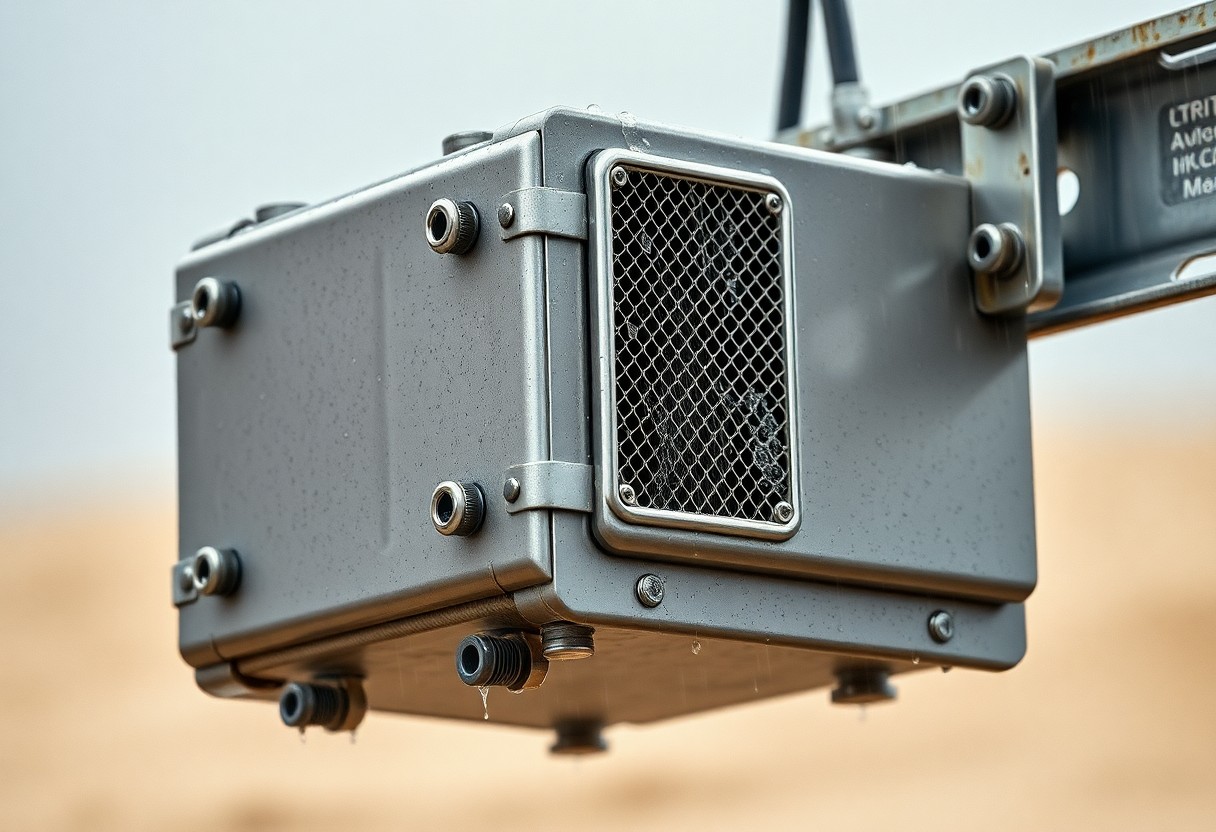
Engineering for Extreme Environments
Design your systems to resist dust, water, and shock by combining sealed enclosures, compliant mounts, and IP/IK-rated components so you maintain reliability in harsh field conditions.
Thermal Management in Sealed Enclosures
Cooling inside sealed enclosures uses conduction paths, heat sinks, and filtered airflow or thermoelectric modules so you can control temperature without compromising ingress protection.
Pressure Equalization and Venting Systems
Venting strategies use breathable membranes or pressure-relief valves to equalize pressure and keep contaminants out, helping you avoid seal fatigue and premature failure.
Consider membrane vents (ePTFE) for vapor-permeable protection and spring-loaded relief valves for rapid pressure spikes; you should size vent porosity and valve crack pressure to match altitude, thermal cycling, and particulate exposure. Choose vent placement and sacrificial filters to reduce clogging risk, and test performance across expected temperature and pressure ranges to validate long-term seal integrity.
Certification and Quality Assurance
Certification verifies that you can trust performance: independent testing and IP ratings confirm dust, water, and shock resistance. See Waterproof Or Water Resistant? What’s Behind an IP Rating? for IP details, while batch testing and traceable records protect product consistency.
Laboratory Simulation of Harsh Conditions
Laboratory simulations expose you to controlled dust, spray, and impact cycles that reproduce field failures and help refine seals and internal cushioning to extend operational life.
Regulatory Standards for Industrial and Military Use
Regulatory standards guide you on required test methods, documentation, and marking for industrial and military deployments, ensuring compliance with operational safety and environmental mandates.
Standards require you to follow MIL‑STD, IEC, and ISO protocols, document test procedures and results, maintain traceability, and undergo periodic audits so procurement authorities accept equipment for harsh environments and missions.
Long-term Reliability and Maintenance
Maintenance routines ensure you detect performance drift, schedule component replacements, and preserve dust, water, and shock resistance over service life.
Identifying Degradation in Protective Barriers
Inspection of seals, coatings, and enclosures helps you spot micro-cracks, corrosion, or porosity before ingress compromises function.
Field Inspection and Re-certification Protocols
Protocols require you to perform scheduled ingress testing, document findings, and follow pass/fail criteria to maintain certification.
You should follow a checklist that combines visual checks, ingress protection tests (IPX), and shock/vibration assessments, with clear thresholds for repair or replacement. Record results in a traceable ledger, assign corrective actions, and schedule re-certification intervals based on exposure severity and historical failure rates.
Conclusion
To wrap up you must prioritize dust, water, and shock resistance by choosing appropriate IP ratings, durable seals, impact-resistant materials, and certified testing; proactive design and maintenance preserve performance, extend service life, and reduce downtime.