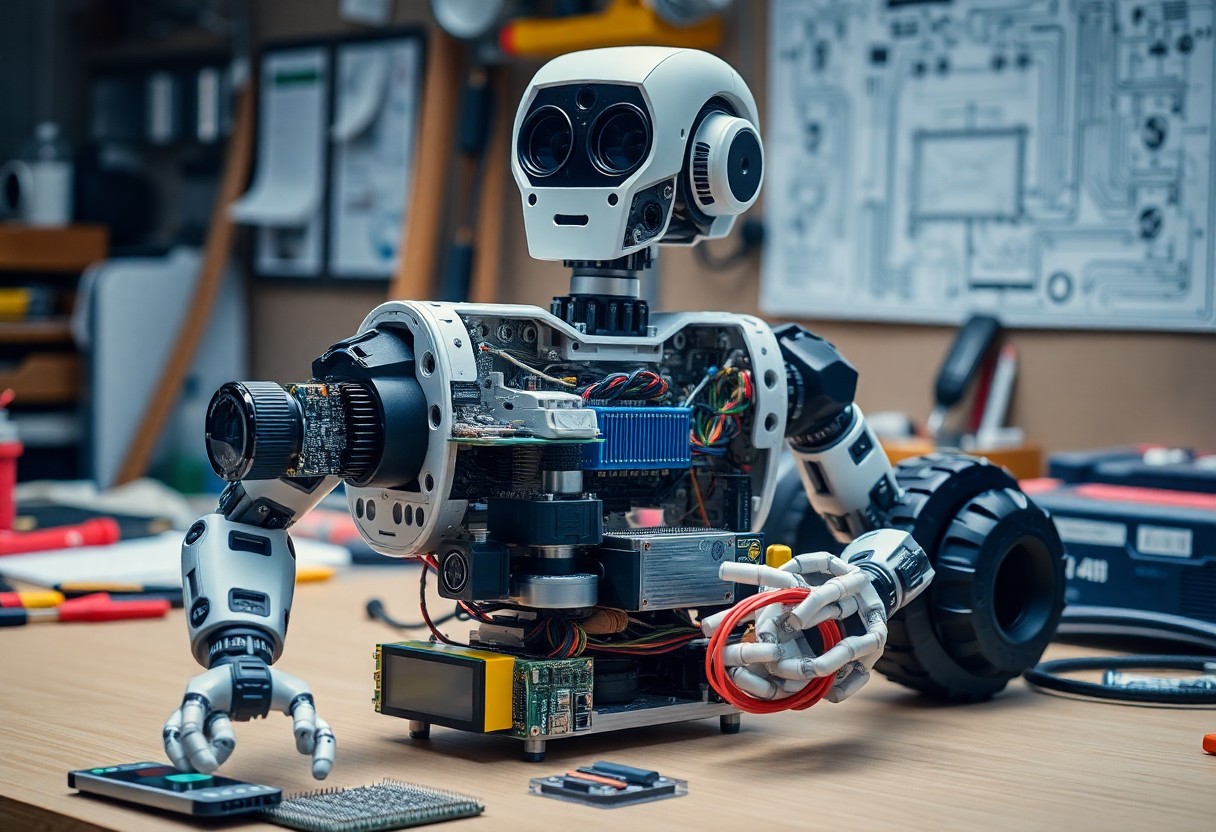
This guide will walk you through the imperative components of robotics, helping you understand the key technical parts that make robots function effectively. You will explore various elements, from sensors and actuators to controllers and power sources, each playing a vital role in robotic systems. By grasping these components, you will enhance your knowledge and skills in the ever-evolving field of robotics, empowering you to design, build, or maintain your own robotic projects. Let’s investigate the intricate world of robotics and uncover the mechanics behind these fascinating machines.
The Backbone of Robotics: Sensors and Actuators
Sensors and actuators form the crucial backbone of robotics, allowing machines to perceive their environment and take action accordingly. Sensors gather data from the surroundings, enabling robots to make informed decisions based on real-time inputs. Meanwhile, actuators translate these decisions into motion, bringing the robot to life with precise movements. This interaction is fundamental in creating responsive, adaptable robotic systems that can perform a wide range of tasks.
The Role of Sensors in Perception
Sensors serve as the eyes, ears, and touch of your robotic system. By measuring physical properties such as distance, light, temperature, and sound, they provide critical information that feeds into the robot’s logic. For instance, ultrasonic sensors deliver distance readings that allow for obstacle avoidance, while cameras can interpret visual data for navigation or object recognition. These sensors enable robots to operate effectively in various environments and make autonomous decisions.
Actuation Mechanisms: Moving the Machine
Actuators are the driving force behind your robot’s movements, converting energy into mechanical motion. These mechanical components include electric motors, hydraulic systems, and pneumatic actuators, each offering distinct advantages depending on your robot’s requirements. Electric motors are common for smaller apps due to their simplicity and efficiency, while hydraulic systems deliver powerful, variable force ideal for heavy-duty tasks. Understanding the strengths of each type enables better design choices for your robotic applications.
When considering actuation mechanisms, think about the specific movements your robot needs to perform. For example, if you’re designing a robotic arm for industrial tasks, hydraulic actuators can provide the necessary strength to lift heavy parts. Conversely, for precise tasks like assembly, servo motors with high torque and positional accuracy are favorable. Each actuator type brings unique capabilities to the table, and selecting the right one can greatly enhance your robot’s performance. Additionally, ensuring seamless integration between sensors and actuators is paramount for optimal functionality, as it enables your robot to respond dynamically to environmental changes.
The Brain of the Operation: Control Systems
Control systems serve as the brain of robotic systems, orchestrating movements and decision-making processes. They take input from sensors, process that information, and output commands to various components like motors and actuators. This intricate communication chain ensures that robots perform tasks with precision, adapting to dynamic environments as needed. Control systems can be classified into open-loop and closed-loop systems, fundamentally influencing how effectively your robot can achieve its objectives.
The Architecture of Robotic Control Systems
The architecture of robotic control systems comprises several layers, each serving a distinct function. At the core, you have the control algorithms, which dictate how the robot interprets sensor data and formulates movement commands. Supporting these algorithms are hardware components like microcontrollers and processors that execute the control logic. Additionally, communication layers enable seamless interactions between sensors, actuators, and the processing unit, maintaining reliability and efficiency in operations.
Feedback Loops and Error Correction in Robots
Feedback loops play an integral role in robotic operations, facilitating real-time adjustments based on ongoing performance. By measuring outputs and comparing them to desired results, robots can detect discrepancies and implement necessary corrections, enhancing their accuracy and reliability. This iterative process allows for improved adaptability and ensures that the robot can respond to unexpected changes in its environment.
Delving deeper into feedback loops, you can see their importance in maintaining operational discipline. For instance, in an industrial robot welding application, sensors continually monitor the welding temperature and speed. If the sensor indicates a deviation from the optimal parameters, the feedback loop signals the control system to adjust the robot’s speed or halt the process until the conditions are favorable again. This automatic error correction minimizes waste, enhances safety, and ensures a consistent quality of work, illustrating why robust feedback mechanisms are vital in robotic systems.

Powering Innovation: Energy Sources and Management
Effective energy management is pivotal for the functionality and longevity of robotic systems, impacting performance and operational costs. Understanding various energy sources and implementing efficiency strategies can lead to innovative solutions and enhanced capabilities. You can explore the best types of power sources to match your robot’s specific requirements, ensuring sustainable operations while maximizing output.
Types of Power Sources: From Batteries to Solar
Robotic systems utilize an array of energy sources to function efficiently. Consider the following options:
- Lithium-ion batteries
- Nickel-metal hydride batteries
- Fuel cells
- Supercapacitors
- Solar panels
This diversity allows you to choose the optimal power solution tailored to your robotic applications.
| Power Source | Description |
| Lithium-ion batteries | High energy density and lightweight, ideal for portable robots. |
| Nickel-metal hydride batteries | Robust and reliable, often used in hybrid systems. |
| Fuel cells | Provide high energy output, suitable for long-duration tasks. |
| Supercapacitors | Offer quick bursts of energy, excellent for transient power demands. |
| Solar panels | Renewable source, great for outdoor applications with sunlight access. |
Energy Efficiency Strategies for Robotics
Incorporating energy-efficient strategies significantly extends the operational lifespan and performance of robotics. From optimizing the coding algorithms to leverage lower power states, to selecting lightweight materials to reduce energy consumption, every detail counts. By implementing regenerative braking, effective energy management systems, and minimizing energy losses, you can maximize your robots’ capabilities while lowering energy costs.
Energy efficiency strategies are multi-faceted and can lead to major improvements in robotics. For instance, using lightweight materials can decrease the amount of energy required for movement. Additionally, software optimizations avoid unnecessary calculations, leading to lower power consumption. Furthermore, integrating regenerative braking systems captures and reuses energy typically lost during operations. As robotics continue to evolve, these strategies will increasingly play a vital role in performance and sustainability, enabling you to innovate effectively while being environmentally responsible.
Building Blocks: Structural Components and Materials
Structural components form the backbone of any robot, serving to provide shape, support, and functionality. From frames to shells, the materials you choose will significantly influence both the performance and lifespan of your robotic design. Whether you’re constructing a small hobby robot or a large industrial machine, understanding the interplay of strength, weight, and flexibility in your materials is vital for optimal functionality and stability.
Selecting the Right Materials for Design and Durability
Your choice of materials should align with the intended application and operating environment of the robot. Lightweight materials like aluminum and carbon fiber are excellent for high-speed applications where speed is necessary, while tougher composites or steel may be better suited for heavy-duty robots requiring superior strength and durability. Ideally, a balance between performance, cost, and weight must guide your selection process.
How Structural Design Influences Robot Performance
The structural design of your robot directly impacts its performance through aspects like weight distribution, center of gravity, and the ability to withstand external forces. For example, a well-structured chassis can enhance maneuverability and speed, while a poorly designed one may lead to instability or even catastrophic failure. Thoughtful design also facilitates efficient integration of components, ensuring that joints and load-bearing areas are appropriately reinforced for optimal functionality in dynamic environments.
Consider the case of competitive robotics, where even a few grams can alter performance dramatically. A robot with a low and centered center of gravity can swiftly navigate obstacles, outperforming taller, top-heavy competitors prone to tipping over. Design features like strategically placed reinforcements and thoughtfully shaped frames can minimize unnecessary weight, thereby maximizing acceleration and agility while maintaining overall structural integrity. Keeping these elements in mind during the concept stage can lead to a significantly more functional and competitive robot.
Programming the Future: Software Fundamentals
The software aspect of robotics can be as intricate as its hardware counterpart. Understanding how robots are programmed is imperative for advanced functionality and adaptability. From controlling movements to processing sensory inputs, you will want to grasp the nuances of software that govern robot behavior. For additional insights on how these elements come together, check out What are the main components of a robot? A quick guide.
The Programming Languages Shaping Robotics
Selecting the right programming languages significantly impacts the capabilities of your robotic system. Popular languages like Python, C++, and ROS (Robot Operating System) provide frameworks that streamline coding processes, enabling you to develop complex functionalities efficiently. Each language offers unique strengths, whether it’s ease of learning with Python or the performance robustness of C++, ensuring you can tailor solutions that fit your specific needs.
Algorithms that Drive Robotics Intelligence
Algorithms form the backbone of intelligent robotics, enabling machines to learn from and adapt to their environments. Implementing machine learning and artificial intelligence techniques, such as neural networks, allows robots to make decisions based on data inputs. This adaptive capability facilitates tasks ranging from navigation and object recognition to pattern detection and real-time problem-solving. For instance, using reinforcement learning, robots can improve their performance through trial and error, ultimately increasing efficiency and effectiveness in their designated roles.
Algorithms such as A* for pathfinding or decision trees for classification are imperative in guiding your robotic system through complex scenarios. As a practical example, self-driving vehicles utilize advanced algorithms to process real-time sensor data and make instantaneous driving decisions. You can also apply concepts like SLAM (Simultaneous Localization and Mapping) for navigation—an approach enabling robots to create maps of unknown environments while simultaneously tracking their position. Understanding these algorithms helps enhance the performance of robots, making them not just tools, but dynamic agents capable of solving problems in real-world situations.
Final Words
On the whole, understanding the necessary components of robotics is key to effectively assembling and troubleshooting your robotic projects. By familiarizing yourself with the various technical parts, from sensors to actuators and controllers, you position yourself to innovate and solve complex challenges in robotics. As you explore into this comprehensive guide, you gain valuable insights that will enhance your skills and confidence in your robotic endeavors. Embrace the knowledge and let it guide your journey in this exciting field.