Ground Robotics and the Changing Nature of Modern Conflict
Robotics is reshaping how you perceive warfare, replacing human soldiers with machines in increasingly complex combat roles. From reconnaissance to direct engagement, unmanned ground systems are no longer experimental tools but operational realities. You now face a battlefield where algorithms guide movement, explosives are delivered without a human trigger finger, and missions unfold with minimal risk to personnel. A mid-sized SaaS firm deploying automated customer support would recognize the logic of efficiency and reduced exposure-military planners do too.
The Rise of the Steel Sentry
Robotic systems now stand guard along fortified perimeters, replacing human patrols in high-threat zones. You encounter these steel sentinels at forward outposts, where they conduct 24-hour surveillance using thermal imaging and motion detection. Their presence reduces exposure for personnel while maintaining constant vigilance, particularly in areas prone to ambush or explosive hazards.
Autonomous Platform Deployment
Self-navigating ground robots independently execute predefined routes using GPS and terrain mapping. You deploy them to scout hostile terrain or secure supply corridors without real-time human input. A mid-sized SaaS firm developing military navigation software recently demonstrated a swarm of ten units coordinating movements across a simulated urban grid, adapting to obstacles without operator intervention.
Remotely Piloted Ground Units
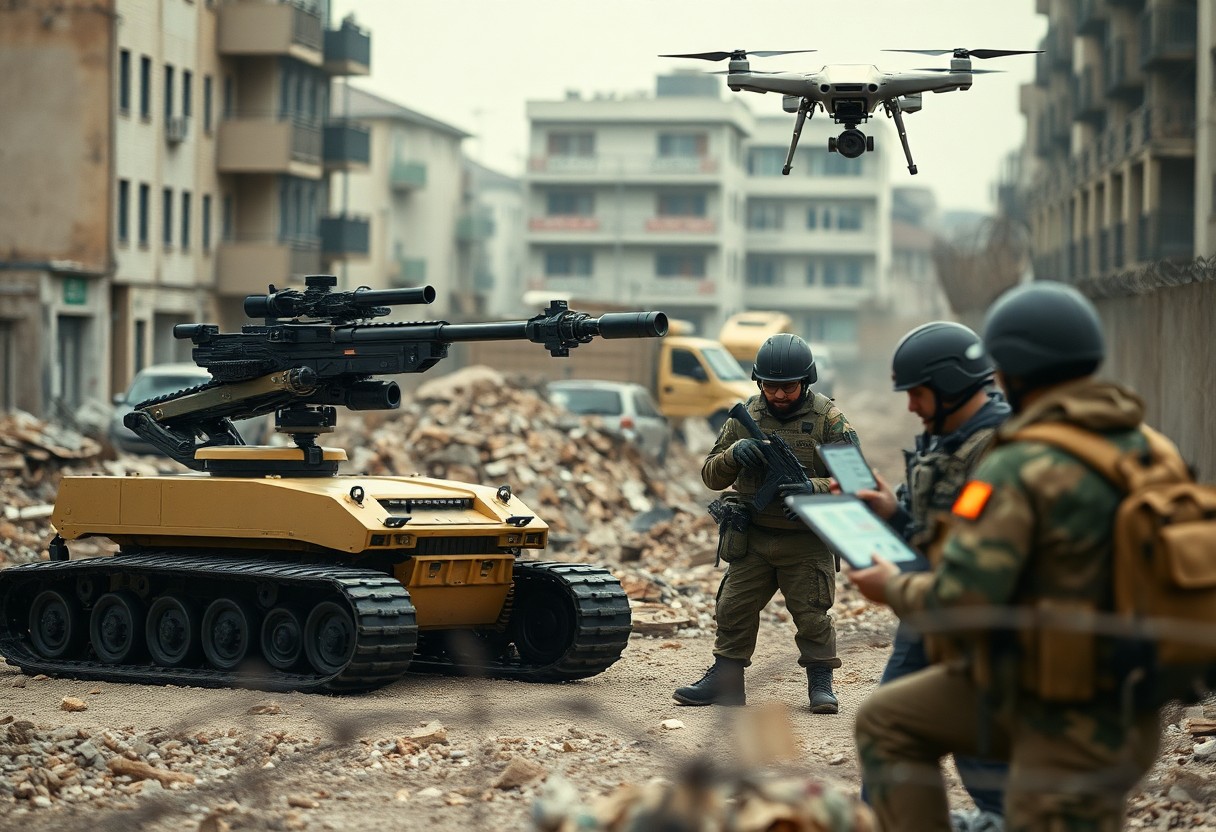
Operators control these units from secure command centers, guiding them through complex environments via live video feeds. You rely on them for bomb disposal, reconnaissance, and entry operations in contaminated or structurally unstable areas. Their responsiveness depends on low-latency communication links, which remain vulnerable to jamming in contested electromagnetic environments.
Signal degradation in dense urban canyons or underground facilities often forces operators to pause maneuvers or switch to manual override protocols. You manage this limitation by pre-programming fallback routes and using mesh networks to maintain connectivity across multiple units. Some models now include AI-assisted obstacle negotiation, allowing limited autonomy when signals drop, such as pausing behind cover until reconnection occurs.
The Erosion of Mortal Risk
Robotic systems increasingly absorb the physical dangers once borne solely by human soldiers. Unmanned ground vehicles now lead reconnaissance missions, disable improvised explosives, and enter hostile structures, reducing battlefield casualties. A U.S. Army brigade reported a 30 percent drop in infantry losses after integrating PackBot units into clearing operations. Machines, unlike humans, do not require evacuation when damaged, altering the calculus of risk in prolonged engagements.
Teleoperated Violence
Operators guide bomb-disposal robots from shielded positions, manipulating mechanical arms to disarm ordnance via joystick and screen. These remote interactions occur meters or miles from the threat, transforming lethal decisions into procedural tasks. The physical safety of the operator contrasts sharply with the immediacy of destruction unfolding in the robot’s camera feed.
The Psychological Buffer of Screens
Distance from the battlefield introduces a cognitive separation between action and consequence. Watching an explosion through a grainy monitor differs profoundly from experiencing its heat and force firsthand. This mediated engagement can dull the emotional weight of combat decisions, particularly during repeated missions where targets shift rapidly between combatants and civilians.
Operators managing ground robots from remote stations often describe a dissonance between technical precision and moral gravity. A mid-sized SaaS firm developing control interfaces for military robotics noted that prolonged screen-based engagement led some users to perceive missions as iterative simulations rather than real-world events with irreversible outcomes. This perceptual gap persists even when operators maintain full situational awareness, suggesting that physical detachment influences psychological response independently of knowledge or intent.
Tactical Shifts in Urban Landscapes
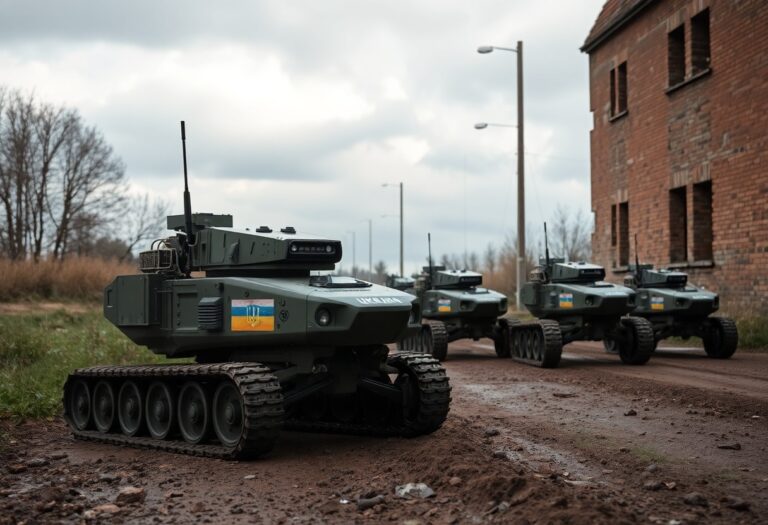
Urban combat now unfolds under the quiet hum of ground robots, reshaping how forces advance through dense terrain. A viral frontline video captured by Ukrainian troops illustrates this evolution, showing how small robotic units scout ahead, reducing exposure to ambushes (see How Ukraine’s Robot Warfare Is Redefining Battlefields A …).
Robotic Breach and Clear Operations
Engineered to enter buildings before human troops, ground robots now lead breach sequences in high-risk districts. These systems disarm traps, detect hostiles, and relay real-time video, minimizing casualties during room-by-room advances in contested urban zones.
Sensor Networks in Ruined Cities
Deployed robots establish ad-hoc sensor grids across rubble-choked blocks, feeding data to command nodes. Acoustic triggers, motion detectors, and thermal relays form a persistent surveillance layer that operates continuously, even in GPS-denied environments.
Networked robots in cities like Bakhmut have maintained positional awareness for weeks despite severed communications infrastructure. Each unit acts as both node and observer, creating a decentralized web that adapts as units are lost or repositioned, ensuring uninterrupted situational clarity for commanders.
The Logic of Machine Attrition
Machine attrition redefines endurance in combat by shifting loss calculations from human lives to hardware replacement. You accept the destruction of robotic units as an expected operational cost, much like ammunition expenditure. Fleets of drones can be cycled through missions with minimal downtime, enabling persistent pressure on adversaries without compounding human fatigue or casualties.
Mass-Produced Expendable Assets
Mass production turns individual robots into replaceable components rather than irreplaceable platforms. You deploy swarms of small ground robots built with commercial-grade parts, designed for function over longevity. A mid-sized SaaS firm’s approach to scalable infrastructure offers a parallel: rapid iteration and redundancy replace the need for invulnerability.
Economic Realities of Robotic War
Cost ratios now favor quantity over singular superiority. You can field dozens of simple robotic scouts for the price of one main battle tank. This recalibrates strategic patience, allowing sustained operations even with steady losses, as long as production and deployment outpace attrition rates.
Industrial capacity becomes a decisive factor in prolonged engagements. You rely on modular designs that simplify repair and reassembly in forward depots, reducing turnaround time. Ukraine’s use of locally manufactured drones shows how decentralized production can sustain pressure despite supply chain fragility, proving that affordability can outweigh technical sophistication in extended conflicts.
The Silence of Algorithmic Command
Orders now flow from code, not conversation. You operate within parameters set long before deployment, your actions constrained by algorithms that weigh threat probabilities in milliseconds. A drone in the Hindu Kush adjusts its patrol based on thermal signatures and pre-approved geofences, requiring no voice command, no radio check. Decisions unfold in radio silence, governed by logic trees refined in simulation.
Pre-Programmed Engagement Rules
Rules of engagement are encoded into firmware, not memorized. You respond to stimuli according to thresholds established by legal and operational planners. A sentry robot near a logistics hub in the Sinai activates non-lethal deterrents when movement breaches a 50-meter perimeter, escalating only if the algorithm confirms hostile intent through gait analysis and object recognition.
The Death of Spontaneous Valor
Heroic improvisation has no place in deterministic systems. You cannot choose to charge a position or rescue a comrade outside protocol. A reconnaissance unit in the Carpathians lost contact, but the nearest autonomous carrier remained stationary, its programming lacking provisions for unsanctioned recovery missions despite clear visual evidence of distress.
Autonomous platforms follow directives, not instincts. You may witness a scenario demanding initiative-a wounded ally exposed to enemy fire-but if the event falls outside the engagement matrix, no action is taken. This rigidity, while reducing unauthorized escalation, eliminates the unpredictable courage that has historically altered battlefield outcomes, such as the lone grenadier who held a pass in the Caucasus by disobeying retreat orders.
Technical Frontiers and Limitations
Even as ground robots reshape battlefield dynamics, their operational reach remains bounded by persistent technical constraints. Power demands, communication vulnerabilities, and environmental adaptability collectively define the edge of current capabilities. You encounter these limits not in theory but in the mud, sand, and signal-dead zones where missions pivot on reliability.
Battery Life and Power Constraints
Operating a robotic platform for more than a few hours often requires bulky battery packs or frequent recharging, limiting sustained missions. You may find yourself recalibrating patrol routes or aborting reconnaissance simply to preserve power, especially in remote or inaccessible areas where resupply isn’t feasible.
Electronic Jamming and Signal Loss
Enemy forces increasingly deploy jamming equipment that disrupts command signals, leaving robots unresponsive or stranded. You must plan for intermittent connectivity, particularly in urban canyons or underground environments where signals degrade even without interference.
Radio frequency jamming is not a theoretical threat but a battlefield reality, observed in recent conflicts where GPS and control links were systematically degraded. You rely on autonomous fallback routines, but these are often limited to basic return-to-home or idle protocols, exposing the gap between current autonomy and operational expectations.
Final words
You operate in a world where ground robots no longer serve as mere support but actively redefine engagement, reducing human exposure while altering the tempo and ethics of combat. A single unmanned convoy in a contested city can sustain operations for days, relaying real-time data without fatigue. Your decisions now weigh not only on tactics but on the broader implications of machine-led warfare, where outcomes hinge as much on software integrity as on firepower.