Lessons from Ukraine for Military Robotics Development
It’s clear that the battlefields of Ukraine have become a proving ground for military robotics, where your assumptions about autonomy and combat effectiveness are tested daily. Drone swarms intercept artillery, AI-guided systems track movements in real time, and low-cost platforms challenge billion-dollar tanks. What unfolds is not theoretical-it’s operational reality, reshaping how forces integrate machines into warfare.
The Cheap Drone and the Heavy Tank
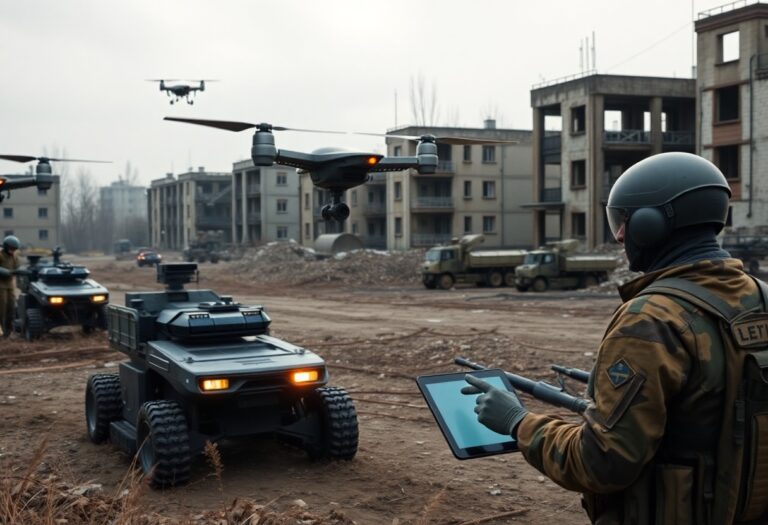
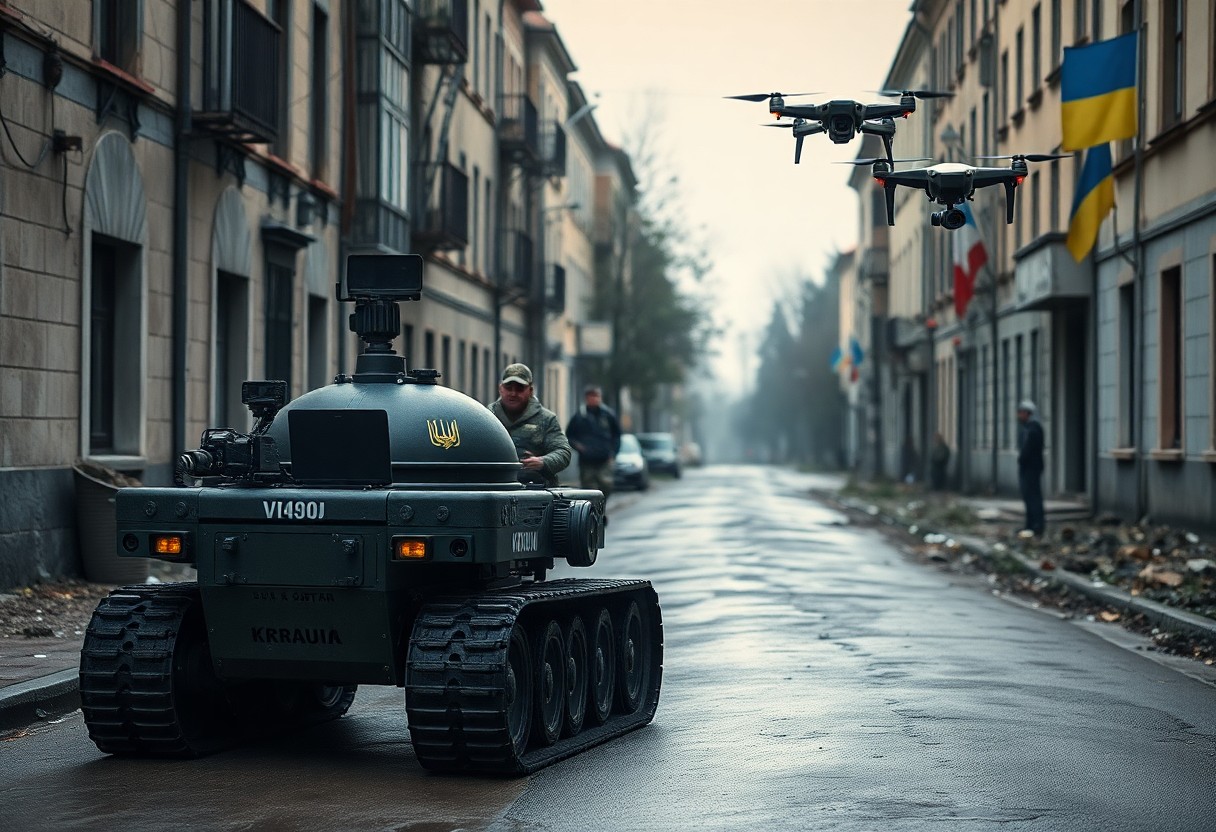
You’re witnessing a shift where low-cost drones routinely threaten multi-million-dollar tanks. A single commercial quadcopter, modified with a grenade, can disable armored vehicles that were once considered dominant on the battlefield. This imbalance isn’t theoretical-it’s been documented in engagements across eastern Ukraine, where operators use drones not for precision strikes alone, but for persistent surveillance that precedes every artillery round. The math favors the drone: dozens can be built for the price of one main battle tank, and losing a few doesn’t cripple the mission. Your strategy must now account for asymmetric vulnerability, where the cheapest systems dictate the survival of the most expensive platforms.
Electronic Shadows and Ghost Signals
Enemy radar systems register your drone’s presence even when you fly low, creating electronic shadows that give away position and intent. Ghost signals from outdated or poorly configured electronic warfare units sometimes mask real threats, leading to false confidence. You learn to interpret the silence between signals as closely as the signals themselves, knowing a sudden drop in emissions might mean a system shutdown or an ambush. Ukrainian operators have adapted by pairing drones with disposable RF emitters, drawing fire away from actual assets. These tactics emerged not from doctrine but from repeated losses in the Donbas, where each downed drone provided forensic data on detection patterns. You now deploy drones in coordinated bursts, ensuring no single signature dominates the spectrum long enough to be targeted. This approach mirrors how birds scatter when a predator strikes, minimizing predictable patterns. A mid-sized SaaS firm might use similar burst logic in server load balancing, though the stakes here involve lives, not latency.
Production at the Speed of Need
Ukraine’s frontline units now receive drone replacements within days, not months, reshaping expectations for military logistics. You adapt manufacturing cycles to match combat attrition rates, often using commercial components sourced locally. A single brigade may deploy over 100 drones per week in active sectors, requiring decentralized production networks that can scale on demand. You rely on 3D printing hubs in Lviv or Kyiv to produce custom airframes, while hobbyist communities contribute modified FPV drones with specific payload requirements. This shift isn’t limited to small units-regimental workshops integrate thermal cameras and encrypted transmitters into mass-produced models, ensuring capabilities evolve faster than adversaries can counter. You no longer wait for central procurement; you build what the front line needs, when it needs it, using whatever works.
The Human Element in the Machine Loop
Operating drones under electronic warfare conditions demands split-second judgment that algorithms cannot yet replicate. You rely on trained operators to interpret ambiguous visual feeds, adapt to jamming, and make ethical targeting decisions in cluttered environments. A single misidentified object can escalate civilian risk, underscoring why human oversight remains embedded in Ukraine’s AI-enabled systems. As outlined in Ukraine’s Future Vision and Current Capabilities for Waging AI-Enabled Autonomous Warfare, scalable autonomy depends not on removing people, but on refining their roles within the loop.
Naval Swarms and Black Sea Lessons
Operating in the Black Sea has shown you that small, coordinated drone vessels can challenge much larger naval assets. Ukrainian forces have used swarms of unmanned surface vehicles to strike enemy ports, demonstrating how distributed systems reduce risk while increasing tactical flexibility. A single explosive-laden drone boat may cost under $25,000, yet can damage or sink multimillion-dollar warships. You now know that persistence, dispersion, and surprise matter more than tonnage in coastal waters.
Integration of the Digital Front
Operating in contested electromagnetic environments demands real-time synchronization between drones, artillery, and command nodes. You rely on encrypted mesh networks to maintain connectivity when GPS is jammed or signals are spoofed. Ukrainian units have adapted commercial software and open-source tools to patch together battlefield management systems that feed targeting data directly to launchers. A mid-sized SaaS firm’s approach to rapid deployment mirrors how frontline units now update tactical apps overnight. Integration is no longer optional; it is the baseline for survival.
Final words
Ukraine’s experience shows you that agility often outweighs sheer power, with small, expendable drones disrupting billion-dollar platforms. You now prioritize modular designs, rapid iteration, and decentralized manufacturing over legacy procurement cycles. A mid-sized SaaS firm adapting similar principles reduced deployment time by two-thirds. You operate in an environment where software updates can be as decisive as ammunition resupply, and survivability depends on adaptability, not just armor.