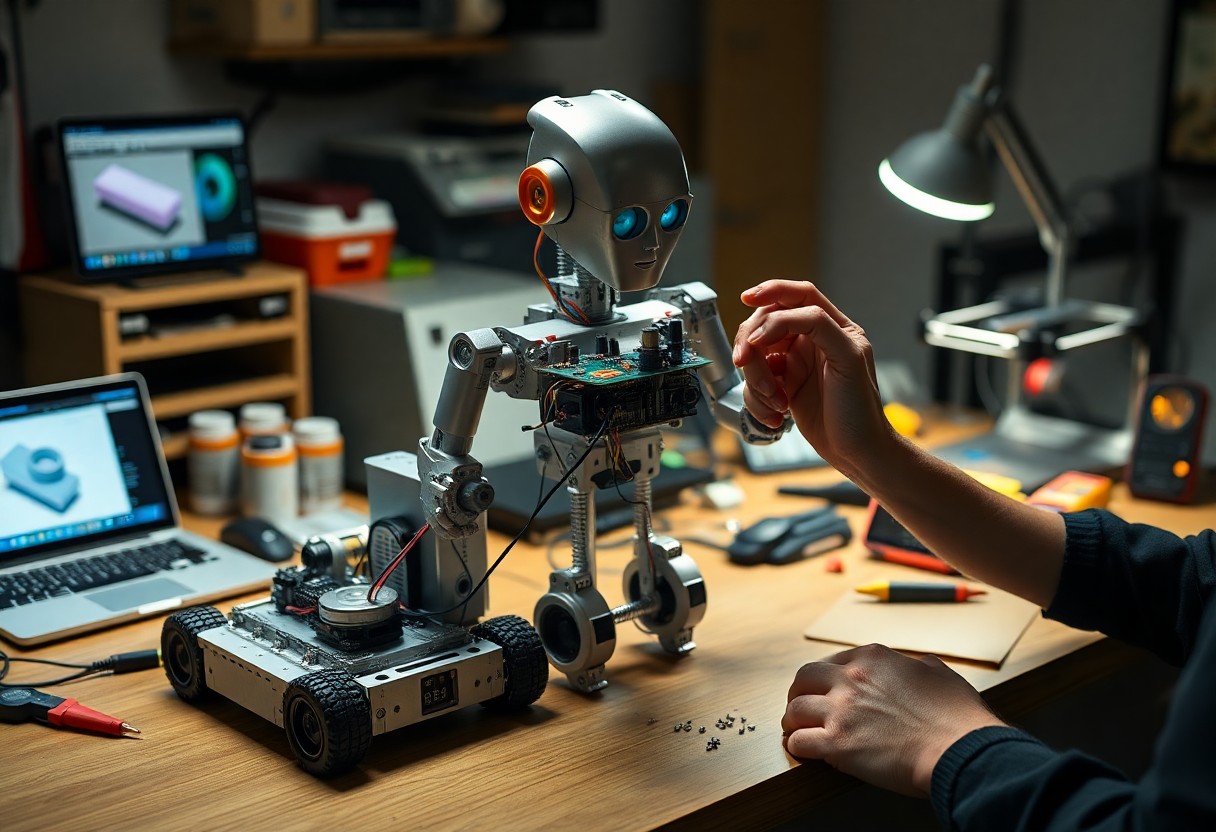
Just follow systematic design, component selection, prototyping, and testing to transform your robot idea into a working prototype.
Conceptualization and Requirements Analysis
Conceptualization connects user needs to measurable goals, so you outline core functions, user scenarios, and constraints that will steer design decisions and early trade-offs.
Defining Operational Objectives and Constraints
Objectives specify mission profiles, operating environments, duty cycles, and safety limits so you can evaluate required autonomy, durability, and system margins before prototyping.
Establishing Technical Specifications and Performance Metrics
Specifications convert objectives into measurable targets-payload, torque, speed, power budget, sensor resolution and latency-that you use to benchmark components and validate designs.
Benchmarking defines test protocols, acceptance thresholds, and statistical confidence so you can quantify performance against real-world scenarios; include environmental, endurance, and interoperability tests, specify instrumentation and data logging, and set repeatable procedures that guide iterations, component selection, and supplier evaluation.
Mechanical Design and CAD Modeling
Mechanical design and CAD modeling let you turn architecture into manufacturable parts, define assemblies, tolerance stacks, and prepare drawings for prototyping. You refine fit, clearance, and mounting interfaces while exporting files for CAM or 3D printing.
Kinematic Modeling and Material Selection
Kinematic modeling helps you simulate joint motions, workspace, and actuator loads before building, informing material choices that balance stiffness, damping, and cost. You prioritize components where motion accuracy matters and choose metals, composites, or polymers based on load cycles and manufacturability.
Structural Integrity and Weight Distribution Analysis
Structural analysis lets you assess stresses, factor of safety, and fatigue life, while weight distribution studies ensure stability and center-of-gravity placement for dynamic tasks. You iterate on ribs, gussets, and mounting points to minimize deflection without oversizing components.
Detailed finite element simulations let you compare load cases, identify stress concentrations, and perform modal analysis to avoid resonance. You validate FE with hand calculations and targeted physical tests, adjust material thickness, and use topology or parameter sweeps to reduce mass while preserving necessary stiffness and safety margins.
Electronics Integration and Power Systems
Electronics integration and power planning determine how you balance current draw, weight, and runtime; consult How To Build A Robot: The Complete Guide for practical wiring patterns, connector choices, and battery sizing to keep your prototype reliable.
Sensor Selection and Actuator Synchronization
Sensors define how you choose detection types and sampling rates; you should match range and resolution to tasks while coordinating actuator timing to prevent control lag and conflicting commands.
Circuit Design and Energy Management Strategies
Circuitry layout and energy management affect efficiency; you optimize PCB traces, fusing, and battery management systems to reduce losses and extend runtime.
Power budgeting helps you size batteries and regulators: calculate peak and average currents, include margin for motors and surges, and choose a BMS with cell balancing and protection. Thermal layout requires heatsinking for regulators and MOSFETs, and decoupling capacitors near ICs reduce noise. Implement current sensing, soft-start for motors, appropriately rated connectors, and charging circuits with safe profiles to ensure predictable runtime and safety.
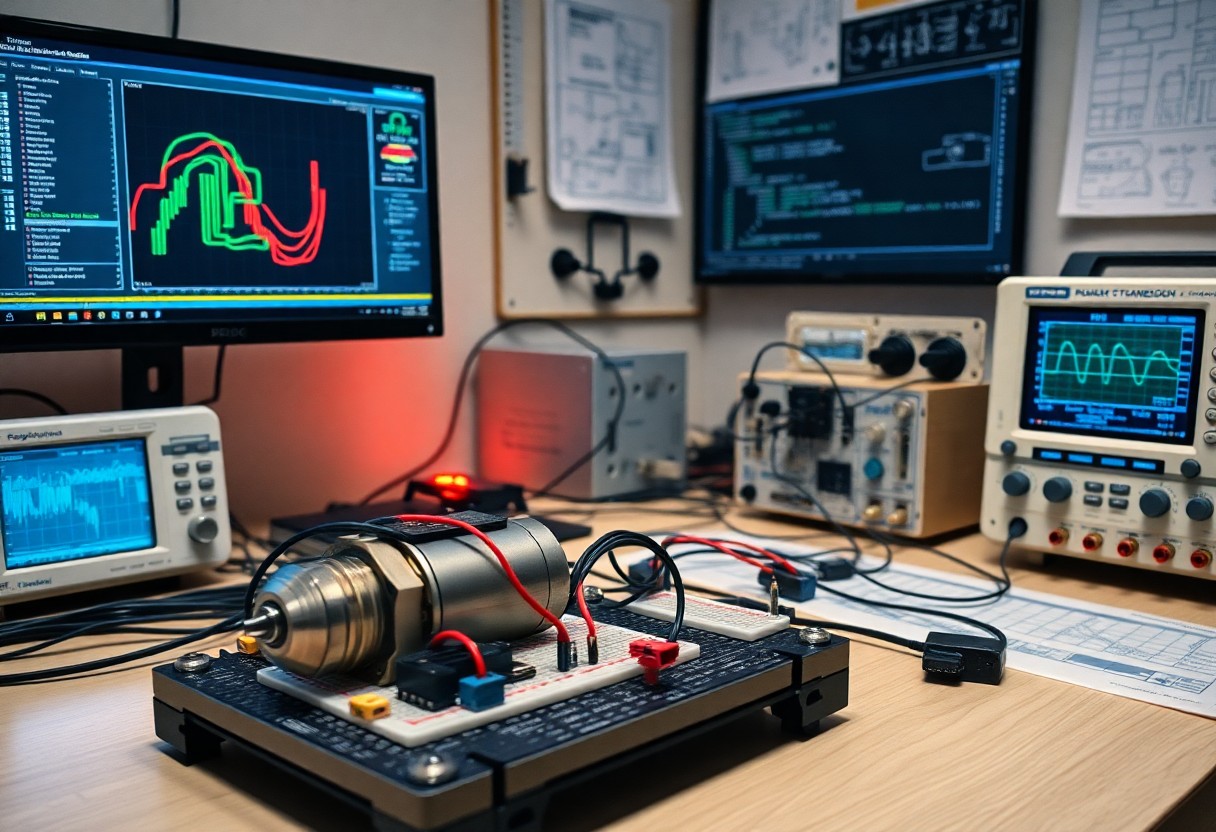
Software Architecture and Control Logic
Software architecture defines module boundaries, communication patterns, and real-time constraints so you can manage complexity and implement predictable control loops.
Embedded Systems and Firmware Development
Firmware ties your hardware to higher-level control, implementing drivers, ISR routines, and power modes while you balance timing, memory, and safety requirements.
Navigation Algorithms and Sensor Fusion Techniques
Sensors supply raw measurements that you fuse through filters and estimators to produce a stable state estimate for path planning and obstacle avoidance.
Algorithms for localization and mapping mix EKF/UKF, particle filters, and graph-based SLAM depending on sensor suites; you must handle time synchronization, outlier rejection, data association, and calibration so the planner receives consistent, low-latency poses for safe motion decisions.
Fabrication and Assembly Processes
Production choices determine how quickly you convert designs into buildable parts, balancing material selection, tolerances, and assembly methods to meet performance and cost targets.
Rapid Prototyping and Component Manufacturing
Prototyping techniques like 3D printing, CNC machining, and injection molding let you iterate parts quickly, validate fit, and optimize manufacturability before committing to larger runs.
System Integration and Hardware-in-the-Loop Verification
Integration and hardware-in-the-loop tests help you validate interfaces, timing, and safety by combining real components with simulated environments for early fault detection.
During system integration you mount and wire subsystems, load firmware, and run incremental tests that validate communication buses, power distribution, and sensor alignment. You should set up HIL rigs that replace select components with real-time simulations to exercise controllers under repeatable conditions, introduce fault cases, measure latencies, and tune gains while logging telemetry. You must iterate on harness routing, shielding, and thermal paths to meet EMI and heat constraints, and formalize test suites for regression and safety certification before field trials.
Validation, Testing, and Refinement
You run structured validation cycles, track failures against requirements, and prioritize fixes so the prototype aligns with design goals while minimizing risk before wider integration.
Performance Benchmarking and Environmental Stress Testing
Measure throughput, latency, power draw, and accuracy in both lab and field scenarios, and use repeatable protocols so you can compare results and target specific improvements.
Iterative Optimization and Error Correction
Refine firmware, control gains, and mechanical alignments in short cycles so you can validate each change, trace regressions, and maintain a clean version history for troubleshooting.
Analyze telemetry, failure logs, and user reports to form hypotheses, design controlled experiments, and quantify trade-offs; you prioritize fixes that reduce mean time to failure and improve repeatability, implement small changes, then re-test across conditions until behavior is consistent and documented.
Summing up
Now you combine clear requirements, mechanical and electronic design, control software, and iterative testing to transform a concept into a functional robot, documenting results and refining systems until performance meets your goals.