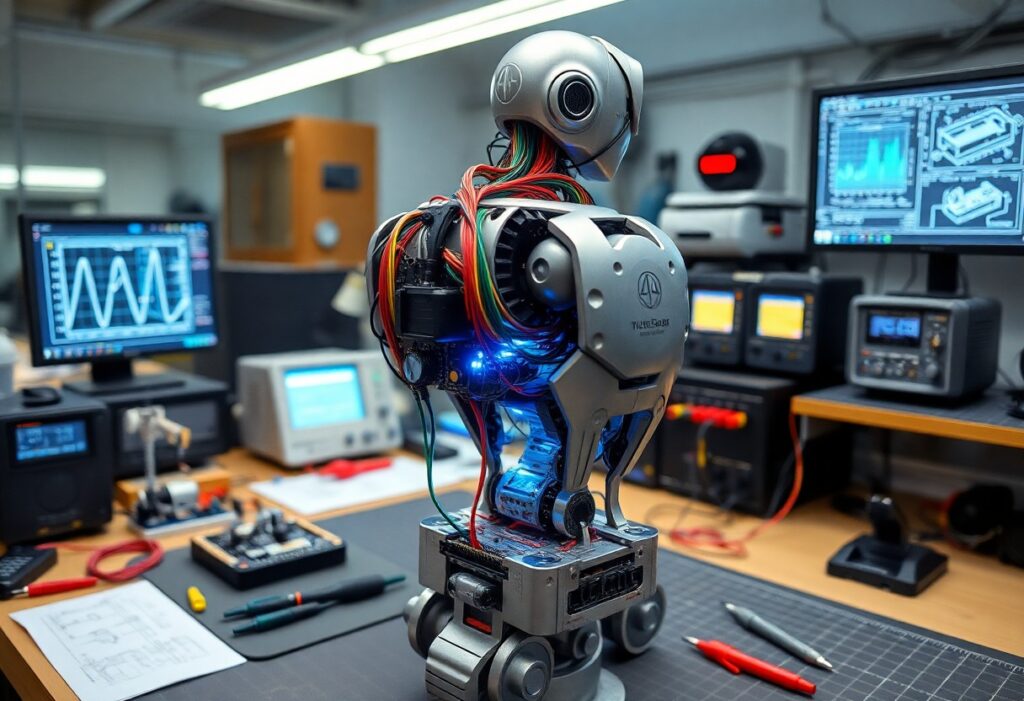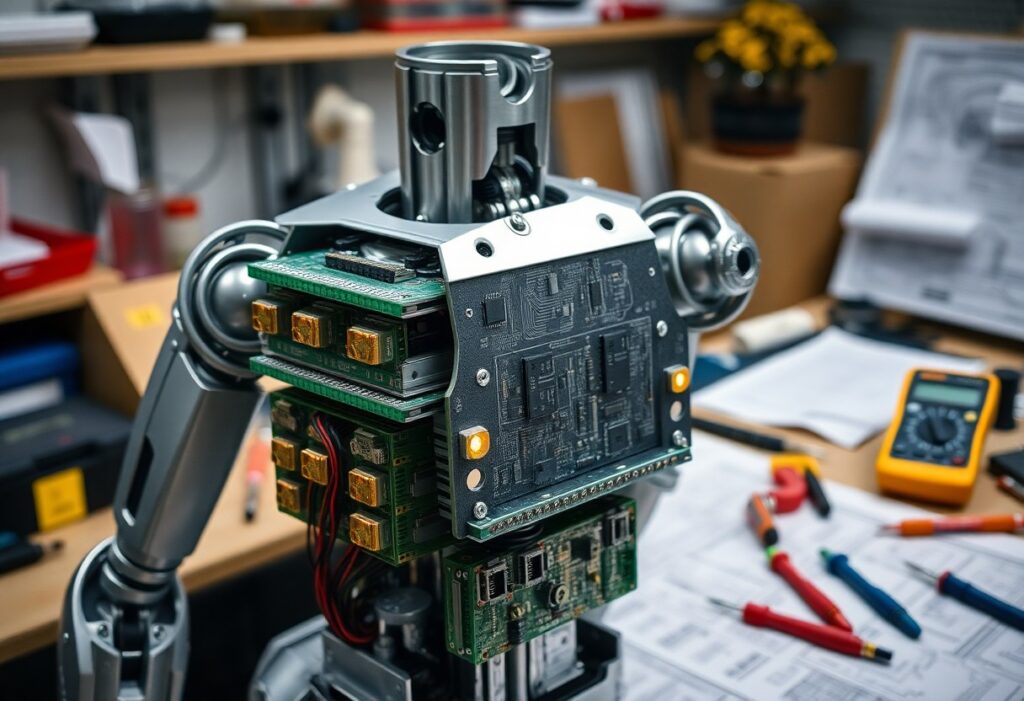
Agility Robotics announced Digit 5 on 15 September 2026, and the headline feature is not dexterity or AI. It is that the robot is designed to be physically incapable of falling on a person. According to IEEE Spectrum, which got the specs from Agility, Digit 5 can lift 23 kilograms (about 50 pounds) up to 2.1 meters, work more than 20 hours a day, and operate next to people without safety fencing. It stands 1.8 meters tall and weighs 129 kilograms.
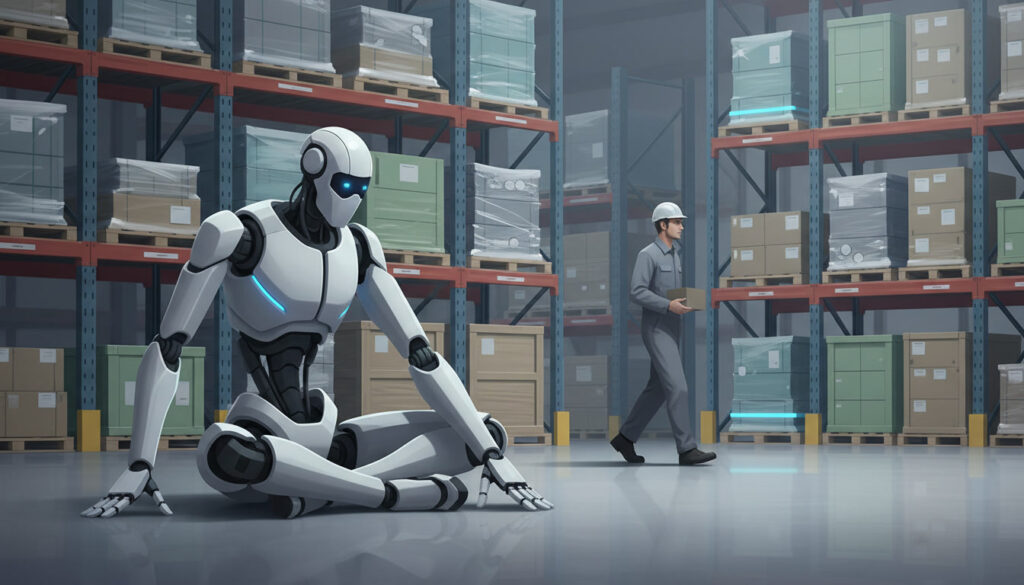
That last number is the whole problem in a nutshell. A 129-kilogram bipedal machine that tips over onto a warehouse worker is a serious injury, which is why almost every industrial robot in service today is either bolted down, caged, or slow and light enough to bump into you harmlessly. Humanoid vendors have mostly avoided the question. Agility’s answer, quoted from its press release by Spectrum, is that Digit 5 handles nearby humans by “autonomously avoiding, stopping or assuming a seated position.” In practice: a person walks toward the robot, the robot puts down whatever it is holding, and if necessary lowers itself into a stable seated position on the floor before the person gets close. Inelegant, and it costs throughput every time it happens. It also removes the failure mode entirely.
The bird legs are gone
Agility’s earlier robots — Cassie and every Digit up to v4 — had backwards-bending, bird-like legs. Co-founder Jonathan Hurst explained in a 2019 IEEE Spectrum article that the layout came from analyzing the physics of animal locomotion, not from copying any particular animal. Digit 5 switches to human-style legs. Spectrum’s Evan Ackerman frames the tradeoff simply: bird legs are better for dynamic motion, human legs are better for squats and lifts. Since the job is picking heavy things up off the floor and putting them on shelves, the lifting geometry won.
Agility’s June 2026 investor presentation, filed with the SEC ahead of a planned public listing, spells out the generational jump. Digit v4 lifts up to 35 pounds; v5 up to 50. Vertical reach goes from 5.5 feet to 7.2 feet. Maximum battery output in a 24-hour period rises from about 16 hours to about 22, and the charge ratio improves from 2:1 to 10:1 — meaning far less of the day spent plugged in. End effectors change from fixed and task-specific to swappable. The filing also credits a newly approved safety standard, ISO 25785-1, and says Agility proposed and leads the ISO working group covering dynamically stable industrial mobile robots. It claims Digit v4 was the first humanoid to receive NRTL approval on a customer’s commercial production line, and that the same safety architecture carries into v5.
The money math is illustrative, and Agility says so
The investor deck puts a price on all this. Digit 5’s bill-of-materials cost at launch is projected at roughly $150,000 to $200,000 per robot — parts only, not the cost of building one — dropping below $50,000 at a production volume of 10,000 units per year. Customers would mostly not buy the hardware outright: Agility models a robots-as-a-service subscription at about $8,500 per month. Against a fully burdened human labor rate of $30.50 an hour across two 10-hour shifts, 120 hours a week, that works out to roughly $100,000 in annual savings per robot. The filing repeatedly labels these figures “purely illustrative” rounded estimates.
The assumption buried in that comparison is that a Digit 5 is a drop-in substitute for a person. Ackerman is blunt about it, writing that this “is not something that I’m entirely sure has ever happened with any robot, anywhere.”
Orders exist, deployments don’t yet
Agility says it had more than $300 million in multi-year customer orders for Digit 5 as of May 2026, with a pipeline across manufacturing, warehousing, and logistics. A footnote in the filing ties that figure to 1,000 robots on three-year service contracts, realized over time and subject to contractual milestones, with warrants vesting as robots deploy. That is one-tenth of the stated 10,000-unit annual capacity of RoboFab, Agility’s factory in Salem, Oregon, which the company says builds Digits from roughly 75 percent domestically sourced parts.
The currently deployed generation is v4: nine customer facilities under deployment commitment and 65,000 hours of operation as of May 2026, including a line in Cheraw, South Carolina where Digit moves 25-pound baskets of bearing components from a stamp press into an industrial washing machine. Digit 5 itself is not in any factory yet, though Spectrum published photographs of real hardware. NVIDIA, which invested in Agility in September 2025, is supplying IGX Thor and Halos Core compute; Agility calls Digit 5 the first launch partner for NVIDIA’s Halos for Robotics platform.
Agility plans to go public through a SPAC merger with Churchill Capital Corp XI, expected to close within a few months, aiming to raise more than $620 million mainly to scale Digit 5 production. European and UK buyers should be able to order in 2027. As the filing puts it, “We believe ‘cooperative safety’ is the critical unlock for scaled humanoid adoption” — a thesis that will not actually be tested until robots that sit down on command are sharing a floor with people who did not sign up to be test subjects.