Thirty Robots Picketed a Polish Ministry. A Robot Rental Firm Organised It.
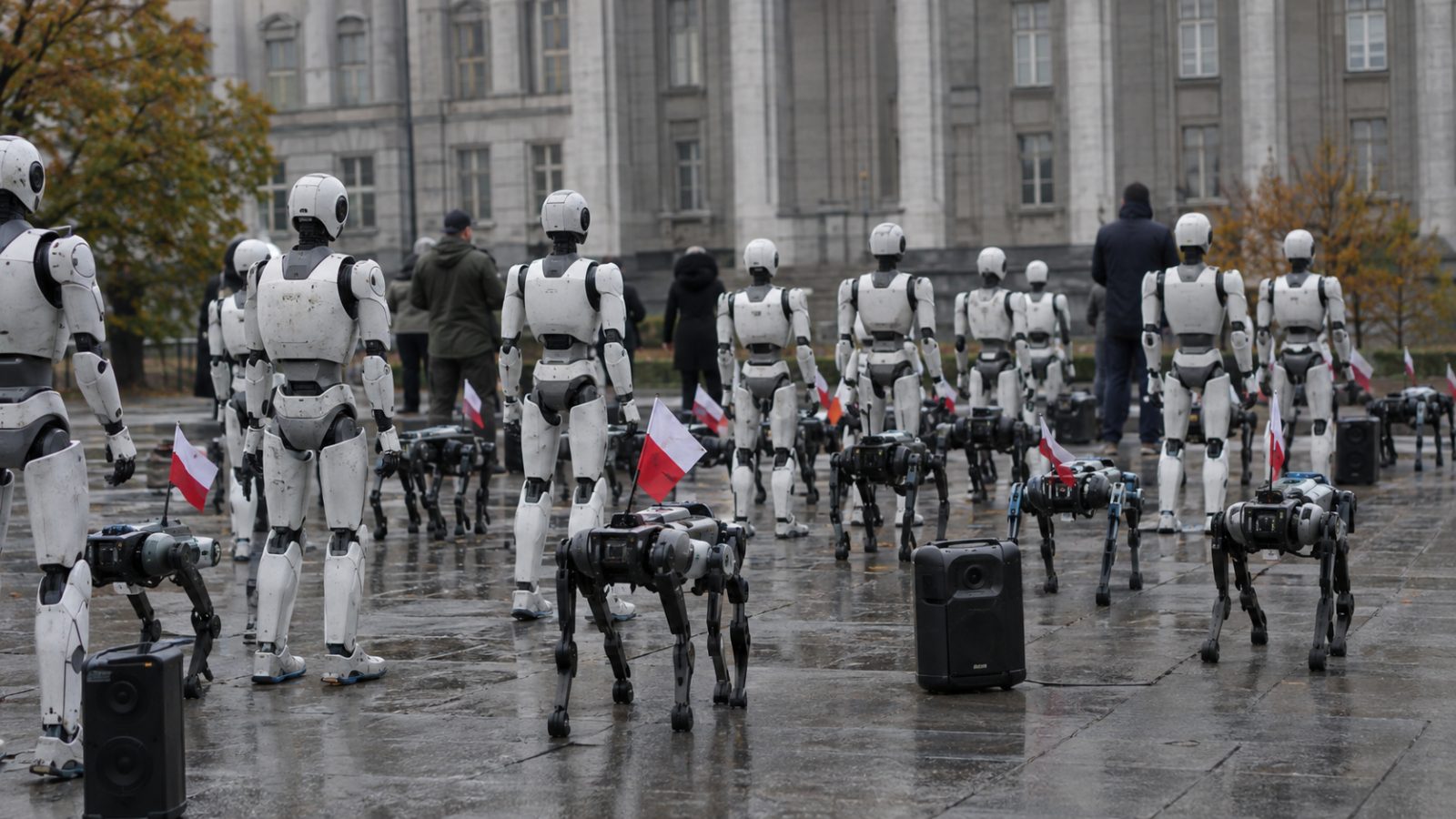
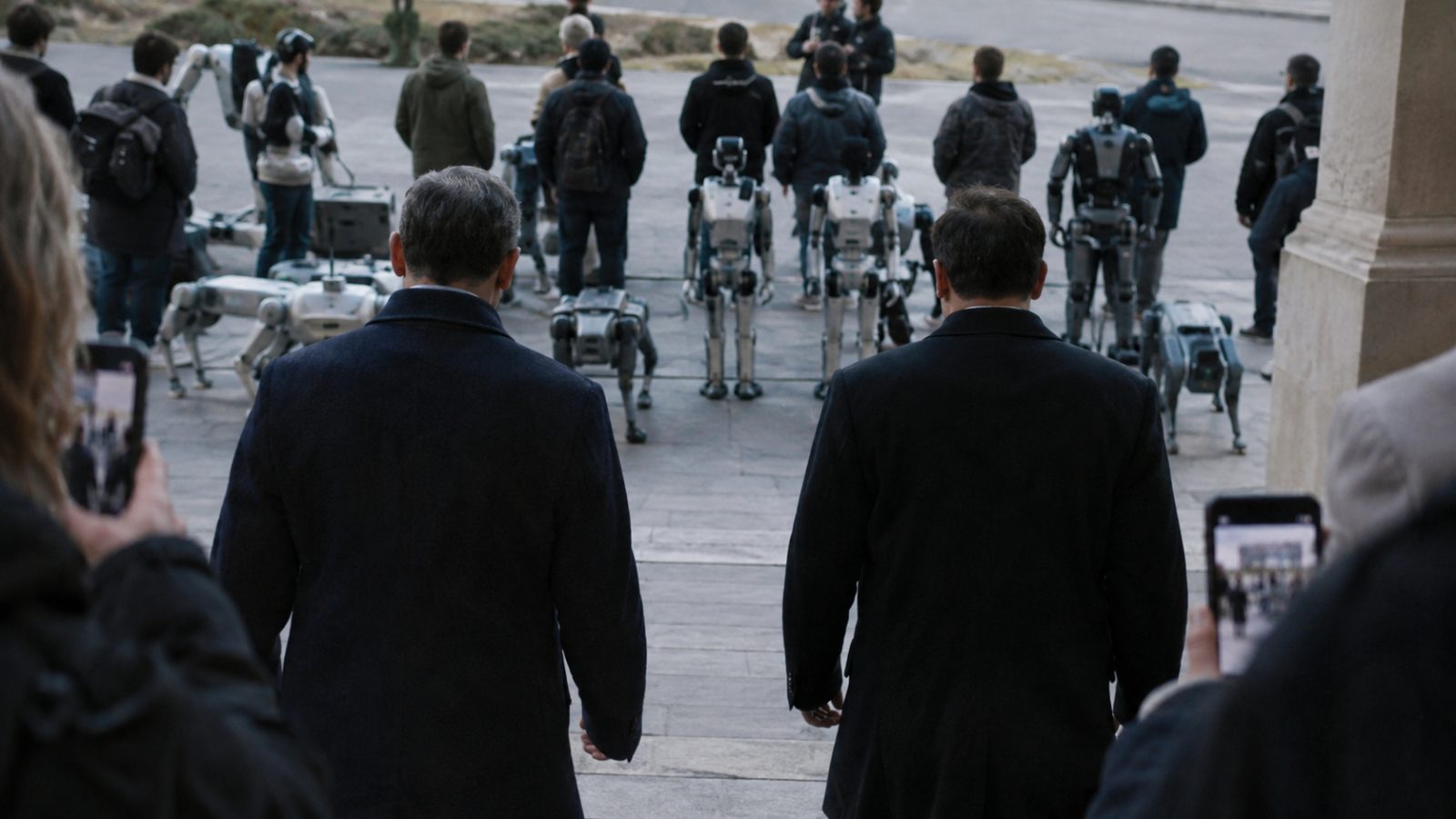
On 7 September 2026, about 30 robots lined up outside Poland’s digital affairs ministry in Warsaw. Some stood on two legs, roughly as tall as an adult. Others walked on four legs, like metal dogs. They held small Polish flags. Loudspeakers played chants asking the government to set rules for artificial intelligence before it costs people their jobs.
Then the minister came out to talk to them. Or rather, to the people standing behind them.
What reporters at the scene saw
The clip below is news agency footage of the demonstration. Here is what the outlets on the spot describe. Euronews, working with the news agency AFP, says the machines marched in circles. Their loudspeakers played “Defend workplaces”, “Time for rules” and “Don’t wait, regulate”. Notes from Poland says the robots stood in several rows and waved flags, chanting “Don’t wait, regulate, protect jobs”.
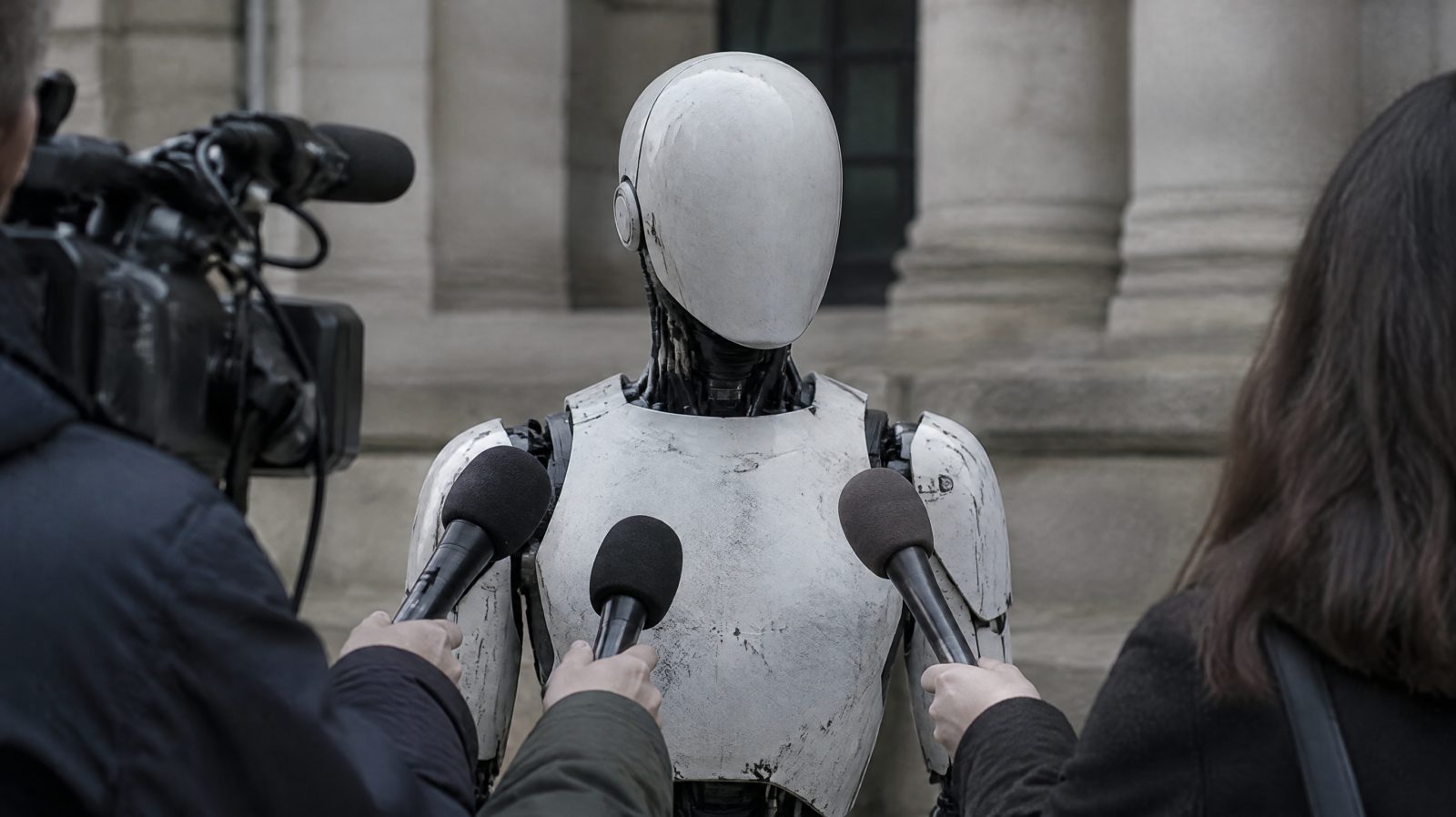
One robot took questions from reporters. It was an AgiBot A3, a Chinese-built machine that walks on two legs. The maker’s own listing says it is 173 cm tall and weighs 55 kg. It is sold for use on stages and at exhibitions. Euronews quotes it saying the robots were there to show the technology is already real. The same article makes the obvious point. A machine reading out a chant loaded into it is not really protesting anything.
The people warning about robots also rent robots out
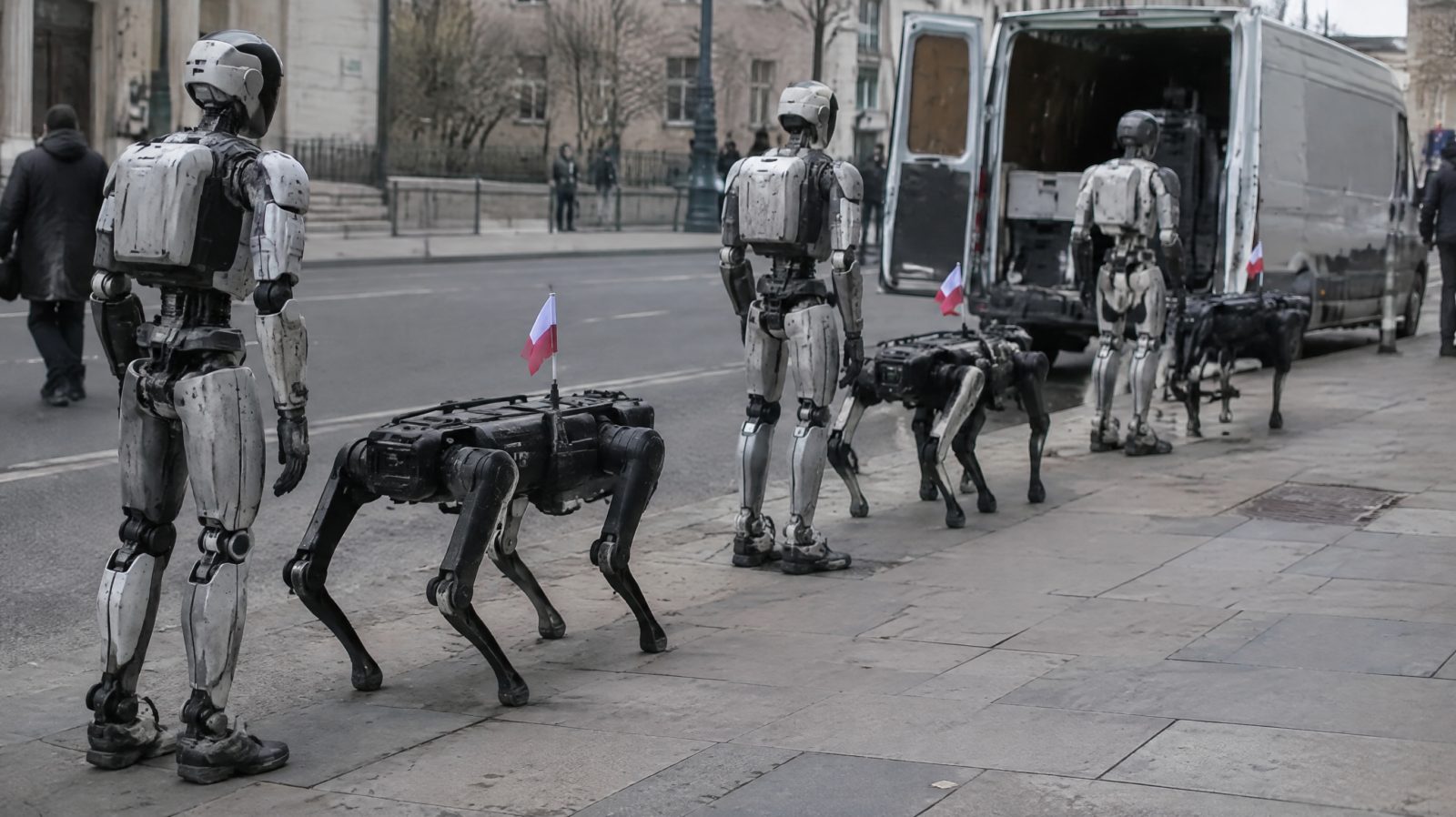
The protest was staged by Democratism. According to Notes from Poland, that group appeared on social media only shortly before the event. It was set up by Delta Robots, a firm based in Opole. The company supplies two-legged and four-legged machines for events. The local outlet Opolska360, quoted by Euronews, says it has done that for over a decade.
The organiser is Grzegorz Kuli
e”, he says, “we’re also humans”, and he lists real worries. He has served two terms on the Labour Market Council at Poland’s family and labour ministry. He is now chief information officer of a robotics company. He also heads the recruitment firm Weegree. His sharpest line, quoted by Notes from Poland: the migrants Poland argues about will mostly arrive as AI agents down undersea cables, or as humanoids in shipping containers from China.
The campaign also set up a petition. It had 61 signatures when Notes from Poland looked. Thirty robots, sixty-one humans.
Poland already has an AI law, and that is the real story
Krzysztof Gawkowski is the digital affairs minister and deputy prime minister. He walked out and told the organisers that people come first. He announced a Commission for the Development and Security of Artificial Intelligence, plus regulatory sandboxes.
In July 2026, President Karol Nawrocki signed a bill putting the European Union’s AI Act into Polish law. It created a national body to enforce rules that already applied.
The worry runs ahead of the evidence, the machines do not
On jobs, the numbers are calmer than the chants. Notes from Poland points to a July analysis from Stanford’s Institute for Economic Policy Research. It finds that AI’s effect on overall employment is probably small so far. That is the honest picture. Job losses you can measure are still hard to find, while the machines visibly improve every year.
So take the stunt for what it is. As a protest, it is theatre written by a seller. As a demonstration, it is genuinely notable. Thirty walking robots can now be trucked into a city centre, unloaded, and made to stand, walk and speak in public for an hour without falling over. Five years ago that was a lab video.
If you live in the United States, nothing here changes your job this quarter. What it shows is the kind of rulebook Europe is building.
Sources
- Robots "protest" in Warsaw to demand regulation of AI and automation
u Notes From Poland - Robot revolt? Polish company stages protest demanding stricter AI rules
u Euronews Next (with AFP) - Forget humans, even robots are now protesting
u ThePrint - AGIBOT A3 product page (specifications)
- Robots 'protest' outside Poland ministry demanding AI oversight
u Reuters video