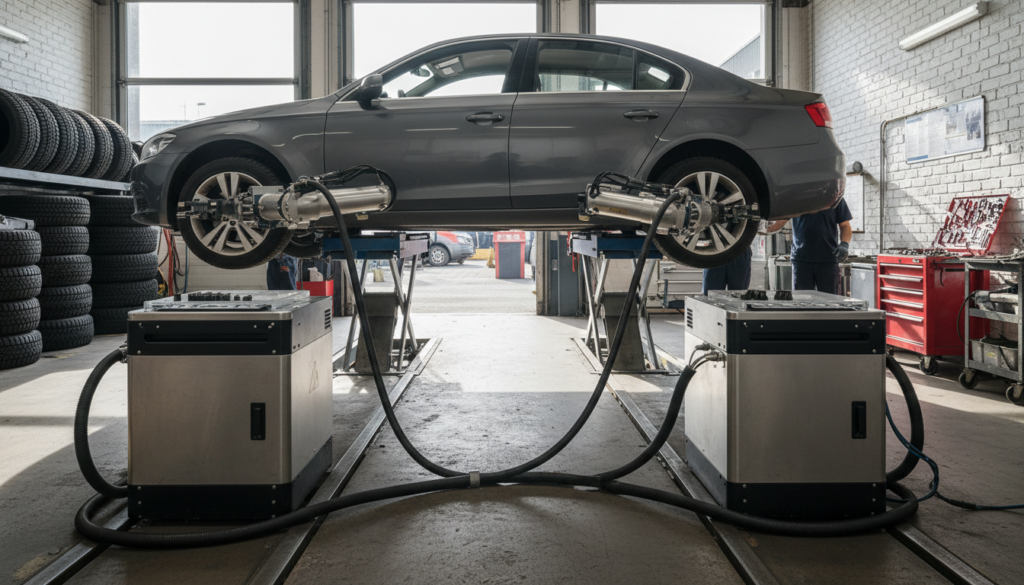
A robot in Calgary is now taking the wheels off your car. On September 23, 2026, San Francisco startup PitPro Automation said its first production tire-changing system went live at a Kal Tire store in Alberta, in time for snow tire season.
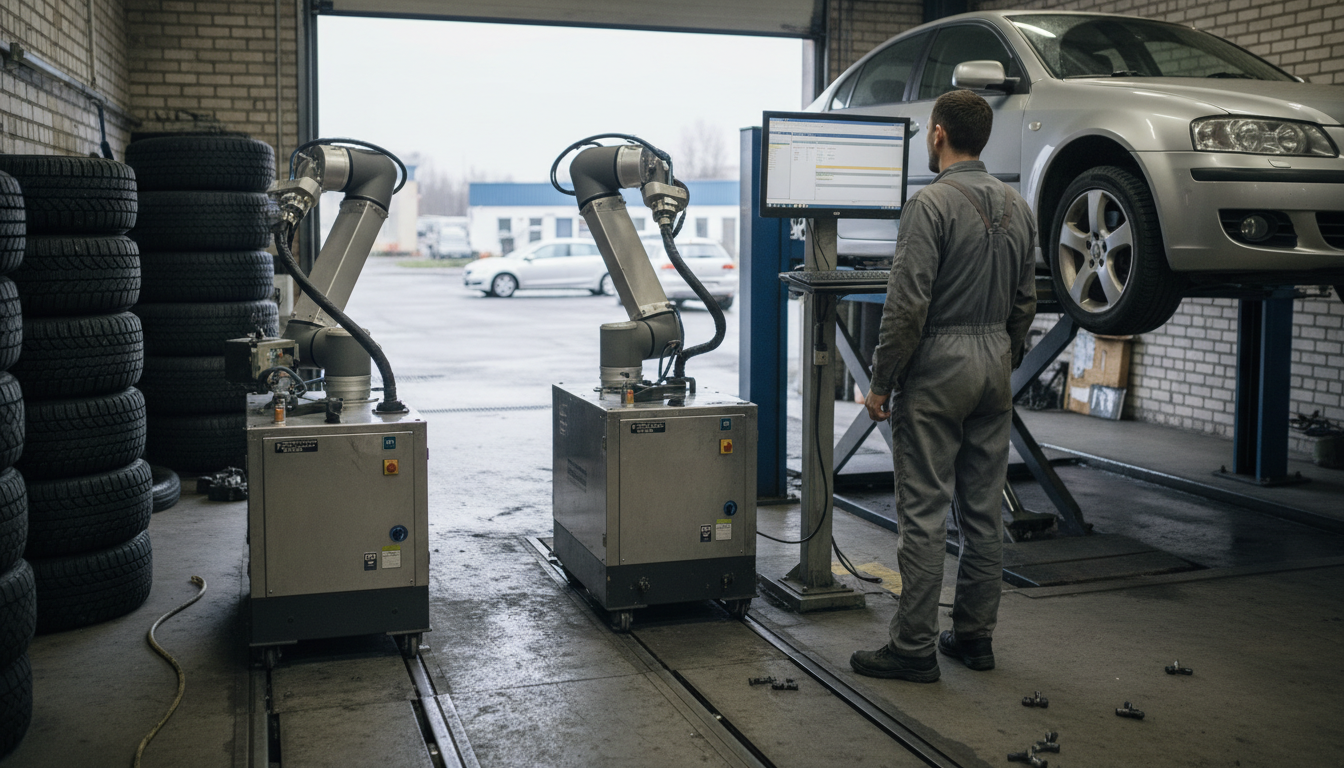
The setup is two boxy machines, each about the size of an oven, sitting in a normal service bay. TechCrunch, which interviewed CEO Jeremy Conrad, describes sensors and a robot arm finding the lug nuts, loosening them, stashing them, pulling each wheel off and bolting the new one on. PitPro’s announcement says two coordinated gantries — overhead frames that slide the tools along rails — work all four corners at once and finish a set in under 15 minutes. That is the company’s number, not a measured one.
Kal Tire runs more than 280 stores and employs around 7,000 people. So the obvious question arrives fast: is this machine helping tire techs, or replacing them?
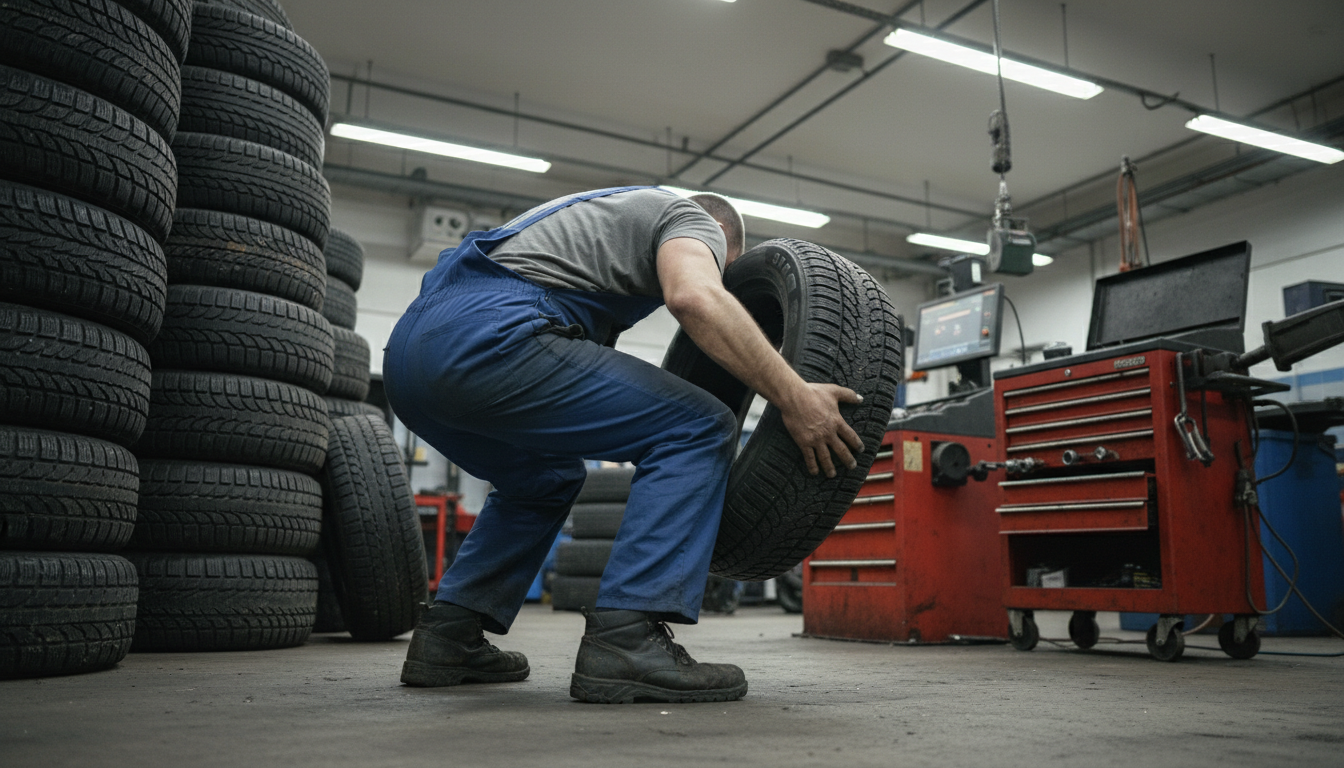
The job it takes over is one of the worst in the trade
Conrad calls tire work “backbreaking,” and the numbers back him up. The US Bureau of Labor Statistics says automotive service technicians have one of the highest injury and illness rates of any occupation, with overexertion and lifting heavy objects like tires named directly. Median pay was $50,620 a year in 2025 — and tire-only positions typically sit below that.
Shops also cannot keep people. Conrad told TechCrunch that new hires often quit within a few months to a year, and repeated a shop manager’s story about needing special permission to raise wages after a Panda Express opened across the street and took roughly half the staff. The TechForce Foundation, a nonprofit that tracks the technician pipeline, estimated this year that the US economy is short about 140,000 skilled technicians annually.
If you cannot fill a job, automating it is not a layoff. It is a patch.
“Force multiplier” is what every employer says first
Kal Tire’s Kenneth Chaun, SVP of strategy and innovation, put it plainly: automation is “a force multiplier for our team members, not a replacement for them,” freeing techs for diagnostic and customer work. He also said that if the system performs as expected, the chain could serve more customers “in the same footprint.”
Read that second half again. More cars per bay, same building. That is a productivity gain, and productivity gains do not automatically show up as more jobs — they show up as fewer hours needed per car. Nothing in the announcement commits Kal Tire to keeping headcount flat.
There is a pipeline worry too. Mounting tires is how a lot of 19-year-olds get in the door and learn the shop before moving to brakes, alignment and diagnostics. Remove the entry rung and the trade still needs the senior people it currently grows from that rung. Nobody in this story has an answer for that.
The evidence is one store old
This is a single installation, announced by the company that built it. No third party has timed it. PitPro has not published a price, a lease rate or a throughput figure per shift. There is no data on whether the Calgary store changed its staffing. PitPro says more systems go to other customer sites this fall; that is when a pattern becomes possible.
Conrad was candid about the messy parts: bay doors stay open, so the robots eat dust, debris and weather, and the sensors have to keep seeing the wheel through it. During the Calgary install, the machines were coated in dandelion seeds. He says it was not a problem. It is also the kind of thing nobody predicts from a demo floor.
What it changes for you
Nothing this winter unless you live near that Calgary store. Over a few years, the plausible upside for drivers is shorter waits during the November rush and lug nuts tightened to the manufacturer’s torque spec every time, which PitPro claims its system does — a genuine improvement over a tired human with an impact wrench at 6pm. The plausible downside is that shops bank the time savings and you pay the same.
My read: this is automation aimed at a job people are actively fleeing, which makes it easier to defend than most. But “we’re not replacing anyone” is a claim made before the second, fifth and fiftieth machine ships. Judge it then, on staffing numbers, not press releases.
Sources
- PitPro's first tire-changing robot goes live in Canada — TechCrunch
- PitPro Automation Announces First Production Deployment of its Automated Tire Changing System at Kal Tire in Calgary (Business Wire release)
- PitPro Automation — company website
- Automotive Service Technicians and Mechanics — US Bureau of Labor Statistics, Occupational Outlook Handbook
- TechForce: More than 73,000 collision techs needed by 2029 — Repairer Driven News
- PitPro robotic wheel changer starts work at Calgary tire shop — Fleet Maintenance