
Inside the seven-hour shift that tells Curiosity what to do on Mars
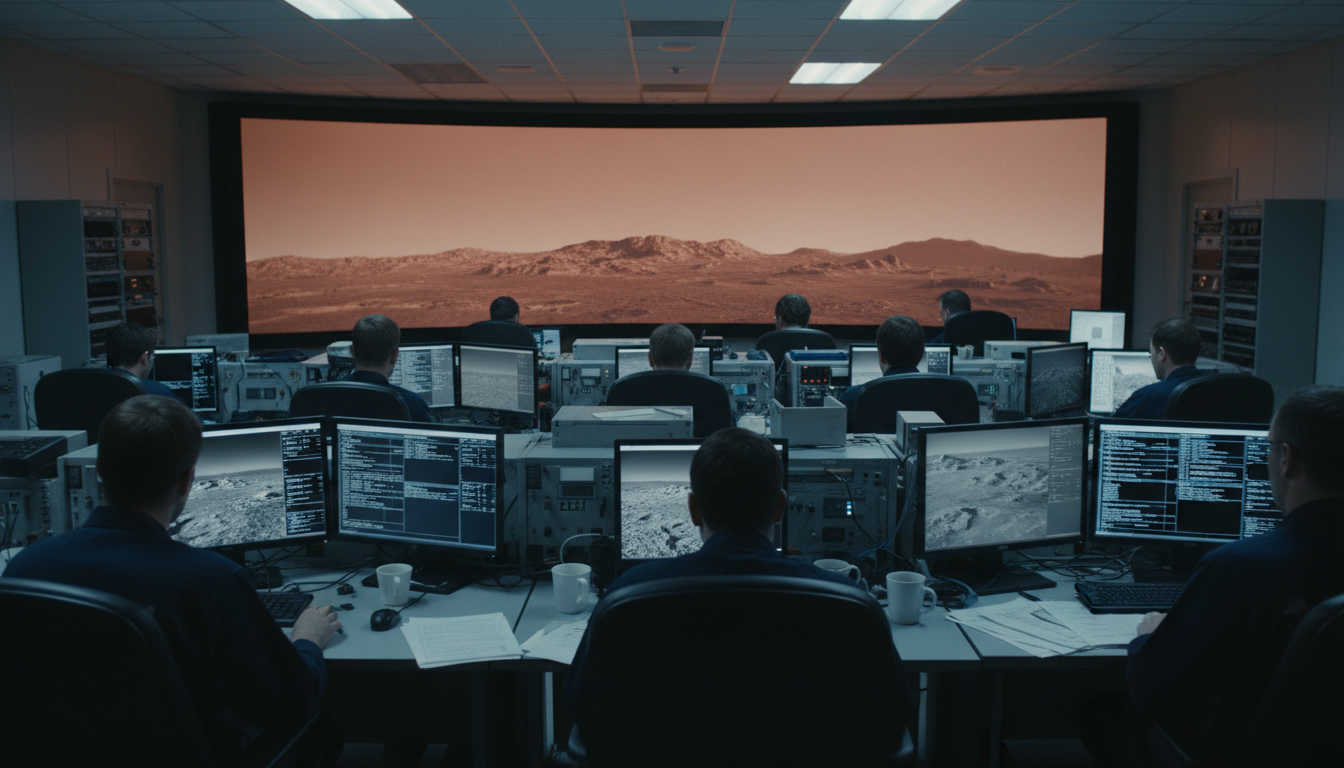
Every working day at NASA’s Jet Propulsion Laboratory in Pasadena, a few dozen people get roughly seven hours to decide what a car-sized robot 100-plus million miles away will do next. Ashwin R. Vasavada, project scientist for the Curiosity rover, described that routine in a first-person piece published by The Conversation and republished by Robohub on September 21, 2026. It is the clearest public account in a while of how a Mars rover is actually operated: not driven, but planned.
Vasavada writes that he arrives at the Rover Operations Center at 7:30 a.m. Overnight, Curiosity finished its Martian day, beamed its images and measurements up to a Mars orbiter passing overhead, and the orbiter relayed them to Earth. The operations shift starts at 8:15 a.m. From there, the team has three hours to check the rover’s health, look at the new science data and agree on the next set of activities — then about four more hours turning those decisions into commands that are safe and that fit inside the rover’s available time and energy budget. Soon after, the Sun rises on Mars and Curiosity listens for instructions.
Why nobody has a joystick
The reason for all that structure is that a rover on Mars cannot be flown live. Data arrives in batches on an orbiter relay schedule, and the finished command load goes back out through NASA’s Deep Space Network. So a Martian day’s worth of work has to be written in advance, as hundreds of commands, with the assumption that no human can intervene once it starts. Vasavada notes that on Fridays the team plans three days of activity at once, because the results will not come back until Monday. As he puts it, Curiosity works weekends.
The science side of the day is a negotiation. Vasavada describes a screen covered in dots, each one a candidate target for the rover’s cameras, its laser spectrometer or the instruments on its arm — “way too many dots,” he writes. A trained moderator narrows the list while faculty, postdocs and students from around the world argue for their targets. Vasavada is the tiebreaker, and says he rarely has to be.
A field of honeycomb cracks
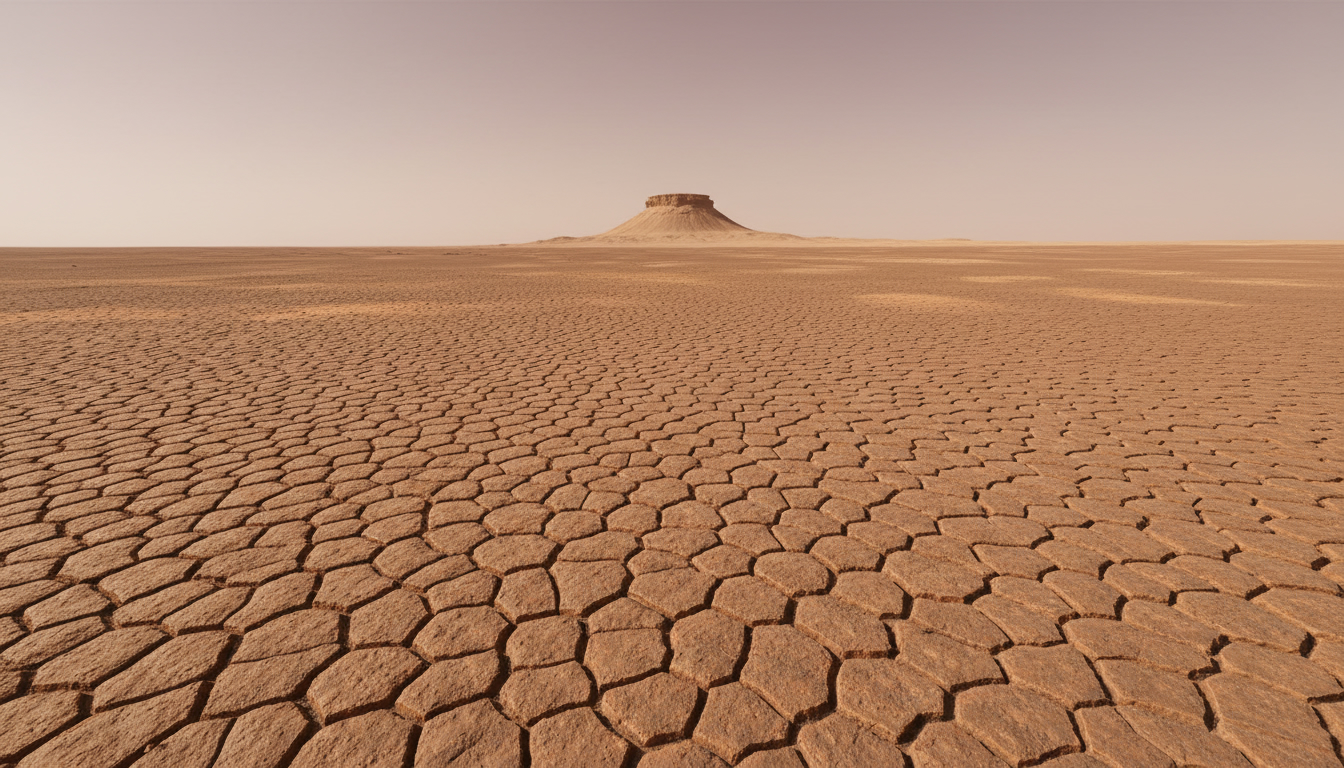
The specific day he recounts starts with a disappointment that turns into a find. The route planners had steered Curiosity toward ground that looked exceptionally smooth from orbit, and they used it to drive 120 feet (37 meters) in one go — a long drive by this rover’s standards. Instead of flat slabs, the images came back showing the surface covered in small polygons, “as if someone covered Mars in honeycomb wallpaper.”
NASA’s own release on that terrain, published July 29, 2026, puts numbers on it. The polygonal fractures sit in a valley nicknamed Valle Grande and measure about 1.5 to 3 inches (4 to 8 centimeters) across. Curiosity shot a 360-degree panorama on June 19 and 20, the 4,930th and 4,931st sols of the mission, showing the shapes extending in every direction and wrapping around a sand-capped butte nicknamed Miraflores, roughly 20 feet (6 meters) tall. The mission had seen small patches of such fractures before, but nothing at this scale.
“We’ve seen a lot of fascinating landscapes through Curiosity’s eyes, but this sea of polygons took our breath away,” Vasavada said in the NASA release. “We measured their shapes and chemistry carefully and are hopeful there are clues in the data as to how these features formed.”
What formed them is still open. NASA says some polygons found earlier in the mission were clearly dried mud cracks, but repeated warm-cold cycles or compression that squeezed water out of buried sediment can produce similar patterns. That ambiguity is exactly what the day’s target list was meant to attack: which images and chemical measurements best separate the competing explanations.
The engineering half of the day
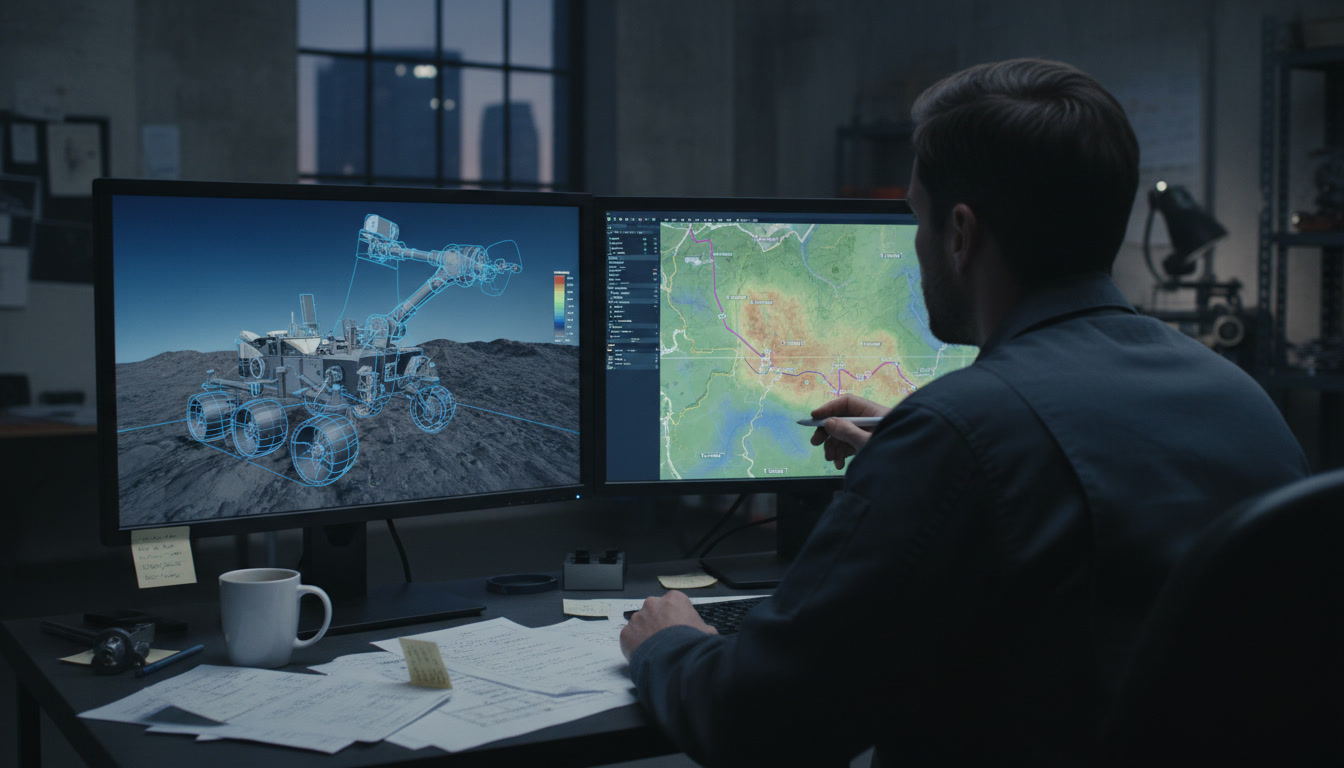
After the science meeting, Vasavada walks into the adjacent room where a robotics engineer checks in 3D how Curiosity’s five-jointed arm will reach the chosen rocks, and another engineer simulates the next drive. Their verdict on the terrain ahead: no more parking lot, “all curbs.” By noon the science team’s role in operations is finished and the rover and instrument operators start converting requests into the actual command sequences.
Some context for how long this has been going on. Curiosity landed in Gale Crater on August 5, 2012, and has been climbing Mount Sharp, also called Aeolis Mons, since 2014. Its layers hold about 3 miles (5 kilometers) of sedimentary rock; the rover has worked its way up through roughly a vertical half-mile (1 kilometer) of it, moving from clay-rich mudstones into younger, salt-bearing sandstones. Vasavada writes that the team has repeated this planning cycle more than a thousand times.
The limits are just as clear. Curiosity’s drilled samples contain small carbon-based molecules and evidence of long-lived lakes, enough for the team to conclude that Gale Crater could once have supported life. NASA is explicit that there is no way to tell from the rover’s data whether those organics came from biology or geology. Settling that, Vasavada writes, means getting Martian rock into laboratories on Earth — a sample return campaign that does not yet have a confirmed plan or schedule.