A Six-Foot Robot Kicked an Influencer Across a Cage — and a Man in a VR Headset Threw the Kick
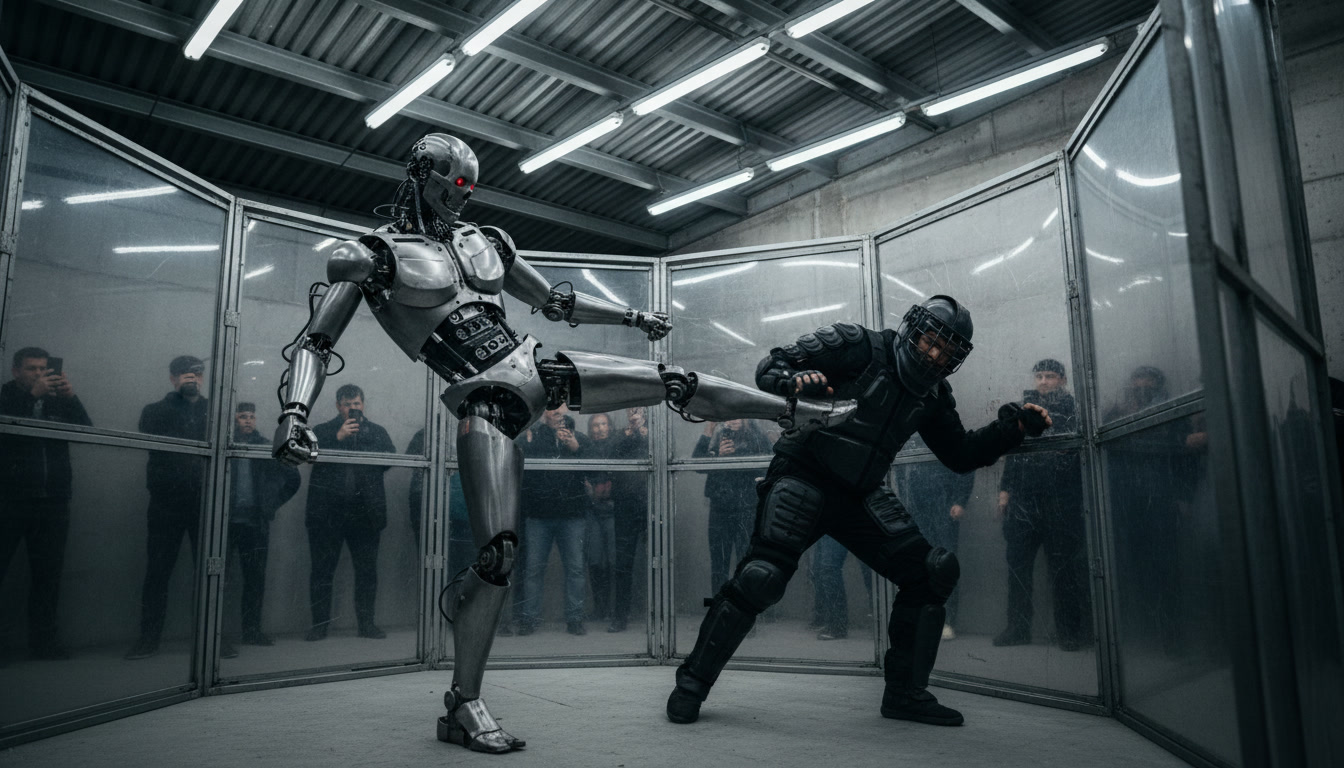
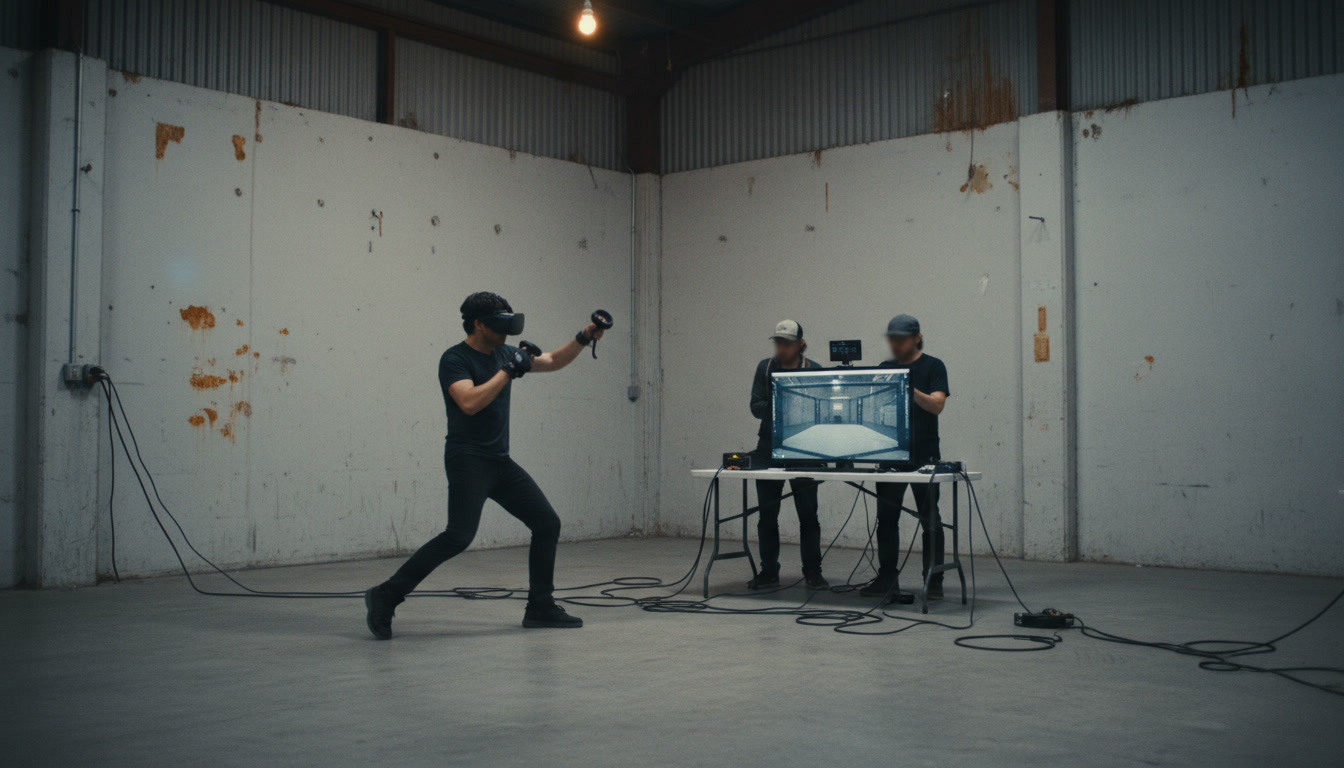
The kick lands in the final seconds of a 44-second clip. A six-foot metal humanoid puts a foot into a padded man’s stomach. He slides into the clear plastic wall of a cage. Here is the part the clip leaves out. The robot did not choose to throw that kick. A person offstage, wearing a virtual reality headset, threw it.
The fight took place in San Francisco on September 18, 2026. Content creator Frankie LaPenna posted the video two days later. The promoter, a company called REK, called it the world’s first human-versus-robot fight.
What you can see in the video
Vice posted the same clip. It says LaPenna walked in wearing heavy padding and landed a few early shots. Then the machine hit back with kicks to the body. The last one, a front kick, sent him into the wall. Breitbart reported that LaPenna fought a series of matches against three robots. An announcer told the crowd this had never happened before.
Interesting Engineering covered the same video and made a point most reposts skipped. A short promotional clip does not show how the fight was run. It also does not show how hard anyone was really hit. That doubt is the right place to start with any video a robot company films in its own cage.
A Chinese robot in an American show
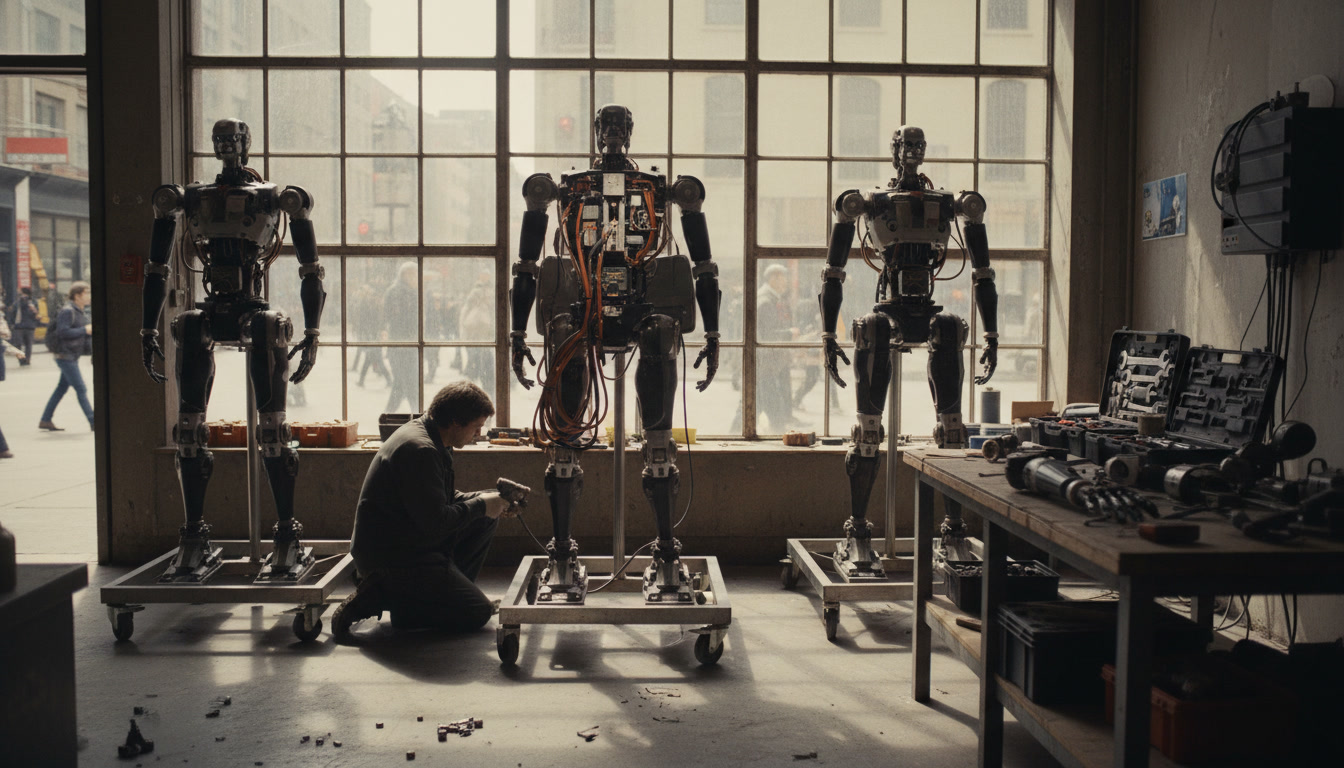
The machine is an EngineAI T800. It is a full-size humanoid built by a startup in Shenzhen. For the fight, it wore a bony head with red eyes, like something off a movie poster. NBC’s TODAY said it stands about six feet tall and weighs 200 pounds.
One technical write-up of the event gives slightly different figures. It puts the robot at about 1.73 to 1.83 metres and 75 to 85 kilos. Some of its joints produce around 450 newton-metres of torque. Torque is turning force. That figure is far above any small hobby motor. It is why a leg like that can shove a grown man.
REK is short for Robot Entertainment Kombat. Virtual reality entrepreneur Cix Liv started it. The investor database PitchBook describes the business simply. It is a league of humanoid fighting robots steered by people in virtual reality headsets, built to stage and broadcast matches. ABC7 and the San Francisco Chronicle have both reported on its new shop in Nob Hill. Liv compares it to a garage for humanoids. You can watch fights there, get the machines fixed, and buy one.
The software was only keeping the robot on its feet
Every punch and kick came from a human pilot. He wore a headset and held controllers. The robot’s own software handled balance and posture. That split matters more than it sounds.
The clever part is not the punching. It is that a 180-pound two-legged machine can plant one foot and swing the other hard enough to move a person. It then takes the shock and stays upright. Five years ago, that robot falls over.
The format is not new either. The Chinese maker Unitree ran a humanoid boxing tournament in 2025. Live Science made the same point in its headline. The robots punch and kick while keeping their balance, but people are driving them.
Think wrestling show, not warning sign
Vice’s take is the honest one. This is closer to a pro-wrestling card than a military demonstration. LaPenna is a stunt performer who knows how to sell a fall.
One report says he hurt his hand or wrist and that the match was stopped. REK’s own account called the human the winner. Nobody has published an injury report or the safety rules used that night. Other coverage does not confirm the injury either way. The evidence is thin, so treat it as unsettled.
The lesson from the clip is narrower than “the Terminator is here.” It is also more useful. Full-size humanoids are now made in bulk. They are strong, cheap enough to risk in a cage, and steady enough for a person in a headset to drive live. The same machines are sold to the public in a San Francisco shop. A robot this size can kick a padded adult off his feet on command. So the force limits and the off switches on the friendlier models heading to warehouses and homes really matter.
Sources
- WATCH: A TikTok Influencer Fought a Robot in the Octagon. It Did Not Go Well. (Vice)
- Video: Humanoid robot takes on human in bizarre cage fight controlled by an operator (Interesting Engineering)
- A Human Fought a 6-Foot-Tall Humanoid Robot in a San Francisco Cage. He Lost. (Yahoo Tech)
- Influencer Frankie Lapenna Fights Humanoid Robot in Cage Match (TODAY)
- WATCH: Robot Kicks Influencer to Floor in Man vs. Machine Cage Fight (Breitbart)
- San Francisco storefront opened by REK will let customers see and buy humanoid robots (ABC7 News)
- Robot fighting league has a new home in San Francisco where you can watch — and buy — humanoids (SF Chronicle via Yahoo)
- Rek company profile (PitchBook)
- China pits rival humanoids against each other in world's first 'robot boxing tournament' (Live Science)