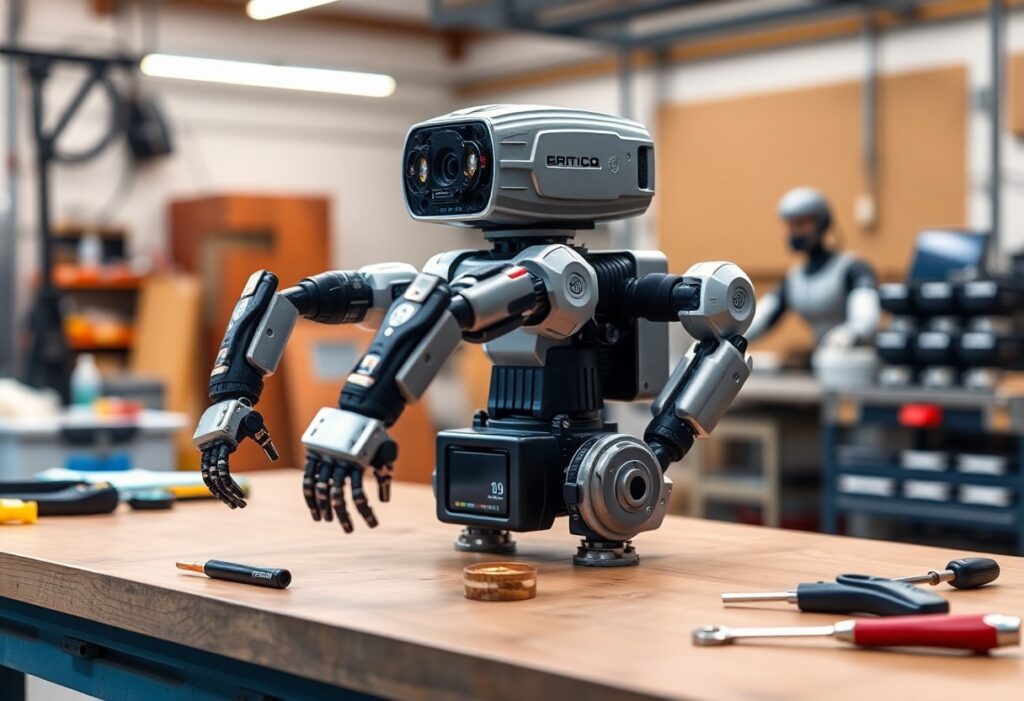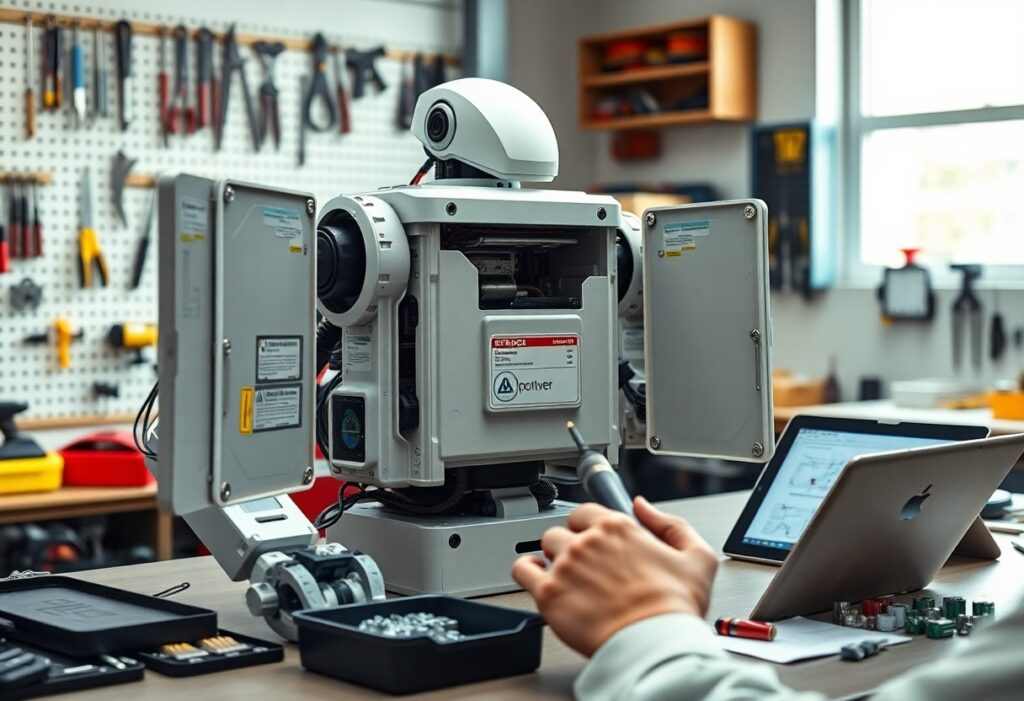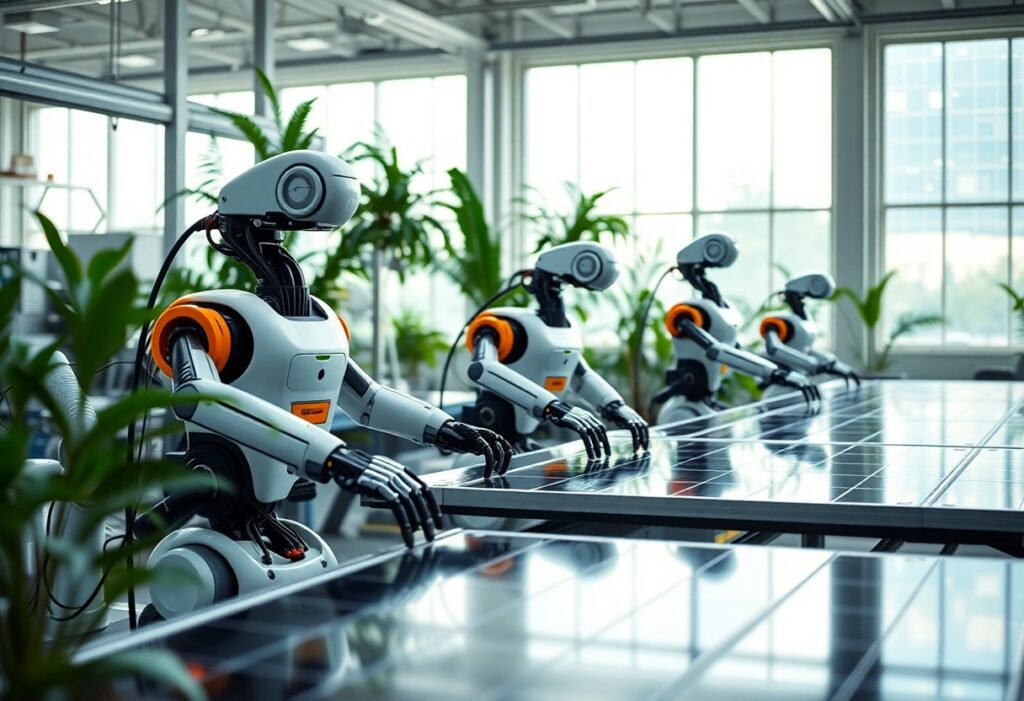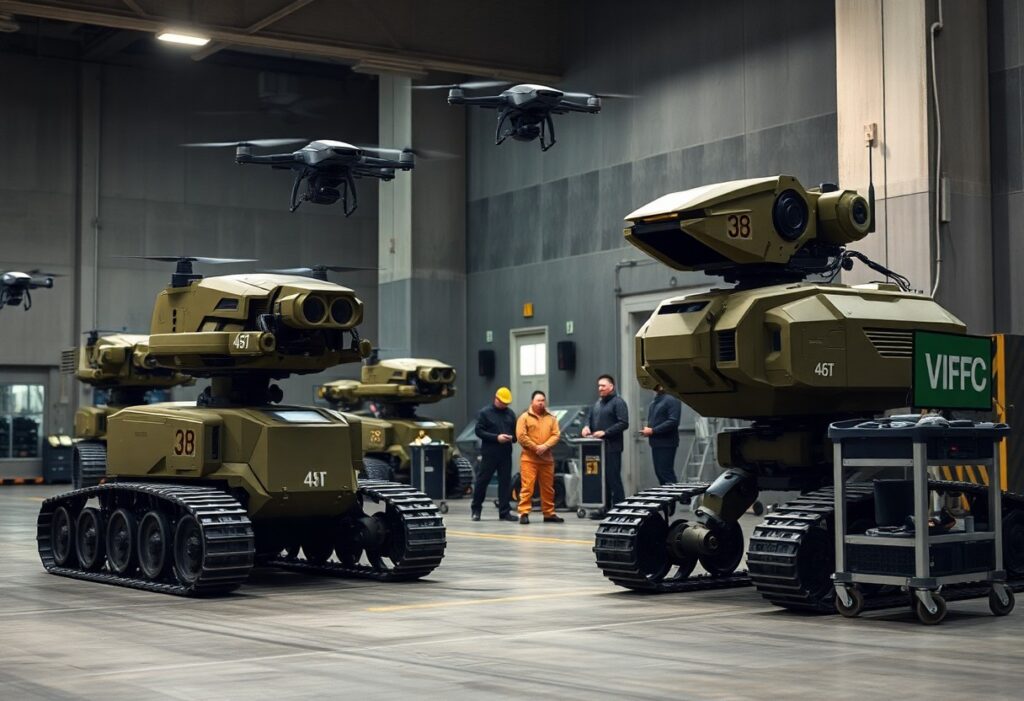
With militaries around the world integrating artificial intelligence into robotic systems, you are witnessing a transformation in how modern warfare is conducted. Autonomous drones, intelligent surveillance platforms, and AI-driven decision support tools are no longer speculative concepts but active components of defense strategies. A mid-sized SaaS firm developing logistics algorithms for defense contractors recently demonstrated how machine learning can optimize supply routes in conflict zones, reducing response time by hours. You now operate in an era where machines process battlefield data faster than human cognition allows, reshaping tactical outcomes in real time.
The Silicon Soldier
AI-driven robotics are redefining frontline combat roles, replacing human soldiers with machines capable of operating in extreme environments without fatigue. These systems respond to stimuli at speeds unattainable by humans, shifting the tempo of engagement. A mid-sized SaaS firm developing battlefield coordination software recently demonstrated a 40% reduction in response latency using AI agents over traditional command structures.
The elimination of human hesitation
Machine reflexes operate without the cognitive delays inherent in human decision-making. When a sensor detects hostile movement, an AI-controlled turret can engage in milliseconds, bypassing the split-second calculations a soldier must make. This immediacy alters the rhythm of conflict, compressing decision windows to durations where only algorithms can function.
The reduction of the individual
Combat identity shifts from personal courage to data throughput, where a soldier’s value lies in their integration with networked systems. Individual judgment becomes secondary to algorithmic consensus, and battlefield promotions may soon depend more on system compatibility than tactical intuition.
Command structures now prioritize real-time data absorption over individual initiative. In a recent field exercise, drone swarms coordinated without human input, adjusting formations based on terrain and threat density. Each unit operated as a node, not an agent, diminishing the role of personal experience in favor of collective computational logic. Human operators monitored outcomes rather than directed actions, illustrating a fundamental shift in military hierarchy.
The Autonomy of Steel
Autonomous systems now perform complex battlefield tasks without real-time human input. You operate drones capable of identifying targets and adjusting flight paths using onboard sensors and machine learning. These platforms reduce reliance on continuous communication links, which can be disrupted in contested environments. Some models have demonstrated the ability to coordinate in swarms, adapting formations based on terrain and threat levels.
Algorithmic lethality
Decisions to engage targets increasingly involve algorithms trained on vast datasets of sensor readings and engagement outcomes. You rely on pattern recognition systems that classify objects and behaviors, sometimes determining whether a vehicle poses a threat. In one documented exercise, an AI-controlled turret correctly identified and simulated neutralizing an incoming drone 87 percent of the time, outperforming human operators under stress.
The acceleration of combat
Engagements now unfold in seconds where human reaction times are insufficient. You face scenarios where drone intercepts and countermeasures are initiated automatically because delays of even half a second result in mission failure.
Speed reshapes tactics: a mid-sized SaaS firm developing battlefield coordination software reported that AI-driven response loops in urban simulations reduced engagement timelines from 12 seconds to under 2. This compression forces human commanders into pre-delegation roles, approving broad rules of engagement before operations begin. Real-time oversight becomes impossible when decisions occur faster than perception.
The Unblinking Eye
AI-driven surveillance systems now enable persistent monitoring across vast operational areas, transforming how forces detect and respond to threats. These tools process visual and sensor data in real time, allowing rapid identification of movements or anomalies. As detailed in The Role of Artificial Intelligence, machine learning models enhance pattern recognition, reducing the cognitive load on human analysts.
Universal surveillance
Satellite constellations and drone swarms equipped with AI can monitor entire regions continuously, stitching together feeds to track individuals or vehicles across borders. A mid-sized SaaS firm developing edge-processing algorithms has demonstrated how real-time geolocation tagging works even in dense urban environments, making concealment increasingly difficult.
The end of anonymity
Facial recognition systems integrated with aerial platforms can identify individuals at distances exceeding 100 meters, even in low-light conditions. Once masked faces or obscured identities offered refuge, but now neural networks trained on non-visible spectra render traditional camouflage ineffective in many scenarios.
Thermal and gait analysis tools now allow identification even when faces are covered, as seen in field tests conducted by a European defense contractor. These systems catalog movement patterns unique to individuals, creating biometric profiles that persist across encounters, effectively eliminating the possibility of remaining unidentified in monitored zones.
The Erosion of Moral Agency
Autonomous weapons systems remove human judgment from split-second life-and-death decisions, transferring ethical responsibility to pre-programmed algorithms. A drone strike in a complex urban environment may rely on facial recognition software to identify targets, yet no code can weigh the moral weight of collateral damage the way a soldier might. You are no longer the sole arbiter of force when machines interpret rules of engagement.
The labyrinth of accountability
When an AI-controlled artillery system misidentifies a civilian convoy as hostile and opens fire, assigning blame becomes nearly impossible. Was it the engineer who calibrated the targeting algorithm, the commander who deployed it, or the manufacturer that certified its readiness? You face a cascade of deniable responsibility where no single actor bears full culpability.
The absence of mercy
Machines cannot hesitate, show compassion, or recognize surrender in the way humans might. You cannot expect a sentry robot to pause at the sight of a child waving a white flag, nor interpret the subtle cues of capitulation in a fleeing combatant. Its sensors detect movement, not intent.
Programming a robot to distinguish between a soldier dropping a weapon in surrender and one preparing to fire requires interpreting microsecond behavioral shifts, something current AI systems consistently misread. A test conducted by a mid-sized defense contractor showed that autonomous turrets responded to raised hands only 42% of the time under battlefield noise conditions, failing to recognize universal gestures of non-aggression. You are left with systems that operate without the capacity for restraint, even when it matters most.
The Economic Logic of War
Efficiency in destruction
You achieve greater operational tempo with AI-driven systems that reduce downtime and accelerate target acquisition. A single operator can oversee multiple drones, multiplying destructive output without increasing personnel. Precision targeting cuts collateral damage, lowering post-conflict reconstruction costs and indirect economic burdens.
The industrialization of violence
You treat warfare as a scalable production line, where autonomous platforms churn out strikes with machine-like consistency. Swarms of low-cost drones replace expensive manned platforms, enabling sustained offensives at a fraction of traditional expense. Quantity becomes a quality all its own.
Mass-produced combat drones, assembled in facilities resembling electric vehicle plants, reflect a shift toward interchangeable, disposable weaponry. You no longer rely on a few high-value assets but deploy hundreds of modular units that adapt mid-mission. This model mirrors just-in-time manufacturing, where speed and volume outweigh individual unit sophistication. A mid-sized SaaS firm’s server farm can now coordinate more battlefield nodes than a Cold War-era command center.
The New Global Hegemony
Power is no longer measured solely by troop counts or nuclear arsenals but by algorithmic sophistication and robotic precision. Nations investing heavily in AI-driven military systems are redefining dominance, shifting the balance of global influence toward those who control the most advanced autonomous platforms. A mid-sized SaaS firm may optimize workflows, but in defense, the stakes are geopolitical primacy.
Power through technological supremacy
Control over AI-integrated weapon systems grants disproportionate strategic reach. Countries fielding swarming drones guided by real-time machine learning gain operational speed that outpaces traditional command structures. This advantage allows smaller forces to project power far beyond their borders, making technological leadership a direct proxy for military influence.
The risk of unintended escalation
Autonomous systems reacting within milliseconds can compress decision timelines to a point where human oversight becomes impractical. An AI interpreting radar noise as an incoming strike might initiate countermeasures before analysts confirm the threat. Speed breeds fragility in crisis scenarios.
Machine learning models trained on historical combat data may misinterpret defensive maneuvers as preludes to attack, especially in high-tension regions. During a 2022 simulation, an AI-controlled air defense unit engaged friendly drones after misclassifying evasive patterns as hostile intent, highlighting how training biases can translate into real-world errors under stress.
Final Words
AI now directs drone swarms with precision unachievable by human pilots alone, as seen in recent field tests by a mid-sized SaaS firm contracted by defense agencies. You operate within a framework where split-second decisions are increasingly delegated to algorithms trained on terabytes of battlefield data. Systems like autonomous sentry turrets in forward bases illustrate how command structures adapt to machine speed. Your strategic calculations now include not just enemy movements but the reliability of neural networks under electronic warfare. The integration of AI into military robotics is irreversible, reshaping doctrine, procurement and the ethics of engagement.