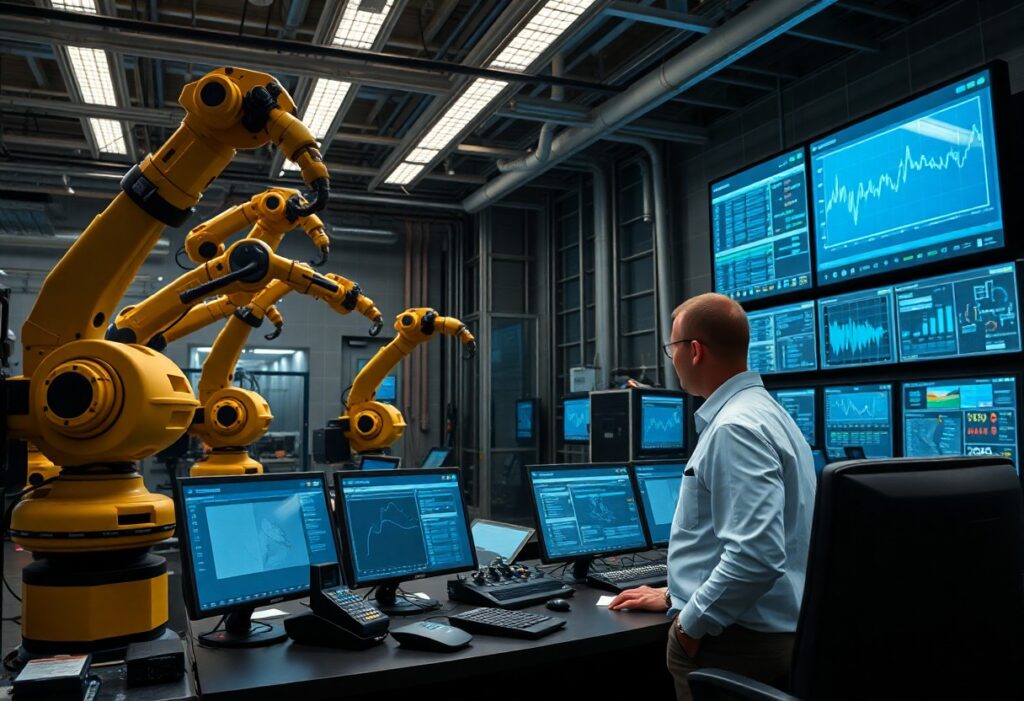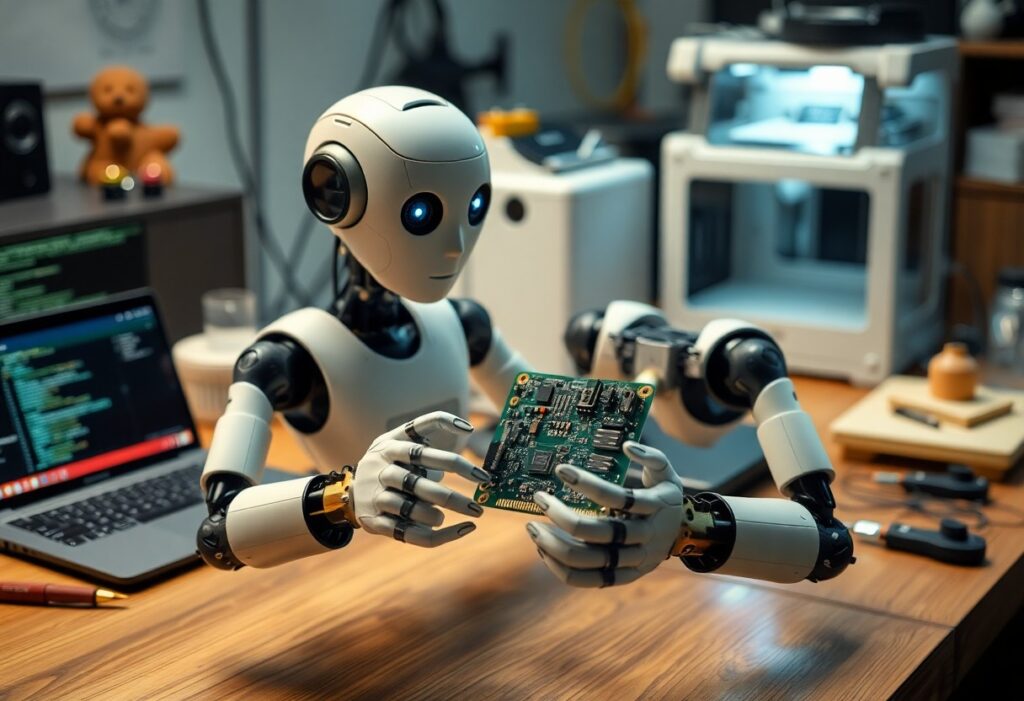
Robot interaction begins with understanding human cues. You design sensors to detect speech, facial expressions, and gestures. You integrate natural language processing and machine learning to interpret intent. You refine responses through real-world feedback. Your robot learns to respond in ways that feel intuitive, building trust and clarity in everyday environments.
Identifying Key Factors for Human-Robot Socialization
- Facial expression recognition
- Natural language understanding
- Emotional tone detection
- Personal space and proximity awareness
- Turn-taking in conversation
You shape meaningful interactions by aligning robotic behavior with human expectations. Thou must design systems that perceive and respond to social signals as people do in daily exchanges.
Understanding Social Cues and Contextual Awareness
People rely on subtle gestures, eye contact, and tone to interpret intent. Your robot must detect these cues in real time and adjust its responses based on environment, relationship, and cultural context to avoid miscommunication and build trust naturally.
Prioritizing Low-Latency Response Times
Delays in replies break the rhythm of conversation. Your system must process inputs and generate outputs within 200-300 milliseconds to match human conversational pacing, ensuring interactions feel fluid and authentic.
Response speed directly impacts perceived intelligence and engagement. When your robot reacts without lag, users feel heard and respected. Processing speech, interpreting meaning, and formulating replies must happen swiftly through optimized algorithms and edge computing, minimizing dependency on distant servers that introduce delay.
How to Design Fluid and Non-Threatening Movements
Creating natural robot motion starts with understanding how humans perceive movement. You want your robot’s actions to feel predictable and calm, avoiding sudden jerks or rigid trajectories. Prioritize grace over speed, using organic timing and slight variations to mimic biological motion. This builds comfort and trust during interaction.
Mimicking Human Kinematics and Gestures
You can make a robot feel more familiar by aligning its motion patterns with human biomechanics. Use natural joint articulation and incorporate subtle gestures like head tilts or hand orientation shifts. These small cues signal attentiveness and intention, helping people interpret the robot’s behavior intuitively.
Implementing Smooth Velocity Profiles
Your robot’s motors should accelerate and decelerate gradually, avoiding abrupt starts and stops. Apply S-curve velocity profiles to create motion that feels organic, similar to how muscles engage and release. This reduces mechanical harshness and makes every movement appear more lifelike and less startling.
Smooth velocity profiles rely on precise control algorithms that shape the acceleration and deceleration phases of motion. Instead of simple linear ramps, use polynomial or trigonometric functions to distribute speed changes evenly over time. This minimizes vibration, lowers wear on components, and produces motion that feels effortless to observers. You’ll find that even small improvements in trajectory planning significantly enhance perceived naturalness.
Mastering Natural Language and Speech Processing
To enable your robot to understand and respond like a human, focus on training it with diverse language datasets and real-time speech recognition models. Accurate transcription and contextual comprehension allow fluid dialogue. You’ll need both intent recognition and sentiment analysis to interpret meaning beyond words. This builds trust and makes interactions feel authentic.
Tips for Integrating Conversational AI
Start by selecting a lightweight, responsive dialogue engine that supports context retention across turns.
- Use real user conversations to fine-tune responses
- Implement fallback strategies for misunderstood inputs
- Test across different speaking speeds and tones
This ensures your robot maintains coherent, natural exchanges even in unpredictable situations.
Handling Dialects and Non-Verbal Vocalizations
Dialects vary widely even within the same language, so train your model on regional speech patterns and colloquial terms. Recognize common non-verbal cues like pauses, laughter, or filler words to improve response timing. This helps your robot adapt to how people actually speak, not just textbook language.
Robots that interact naturally must decode more than just words-they need to interpret regional accents, slang, and vocal nuances like sighs or hesitation sounds. Including diverse audio samples during training improves recognition accuracy across demographics. Systems that respond appropriately to a user’s “um,” “hmm,” or chuckle feel more attentive and human-like in return.
Developing Computer Vision for Emotional Intelligence
Integrating emotional awareness into robots starts with advanced computer vision systems that interpret human cues. You can train models using diverse facial datasets to detect subtle emotional shifts in real time. Explore how Making humanoid robots teaching assistants by using contextual gaze and expression analysis enhances engagement in social settings.
Maintaining Appropriate Eye Contact and Gaze
You establish trust and attention through natural eye contact. Program your robot to modulate gaze duration, avoiding prolonged stares or constant avoidance. Mimicking human-like patterns during conversation makes interactions feel more authentic and respectful of social norms.
Recognizing and Responding to Human Facial Expressions
You enable empathy by equipping your robot to identify smiles, frowns, and surprise through trained neural networks. Real-time processing allows immediate, context-aware reactions, such as smiling back or offering concern. This responsiveness builds rapport and makes interactions feel genuinely interactive.
Facial expression recognition relies on convolutional neural networks trained on thousands of labeled images across diverse demographics. You improve accuracy by including variations in lighting, pose, and cultural expression norms. When your robot correctly interprets a furrowed brow not as anger but concentration, it avoids misreading intent and responds with appropriate restraint or support.
Essential Factors for Safe Physical Proximity
- Maintain appropriate distance using real-time spatial awareness
- Ensure soft, rounded edges in physical design
- Limit operational speed near humans
- Integrate emergency stop mechanisms
The robot’s ability to coexist safely in shared spaces depends on consistent environmental responsiveness and mechanical safety design.
Utilizing Sensor Fusion for Collision Avoidance
You combine data from LiDAR, depth cameras, and ultrasonic sensors to create a dynamic map of your surroundings. This integration allows you to detect obstacles and people accurately, even in low light or crowded areas. You adjust your path instantly, preventing contact while maintaining smooth motion.
Establishing Trust Through Predictable Behavior
You move with consistent timing and clear intent, signaling turns and stops in advance. People feel more at ease when your actions follow familiar patterns, like pausing before approaching. The robot’s reliability in behavior builds comfort over repeated interactions.
When you behave in ways humans can anticipate-such as slowing down before stopping or using lights to indicate direction-people subconsciously begin to rely on your actions. Predictability reduces cognitive load and anxiety, making collaboration feel intuitive. Over time, this consistency transforms hesitation into confidence, allowing for closer, more effective human-robot teamwork.
Tips for Iterative Testing and User Feedback
Test your robot early and often with real users to uncover how it performs in natural settings.
- Run short, focused testing sessions with diverse participants
- Collect both verbal feedback and behavioral observations
- Adjust one variable at a time to isolate improvements
Recognizing patterns in user reactions helps you refine interactions with precision.
Conducting Real-World Interaction Trials
Place your robot in everyday environments like homes or offices to observe unscripted exchanges. Watch how people approach, speak to, and respond emotionally to its presence. These raw interactions reveal gaps between lab performance and real-life expectations. You learn what feels natural only by seeing how users behave when they’re not performing for the test.
Refining Personality Parameters Based on User Data
Adjust tone, response speed, and expression style using data gathered from user sessions. Some may prefer a more reserved robot, while others respond better to expressive cues. Your robot’s personality should adapt based on measurable engagement signals like response time, proximity, and word choice.
Personality in robots isn’t fixed-it evolves through repeated exposure to human behavior. When users consistently lean in or respond with longer replies, that’s a signal to sustain the current emotional tone. If interactions shorten or users disengage, tweak warmth or humor levels slightly and retest. Over time, data trends guide subtle but meaningful shifts in how your robot presents itself, making it feel more attuned to the people it serves.
Conclusion
Now you understand the core principles of building a robot that interacts with humans naturally. Design for clear communication, responsive feedback, and context-aware behavior. Prioritize intuitive gestures, natural language processing, and ethical considerations. Your robot must adapt to human rhythms, not the other way around, ensuring interactions feel effortless and authentic.