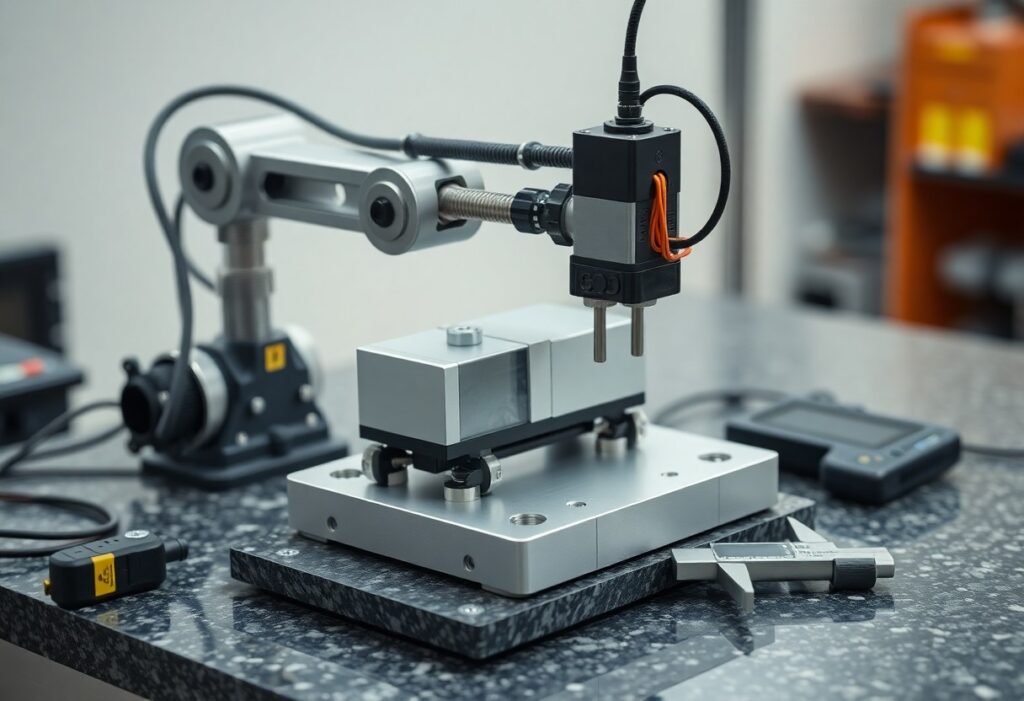
Control begins the moment your robot moves exactly as intended, not just roughly in the right direction. You design each component to respond with accuracy, using motors, encoders, and feedback loops that minimize error. Your choices in hardware and control algorithms determine how reliably your robot performs complex tasks.
The Framework of the Machine
Your robot’s frame defines how well motion translates from theory to action. A rigid, well-aligned structure minimizes deflection and vibration, ensuring commands result in exact movements. You choose materials like aluminum or steel based on weight, strength, and environmental needs. Every mounting point must hold tight under dynamic loads, preserving calibration over time. Precision begins not just in the motor, but in the skeleton that carries it.
The Geometry of the Path
Defining the Trajectory
You map every movement with exact coordinates, turning abstract motion into measurable segments. Each point along the path influences acceleration and deceleration, demanding careful calculation to maintain smooth transitions.
Curvature and Continuity
Curves define how gracefully your robot changes direction. Sharp turns introduce instability, so you prioritize continuous curvature, ensuring velocity remains controlled without abrupt shifts in force.
Error Tolerance in Motion
Even minor deviations accumulate over distance. You set strict angular and positional tolerances, knowing that precision in geometry directly determines repeatability and final placement accuracy.
The Sensory Feedback
Your robot relies on real-time input to adjust its movements with accuracy. Sensors embedded in joints and limbs return data on position, force, and velocity, closing the control loop. You interpret this feedback to correct deviations instantly, ensuring smooth, precise operation. Without it, even the most advanced motion algorithms fail under real-world conditions.
The Control Loop
Your robot’s movements depend on a continuous feedback cycle that adjusts position in real time. Sensors detect deviations and send data to the controller, which recalculates output to correct motion. This loop runs thousands of times per second, ensuring accuracy even at high speeds. For deeper insight into how this applies across industrial systems, read the Motion Control for Industrial Robotics Complete Guide.
The Power Source
Your robot’s performance hinges on selecting the right power source. Lithium-polymer batteries offer high energy density and lightweight construction, ideal for mobile systems requiring extended operation. Voltage stability directly impacts motor consistency, so regulated power delivery ensures precise motion. You’ll need to balance capacity, weight, and discharge rates to maintain responsiveness without overburdening the frame. Efficiency isn’t optional-it’s built in from the start.
The Calibration
You align each motor and sensor to ensure movements match digital commands with minimal deviation. Small errors in positioning compound quickly, so you adjust feedback loops and refine reference points until repeatability falls within micrometer tolerances. This step transforms assembly into precision, turning raw components into a coordinated system that responds exactly as intended.
Summing up
With this in mind, you understand that building a robot with precision motion control demands careful selection of motors, sensors, and control algorithms. Your success hinges on integrating components that respond accurately to input, maintain stability, and achieve repeatable movements under varying conditions. Mastery of these elements ensures your robot performs with the accuracy required in real-world applications.