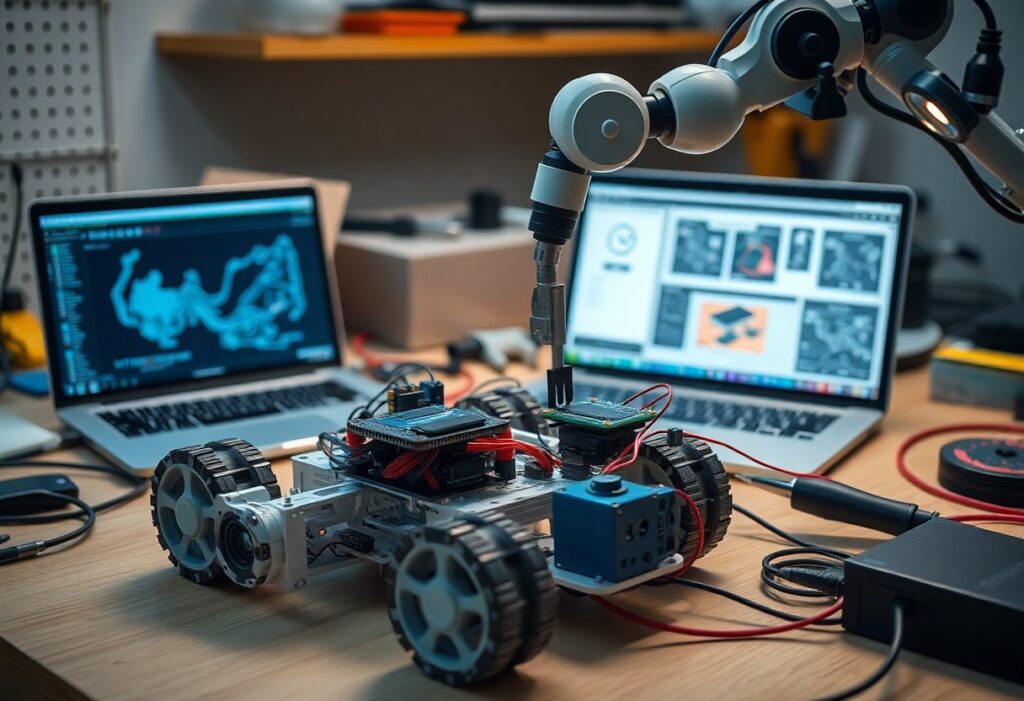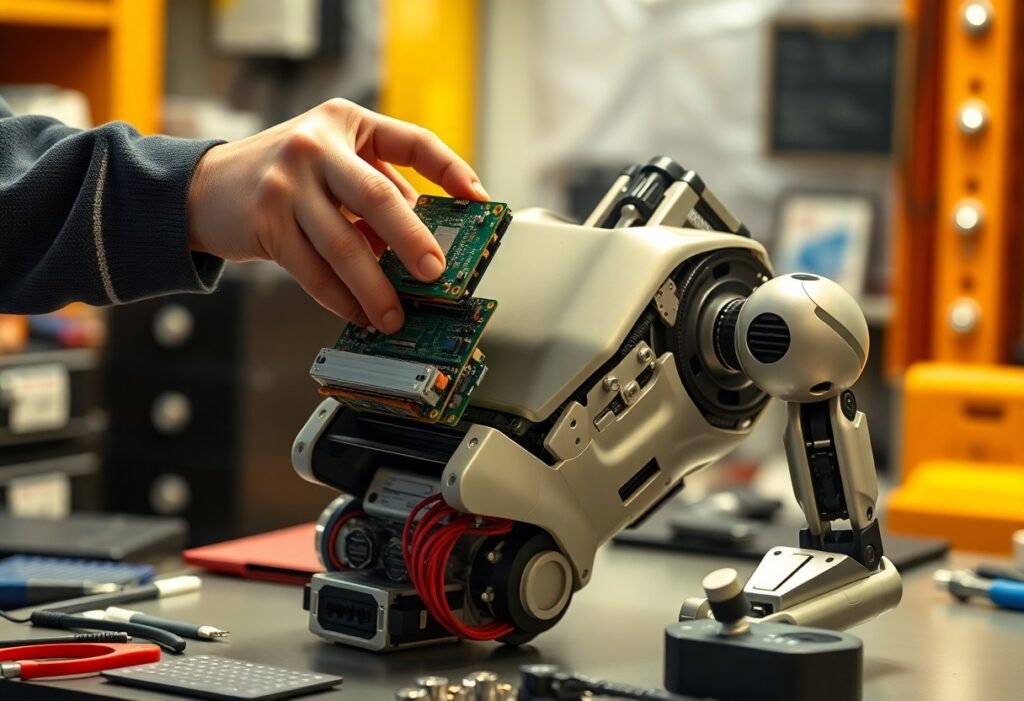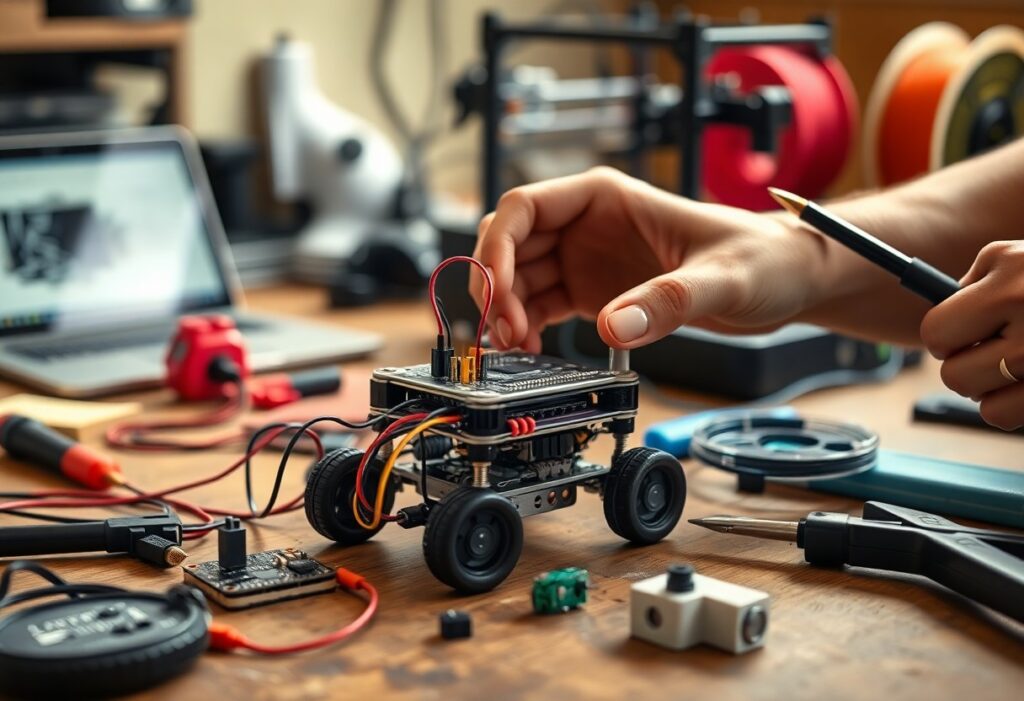
Most robotics enthusiasts begin with limited budgets but big ambitions. You can build functional, adaptable robots using affordable, widely available parts without sacrificing performance. This guide shows you how to select components, design flexible systems, and implement smart engineering choices that maximize capability while minimizing cost.
The Economic Imperative of the Machine
You build smarter when you design under financial constraints. Cost shapes innovation, forcing clarity in function and purpose. Every dollar saved on components is a step toward broader access and faster iteration. Affordability isn’t a compromise-it’s the foundation of scalable, sustainable robotics.
Scavenging for Logic Gates
You’ll often find usable logic gates in discarded electronics. Old printers, broken routers, and obsolete appliances contain functional ICs that perform reliably. Testing salvaged chips with simple voltage checks reveals hidden value. This practice reduces material costs and sharpens your diagnostic skills through hands-on discovery.
The Logic of Thrift in Design
You gain precision by limiting resources. Constraints eliminate excess, leaving only what performs necessary tasks. A minimalist circuit responds faster and fails less often. Designing with thrift forces you to question every connection, every component choice, leading to cleaner, more efficient systems.
Choosing fewer parts means each one must justify its place. You begin to see redundancy as a design flaw, not a safety net. Simpler schematics are easier to debug and reproduce. When cost and performance are aligned, your robot becomes not just affordable, but more reliable by design. This is how constraint breeds innovation.
Modular Anatomy and Universal Joints
You design robots to adapt, not just function. A modular anatomy lets you swap, extend, or reconfigure parts without overhauling the entire system. Universal joints act as the pivot points that enable multidirectional movement, mimicking biological articulation. These joints, built from low-cost hinges or 3D-printed connectors, allow smooth rotation across multiple axes, making them ideal for dynamic, evolving robot forms.
Engineering for Infinite Configuration
Your robot’s structure should never limit its purpose. By standardizing connection points and using symmetrical mounting patterns, you enable endless arrangements of limbs, sensors, and actuators. Each module speaks the same mechanical language, so you can reassemble a six-legged walker into a dual-arm manipulator in under an hour. Flexibility isn’t a bonus-it’s the foundation.
Structural Resilience with Basic Hardware
Strength doesn’t require exotic materials. You achieve durability using off-the-shelf bolts, brackets, and aluminum extrusions commonly found in DIY electronics or furniture assembly. These components handle stress, resist deformation, and survive repeated reconfiguration. Their widespread availability keeps costs low while ensuring long-term repairability and scalability across builds.
When you rely on basic hardware like M3 screws, T-slots, and nylon spacers, you’re not cutting corners-you’re optimizing. These parts have been stress-tested in industrial and consumer applications for decades. Their predictable behavior under load means you can model structural integrity without complex simulations. Even under constant reassembly, they maintain alignment and clamping force, forming a skeleton that’s both tough and forgiving when prototypes fail or evolve.

Sensory Perception on a Budget
You can equip your robot with responsive sensory systems without overspending. Off-the-shelf sensors like IR modules, ultrasonic distance detectors, and photoresistors deliver reliable input for under $5. These components integrate easily with microcontrollers, enabling real-time environmental awareness while keeping design accessible and scalable.
Mimicking Human Senses with Simple Circuits
Temperature changes, light levels, and proximity can simulate touch, sight, and spatial awareness using basic analog circuits. A thermistor paired with a comparator alerts your robot to heat shifts, while LDRs mimic rudimentary vision by detecting shadows or brightness. These setups replicate sensory functions with minimal parts and no complex programming.
Data Processing via Minimalist Nodes
Each sensor feeds into a dedicated microcontroller node that handles only its data stream. An ATtiny or ESP-01 filters noise, applies thresholds, and transmits only necessary signals. This distributed approach reduces central processing load and increases system responsiveness using low-cost, single-purpose chips.
Running computations locally on minimalist nodes means your robot reacts faster and uses less power. Instead of sending raw data to a central brain, each node decides what’s worth sharing-like a reflex arc in biology. This method supports modular expansion, where adding a new sensor brings its own processing, keeping the system agile and efficient as complexity grows.
The Adaptable Brain of the Automaton
Your robot’s intelligence doesn’t need expensive hardware to be effective. By using low-cost microcontrollers like Arduino or ESP32, you can build a responsive control system that adapts to changing environments. These platforms support real-time decision-making, allowing your robot to react dynamically while staying within budget constraints.
Open Source Logic for Dynamic Tasks
You gain flexibility by building on open source frameworks such as ROS or MicroPython. These tools let you implement complex behaviors-like obstacle avoidance or path planning-without starting from scratch. With community-supported libraries, you adapt proven logic to your robot’s unique challenges.
Software Efficiency in Limited Environments
You must optimize code to run reliably on hardware with minimal RAM and processing power. Efficient algorithms and lightweight firmware ensure your robot performs core functions without lag or crashes. Every line of code counts when resources are tight.
Running on constrained systems means prioritizing what computations matter most. You strip away unnecessary processes, use fixed-point arithmetic instead of floating-point when possible, and favor event-driven programming over constant polling. This disciplined approach keeps your robot responsive, even on a $5 microcontroller.
Power and Propulsion Logistics
Efficient power delivery starts with smart component choices-use recycled lithium-ion cells paired with voltage regulators to maintain stability. Pair these with low-RPM DC motors for balanced speed and torque. You can build an advanced robot for under $100 by sourcing wisely-check this detailed guide on Building an Advanced Robot for Under $100 | Loona Blog for proven strategies.
Energy Conservation in Mobile Units
Smart energy use keeps your robot running longer without oversized batteries. Implement sleep modes when idle and pulse-width modulation to drive motors only as hard as needed. You’ll extend operational time while maintaining responsiveness, especially in autonomous navigation tasks where power spikes are common.
Reclaiming Motion from Discarded Motors
Old printers, DVD drives, and broken toys often contain usable geared motors. Harvest these to power wheels or arms without spending extra. Test each motor for torque and RPM, then integrate them with motor driver modules compatible with your microcontroller for reliable control.
Salvaged motors may lack documentation, but simple bench testing reveals their potential. Apply variable voltage and measure performance under load to categorize them for specific tasks. Brushed DC units from scanners offer precise movement, while vibration motors from phones can enable compact crawling mechanisms-turn e-waste into motion with minimal investment.
The Social Reliability of Flexible Tools
You build trust when robots adapt without constant oversight. Systems made from low-cost, modular parts prove dependable not because they’re complex, but because they respond predictably in shared environments. Their consistency in varied conditions makes them socially credible among users who rely on them daily.
Safety Constraints for Human Proximity
Sensors define how close your robot can operate near people. Infrared, ultrasonic, or time-of-flight modules create virtual boundaries that trigger slowdowns or stops. You program these responses to comply with basic physical safety, ensuring minimal risk during unexpected encounters.
Protocols for Unsupervised Operation
Rules govern how your robot behaves when no one is watching. Simple logic trees determine actions based on sensor input, battery levels, or environmental changes. You design fallback routines that prioritize stability and prevent erratic behavior during isolation.
When operating without supervision, your robot must make limited but safe decisions. It checks in periodically using low-bandwidth signals, logs anomalies locally, and returns to a known state if confusion arises. These protocols don’t replace human judgment but create a buffer that maintains function and safety until intervention is possible. You rely on tested thresholds-like maximum idle time or obstacle count-before initiating shutdown or homing sequences.
Summing up
You build capable robots without high expenses by selecting affordable, accessible components and prioritizing modular design. Flexibility emerges not from cost but from thoughtful integration and adaptability in function. Your approach determines the outcome-smart choices in materials, sensors, and control systems allow for performance that rivals more expensive builds, proving resourcefulness outweighs budget.