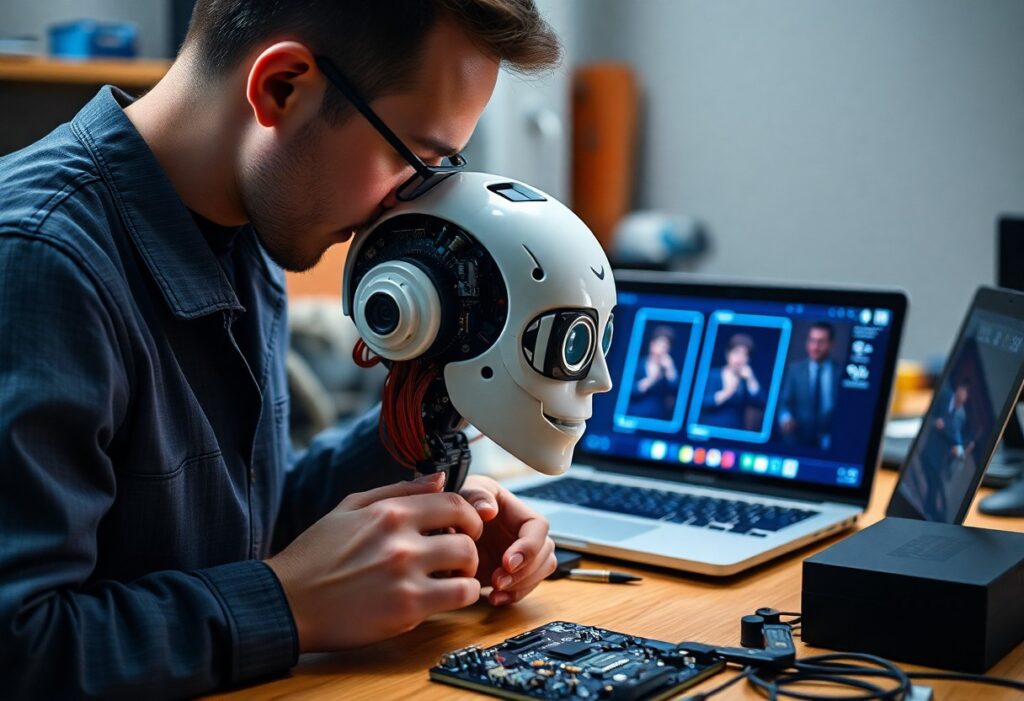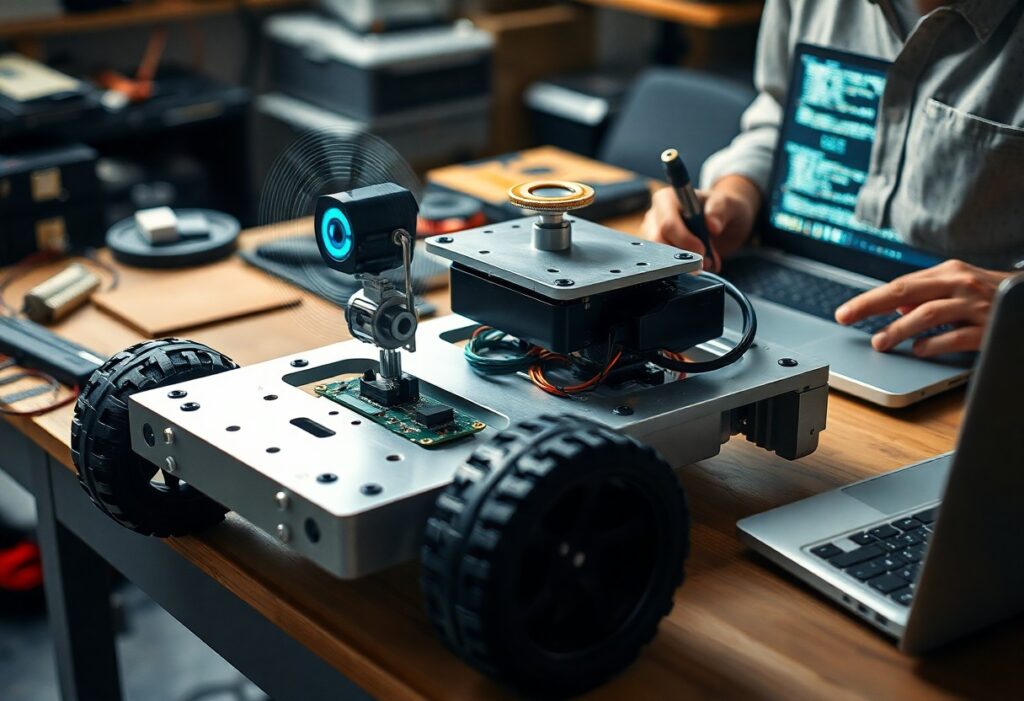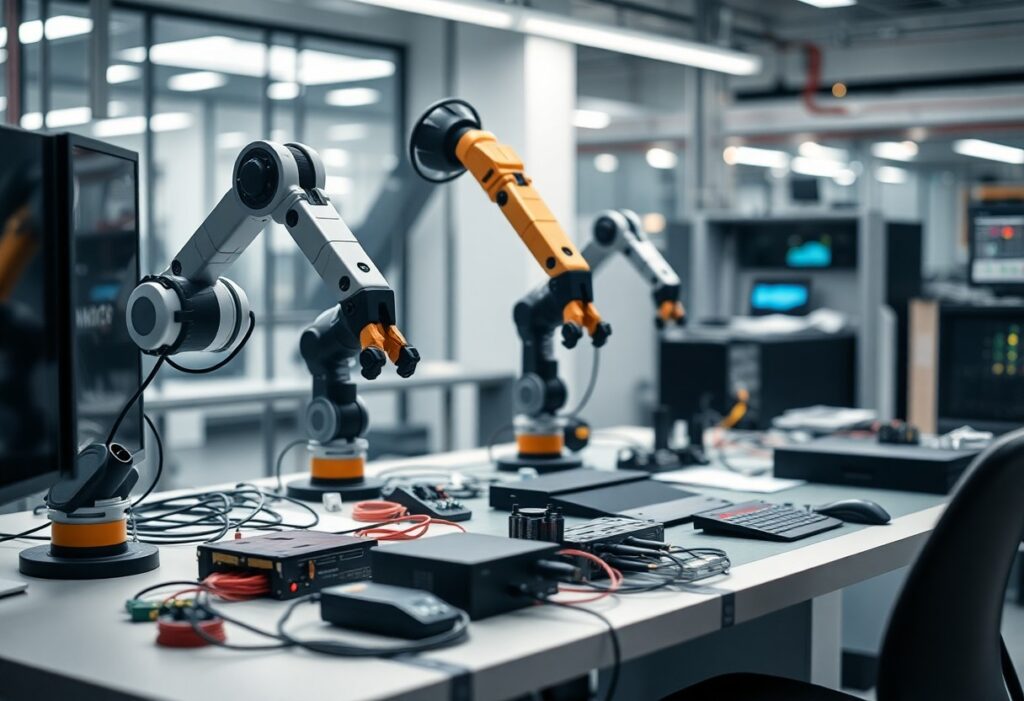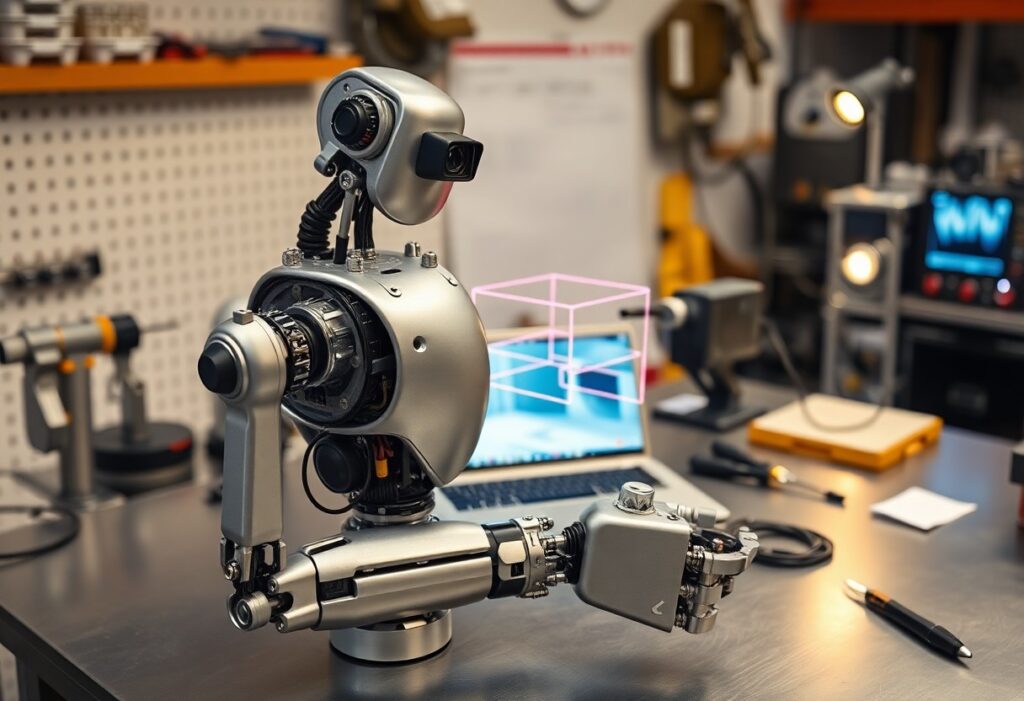
Construction of a robot capable of object recognition begins with integrating sensors, processing units, and machine learning models. You select cameras and depth sensors to capture visual data, then process it using trained neural networks to identify objects. Proper calibration and iterative testing ensure accuracy and responsiveness in real-world environments.
The Mechanical Foundation
Your robot begins with a rigid frame designed to support sensors, processors, and actuators without unnecessary weight. Precision in joint alignment ensures smooth movement, while modular construction allows for quick adjustments during testing phases. Stability and accessibility shape every design decision.
Optical Sensor Integration
Your camera module mounts at eye-level height to mimic human perspective, enabling accurate depth perception. Secure cabling and shielding from glare ensure consistent image input for downstream processing.
Chassis Equilibrium Dynamics
Your robot’s balance depends on weight distribution across its base. A low center of gravity prevents tipping during motion, especially when turning or interacting with objects.
Shifting mass during operation can destabilize your robot if not accounted for. You must calculate the combined center of gravity for all components, including batteries and motors, and position them to maintain stability under movement. Even small imbalances amplify at higher speeds, so symmetry and measured ballast are crucial.
The Positronic Logic Core
Your robot’s decision-making hinges on the Positronic Logic Core, a dedicated processing unit designed to interpret sensory input and execute recognition tasks with precision. This core integrates real-time data flows, enabling coherent responses to dynamic environments while maintaining system stability and low-latency inference.
Configuring Neural Network Layers
You shape recognition accuracy by adjusting the depth and structure of neural network layers. Each layer extracts increasingly complex features, from edges to object identities, and your choices in activation functions and filter sizes directly influence how well the model generalizes across varied visual inputs.
Allocating Computational Resources
You balance speed and accuracy by assigning processing power where it’s needed most. Real-time object detection demands efficient use of GPU memory and CPU cycles, so prioritizing critical operations ensures smooth, uninterrupted performance without overloading the system.
Efficient resource allocation means mapping each recognition task to the appropriate hardware tier. You might run lightweight detection models on edge processors while reserving high-performance units for complex classification. This tiered approach minimizes latency and extends operational endurance, especially in battery-powered robots where thermal and power constraints are constant factors.
Sensory Input Streams
Your robot relies on continuous sensory input to interpret its surroundings. Cameras serve as primary sensors, feeding live visual data for immediate processing. These streams form the foundation for all downstream recognition tasks, making timing and synchronization vital for accurate perception.
Frame Capture Methodology
Timing determines how effectively your system captures visual data. You configure the camera to sample frames at consistent intervals, ensuring motion doesn’t blur critical details. Triggered captures or rolling buffers help maintain data integrity during high-speed operations.
Digital Pattern Distillation
Each frame undergoes transformation into analyzable features. You isolate edges, textures, and color gradients, converting raw pixels into structured data. This step reduces complexity while preserving identifying characteristics necessary for recognition.
Pattern distillation works by applying convolutional filters that respond to specific spatial arrangements in the image. You use trained weights to highlight meaningful structures-like corners or lines-while suppressing irrelevant noise. This distilled representation becomes the input for classification, enabling your robot to differentiate objects efficiently and reliably under varying conditions.
The Identification Matrix
Your robot relies on a structured framework to translate visual input into actionable understanding. The Identification Matrix organizes detected features into a coherent system, mapping geometric data to known object profiles. This matrix enables rapid comparisons, allowing your robot to assess similarity and make recognition decisions with precision.
Geometric Feature Extraction
You begin by isolating key shapes and contours from raw sensor data. Edges, corners, and symmetry patterns are converted into measurable attributes, forming a foundational set of descriptors. These geometric traits remain consistent across lighting and orientation changes, giving your system reliable input for downstream analysis.
Classification Probability Vectors
You receive a set of likelihood scores for each potential object class after feature processing. These values reflect how closely the input matches known categories, such as “cup,” “book,” or “phone.” Your system uses this vector to select the most probable match based on thresholded confidence.
Each value in the classification probability vector corresponds to a specific object type learned during training. Your model calculates these probabilities using weighted feature responses, shaped by prior exposure to labeled examples. A high score in one position doesn’t guarantee identity-it must surpass a confidence threshold and outperform alternatives to trigger recognition. This probabilistic approach allows your robot to handle ambiguity and avoid false positives in cluttered environments.
Environmental Interaction
Interacting with surroundings effectively requires your robot to process visual input and respond appropriately. By integrating sensors and vision algorithms, it identifies objects and adjusts its actions in real time. Learn how to implement these systems by checking out this guide to Build a Robot – Computer Vision.
Real-Time Environment Scanning
Sensors continuously feed data to your robot, enabling instant detection of moving and static objects. This constant stream allows the system to map its surroundings dynamically, ensuring accurate navigation and object interaction without delays or blind spots.
Error Correction Protocols
Mistakes in object identification can lead to incorrect actions. Your robot uses feedback loops to verify detections and discard false positives, improving reliability during operation.
When your robot misidentifies an object, built-in validation routines compare the result against known patterns and sensor history. Discrepancies trigger a re-scan or request additional input from alternate sensors, minimizing errors in complex environments. This layered verification ensures consistent performance even under variable lighting or partial obstructions.
Validation of the Synthetic Mind
You confirm the robot’s cognitive accuracy by testing its perception system against diverse real-world environments. Each recognition event is logged and cross-referenced with ground truth data to assess decision fidelity. Performance patterns reveal how well synthetic perception aligns with human-verified outcomes, establishing trust in autonomous judgment.
Precision Benchmark Metrics
Performance is quantified using precision, recall, and F1 scores derived from thousands of test images across varying lighting and occlusion conditions. You measure false positives and missed detections to fine-tune classification thresholds. These metrics provide a clear, numerical assessment of recognition reliability.
Long-Term Reliability Analysis
Stability over time defines a capable system. You monitor recognition accuracy across weeks of continuous operation, tracking degradation in sensor performance or model drift. Environmental wear and computational load are factored into failure mode predictions, ensuring sustained functionality under real-world stress.
Long-term reliability goes beyond initial accuracy by examining how the robot adapts to changing conditions over extended deployment. You observe thermal stress on cameras, memory leaks in processing units, and shifts in object appearance due to wear or lighting cycles. Regular recalibration intervals and anomaly detection protocols are built into the system to maintain consistent performance without manual intervention, ensuring the robot remains effective across months of autonomous operation.
Final Words
So you have built a robot capable of recognizing objects by combining sensors, processing units, and machine learning models. Your design translates visual data into actionable decisions, enabling real-world interaction. Success lies in calibration, training accuracy, and system integration-elements you now control with confidence and technical precision.