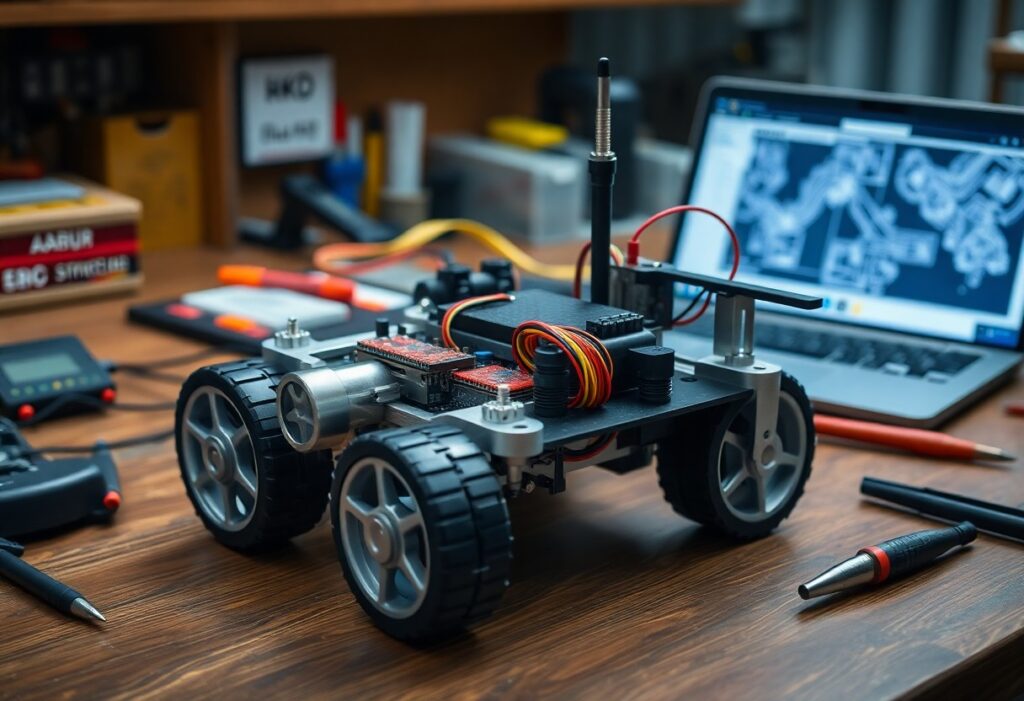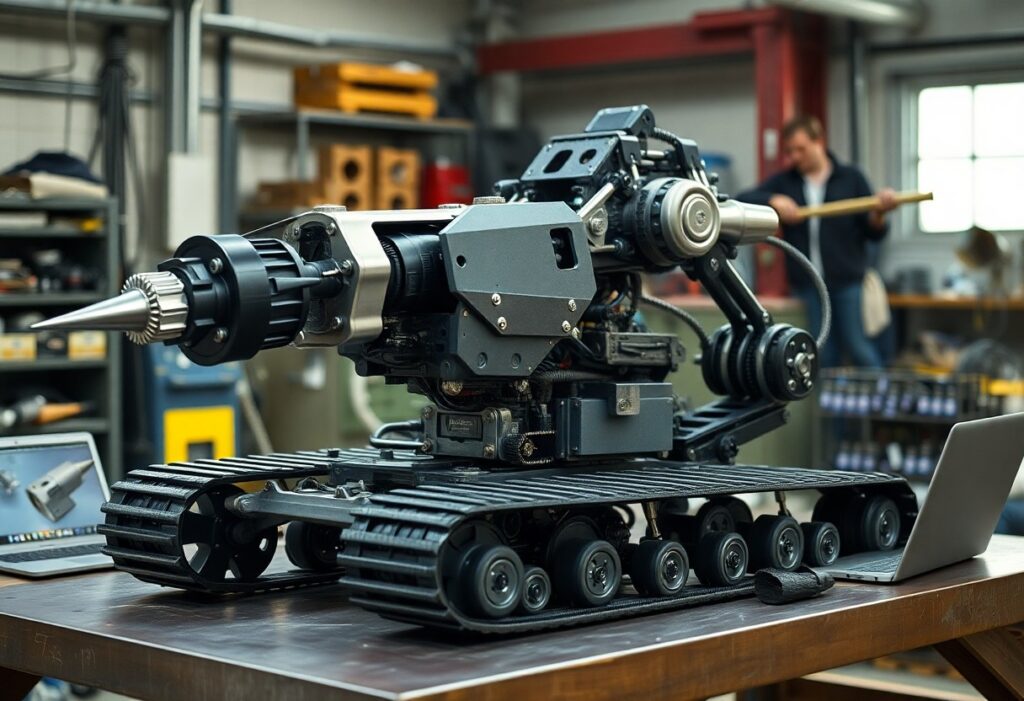
Engineering a competitive robot for Robot Wars demands precision, creativity, and a deep understanding of mechanics and electronics. You begin with a clear design focused on durability and weapon effectiveness. Every component, from motors to armor, must withstand extreme impacts while delivering maximum damage. Your build process balances speed, power, and control to dominate in the arena.
The Blueprint of Violence
Design Philosophy
Your robot’s shape isn’t just about looks-it’s a direct response to physics, weight limits, and weapon dynamics. Every angle, cutout, and mounting point serves a purpose. You choose low profiles to reduce target exposure, reinforced zones to absorb impacts, and clearance for weapon arcs that maximize damage. Form follows function, and in the arena, function means destruction.
The Forging of the Shell
Your robot’s shell isn’t just armor-it’s the first line of defense when impacts come fast and hard. You shape hardened steel or polycarbonate with precision, balancing weight against resilience. Every curve and angle is calculated to deflect blows and protect internal systems. This is where your design becomes battle-ready, forged not just in metal, but in purpose.
The Heart of the Circuit
Your robot’s electronics are the silent conductors of chaos and control. Every signal from your transmitter routes through the receiver, translating intent into motion. Speed controllers manage power delivery with precision, ensuring motors respond instantly. Wiring must be clean and secure-loose connections fail under impact. Choose components that survive vibration, heat, and electromagnetic noise. This network doesn’t just function-it fights.
The Edge of the Blade
Your weapon defines your robot’s identity in the arena. A well-crafted blade delivers impact, inspires fear, and turns momentum into destruction. You’ll need precision engineering and durable materials to survive repeated hits. Curious about the first steps? How to get started, to build my own combat robot? is a question many ask-and the answers begin with a single spinning idea.
The Command of the Air
You control your robot with precision, not guesswork. A reliable radio system ensures every command reaches its target without delay. Your transmitter must offer low latency and strong signal penetration to maintain dominance in the arena. Interference from other machines won’t compromise your response time when split-second decisions decide survival. Choose a 2.4 GHz spread-spectrum setup tuned for high-noise environments.
The Trial of the Arena
You step into the arena knowing every weld, wire, and weapon choice will be tested under fire. The roar of the crowd fades as your robot powers up, sensors scanning for movement. One hit from a spinning blade or flipper changes everything. Your reflexes sharpen-this is where theory meets destruction. Success isn’t just surviving; it’s dominating with precision, control, and relentless aggression.
Final Words
You have transformed an idea into a battle-ready machine, shaping every component with precision and purpose. Your robot stands not just as a collection of metal and circuits, but as proof of your engineering skill and strategic thinking. In the arena, it will face real challenges, testing every decision you made from concept to combat.