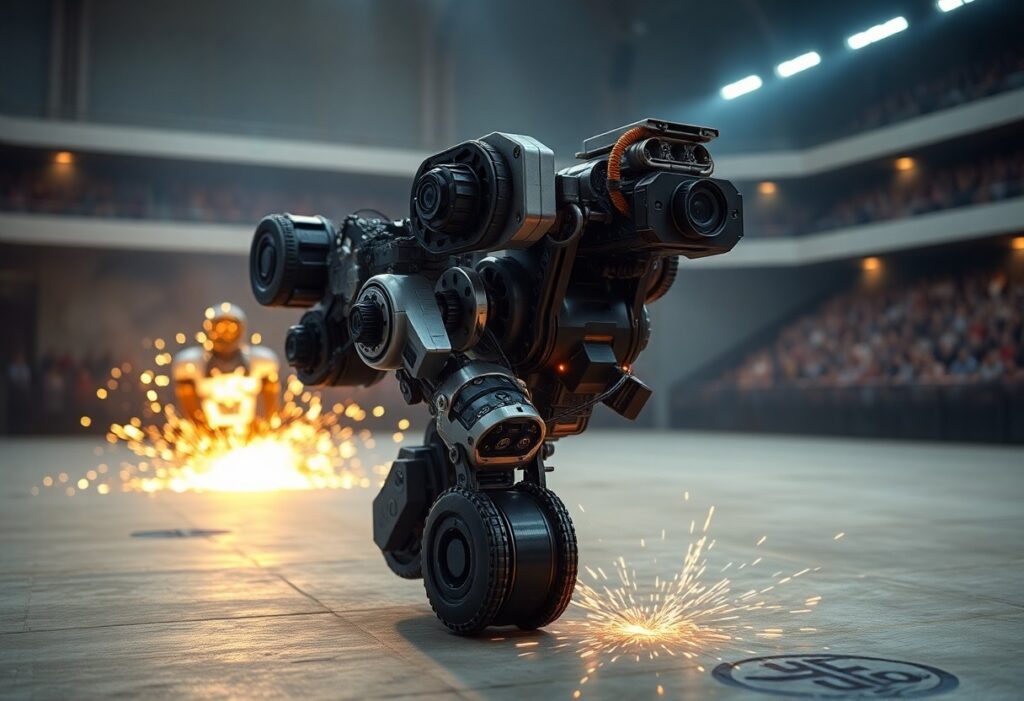
Many combat robotics enthusiasts aim to build machines that dominate through agility, strength, and strategy. You need a design that integrates powerful actuators, low-center-of-mass stability, and responsive controls to flip and push opponents effectively. Smart sensor integration and predictive algorithms give your robot the edge to anticipate moves and react decisively in fast-paced battles.
The Anatomy of the Upheaval
Your robot’s ability to dominate begins with structure. Every component, from chassis geometry to weight distribution, is engineered for instability-yours to control, your opponent’s to suffer. This machine isn’t built to survive chaos; it creates it.
Harnessing the Pneumatic Beast
Power surges through compressed air, turning restraint into explosive motion. You trigger the piston, and in a fraction of a second, stored energy erupts-lifting, flipping, launching your opponent skyward. Precision valves and rapid exhaust cycles make repeat strikes possible before they recover.
Pivot Points and Violent Leverage
Force multiplies where motion meets resistance. You position the contact edge so impact occurs far from the opponent’s center, turning their mass against them. A well-placed fulcrum turns a shove into a somersault.
Think of your flipper arm as a battering ram hinged at the edge of chaos. When it strikes, the point of contact isn’t just pushing-it’s pivoting the entire enemy robot around a single point on the arena floor. That pivot becomes the epicenter of destruction. You control the angle, the speed, and the timing, ensuring each hit maximizes rotational force. Too close to their center, and they absorb it. Too high, and you lift without flipping. But when you strike just below their center of mass at the right angle, torque does the rest-sending them end-over-end into the air. This isn’t brute strength; it’s calculated violence.
The Low-Profile Deception
Height works against you in high-impact combat. By staying low, your robot avoids becoming a target for overhead strikes and gains stability during aggressive maneuvers. A compact frame slips under opponents’ defenses, turning their momentum into a liability. You’re not just building a machine-you’re crafting an ambush.
Scrapping the Steel Floor
Steel floors punish poorly shielded electronics. Every spark from a grinding impact risks shorting circuits or degrading performance. You insulate critical components and angle undercarriages to deflect debris. Surviving the grind means thinking beneath the surface-where damage starts unseen.
Slopes of Pure Treachery
Inclines lure robots into traps. A slight ramp may look passable, but it’s often the last move before tipping or wheel spin. You design for controlled ascents and rapid retreats, treating every slope as a potential downfall.
Slopes exploit hesitation and poor weight distribution. When your robot climbs, center of mass shifts dangerously, especially under opponent pressure. You counter by positioning motors low and drive wheels wide, maintaining grip and balance. These angles aren’t just terrain-they’re weapons your opponent will try to turn against you.
Muscle and Traction
Power means nothing without control, and your robot’s ability to dominate hinges on how well force translates into motion. You need components that convert raw energy into decisive movement-whether shoving an opponent or launching into a flip. The balance between strength and grip defines your machine’s aggression and responsiveness on the arena floor.
Raw Torque for the Push
Force begins at the motor. Your robot relies on high-torque gearboxes to deliver crushing push power, letting it overpower opponents during standoffs. You’ll want brushless systems with low RPM but high output, ensuring sustained pressure without burning out. Every ounce of weight is leveraged into forward momentum.
Rubber Gripping the Abyss
Traction seals the deal when metal meets metal. Your robot’s wheels need specialized rubber compounds that cling to slick surfaces without shredding under stress. You’re not just fighting gravity-you’re defying slippage in high-impact clashes where a single lost inch costs control.
High-performance rubber isn’t just sticky-it’s engineered for rebound and heat resistance. You’ll notice the difference when your bot maintains grip after repeated impacts, its tires resisting glazing and chunking. The right tread pattern channels debris away, keeping contact patches locked and responsive even on oil-slicked steel. This isn’t just rubber; it’s your silent advantage.
Defensive Robots/Strategies?
Your robot’s synthetic brain must process real-time data like sensor input, opponent position, and field boundaries to make split-second tactical decisions. This internal logic system mimics instinct, allowing your machine to shift from offense to defense without hesitation, adapting like a seasoned player reading the game flow.
Coding for Combat Instincts
You train your robot’s decision-making through layered conditional logic and state machines that simulate aggression, caution, and opportunism. Each line of code shapes how quickly it reacts to threats, when to push forward, and when to hold ground-turning raw programming into battlefield intuition.
Outmaneuvering the Metal Meatheads
You rely on predictive algorithms to anticipate对手 movements based on speed, direction, and past behavior. By calculating likely paths seconds in advance, your robot positions itself to block, flip, or sidestep brute-force opponents before they strike, turning raw power into a predictable pattern.
Outmaneuvering the Metal Meatheads isn’t just about speed-it’s about reading the rhythm of the match. You equip your robot with dynamic pathfinding that adjusts in real time, using lidar and vision tracking to detect openings. When a hulking opponent charges, your machine sidesteps with precision, exploiting momentum against them and creating space to counterattack.
Summing up
With these considerations, you shape a robot capable of flipping, pushing, and outmaneuvering opponents through balanced mechanics, responsive controls, and strategic design. Your choices in weight distribution, actuation, and durability directly determine performance under pressure. Success lies not in complexity, but in precision, testing, and adaptability to real-time combat dynamics.