Building a Powerful Drive System for Combat Robots
Drive performance determines how fast, agile, and durable your combat robot will be in the arena. You need a system that delivers high torque, responsive control, and resilience under impact. Choosing the right motors, gear ratios, wheels, and motor controllers directly affects your robot’s ability to attack, evade, and survive.
The Heart of the Machine
Your robot’s performance lives or dies by its drive system. This is where raw power meets precision control, turning energy into motion that dominates the arena. Every component must work in sync, delivering reliability under impact and responsiveness during high-speed maneuvers. Choose wisely-your machine’s heart must beat strong through every collision.
Motor Selection
You need motors that match your weight class and fighting style. Brushless systems offer efficiency and speed, while brushed motors provide simplicity and instant torque. Think about heat buildup, power draw, and physical size when making your pick. The right motor doesn’t just move your bot-it enables your strategy.
Torque and Speed
Torque gets you moving from a stop and pushing opponents; speed lets you dodge and reposition. You can’t maximize both without trade-offs, so define your priorities. Gearing adjusts this balance, letting you tune performance to your exact needs. Your robot’s aggression depends on how well you manage this relationship.
High torque at low speeds means better pushing power, important for rammers and wedges. If you’re building a spinner or flipper, you may sacrifice some drive torque for rapid acceleration and retreat. Understand your gear ratios-lower ratios increase speed, higher ones boost torque. Your robot’s effectiveness in combat hinges on getting this equation right under real fight conditions.
The Transmission of Force
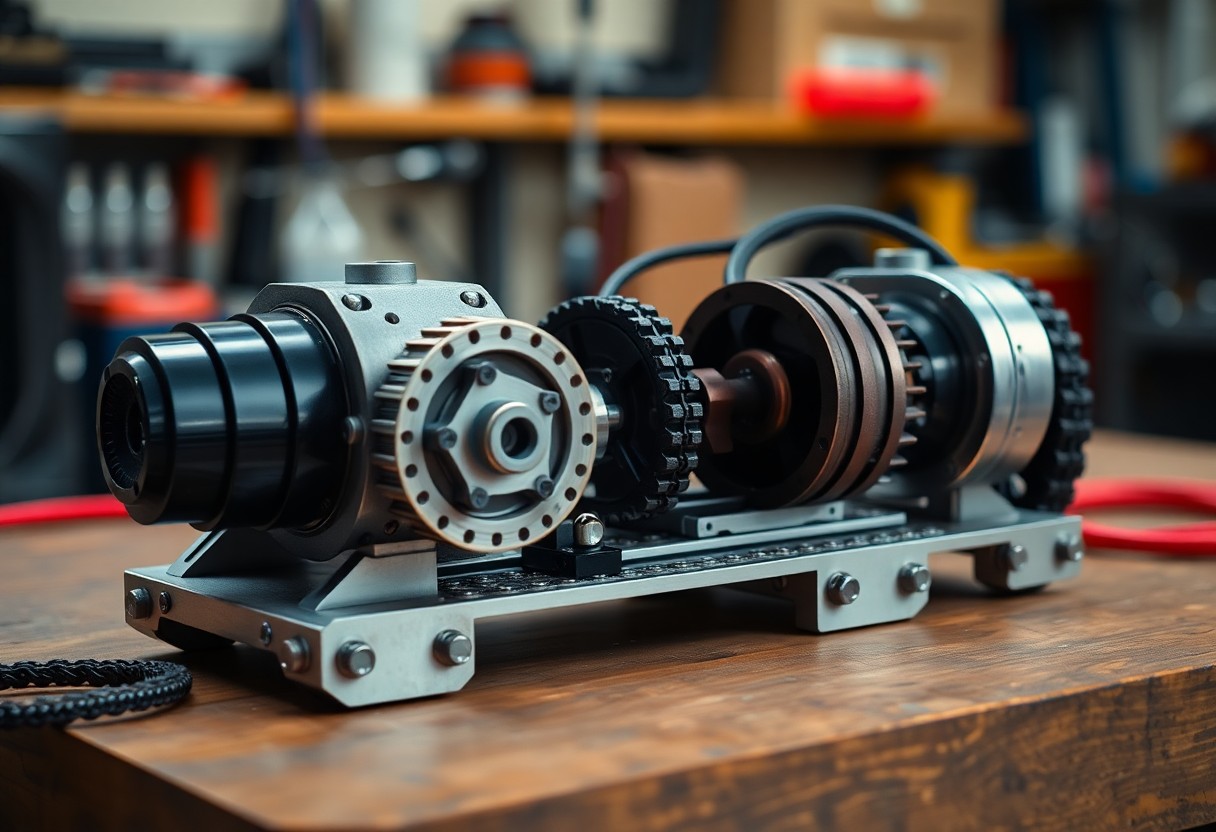
Efficient force transfer from motor to wheel defines your robot’s battlefield performance. Every component in the drivetrain must work in unison to deliver power without delay or loss. Your design choices here directly impact acceleration, control, and durability under impact.
Gearbox Selection
You need a gearbox that matches motor output to your robot’s weight and strategy. Planetary gearboxes offer compact strength and efficiency, ideal for high-torque applications. Consider serviceability and gear material-steel gears withstand punishment better than nylon, especially in weapon-heavy matches.
Drive Ratios
Your drive ratio shapes how quickly your robot moves versus how hard it can push. A higher ratio increases torque at the expense of top speed, favoring pushing bots. Lower ratios suit aggressive rammers needing rapid acceleration and maneuverability in tight spaces.
Choosing the right drive ratio means balancing motor RPM, wheel size, and competition weight class. You can calculate ideal ratios by estimating load resistance and desired speed. Test different setups on similar surfaces to the competition arena-small changes can dramatically alter handling and responsiveness during combat.
What are good drive motors and strong weapon …
Your robot’s performance hinges on electrical vitality-how well energy moves from battery to motors. Choose systems that balance draw and output, avoiding voltage sag under load. Efficiency isn’t just power; it’s sustained responsiveness when impacts drain momentum.
Battery Capacity
Capacity determines how long your robot stays aggressive in the arena. A higher amp-hour rating extends runtime, but size and weight matter-overloading cuts agility. Match your battery’s output to motor demands without tipping the scale.
Speed Controller Limits
Controllers cap how much current reaches your motors. Exceeding their limit causes overheating or failure mid-match. Pick a model rated above your motor’s peak draw to stay safe under combat stress.
Speed controllers don’t just switch power-they manage surges from sudden direction changes or weapon recoil. H-bridge design and thermal protection define real-world durability. If your robot stalls often, the controller may be shutting down to protect itself, killing momentum when you need it most.
Contact with the Arena
Your robot’s performance hinges on how effectively it interacts with the arena surface. Every push, turn, and impact depends on the quality of contact between your wheels and the floor. Optimizing this connection ensures better control, faster acceleration, and stronger attacks during combat.
Wheel Materials
You need wheel materials that balance grip, durability, and weight. Urethane offers excellent traction on smooth surfaces, while rubber can wear faster but provides strong initial bite. Consider composite blends if you’re facing abrasive arena floors or need resistance to shredding from opponent weapons.
Traction Strategy
You must match your traction approach to both the arena and your robot’s role. High-traction setups help flippers and rammers generate momentum, while lower grip may benefit spinners by allowing controlled drift. Surface texture, weight distribution, and drive power all shape your ideal setup.
Think beyond just sticky tires-your traction strategy includes tire tread pattern, wheel camber, and even load per wheel. Pressure distribution changes how your robot bites during acceleration or resists being shoved. Test different configurations under real fight conditions to see how your robot responds when every inch matters.
Structural Integrity
Your robot’s frame must withstand repeated impacts without flexing or cracking. Use high-strength materials like chromoly steel or aluminum alloys designed for dynamic loads. Ensure all mounting points for the drive system align precisely to prevent stress concentration. A rigid, well-designed chassis transfers power efficiently while protecting internal components from shock and vibration during combat.
Shock Mounting
You reduce drivetrain damage by isolating motors and gearboxes from sudden impacts. Mount these components using rubber grommets, silicone bushings, or Sorbothane pads that absorb energy without sacrificing stability. Proper damping prevents gear tooth fracture and motor shaft bending when your robot takes a hard hit from an opponent’s weapon.
Axle Support
You need strong axle support to maintain wheel alignment under extreme side loads. Use sealed ball or tapered roller bearings mounted close to the wheel hub. Avoid relying solely on gearbox internals for support-this leads to premature failure during aggressive pushing or lateral impacts.
Proper axle support starts with selecting the right bearing type and placement. Tapered roller bearings handle combined radial and axial loads common in combat scenarios, especially during ramming or weapon strikes. Mount them in pairs within a rigid carrier that ties directly to the main frame. This setup keeps the axle from deflecting under load, preserving gear mesh alignment and minimizing the risk of shearing keys or breaking shafts. Use shoulder bolts or precision-machined spacers to eliminate play while allowing smooth rotation. A well-supported axle doesn’t just improve durability-it enhances traction and control when you need it most.
Field Trials
Real-world performance separates theory from function. You’ll face uneven terrain, sudden impacts, and unpredictable opponent behavior. These trials expose weaknesses no simulation can replicate. Your robot must respond instantly, maintain control under chaos, and keep driving when systems are pushed beyond limits. Success comes from adaptation, not just power.
Stress Testing
Impact after impact, your drive system must hold firm. You subject gears, motors, and mounts to repeated high-torque stalls and abrupt reversals. This reveals material fatigue and alignment issues before competition. Failures here are lessons, not losses-each broken part guides a stronger rebuild.
Thermal Efficiency
Heat builds fast under combat loads. You monitor motor and ESC temperatures during sustained runs. Excessive heat degrades performance and risks shutdowns. Efficient airflow, thermal paste, and component spacing keep temperatures in check, ensuring consistent output when matches demand peak drive response.
Every watt of power you deliver turns into motion-or heat. You’ve seen motors sag in output after 30 seconds of aggressive pushing, not from electrical limits but thermal throttling. By upgrading to higher-temperature windings and adding heat sinks, you maintain torque throughout a match. Infrared imaging helps you spot hotspots during trials, letting you reposition components or add ducting where airflow is stagnant. Thermal efficiency isn’t just about survival-it’s about sustaining dominance from first impact to final knockout.
Summing up
Summing up, you build a powerful drive system for combat robots by selecting motors with high torque and speed ratings, matching them to durable gearboxes, and pairing them with responsive controllers. Your robot’s performance hinges on proper wheel choice, secure mounting, and a reliable power supply. Every component must withstand impact and stress while delivering consistent, agile movement in the arena.