
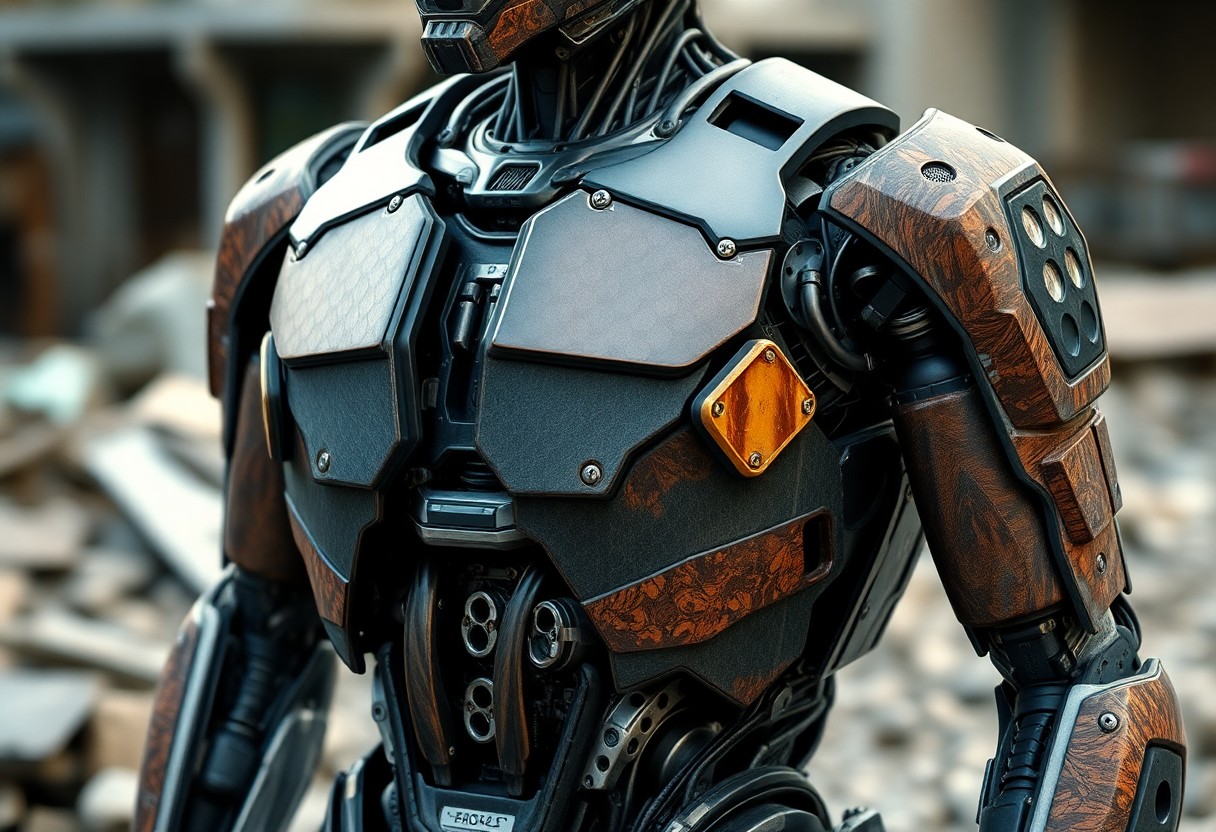
Armor Design Strategies for Surviving Robot Battles
Over years of competitive robot combat, effective armor design has proven decisive in determining survival. You need layered materials, strategic sloping, and impact distribution to withstand heavy strikes. Your robot’s shape, weight, and weak points directly influence durability. Choose wisely to deflect blows and maintain mobility under fire.
The Choice of Metal
Selecting the right metal defines how well your robot withstands impacts and heat during combat. Your design must balance strength, weight, and cost, as each material reacts differently under stress. The wrong choice can lead to catastrophic failure in the arena, so consider performance under real battle conditions, not just specs on paper.
Steel and Titanium
Steel offers high strength and affordability, making it a go-to for heavy-duty frames. You’ll benefit from its durability against blunt force, though its weight can slow you down. Titanium, while lighter and corrosion-resistant, demands precision in fabrication and a steeper budget-ideal when every ounce counts.
Composite Laminates
Layered materials like ceramic-titanium or fiberglass-steel hybrids give you superior energy absorption. You gain protection without the bulk, allowing faster, more agile builds. These laminates disperse impact across layers, reducing the chance of penetration from spinning weapons or rams.
Composite laminates work by combining materials with different mechanical properties into a single armor system. You rely on the outer layer to shatter or deform incoming projectiles, while inner layers absorb residual energy. This approach lets you tailor defense strategies based on expected threats-whether high-speed impacts or sustained crushing force-without overburdening your chassis.
The Slant of the Plate
Angle matters when deflecting incoming strikes on your antweight combat robot. A well-sloped surface redirects force upward, reducing impact damage and increasing the chance of weapon glancing. For proven design insights, review Building The Best Antweight Combat Robot, which breaks down effective armor geometries used in competition.
Sloped Surface Theory
Surface angle changes how force transfers during a hit. When you tilt your armor plates, incoming energy spreads across a broader area instead of concentrating at one point, helping your robot stay operational after high-speed collisions.
Ricochet Mechanics
Impact angle determines whether an attack bounces off or digs in. You increase deflection success by shaping your armor to meet weapons at acute angles, turning powerful blows into harmless glances when timed correctly.
Sharp angles don’t just deflect-they can send spinning weapons careening away unpredictably. You gain an edge when your opponent’s momentum works against them, especially in tight arenas where ricochets lead to self-inflicted damage or ring-outs.
The Giving of the Frame
Your robot’s frame isn’t just structure-it’s the first line of defense. A well-designed chassis absorbs and redirects impact, preserving internal systems. You shape survival into the skeleton, balancing rigidity with strategic flexibility to endure direct hits and maintain mobility under duress.
Crumple Zones
Impact energy has to go somewhere. You design crumple zones into your frame to collapse in a controlled way, sacrificing outer structure to protect critical components. These zones act like shock absorbers, reducing the force that reaches your drivetrain and electronics.
Internal Dampening
Vibrations from collisions can destroy precision components over time. You install internal dampening systems-like rubber mounts or silicone suspension-to isolate sensitive electronics. These materials absorb high-frequency shocks, keeping gyros, sensors, and circuit boards operational during intense combat.
Dampening isn’t just about soft materials-it’s about smart placement. You position isolators between the frame and key modules so that each impact doesn’t resonate through the entire system. This layered defense ensures your robot stays responsive, even after repeated blows to the chassis.
The Ease of Repair
Speed matters when your robot returns from battle with damaged armor. Designing for quick repairs means less downtime and more time dominating the arena. You need solutions that let you fix, replace, or reconfigure armor fast-without specialized tools or complex procedures.
Field Swappable Plates
You can swap out damaged sections in minutes when plates are designed to detach easily. Use fasteners that don’t require full disassembly, so you maintain structural integrity while replacing only what’s broken. This approach keeps your robot battle-ready with minimal effort.
Standardized Mounting
Mounting points that follow a consistent pattern simplify repairs and upgrades. You won’t waste time figuring out alignment or compatibility when every plate fits the same way. Standardization means any team member can make fixes under pressure.
When every armor segment attaches using the same bolt pattern and spacing, you eliminate guesswork during maintenance. This uniformity also lets you pre-build spare sections ahead of competitions. You’ll respond faster to damage and maintain performance consistency across multiple fights, giving you a real edge when it counts.
The Balance of the Load
Every pound of armor you add shifts how your robot handles under pressure. Too much weight in the wrong place turns agility into liability. You must distribute mass wisely to maintain responsiveness without sacrificing protection. A well-balanced machine survives longer because it moves predictably and resists tipping during high-speed maneuvers or impacts.
Center of Gravity
Positioning your robot’s heaviest components low and central keeps the center of gravity stable. You’ll notice sharper turns and less chance of flipping when colliding head-on. If your bot feels top-heavy, reassess where batteries and motors sit-small adjustments here dramatically improve battlefield control.
Mobility Tradeoffs
Adding thick plating slows acceleration and reduces top speed. You gain defense but lose the ability to reposition quickly. Choose armor thickness based on your movement strategy-lighter builds exploit speed, while heavier ones rely on controlled advances and deliberate strikes.
Speed isn’t just about winning races-it’s about dictating engagement. When you sacrifice too much mobility for armor, you become predictable and easier to corner. Instead, consider segmented protection: reinforce only the most exposed areas and leave non-critical zones lighter. This way, you keep evasive capabilities while still surviving initial hits. Your robot stays in the fight, not just standing in place.
Conclusion
Summing up, your armor design directly determines your robot’s survival in battle. Prioritize material strength, weight distribution, and impact absorption tailored to expected attack types. Angled surfaces deflect strikes, while modular sections allow quick repairs. Your strategy must balance protection with mobility-overbuilding sacrifices speed, underbuilding risks destruction. Test iteratively to refine performance under real combat conditions.