Constructing a Robot with Autonomous Mapping Capabilities
Many robotics enthusiasts aim to build machines that perceive and move through environments without human guidance. You can construct a robot with autonomous mapping capabilities using sensors like LiDAR or depth cameras, paired with SLAM algorithms. This guide walks you through the core components, software frameworks, and integration steps to bring your intelligent robot to life.
The Positronic Blueprint
Design Foundations
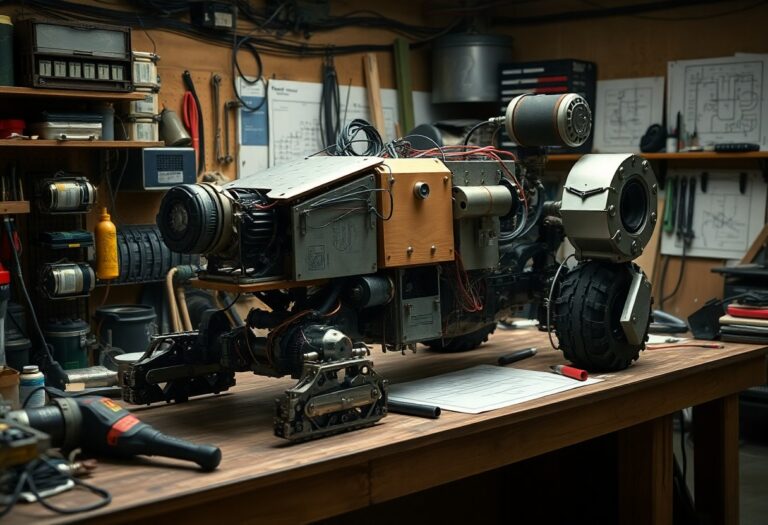
Your robot’s structural integrity begins with precise motor selection and sensor placement. Each component must align with the intended mapping algorithm’s demands, ensuring real-time data processing without lag. You balance weight, power consumption, and responsiveness to create a frame that supports autonomous decision-making. This foundation enables consistent environmental interpretation.
Circuit Integration
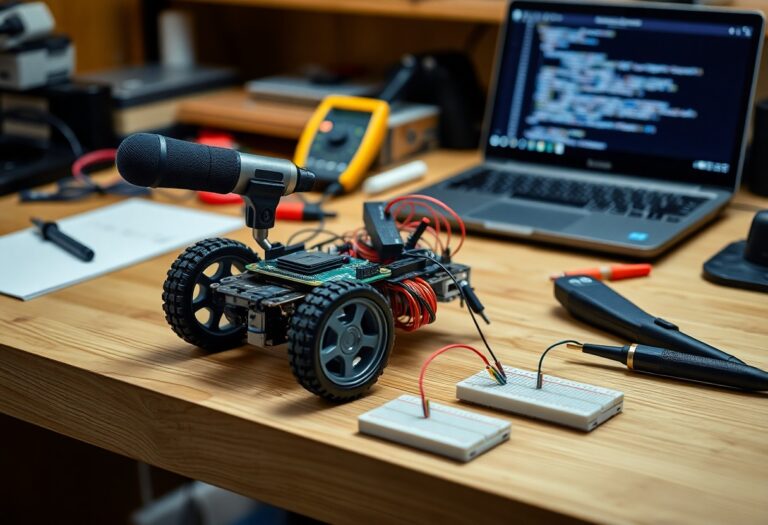
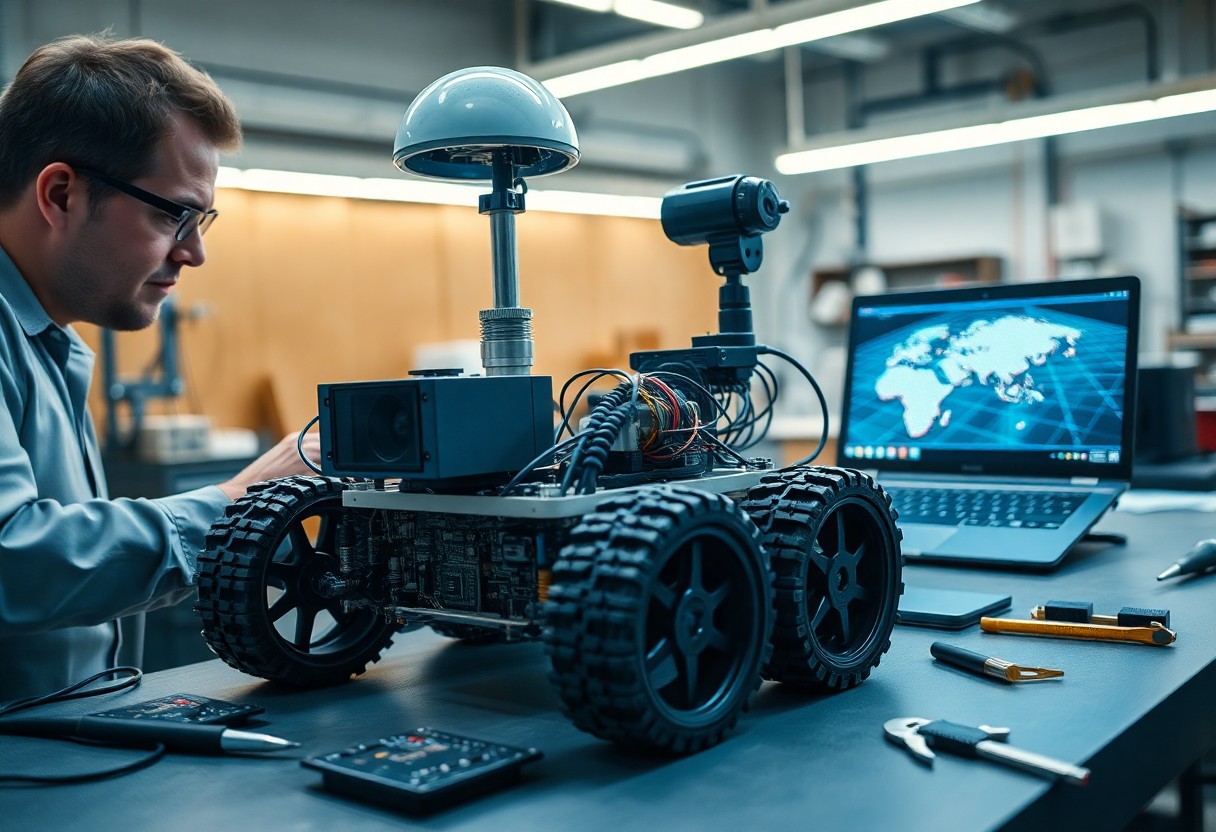
Sensors feed directly into a central processing unit programmed for SLAM logic. You wire LiDAR, IMU, and wheel encoders to minimize signal delay, allowing instantaneous spatial updates. The circuit board acts as the nervous system, translating raw input into navigable maps. Precision in connections determines accuracy in movement and perception.
Software Architecture
A lightweight Linux-based OS runs your custom mapping stack, optimized for low-latency performance. You implement modular code so updates to pathfinding or obstacle avoidance don’t disrupt core functions. Real-time feedback loops adjust trajectories based on dynamic surroundings. This architecture turns hardware input into intelligent motion.
Sensory Input Arrays
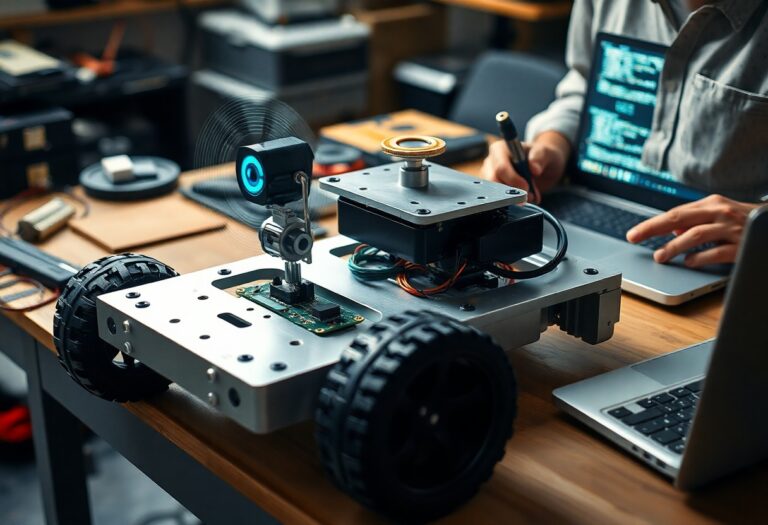
Your robot relies on a network of sensors to perceive its surroundings in real time. You integrate LiDAR, ultrasonic sensors, and stereo cameras to capture depth, distance, and visual data simultaneously. Each sensor complements the others, reducing blind spots and increasing environmental awareness. You calibrate these inputs to align within a unified coordinate system, ensuring accurate spatial interpretation. This fused sensory stream forms the foundation for reliable mapping and navigation.
The SLAM Protocol
You rely on SLAM-Simultaneous Localization and Mapping-to enable your robot to build a map of an unknown environment while tracking its own position within it. This protocol merges sensor data, typically from LiDAR or cameras, in real time, allowing autonomous navigation without prior spatial knowledge. Your system continuously refines both map accuracy and location estimates through probabilistic algorithms like EKF or particle filters.
Power and Propulsion
Your robot’s mobility hinges on a well-matched power source and propulsion system. Lithium-ion or LiPo batteries offer high energy density, ensuring extended operation without excessive weight. Brushless DC motors paired with efficient gearboxes deliver responsive movement across varied terrain. Proper voltage regulation protects sensitive electronics while maintaining consistent performance. You’ll need to balance speed, torque, and power consumption based on your robot’s size and mapping environment.
The Ethical Algorithm
Designing for Responsibility
You shape every decision your robot makes through the code you write. Each mapping choice affects privacy, safety, and autonomy. When your robot records environments, it must respect boundaries without explicit instruction. Ethical behavior isn’t an add-on-it’s embedded in sensor thresholds, data retention policies, and access controls. Your algorithm should act not just accurately, but rightly.
Summing up
You have now built a robot capable of autonomous mapping by integrating sensors, motion control, and SLAM algorithms. Your design enables real-time environment modeling and independent navigation. Success depends on precise calibration, sensor fusion, and efficient data processing. This project demonstrates how hardware and software converge to create intelligent, self-guided systems.