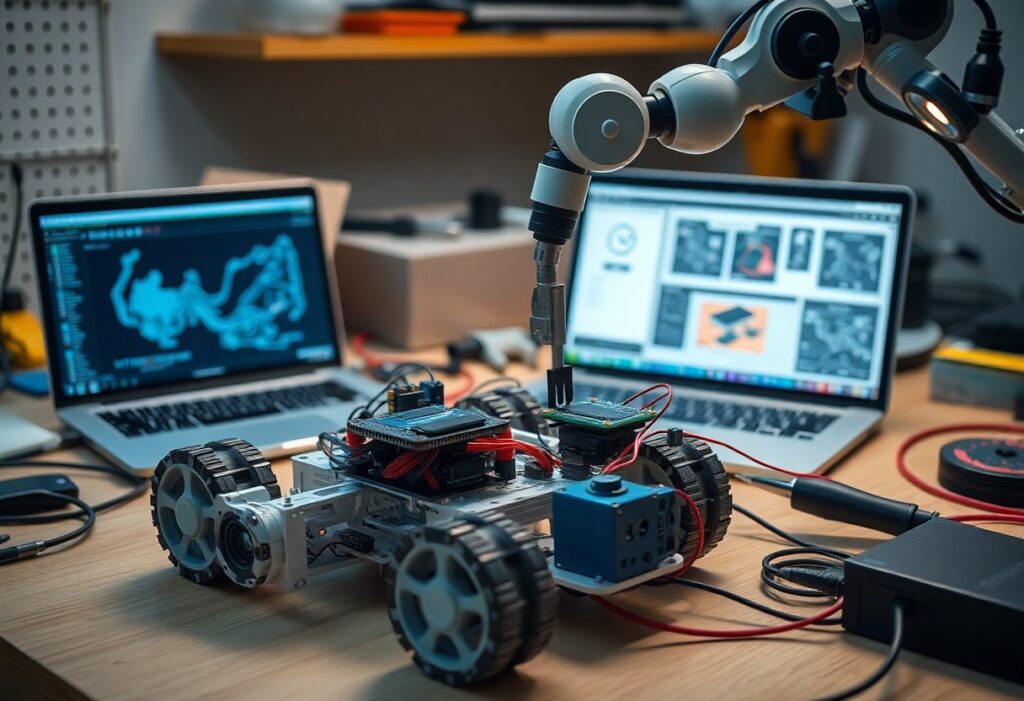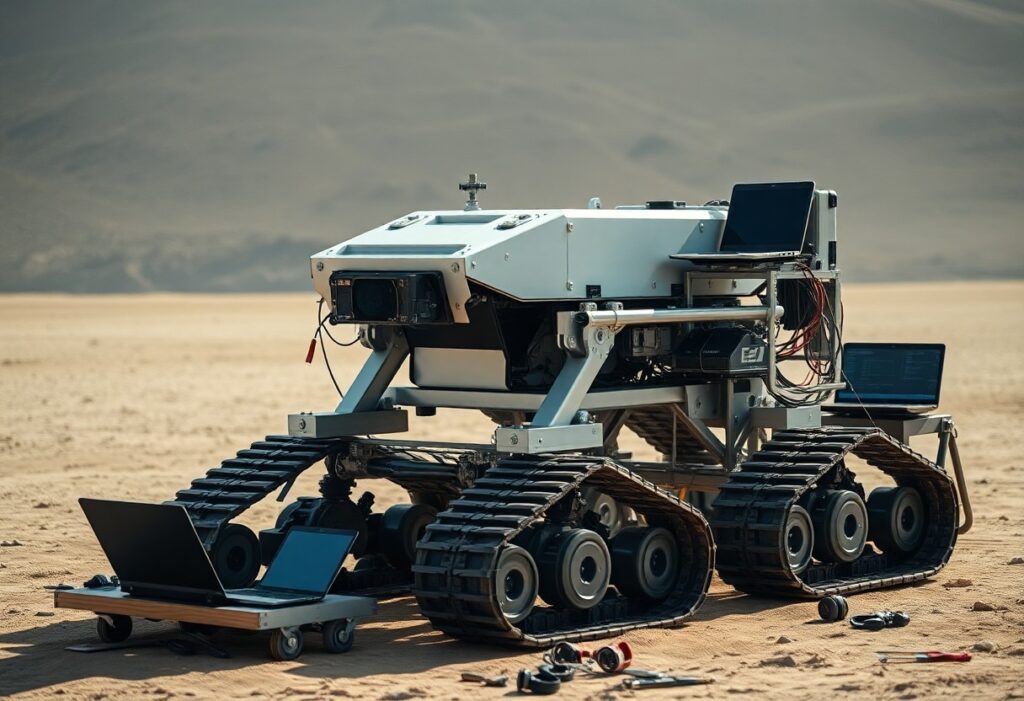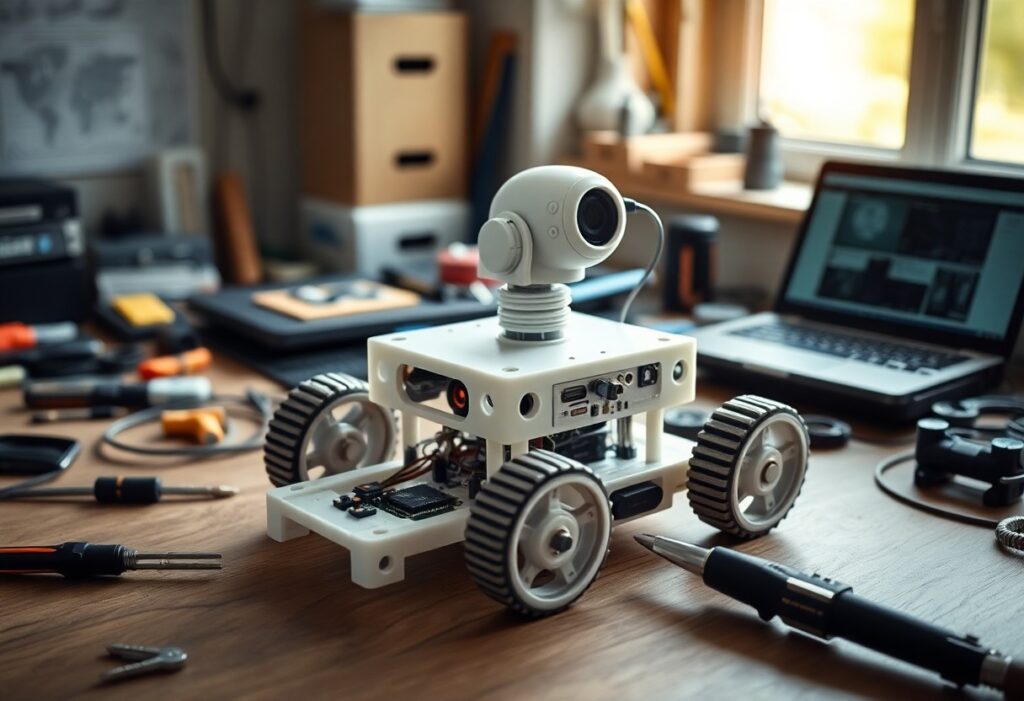
Just imagine robots moving through your home, handling chores, or guiding elderly family members with precision and care. You’re already seeing early versions in vacuums and lawn mowers, but today’s engineering advances allow you to build systems that perceive, decide, and act independently in real-world settings using sensors, AI, and modular design.
The First Principles of Domestic Design
Every successful domestic robot begins with an understanding of home life. You design not just for function, but for the rhythms of daily routines, quiet moments, and unpredictable human behavior. Space is limited, surfaces vary, and lighting changes-your robot must adapt without instruction. Simplicity in form supports reliability in action.
Human-Centric Spatial Navigation
You move through your home intuitively, and your robot should too. It learns not just room layouts, but where people walk, where pets rest, and where children play. Pathways shift throughout the day, and your robot anticipates these changes by recognizing behavioral patterns, avoiding congestion before it happens.
Safety Protocols for Shared Environments
Your robot operates where people sleep, eat, and relax, so safety can’t be an afterthought. It stops instantly when a child steps into its path, avoids loose cables under tables, and halts operation if it detects instability on stairs. These responses are automatic, embedded in both software and sensor design.
Safety in shared spaces means constant awareness without constant supervision. Your robot uses real-time sensor fusion-combining depth mapping, motion prediction, and touch feedback-to make split-second decisions. It never assumes a path is clear; it verifies with every movement. Thermal monitoring prevents overheating during extended tasks, and emergency shutoffs engage silently, without startling nearby users. These protocols aren’t add-ons-they’re built into every action.
Sensory Perception and Environment Mapping
You rely on a network of sensors-cameras, LiDAR, and ultrasonic arrays-to interpret spatial data in real time. These inputs feed into algorithms that construct dynamic maps of your surroundings, enabling coherent navigation. By continuously updating environmental models, your robot maintains awareness, adapting to changes like moving furniture or open doors, ensuring reliable operation in unpredictable home settings.
Real-Time Obstacle Avoidance
You process sensor data at millisecond intervals to detect and react to obstacles as they appear. Whether it’s a pet darting across the floor or a dropped item, your system recalculates paths instantly. This responsiveness ensures smooth, uninterrupted movement without collisions, maintaining both safety and efficiency during daily tasks.
Recognition of Common Household Objects
You identify everyday items like mugs, shoes, and remote controls using trained vision models. These systems distinguish objects by shape, color, and context, allowing accurate classification even in cluttered environments. Recognition enables purposeful interactions, such as retrieving an item or clearing a surface, making automation more intuitive and useful.
Object recognition goes beyond simple detection by incorporating contextual understanding and usage patterns. You learn that a remote is often found on a couch, while a coffee mug tends to appear in the kitchen or on a desk. By combining visual input with positional history and user behavior, your robot anticipates where objects should be and how they’re typically used, refining accuracy over time and supporting more complex domestic tasks. This contextual layer transforms basic identification into meaningful, task-oriented awareness.
Power Management and Autonomy
Efficient power management defines how long your robot remains operational in real-world settings. By integrating smart energy allocation, your system sustains performance across extended cycles. Research into on-site autonomous construction robots reveals how autonomy and energy use intersect in demanding environments.
Energy Efficiency in Routine Tasks
Every movement your robot makes impacts its overall energy budget. Optimizing path planning and task sequencing reduces unnecessary motor use, extending operational time between charges. You achieve longer service intervals by minimizing power draw during common activities like object transport or surface scanning.
Automated Recharging Cycles
Your robot can resume operations quickly when it initiates recharging without human input. Sensors detect low battery levels and trigger a return to the docking station. This self-sustaining loop ensures minimal downtime while maintaining task continuity in dynamic environments.
When your robot identifies a drop in power, it calculates the most efficient route back to the charger using existing environmental maps. Once docked, inductive or direct-contact charging begins automatically, monitored by onboard systems to prevent overcharging. You benefit from uninterrupted workflow as the robot rejoins its duties once energy levels are sufficient, making autonomy truly functional over extended periods.
Logic Systems and Task Execution
Your robot’s ability to complete everyday tasks hinges on well-structured logic systems. These frameworks guide actions based on sensor input, environmental cues, and user goals. By translating high-level objectives into step-by-step operations, logic systems ensure reliable performance in dynamic home environments.
Decision Trees for Daily Errands
You rely on decision trees to simplify how robots handle routine chores. Each branch represents a clear choice-like whether the dishwasher is full or the floor needs vacuuming. This structured approach enables fast, consistent decisions without complex computations.
Simplified Command Interfaces
You interact with your robot using plain-language commands that require no technical knowledge. These interfaces convert natural speech or tap-based inputs into executable actions, making automation accessible to everyone in the household.
Designing simplified command interfaces means anticipating how you naturally express tasks. Saying “clean the living room” triggers a sequence without needing precise instructions. The system interprets intent, adjusts for context, and confirms actions discreetly, ensuring clarity without clutter. This responsiveness builds trust in daily use.
Structural Integrity and Material Selection
Your robot’s frame must withstand daily stress without added weight. Choosing materials like reinforced polymers or lightweight alloys ensures stability while maintaining efficiency. You balance strength and flexibility to handle impacts and vibrations over time.
Durability for Constant Operation
Performance under continuous use defines reliability. You select components that resist wear, thermal stress, and electrical fatigue. Long-term functionality depends on materials that maintain integrity across thousands of cycles.
Ergonomic Integration into the Home
Size and shape influence how naturally your robot moves through living spaces. You design for low profiles and rounded edges to avoid collisions and fit under furniture or near walls.
Think about how often you interact with doorways, tables, or stair edges-your robot must respect those same spatial limits. A well-placed sensor array and compact chassis allow it to glide through tight spaces without disrupting room layouts. Smooth surfaces also make cleaning easier and reduce dust buildup, blending utility with household harmony.
To wrap up
Summing up, you now understand that constructing autonomous robots for everyday applications requires balancing simplicity, reliability, and user-centered design. These systems must operate safely in unpredictable environments while performing tasks that genuinely assist. Your focus should remain on practical functionality, ethical considerations, and real-world usability to ensure meaningful integration into daily life.