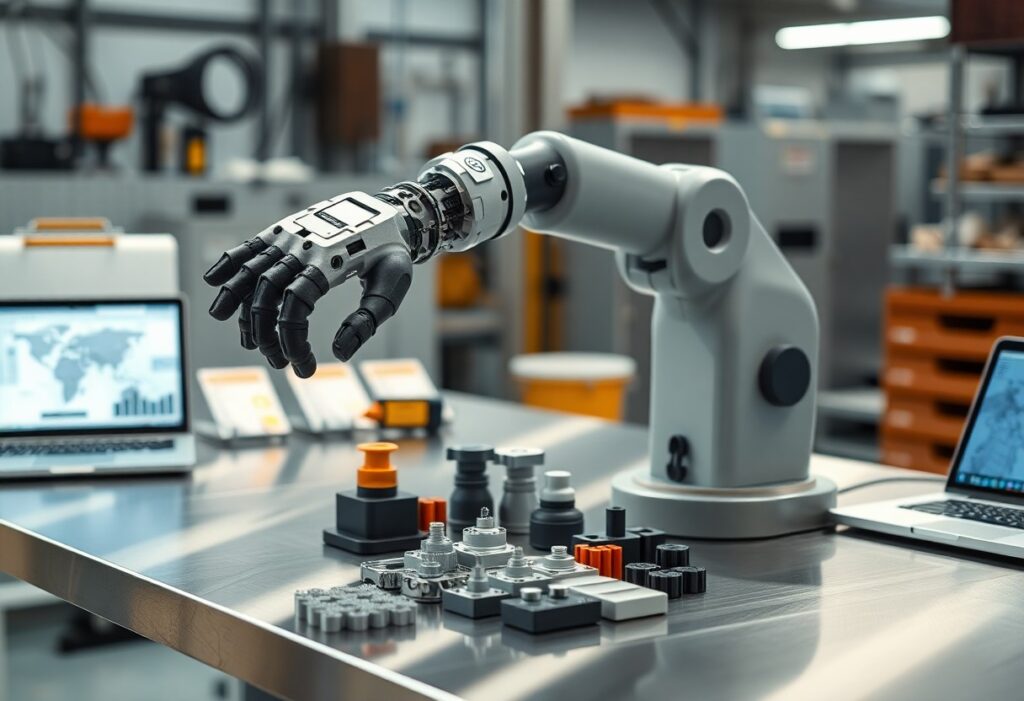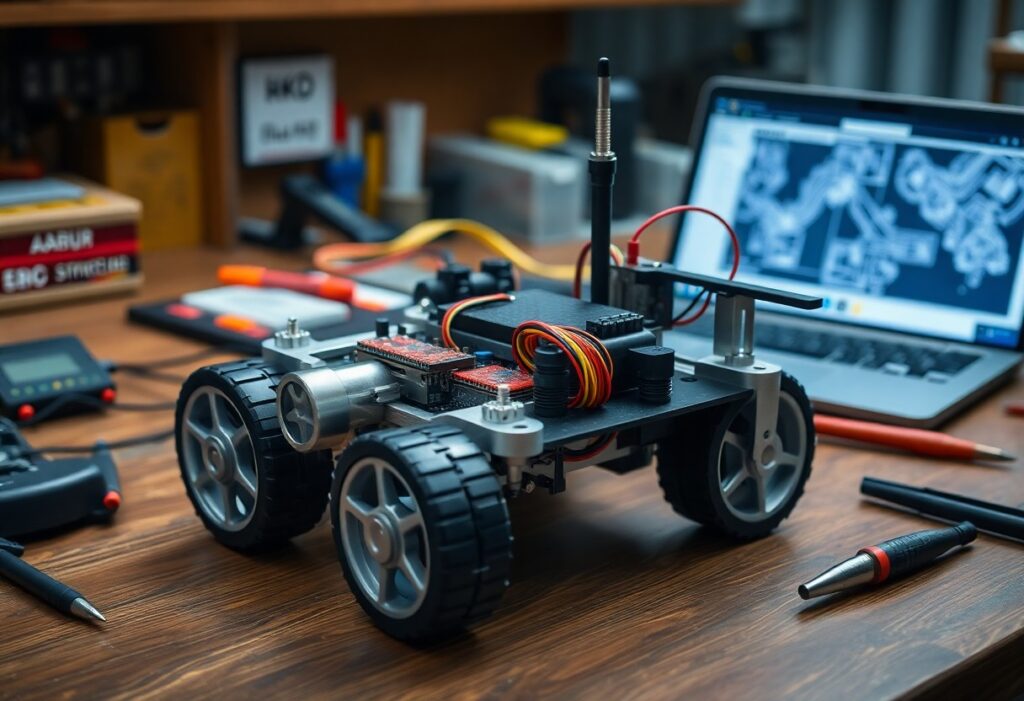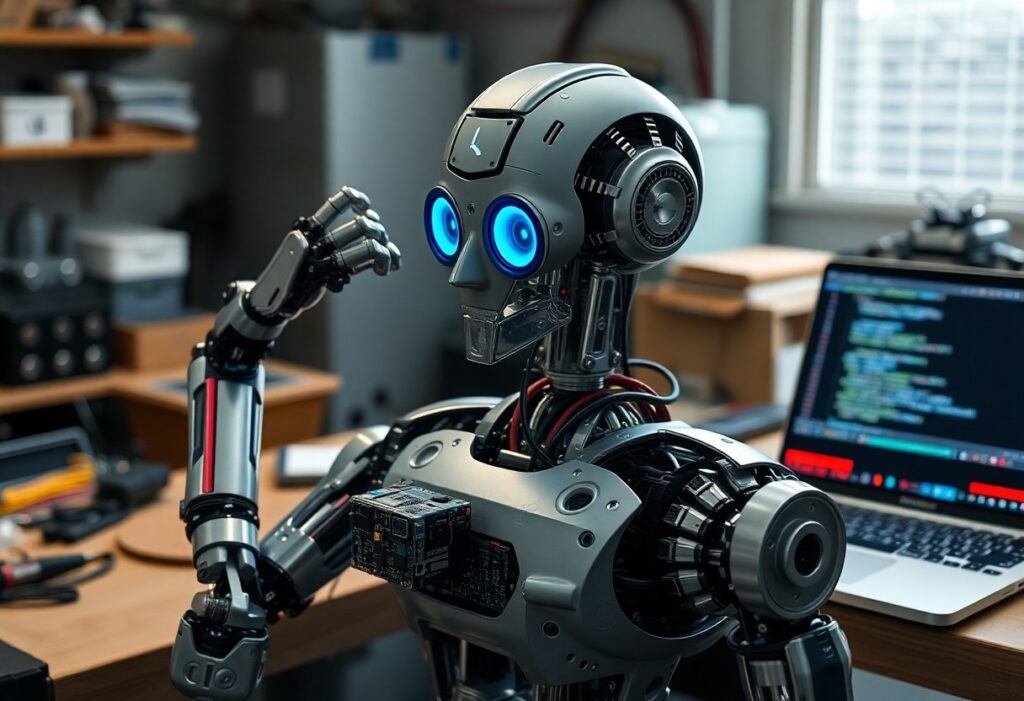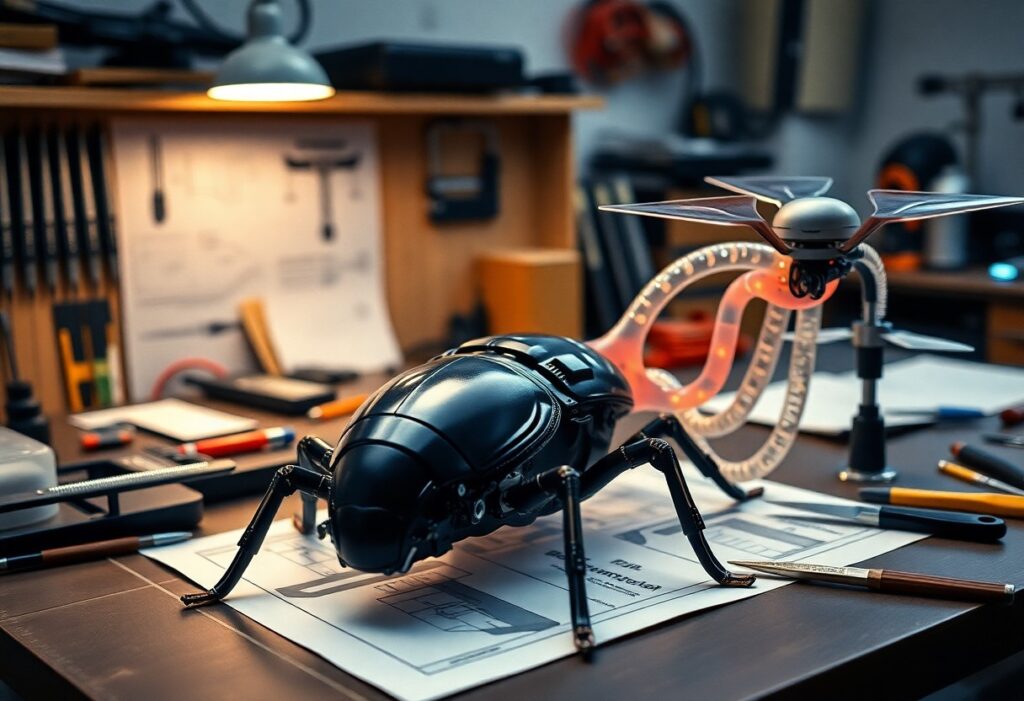
With millions of years of evolutionary refinement, nature offers proven solutions to movement, sensing, and adaptation that you can apply directly to robotics. By observing animals, insects, and natural systems, you design machines that walk like insects, fly like birds, or grip like plant tendrils-achieving efficiency and functionality that traditional engineering often misses.
The Biological Blueprint
Nature has spent billions of years refining designs through trial and error, resulting in organisms optimized for survival, efficiency, and adaptability. You’re already surrounded by solutions-flight in birds, grip in geckos, movement in fish-each a ready-made blueprint for smarter robots. These biological models offer proven strategies engineers can adapt with modern materials and computation.
Evolution as Engineering
Evolution shapes organisms like a meticulous designer, favoring forms that conserve energy, respond to environments, and repair themselves. You see this in the way insects walk over rubble or how birds adjust wing shape mid-flight. These adaptations aren’t random-they’re functional responses you can reverse-engineer into robotic systems that perform under real-world conditions.
Cellular Mechanics in Metal
Living cells use microscopic structures to generate motion, sense pressure, and heal damage. You can replicate these behaviors in synthetic systems by embedding responsive materials into robotic frameworks. Tiny actuators mimic muscle fibers, while sensor networks echo neural feedback, bringing lifelike responsiveness to mechanical bodies.
At the micro level, biological cells rely on cytoskeletal networks and ion-driven mechanisms to move and communicate. You can mirror this precision using shape-memory alloys and piezoelectric elements that contract or expand in response to electrical signals. These components allow robots to shift shape, absorb impact, or adjust grip strength-just as cells do-creating machines that react with organic subtlety, not just programmed rigidity.
Locomotion and Kinetic Logic
Movement in nature follows elegant patterns shaped by millions of years of adaptation. You observe how creatures traverse complex terrains with minimal energy, inspiring robotic systems that mimic these efficient motion strategies. By studying biological motion, engineers translate organic mechanics into responsive, agile machines capable of dynamic interaction with their environments.
Multipedal Stability
Walking on multiple legs offers inherent balance across uneven ground. You see insects maintain steady progress even on shifting surfaces, thanks to distributed weight and rhythmic gait patterns. Robots designed with similar configurations use decentralized control to adapt instantly, ensuring stability without constant recalibration.
Avian Aerodynamics
Flight in birds combines lightweight structure with precise wing modulation. You notice how feathers adjust mid-air to control lift and drag, enabling sharp turns and energy-efficient gliding. Robotic flyers now replicate these micro-adjustments using flexible materials and sensor-driven actuation.
Birds achieve flight mastery through morphing wings and real-time response to air currents. You can design aerial robots that emulate alula feathers or wingtip slots to enhance stall resistance and maneuverability. These bio-inspired features allow drones to operate in turbulent urban environments or tight forest canopies with greater reliability and less power consumption.
Sensory Systems and Perception
Designing robots that perceive their environment like living organisms begins with mimicking natural sensory systems. You can explore how engineers are turning to biology for solutions at Bio-Inspired Robotics: Engineering Design from Nature, where vision, touch, and motion converge in surprising ways.
Bio-Electronic Vision
Cameras inspired by insect eyes now offer wide-angle, low-latency vision for drones. You benefit from systems that replicate how compound eyes detect motion and depth with minimal processing, enabling faster navigation in cluttered environments.
Tactile Feedback Loops
Robotic hands equipped with artificial skin respond to pressure, temperature, and texture in real time. You experience more precise manipulation, similar to how octopus tentacles adjust grip based on sensory input from their surroundings.
These feedback systems rely on networks of flexible sensors embedded beneath a soft surface, transmitting data to control units that mimic neural pathways. As pressure changes, the robot instantly modulates force, preventing slippage or damage-just as your fingers automatically adjust when holding a fragile object.
Energy Efficiency and Metabolism
Nature optimizes energy use across every organism, and your robotic designs can do the same. By mimicking biological metabolic processes, engineers create systems that regulate power with precision, minimizing waste while sustaining performance over extended operations.
Low-Consumption Architectures
Efficient robots often mirror the minimalist structures found in insects and small mammals. You can reduce power demands by adopting decentralized control systems and passive components that perform mechanical functions without constant energy input.
Synthetic Muscle Dynamics
Artificial muscles powered by electroactive polymers respond like biological tissue, contracting and expanding with minimal electricity. You benefit from their lightweight nature and ability to generate motion smoothly, much like real muscle fibers.
Synthetic muscle dynamics go beyond simple movement-they integrate responsiveness and adaptability into robotic systems. When you use materials such as dielectric elastomers or shape-memory alloys, the resulting actuators emulate the nuanced tension and elasticity of natural muscles, enabling lifelike motion while consuming far less energy than traditional motors. These systems also allow quieter, more fluid interactions with environments and users.
Swarm Intelligence and Social Robotics
You observe how simple agents, following basic rules, achieve complex group behaviors seen in nature. Robot swarms mimic insect colonies, coordinating without central control. Each unit operates independently, yet the collective adapts dynamically to changing environments. This decentralized approach enhances resilience and scalability in robotic systems.
Collective Decision Engines
You see how robot groups emulate honeybee consensus during nest selection. Each unit contributes local data, and through repeated interactions, the swarm converges on optimal choices. These decision models rely on feedback loops and probabilistic responses, mirroring natural systems where no single agent holds complete information.
Communication Protocols in Hives
You notice how bees use the waggle dance to share precise directions to food sources. Robotic systems replicate this with encoded motion patterns or signal bursts that convey location and quality. These protocols enable efficient information transfer across decentralized networks using minimal, energy-conscious messaging.
Bees don’t rely on a leader to direct foraging; instead, they use rhythmic movements and pheromone signals to influence group behavior. In robotics, this translates into algorithms where agents broadcast short, structured data packets after detecting resources. These signals decay over time, preventing outdated information from dominating decisions. You design such systems to balance responsiveness with stability, ensuring the swarm avoids premature convergence while maintaining cohesion under uncertainty.
Ethical Frontiers of Synthetic Life
You stand at a threshold where engineering meets existence, crafting machines that mimic life so closely they challenge what it means to be alive. As robots breathe, move, and learn like organisms, you must ask not just what you can build, but what you should.
The Boundary of Animation
Life begins with movement that responds, adapts, and persists. When your robot flinches from heat or seeks light like a plant, you’ve crossed from mechanism into behavior-raising questions about sentience no blueprint can answer.
Laws for Mimetic Machines
Designers now face the need for rules that govern machines mimicking living beings. You must define accountability when a robot’s actions resemble instinct, ensuring safety without stifling innovation in biomimetic design.
Current frameworks struggle to classify robots that learn, adapt, and interact autonomously. You’re expected to comply with evolving standards that distinguish tools from entities, especially as mimetic machines operate in healthcare, wildlife conservation, and public spaces. Regulatory bodies are drafting guidelines that demand transparency in function and limitation, requiring you to document behavioral thresholds and response protocols. These laws aim to prevent deception-ensuring humans know when they’re interacting with a machine, not a living creature-while supporting ethical progress in robotics.
Summing up
Upon reflecting, you see that nature offers proven blueprints for efficient, adaptive robot design. Biomimicry allows you to build machines that move, sense, and respond like living organisms. By studying animals and natural systems, you create robots capable of real-world performance with elegance and simplicity grounded in evolutionary success.