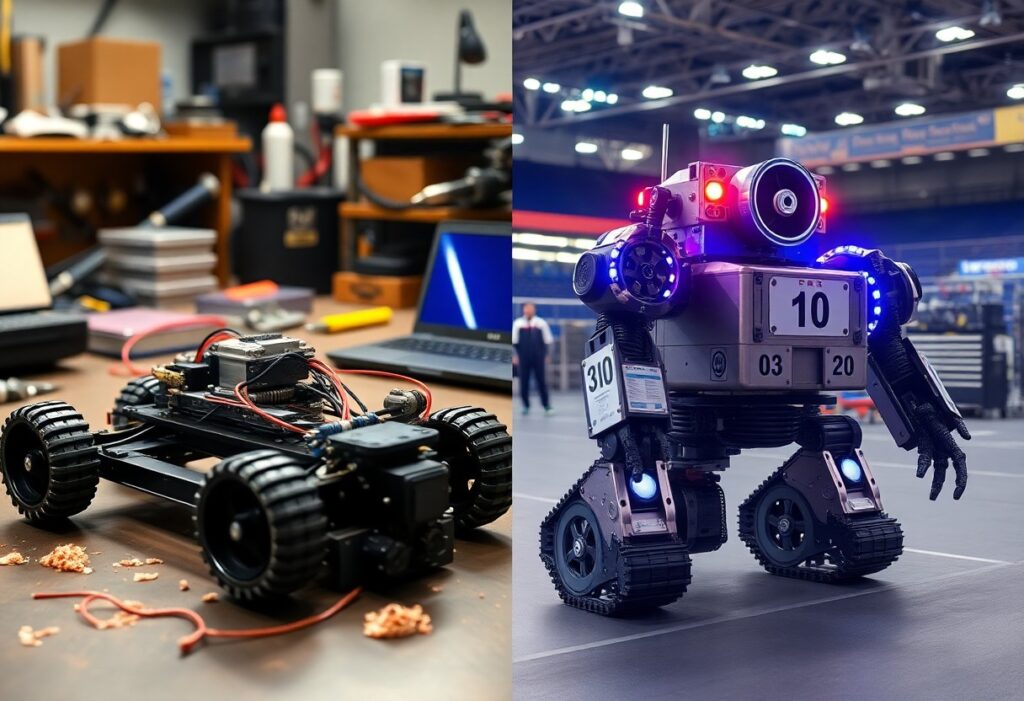
Just beginning your journey from concept to combat robot? You start with a basic prototype, refine mechanics through testing, strengthen armor, optimize weapon systems, and fine-tune control. Each iteration sharpens performance. With persistence and precision, your machine evolves into a reliable, competition-ready contender built to withstand real arena challenges.
The Raw Steel
Every battle bot begins with raw material, and yours is no different. You’re working with solid metal, not plastic models or mockups. This is where theory meets force, and your design faces its first real test. The steel doesn’t forgive poor planning-it responds only to precision and intent.
Selecting the Alloy
You need a balance between toughness and weight, and that starts with choosing the right alloy. 4130 chromoly steel often wins for its strength-to-weight ratio, resisting cracks under impact. Your bot will endure brutal punishment, so this decision shapes how long it lasts in the arena.
Cutting the Base
You mark the steel with sharp, clear lines, knowing each cut determines structural alignment. A plasma cutter bites through the sheet, leaving clean edges and a trail of molten sparks. Accuracy here ensures every motor, wheel, and weapon mounts flush and true.
Starting with a warped or misaligned base compromises everything that follows. You clamp the steel firmly, double-check measurements, and make slow, controlled passes with the cutter. Thermal distortion is a real risk, so you avoid overheating zones and let the metal breathe between cuts. A well-cut base doesn’t just look clean-it performs predictably under stress, giving you a stable platform for the chaos ahead.
The Heart of the Machine
Your robot’s performance lives or dies by its drivetrain. Every component must work in unison, turning raw power into controlled aggression. This is where speed meets durability-where your design proves itself or fails under pressure.
Mounting the Motors
Positioning your motors correctly ensures balanced thrust and reduces strain on the gearbox. You secure them with reinforced brackets, aligning each shaft precisely with the wheels. Misalignment now means breakdowns later-precision here prevents costly failures in the arena.
Linking the Drive
Wiring the motor controllers to your receiver establishes real-time control over movement. You route cables through protective conduits, minimizing exposure to impacts and sparks. Clean connections mean responsive handling when split-second reactions decide胜负.
Linking the drive isn’t just about plugging in wires-it’s about creating a responsive nervous system for your bot. You pair ESCs with the correct battery input, ensuring signal clarity between transmitter and motors. Each throttle test refines timing, eliminating lag so your robot moves exactly as intended the moment you command it.
The First Movement
Power surged through the circuit when you flipped the switch, and the robot twitched to life. Motors responded with a hum, and the treads turned just enough to inch forward. That first wobble confirmed everything-your design worked. Excitement replaced months of doubt in a single rolling second.
Binding the Wires
Neatness became your priority once the robot moved. Loose wires tangled during test runs, risking shorts and delays. You grouped cables by function, securing them with zip ties and spiral wrap. Clean routing improved access and reduced strain on connections, making troubleshooting faster and safer during intense prep sessions.
Driving the Floor
Control sharpened the moment you tested on smooth concrete. The robot responded to joystick inputs with predictable turns and bursts of speed. You adjusted PWM signals to balance aggression and stability, learning how weight distribution affected traction during quick reversals and pivots.
Driving on the actual competition surface revealed subtle flaws in motor synchronization. One tread lagged under load, causing drift during high-speed maneuvers. You recalibrated the ESCs and fine-tuned the drive code to match output, ensuring both sides delivered equal power. These small corrections transformed erratic movements into precise, responsive control-exactly what you’d need in the arena.
The Weapon of Choice
Your robot’s personality emerges in its weapon system-yours was built to dominate with speed and impact. After evaluating flippers, hammers, and blades, you committed to a vertical spinning disc: high-risk, high-reward, and perfectly suited to your aggressive style. This decision shaped every structural choice that followed.
Forging the Spinner
Material selection defined your spinner’s potential. You chose 4140 chromoly steel for its balance of toughness and hardness, machining it in-house to precise thickness and balance specs. Every grind mark was intentional, every ounce saved translated to faster acceleration and sharper strikes.
Testing the Impact
First spin tests revealed wobble at 3,000 RPM-enough to shake the chassis apart. You disassembled, rebalanced, and reinstalled with tighter tolerances. The second run held true, delivering clean, violent contact with the test dummy. Each strike confirmed the spinner could survive-and deliver-full-force hits.
Seeing the steel block dent after repeated impacts gave you confidence in both design and execution. You monitored motor draw, frame flex, and recovery time between spins, adjusting the mounting geometry to reduce stress. Real-world force feedback proved the spinner wasn’t just functional-it was fight-ready.
The Weight of Battle
Every gram counts when your robot steps into the arena. You’re not just building a machine-you’re crafting a contender for BattleBots: Home, where speed, power, and durability hinge on precise weight management. Exceed the limit and you’re disqualified, no matter how hard you hit.
Trimming the Excess
Weight savings begin with ruthless evaluation. You strip non-crucial components, swap out dense materials for lighter alternatives, and redesign bulky brackets. Each cut brings you closer to the sweet spot-under the limit but never underpowered.
Bracing the Armor
Strong armor must resist impacts without adding bulk. You reinforce critical zones with strategic bracing, using triangulated supports and high-strength alloys to deflect force and protect internals.
Bracing the armor isn’t just about bolting on metal. You analyze stress points from previous tests, then integrate internal frames that channel impact energy away from motors and electronics. This balance of structure and weight keeps your bot agile and battle-tough.
The Arena Gate
Standing at the arena gate, your robot hums with readiness, its systems glowing in the dim light. This moment is the result of months of refinement, each decision now tested under pressure. The gate lifts, and the crowd’s energy surges-your creation rolls forward, not as a prototype, but as a contender.
The Last Check
Your fingers run through the pre-match checklist one final time. Battery voltage holds steady, weapon spin-up sounds clean, and radio signals respond instantly. There’s no room for guesswork now-every bolt, wire, and code tweak has led to this silent confirmation that everything is set.
Facing the Opponent
Your robot locks onto the opponent as they enter from the opposite gate. Their design favors brute force, but you’ve trained for this matchup. The referee signals start, and your thumb hovers over the trigger-this is where theory meets impact.
When the match begins, split-second decisions define survival. You watch how their weapon arcs, how they pivot under stress. Your robot dodges the first swing, then counters with precision. It’s not just about power-it’s about timing, control, and staying calm when sparks fly inches from your line of sight.
Final Words
The journey from your first prototype to a competition-ready battle robot tests your skill, patience, and adaptability. You’ve refined designs, strengthened mechanisms, and sharpened strategy through real-world testing. Every setback became a lesson, every match a chance to improve. Now, with a machine built for combat and proven under pressure, you stand ready to face the arena on your terms.