Most robotics projects fail because they lack real-time feedback and remote oversight. You can avoid this by integrating telemetry and remote monitoring from the start. These systems let you track performance, diagnose issues, and adjust operations from a distance, ensuring reliability and precision in dynamic environments.
The Frame and the Motor
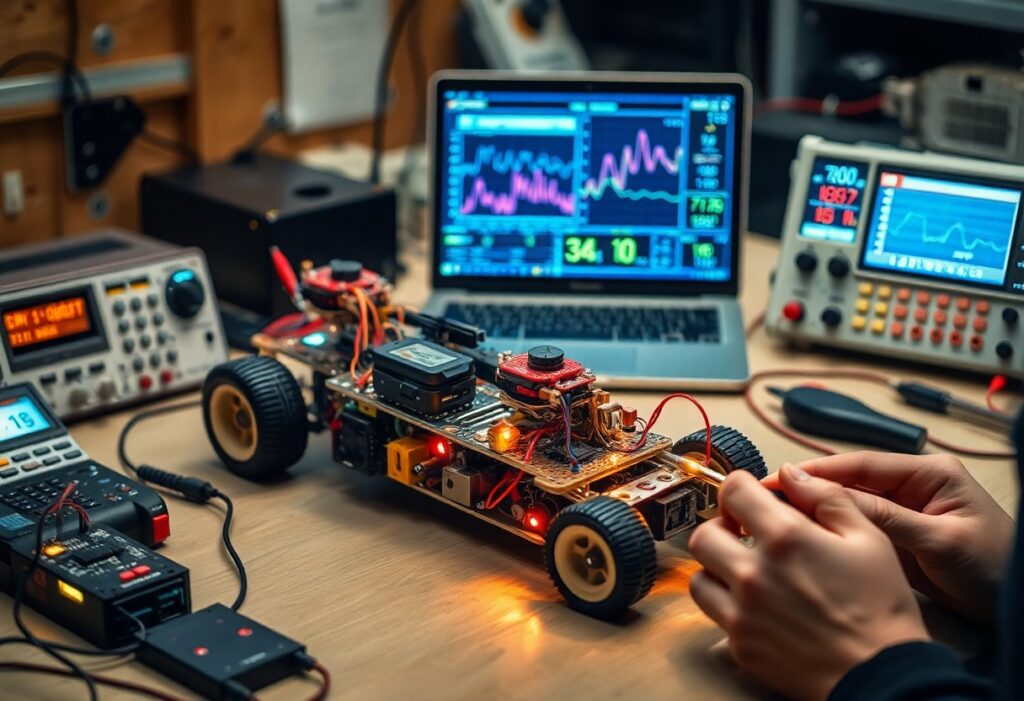
Your robot’s frame sets the foundation for stability and mobility. Choose lightweight yet durable materials like aluminum or reinforced plastic to support components without sacrificing speed. Mount motors securely to the frame, aligning wheels or tracks for balanced movement. Proper motor placement ensures efficient power transfer and responsive control during remote operation.
The Digital Nervous System
Data Flow Architecture
You design the data flow to move sensor readings from microcontrollers to a central processing unit in real time. Each node in the system acts like a neuron, passing information through predefined channels. This structure ensures low-latency updates and supports immediate decision-making.
Communication Protocols
Serial protocols like UART, I2C, and SPI link onboard components efficiently. For remote telemetry, you implement Wi-Fi or LoRa modules that transmit data to a cloud dashboard. These choices balance speed, range, and power consumption based on your robot’s operating environment.
Signal Integrity
Noise and interference can distort telemetry signals, especially in electrically noisy environments. You shield critical wiring and use differential signaling where needed. Proper grounding and filtering preserve data accuracy across long transmission paths.
Remote Monitoring Interface
Your monitoring dashboard displays live sensor feeds, system status, and error logs. Using tools like MQTT and Node-RED, you create visualizations that update in real time. This interface becomes your window into the robot’s operational health from any location.
The Invisible Tether
Your robot operates beyond line of sight, yet remains under your control through a continuous stream of data. This connection isn’t physical-it’s a constant exchange of telemetry, sensor readings, and command signals flowing through wireless protocols. You rely on this invisible tether to assess performance, detect anomalies, and make real-time adjustments. Without it, autonomy becomes guesswork.
Watching from Afar
You gain real-time insight into your robot’s behavior through remote telemetry, allowing adjustments without physical access. Sensor data streams to your interface, revealing performance trends and anomalies as they occur. This continuous feedback loop transforms how you interact with distant systems. Explore the Development of an intelligent-based telemetry hexapod for advanced implementation strategies.
The Long Range Test
Your robot now faces its first true challenge: operating beyond line of sight. Distance tests reveal how well your telemetry system maintains signal integrity under real-world interference. You monitor latency and packet loss as the robot moves farther from the base station. Stability in data transmission determines whether your communication setup is ready for deployment in remote environments.
Troubleshooting the Ghost
Signals sometimes behave unpredictably, and your robot may respond to commands that weren’t sent. You suspect interference or a software echo. Recheck your packet structure and ensure each transmission includes a unique identifier. Isolate the issue by logging every incoming and outgoing message. Over time, the ghost reveals itself in duplicated telemetry frames.
Summing up
Presently, you are building a robot capable of remote monitoring and telemetry by integrating sensors, wireless communication, and real-time data processing. Your design enables direct oversight and control from a distance, ensuring accurate feedback and responsive operation. This approach enhances functionality and reliability in practical applications where direct access is limited or unsafe.