Constructing a Robot That Learns from Human Input
Human feedback shapes how machines adapt and improve over time. You can build a robot that interprets gestures, voice commands, or corrections to refine its actions. By integrating learning algorithms with real-time input, you create systems that grow more accurate and responsive through direct interaction, transforming how robots understand and assist in everyday tasks.
The Positronic Blueprint
Your robot’s learning capability begins with the Positronic Blueprint-a structured design that integrates sensory input, decision logic, and adaptive feedback loops. This framework enables real-time interpretation of human actions and corrections, forming the foundation for autonomous improvement. You define each module to respond dynamically, ensuring the machine evolves through direct interaction rather than static programming.
The Mimetic Faculty
You mirror human behavior not by copying every motion, but by interpreting intent behind actions. Your design enables pattern recognition from subtle cues-how someone pauses before turning, or adjusts grip under pressure. This observational learning lets you adapt in real time, refining movements through repetition and feedback. Your mimicry becomes intelligent when it anticipates purpose, not just motion.
The Binary Teacher
You train the robot using simple yes-or-no feedback as it performs tasks. Each response becomes a data point, shaping its decisions through pattern recognition. Over time, these binary signals build a reliable model of your preferences. Your consistent input turns basic reactions into refined behavior, proving that clarity in teaching drives learning in machines.
The Haptic Bond
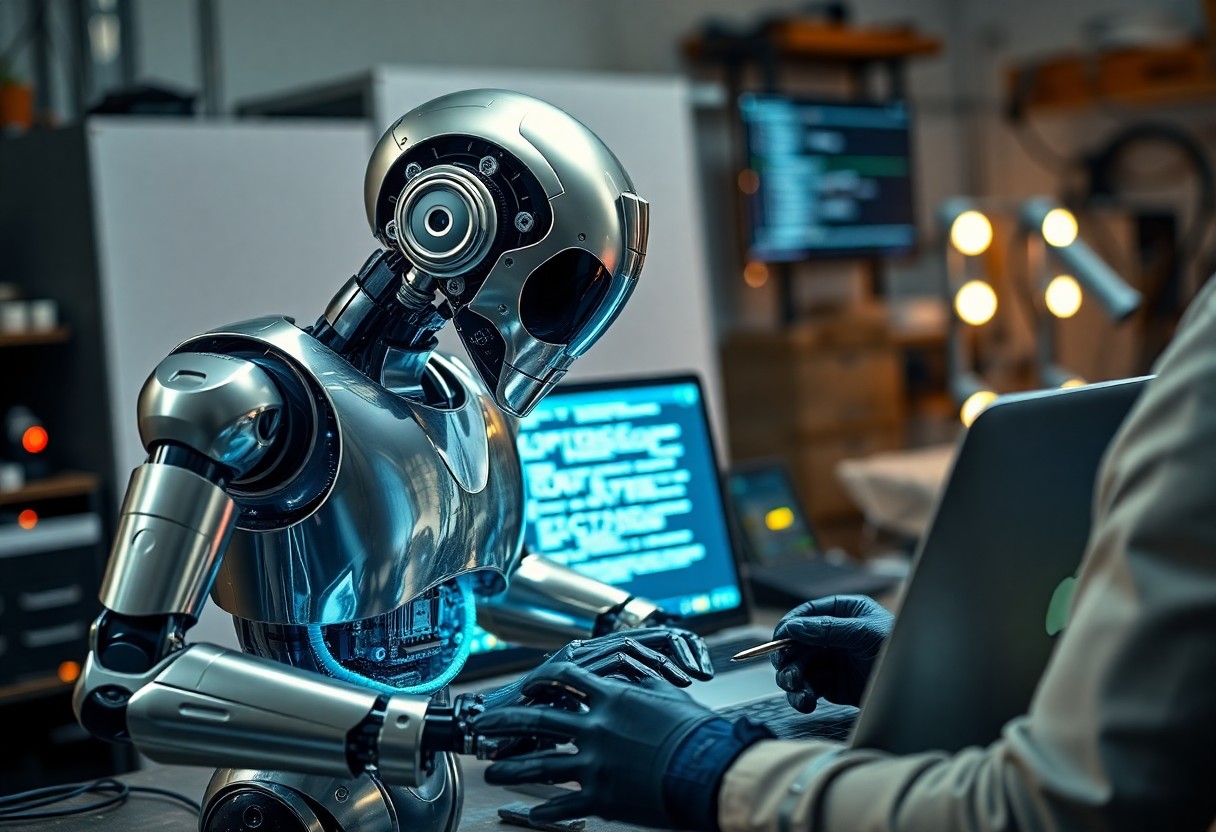
You feel the robot’s response the moment it adjusts its grip based on your hand’s subtle pressure-a silent dialogue unfolding through touch. This physical connection enables real-time feedback, shaping how the machine interprets intent. Reinforcement learning AI might bring humanoid robots to life in ways once limited to science fiction, turning each interaction into a lesson.
The Prime Directives
Your Robot’s Core Principles
You define the system’s behavior by embedding three foundational rules into its decision-making layer. These rules govern how it interprets feedback, adjusts actions, and prioritizes safety. Your robot learns only within boundaries you set, ensuring alignment with intended use. This structure prevents erratic behavior while allowing adaptive growth from real human interaction.
The Final Frontier
Pushing Boundaries
You train the robot not just to follow commands but to interpret intent, adapting its actions based on subtle cues in human behavior. Each interaction becomes a data point, refining its responses over time. You’re no longer programming behavior-you’re cultivating understanding, bridging the gap between machine logic and human intuition in real-world contexts.
Final Words
Presently, you are building robots capable of learning directly from human input, shaping their behavior through interaction rather than preprogrammed rules. Your approach transforms how machines adapt, making them responsive to individual users and real-time feedback. This shift places you at the center of a practical evolution in robotics, where learning emerges from everyday human guidance.