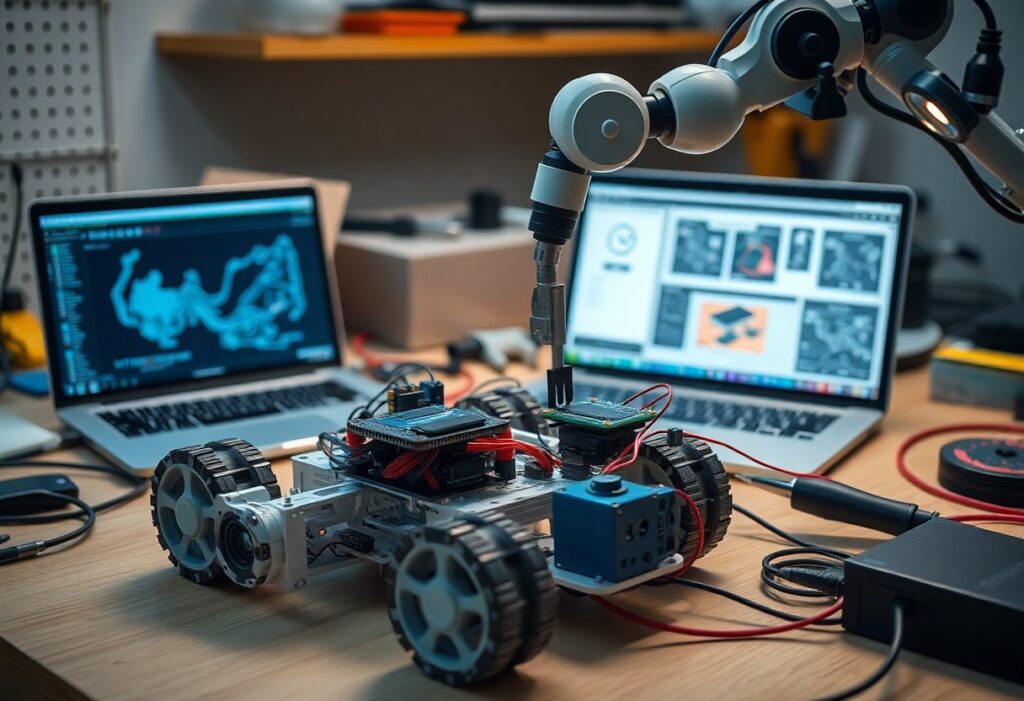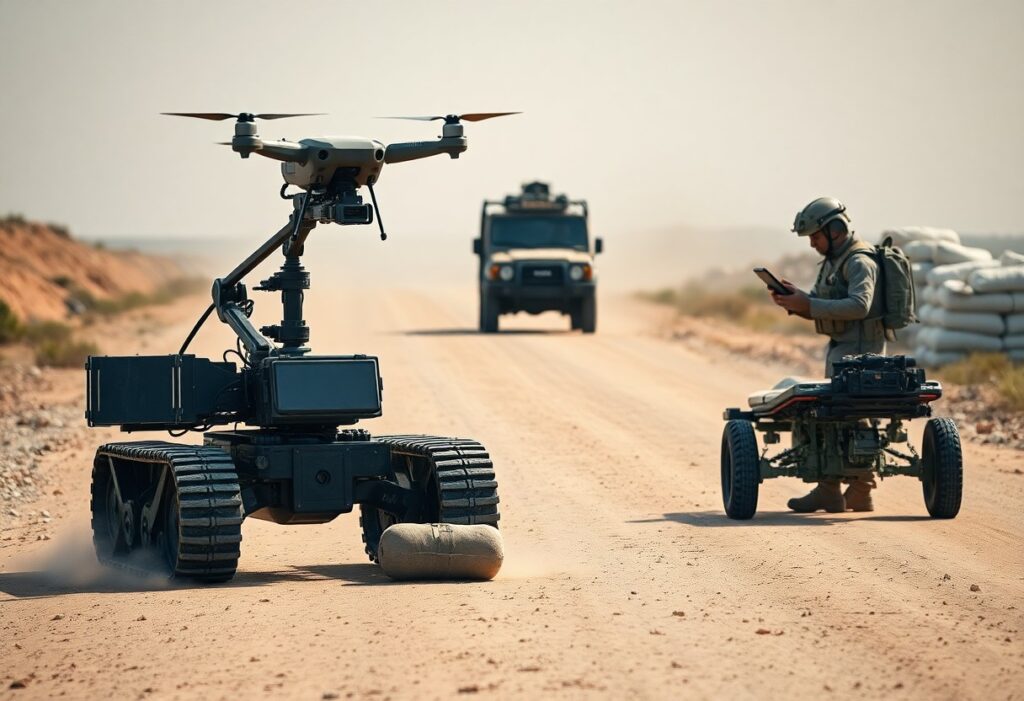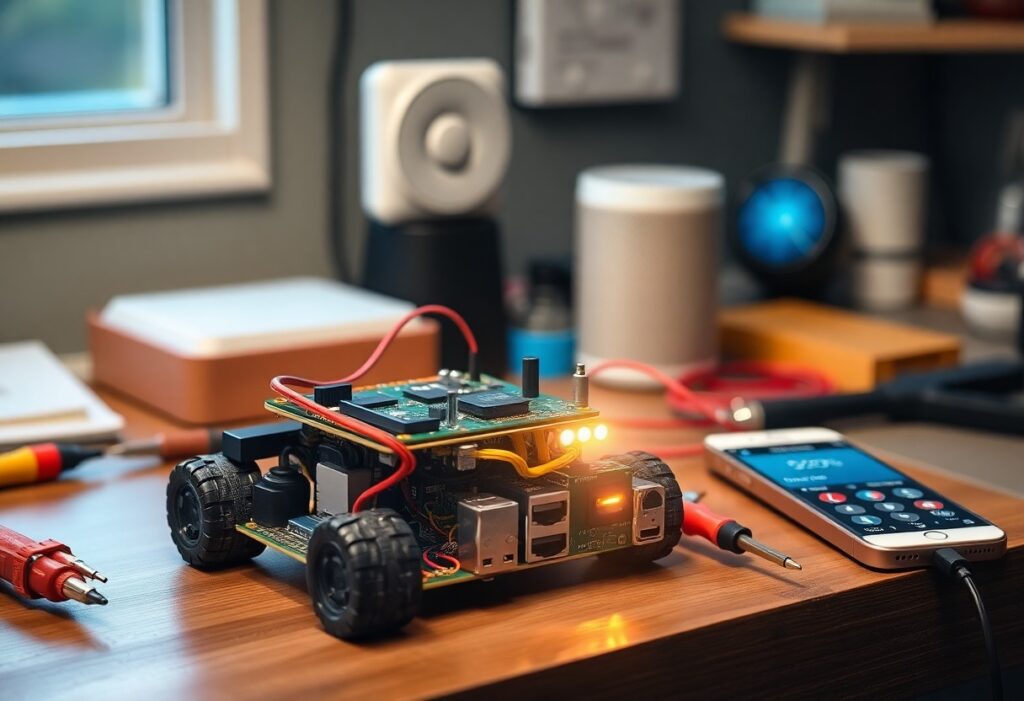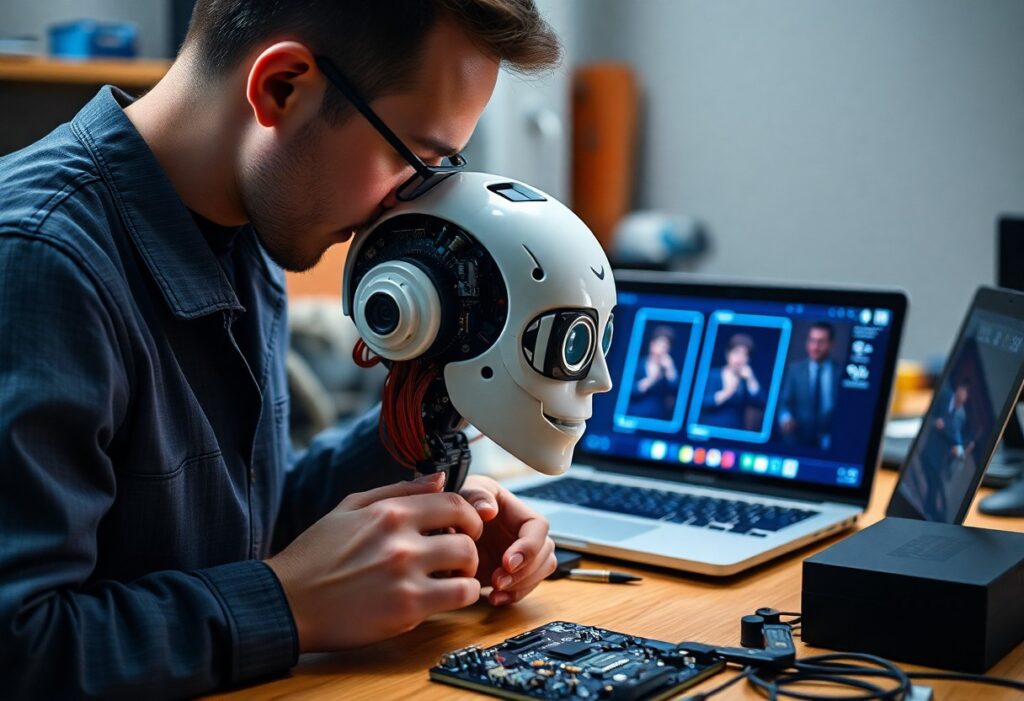
With advances in artificial intelligence and computer vision, you can now build a smart robot that perceives and reacts to its environment in real time. By integrating sensors, cameras, and machine learning models, you enable your robot to identify objects, make decisions, and perform complex tasks autonomously.
The Positronic Foundation
You build intelligence not from instinct, but from structure. The Positronic Foundation forms the core framework where AI reasoning and sensory input converge, enabling your robot to process decisions with speed and coherence. This architecture mimics cognitive pathways, ensuring responses are context-aware and dynamically adaptive to real-world conditions.
Neural Architecture Selection
Choosing the right network shape defines how well your robot interprets visual data. You balance depth, layer types, and parameter efficiency to match task complexity-whether detecting objects or predicting motion. The architecture you pick directly influences accuracy, latency, and scalability in live environments.
Real-Time Processing Units
Your robot relies on specialized hardware to keep up with split-second decisions. These units accelerate inference, allowing continuous image analysis without lag. You integrate them to maintain responsiveness, especially in dynamic settings where delays compromise performance.
Processing speed becomes a defining factor when your robot operates in unpredictable spaces. You deploy dedicated accelerators like GPUs or TPUs to handle concurrent vision tasks-object detection, depth estimation, motion tracking-all within tight time windows. These chips are optimized for parallel computation, letting your system analyze frames as they arrive, not after delays that break real-time interaction. Your robot stays aware, reactive, and precise because the hardware keeps pace with perception demands.
The Optical Frontier
Cameras serve as the primary eyes of your smart robot, transforming light into actionable data. You rely on high-resolution imaging and real-time frame processing to interpret dynamic environments. Depth sensing, infrared filtering, and wide-angle optics expand perception beyond human capability, enabling precise spatial awareness in complex settings.
Sensor Array Calibration
Alignment between optical sensors and other onboard systems ensures coherent data interpretation. You adjust exposure, white balance, and positional offsets to minimize noise and parallax errors. Regular calibration routines maintain accuracy across changing lighting and environmental conditions.
Object Recognition Logic
Detection begins the moment visual data flows into your neural network. You train models to identify edges, textures, and shapes associated with target objects. Labels are assigned based on learned features, allowing the robot to distinguish tools, obstacles, or people in its path.
Your object recognition system doesn’t just classify-it reasons. You implement layered inference where initial detections are cross-verified with contextual cues like object size, location, and movement patterns. This reduces false positives and enables adaptive responses when encountering unfamiliar variations of known items.
Mechanical Synthesis
Designing the robot’s physical structure demands precision in aligning actuators, joints, and frames for optimal motion efficiency. You integrate lightweight yet durable materials to support dynamic movement while minimizing energy use. Understanding the integration of Computer Vision in robotics helps align sensor placement with mechanical design for accurate environmental perception.
Motorized Limb Control
Your robot’s limbs respond to real-time commands through embedded microcontrollers that regulate speed and torque. Each joint uses feedback loops from encoders to adjust positioning with high accuracy, enabling smooth, purposeful motion across varied terrains and tasks.
Power Distribution Grids
Your system routes energy efficiently through a centralized power distribution network that prioritizes stability across high-drain components. Fuses and voltage regulators protect sensitive circuits while ensuring consistent performance during extended operation.
Power distribution grids in advanced robots function like circulatory systems, delivering steady voltage to motors, sensors, and processors. You design them with modular redundancy, allowing isolated failures without full system shutdown. Proper trace routing on PCBs reduces electromagnetic interference, preserving signal integrity across communication lines connected to your AI and vision modules.
Logic Integration
You connect perception to action through structured logic that governs how your robot interprets data and responds. This integration ensures decisions align with both environmental input and predefined goals, forming the backbone of intelligent behavior in dynamic settings.
Algorithmic Decision Paths
Each sensor input triggers a specific evaluation chain that directs your robot’s next move. You define these paths using conditional rules and priority hierarchies, enabling consistent, context-aware responses without relying on external guidance.
Sensory Feedback Loops
Your robot continuously updates its understanding by comparing expected and actual sensor outputs. This real-time adjustment allows it to correct course, adapt to obstacles, and maintain task accuracy under changing conditions.
Sensory feedback loops close the gap between intention and execution. You rely on constant data streams from cameras, depth sensors, and motion detectors to refine motor commands. When your robot reaches for an object, visual and tactile inputs confirm grip stability, prompting micro-adjustments to prevent drops. These loops operate in milliseconds, creating responsive, reliable behavior that mimics natural interaction with the environment.
Spatial Navigation
Efficient movement through dynamic environments begins with accurate spatial understanding. You equip your robot with sensors and AI algorithms that interpret depth, distance, and orientation in real time. By fusing data from cameras, LiDAR, and inertial systems, the robot builds a coherent model of its surroundings, enabling intelligent path decisions and reliable self-localization.
Mapping Unfamiliar Terrain
Exploring unknown spaces requires your robot to construct maps on the fly. Using simultaneous localization and mapping (SLAM), it identifies key landmarks and spatial relationships. Each sensor sweep updates the internal representation, letting the robot adapt quickly and maintain accuracy even when landmarks shift or lighting changes unexpectedly.
Obstacle Avoidance Systems
Reacting to sudden obstacles demands split-second decisions. Your robot uses real-time computer vision and distance sensors to detect unexpected objects in its path. Instead of halting, it recalculates trajectories using predictive modeling, ensuring continuous motion while preserving safety and task efficiency in cluttered or unpredictable spaces.
Obstacle avoidance relies on layered perception and rapid decision logic. Your robot processes visual input at frame-level speed, identifying not just static barriers but moving entities like people or pets. By assigning risk levels to detected objects and projecting their paths, the system chooses detours that minimize disruption without sacrificing goal orientation, making navigation both safe and purposeful.
Interaction Ethics
Every robot you design carries ethical responsibilities. How it perceives, reacts to, and engages with humans must align with societal norms and safety standards. You’re not just coding behavior-you’re shaping trust. Ensuring respectful, predictable interactions prevents misuse and protects user dignity in everyday environments.
Human Safety Parameters
Safety begins the moment your robot powers on. You define boundaries that prevent physical harm by limiting speed, force, and proximity to people. Sensors constantly monitor surroundings, triggering automatic slowdowns or stops when someone enters a risk zone. Your robot’s actions must never override human well-being.
Communication Interface Design
Your robot’s interface guides how users understand and respond to its behavior. Clear visual cues, intuitive voice prompts, and responsive feedback reduce confusion. You shape interactions that feel natural, not mechanical. A well-designed interface builds confidence and ensures users remain in control.
Effective communication relies on consistency and context awareness. You program your robot to adjust tone, timing, and modality based on user input and environment. For example, it uses softer lights and quieter tones in a bedroom versus a busy lobby. These subtle choices make interactions feel considerate and reliable, increasing user comfort over time.
Final Words
So you’ve built a smart robot capable of perceiving its environment and making decisions using AI and computer vision. Your system combines sensors, algorithms, and real-time processing to act autonomously. You now have the foundation to refine performance, expand functionality, and apply it to real-world tasks with precision and reliability.