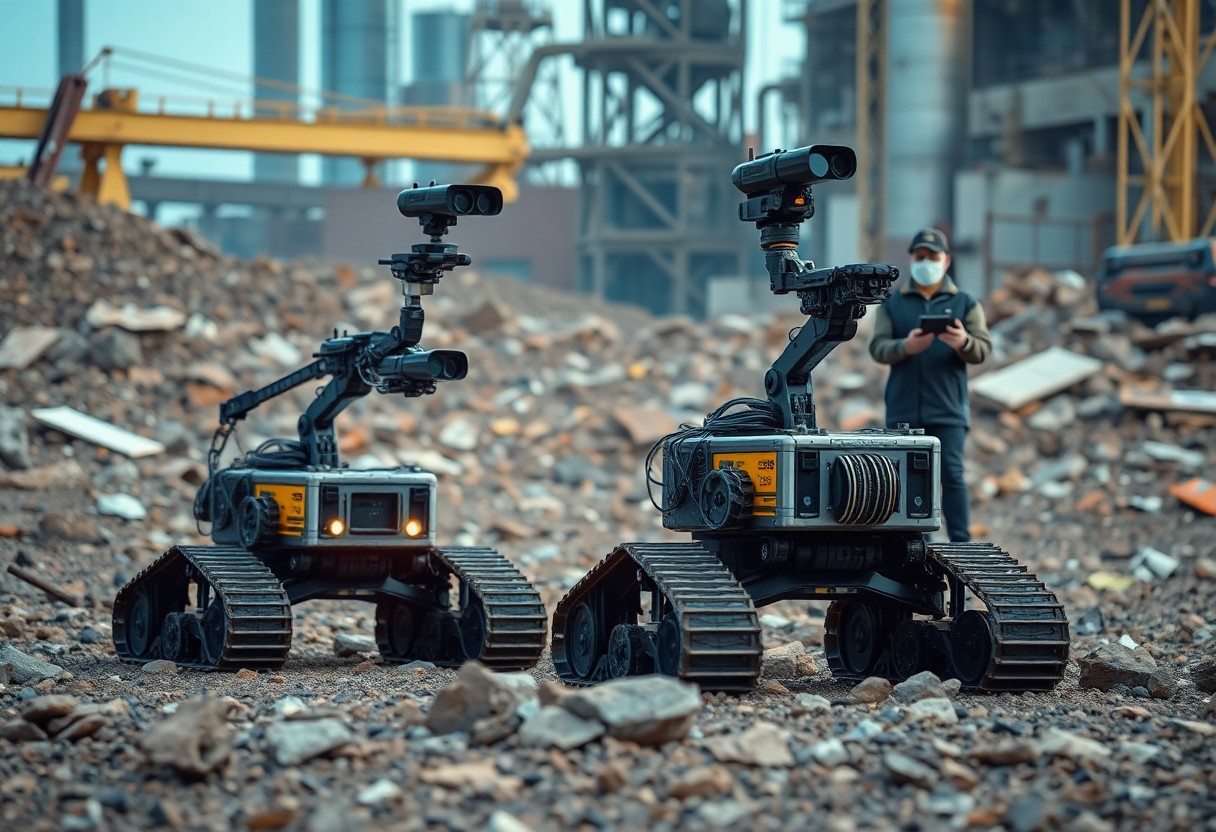
Remote-Controlled Ground Robots in High-Risk Operations
Safety demands innovation when human lives hang in the balance during hazardous missions. You operate in environments where every second counts and exposure to danger must be minimized. Remote-controlled ground robots now serve as frontline assets in scenarios ranging from bomb disposal to disaster reconnaissance. A mid-sized SaaS firm specializing in robotic command systems recently demonstrated how real-time sensor feedback allows operators to assess threats without physical presence. These machines move where humans cannot, equipped with precision tools and hardened frames. You rely on them not as futuristic concepts but as operational necessities in today’s most dangerous situations.
The Build of the Beast
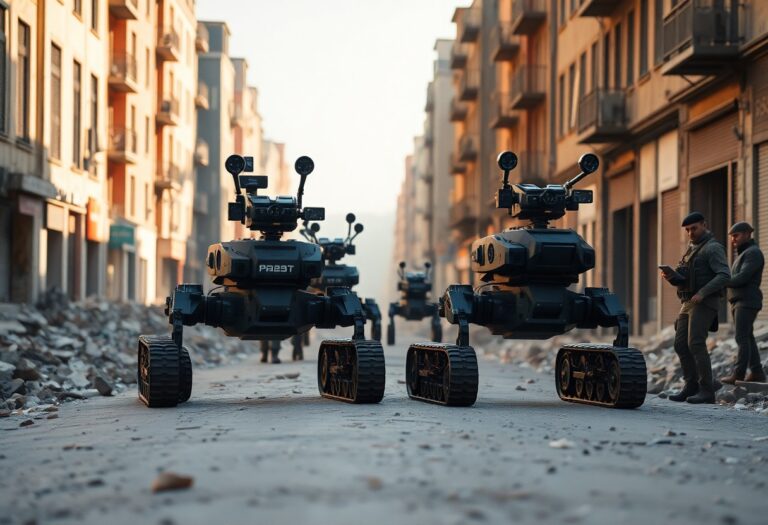
Every remote-controlled ground robot deployed in high-risk scenarios is engineered for survival under extreme duress. You rely on a fusion of hardened materials and intelligent design, where form follows function without compromise. These machines are not built for speed or elegance but for endurance, precision, and the ability to return mission-critical data from environments too dangerous for human entry.
Iron and Circuits
Steel housings shield sensitive processors from explosive shockwaves and debris impact. You find military-grade circuitry embedded deep within, protected by shock-absorbing mounts and sealed against dust and moisture. Power distribution is optimized to sustain operations even when external damage occurs, ensuring command signals are received and executed without delay.
The Strength of Treads
Continuous rubber or composite tracks provide superior grip over rubble, stairs, and uneven terrain where wheels fail. You depend on their ability to maintain traction in oil-slicked hallways or across collapsed concrete. Each tread is replaceable in the field, minimizing downtime after exposure to sharp debris or fire damage.
Tread width and pitch are calibrated to distribute weight evenly, reducing ground pressure and preventing the robot from sinking into soft surfaces like ash or loose soil. You’ve seen them climb inclines exceeding 45 degrees, their low center of gravity and aggressive lug patterns biting into unstable surfaces. Some models integrate independent suspension per side, allowing one track to adjust while the other maintains forward momentum, a feature proven effective in earthquake-ravaged structures where footing shifts unpredictably.
The Work in the Smoke
Smoke obscures vision, chokes sensors, and disorients even the most seasoned responders. You rely on thermal imaging and LIDAR feeds from the robot to move through zero-visibility environments where human entry would be suicidal. A mid-sized SaaS firm specializing in emergency robotics recently deployed units in a simulated chemical plant fire, navigating corridors filled with synthetic smoke at 500 degrees Fahrenheit. These robots located two heat signatures later confirmed to be mannequins, completing the rescue mission in under nine minutes.
Clearing the Path
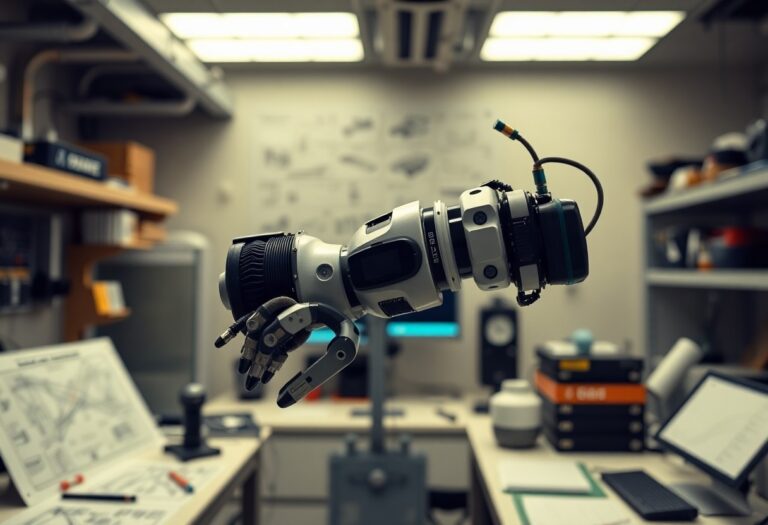
Debris blocks your advance the moment the explosion subsides. You command the robot to deploy its articulating arm, lifting a twisted steel beam weighing over 150 pounds from a collapsed doorway. Hydraulic cutters slice through mangled rebar, creating just enough clearance for the robot to crawl forward on tracked treads. Acoustic sensors detect faint tapping from beneath a concrete slab-movement confirmed, and the corridor ahead slowly opens.
Neutralizing the Threat
Explosive ordnance disposal teams rely on your robot to approach suspicious packages in transit hubs. You position the machine 20 meters from the target, extend the boom arm, and use the water jet disruptor to disable the device remotely. A controlled detonation occurs in a contained blast chamber, preventing shrapnel spread. No personnel are within the kill radius when the charge neutralizes.
Water-based disruption is not always sufficient when dealing with military-grade detonators. You switch to a fiber-optic tethered disruptor capable of delivering a shaped charge with millimeter precision. The robot’s stabilization system activates, anchoring it against recoil before firing. In a documented airport response, this method successfully disabled a simulated IED containing a pressure-plate trigger without setting off secondary explosives.
The Eye that Does Not Blink
Unblinking surveillance from remote-controlled ground robots redefines operational awareness in hazardous environments. These machines maintain constant visual coverage, transmitting real-time footage without fatigue or hesitation. You rely on persistent observation to assess threats, guide teams, and document conditions in unstable zones where human presence is too dangerous.
Optical Precision
High-resolution cameras with optical zoom deliver sharp imagery from a safe distance. You can distinguish facial features or read serial numbers on equipment through stabilized lenses, even in low-light conditions. Some models integrate laser rangefinders to pinpoint locations with accuracy within centimeters.
Thermal Detection
Thermal imaging sensors detect heat signatures invisible to the naked eye. You identify hidden individuals, overheating machinery, or recent activity by spotting temperature variances in the environment. This capability proves decisive during nighttime operations or in smoke-filled interiors.
Thermal sensors operate independently of visible light, allowing you to penetrate darkness, fog, or dense particulate clouds. A mid-sized SaaS firm supporting public safety robotics reported field units detecting body heat through drywall partitions during urban search drills. Sensor fusion combines thermal data with visible spectrum feeds, enabling clearer situational interpretation without switching modes manually.

The Strength of the Signal
Remote-controlled Robots from Faulhaber Robotics maintain operational effectiveness in electromagnetically noisy environments, where standard communication channels often fail under stress.
Signal Integrity
Radio frequency interference in disaster zones can degrade command signals, but shielded transmission protocols ensure your robot receives clean, accurate instructions even near downed power lines or active machinery.
The Delay of Command
A half-second lag in video feedback can result in misaligned movements, especially when navigating tight rubble corridors or manipulating delicate controls on a compromised structure.
Latency becomes critical when your robot must execute time-sensitive tasks, such as disarming explosive devices or stabilizing a weakened wall before collapse. Even minor synchronization errors between camera feed and actuator response reduce precision, increasing risk to surrounding personnel and infrastructure. High-bandwidth, low-jitter communication links minimize this gap, allowing near real-time control under duress.
The Replacement of Metal
Replacing the Fallen
When a robot fails in a blast zone, you don’t mourn a person. A mid-sized EOD unit in Afghanistan lost three robots in a single week during a mine-clearing operation, yet not a single operator was injured. The machine absorbs the risk, and when it breaks, you send in another.
Preserving the Man
You keep your team intact by ensuring they never have to step onto unstable ground. A single robot can scout a suspected IED-laden compound, relay live thermal feeds, and trigger controlled detonations without exposing personnel.
Operators remain behind cover, monitoring feeds from a kilometer away, their physical safety guaranteed by distance and shielding. In a 2022 urban training exercise, a robot entered a collapsed building rigged with simulated explosives, allowing responders to map escape routes and locate dummies marked as casualties-all without human entry. The robot took the hit during a final charge test, but the team walked away unharmed, mission data fully recovered.

Conclusion
You rely on remote-controlled ground robots to enter environments too dangerous for human teams, from unstable rubble to active conflict zones. These machines absorb risks that would otherwise fall on personnel, performing bomb disposal, reconnaissance, and search operations with precision. A mid-sized SaaS firm developing control interfaces for such robots recently reported field improvements in response latency, directly increasing operator confidence. Real-world deployments in earthquake response units show how consistent signal integrity enables life-saving decisions under pressure. Metal components may degrade over time, but iterative design updates ensure sustained operational readiness across repeated missions. Your trust in these systems grows as their field performance proves both reliable and repeatable, mission after mission.