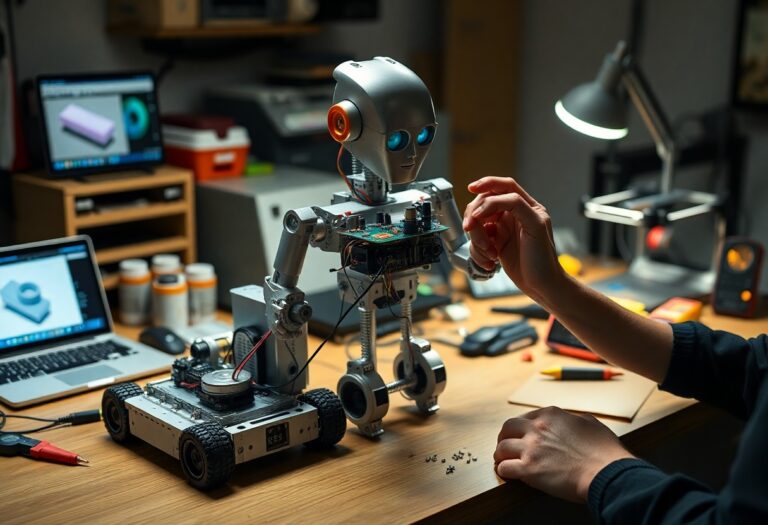
Building a Multi-Purpose Robot for Everyday Tasks
Just imagine a robot that handles chores, assists with errands, and adapts to your daily needs. You can design such a system by integrating modular hardware, responsive sensors, and intuitive software. This guide walks you through the practical steps to build a functional, multi-purpose robot that simplifies everyday life.
The Physical Framework
Your robot’s durability begins with a well-engineered physical framework. This structure supports all internal systems while enduring daily wear. You need materials that balance strength, weight, and cost, ensuring mobility and resilience across varied environments. A thoughtful design here sets the stage for reliable performance in real-world conditions.
Selecting Rigid Alloys
Aluminum alloys offer an ideal mix of lightness and strength for your robot’s frame. You’ll want to prioritize corrosion resistance and ease of machining, especially when prototyping. These metals maintain structural integrity under repeated stress, making them practical choices for long-term use in household settings.
Motor and Joint Configuration
Efficient movement depends on how you place motors and shape joint mechanics. You’re aiming for smooth, precise motion without excessive power draw. Positioning motors close to joints reduces inertia, improving responsiveness while minimizing strain on moving parts during routine tasks.
Each joint must support a specific range of motion tailored to its function-whether rotating a wrist or lifting an arm. You’ll benefit from brushless DC motors for their longevity and control accuracy. Coupling them with harmonic drives or precision gears allows fine adjustments, letting your robot handle delicate objects or apply steady force when needed. Proper thermal management and feedback sensors further refine performance, ensuring consistent operation over time.
The Positronic Core
Every action your robot takes begins with the Positronic Core, its central intelligence engine. This advanced processing hub enables real-time decision-making, learning from daily interactions while maintaining safety and efficiency across diverse environments.
Central Processor Integration
Your robot’s responsiveness depends on how well its components communicate. The central processor links all subsystems into a unified network, ensuring commands from perception to motion execute without delay or error.
Visual and Tactile Sensors
Sensors give your robot awareness of its surroundings. Cameras capture depth and color, while touch-sensitive surfaces detect pressure and texture, allowing precise object handling and safe human interaction.
You rely on visual and tactile sensors to interpret complex environments accurately. Stereo vision enables depth perception for navigation and object recognition, while capacitive and piezoelectric sensors in the fingertips detect grip strength and surface properties, adjusting in real time to prevent slips or damage during everyday tasks like pouring a drink or opening a door.
Algorithmic Instructions
You design each action your robot takes around clear, step-by-step logic. These algorithmic instructions translate high-level goals into executable behaviors, ensuring consistency across environments. By structuring tasks as modular sequences, you enable adaptability without rewriting core functions.
Routine Task Sequences
Your robot executes daily chores through predefined workflows, such as picking up objects or navigating rooms. Each sequence follows a logical order, minimizing wasted motion and energy. You can customize these routines based on household patterns and timing preferences.
Error Handling Protocols
Unexpected obstacles or sensor glitches require immediate, intelligent responses. Your robot identifies anomalies and switches to safe fallback modes without user input. This ensures continued operation while preserving system integrity and user trust in unpredictable conditions.
When a sensor misreads distance or a motor stalls, your robot doesn’t halt completely. It assesses the discrepancy, logs the fault, and applies corrective logic-like rerouting a path or recalibrating a grip. These built-in responses maintain functionality and reduce the need for manual intervention, making the system reliable over time.
Sustaining the Machine
Keeping your robot operational over time demands more than just routine charging. You need a maintenance strategy that prevents wear from disrupting daily tasks. Design choices today directly impact how often you’ll intervene down the line. Reliability hinges on foresight, not fixes after failure.
Power Cell Optimization
Your robot’s endurance depends on how efficiently it uses energy. You can extend active hours by selecting high-density cells and minimizing power draw during idle states. Smart voltage regulation ensures consistent performance without overheating or degrading battery life prematurely.
Docking Station Logistics
Positioning the docking station affects how quickly your robot resumes work. You must place it where signal clarity and physical access aren’t obstructed. A poorly located dock turns routine recharging into a time-consuming detour.
Placing the docking station requires balancing accessibility with environmental stability. You benefit from installing it on a level surface away from high-traffic zones and moisture sources. This ensures reliable alignment during autonomous return and reduces wear on connectors. Your robot returns seamlessly, ready for its next task without manual intervention.
Constructing the Unit
Start building your DIY Multi Featured Robot With Arduino by gathering modular components for adaptability. Follow step-by-step guides on DIY Multi Featured Robot With Arduino to integrate sensors and control systems efficiently. Precision in assembly ensures smooth operation across various household tasks.
Frame and Limb Assembly
Choose lightweight yet durable materials like aluminum or reinforced plastic for the frame. Align joints to allow full range of motion while maintaining structural integrity. Secure each limb with servo mounts that enable precise movement for lifting, rotating, or gripping everyday objects.
Internal Circuit Routing
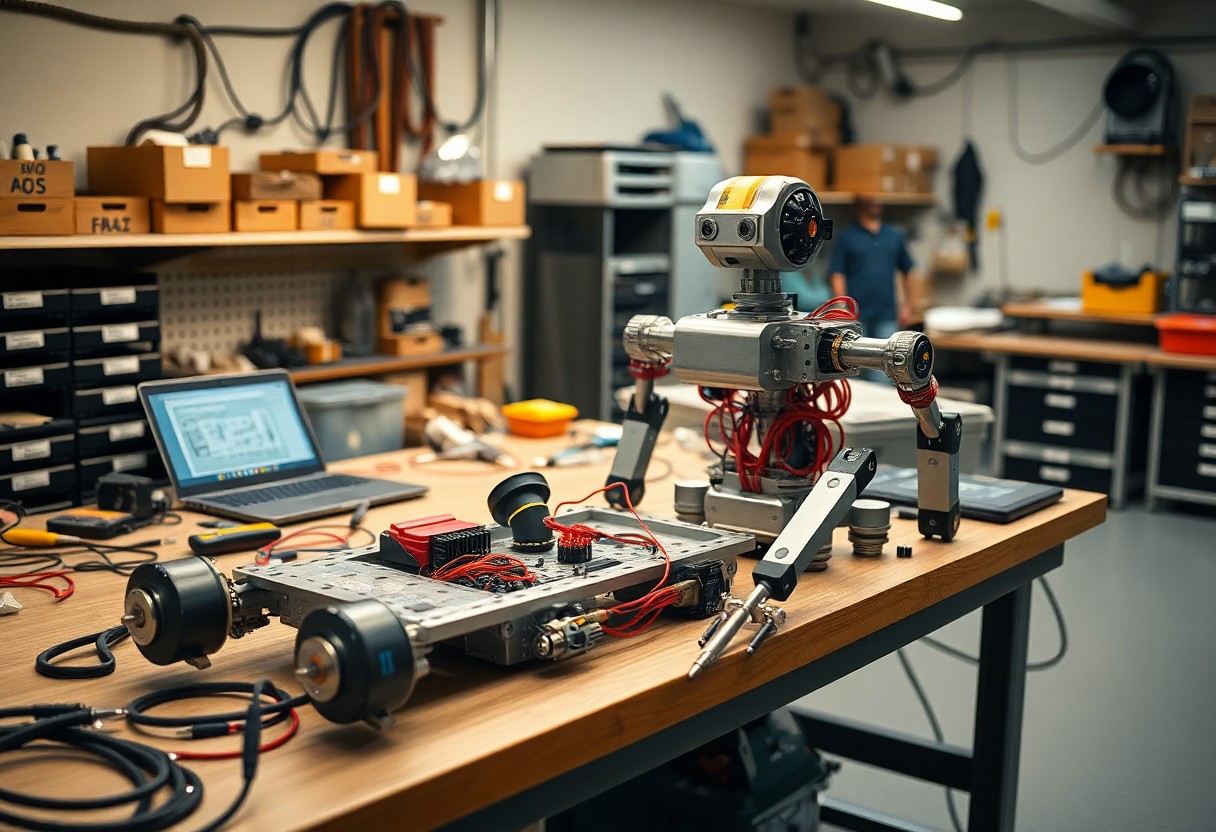
Plan wire paths to minimize interference and avoid mechanical stress during motion. Use labeled, shielded cables routed through protective conduits along the frame’s interior. This keeps connections clean and accessible for troubleshooting or upgrades.
Proper internal circuit routing prevents signal noise and short circuits, especially when multiple motors and sensors operate simultaneously. Group power and data lines separately, fasten them at intervals, and leave slack at pivot points. This ensures reliability and simplifies maintenance as your robot takes on more complex routines.
Domestic Integration
Bringing a robot into your home means more than just adding a machine-it’s about fitting a new helper into your daily life. Your robot must adapt to your routines, respect personal spaces, and operate without constant supervision. Success lies in how naturally it blends into the background while remaining ready to assist.
Mapping Interior Spaces
Your home’s layout is unique, and your robot needs to learn it thoroughly. Using sensors and spatial recognition, it builds a dynamic map, identifying rooms, obstacles, and high-traffic zones. This internal blueprint allows it to move efficiently and avoid collisions, even as furniture shifts or doors close.
User Interface Setup
You’ll customize how you interact with your robot through a simple, intuitive dashboard. Whether via touch, voice, or mobile app, the interface adapts to your preferences. Clear prompts and real-time feedback ensure you stay in control without confusion or clutter.
Setting up your robot’s interface begins with pairing it to your home network and selecting your preferred control method. You can assign tasks using natural voice commands or tap through a clean mobile interface. Personalize response tones, set access permissions, and define task schedules so the robot aligns precisely with your household’s rhythm. Over time, it learns your patterns, reducing the need for repeated input while staying responsive to new requests.
Summing up
Now you understand how building a multi-purpose robot for everyday tasks combines practical design with accessible technology. You can create a system that handles chores, responds to voice commands, and adapts to household needs without complexity. Your robot becomes a functional part of daily life when built with clear objectives and reliable components.