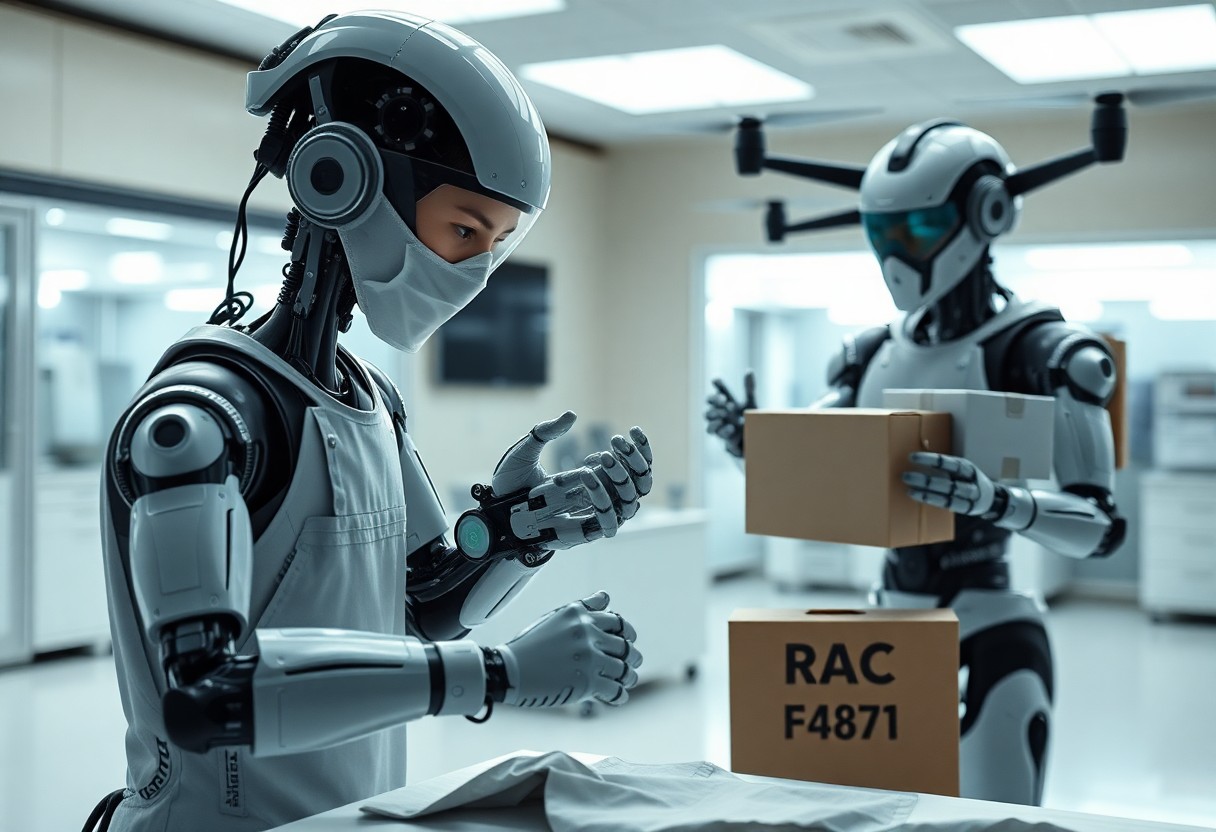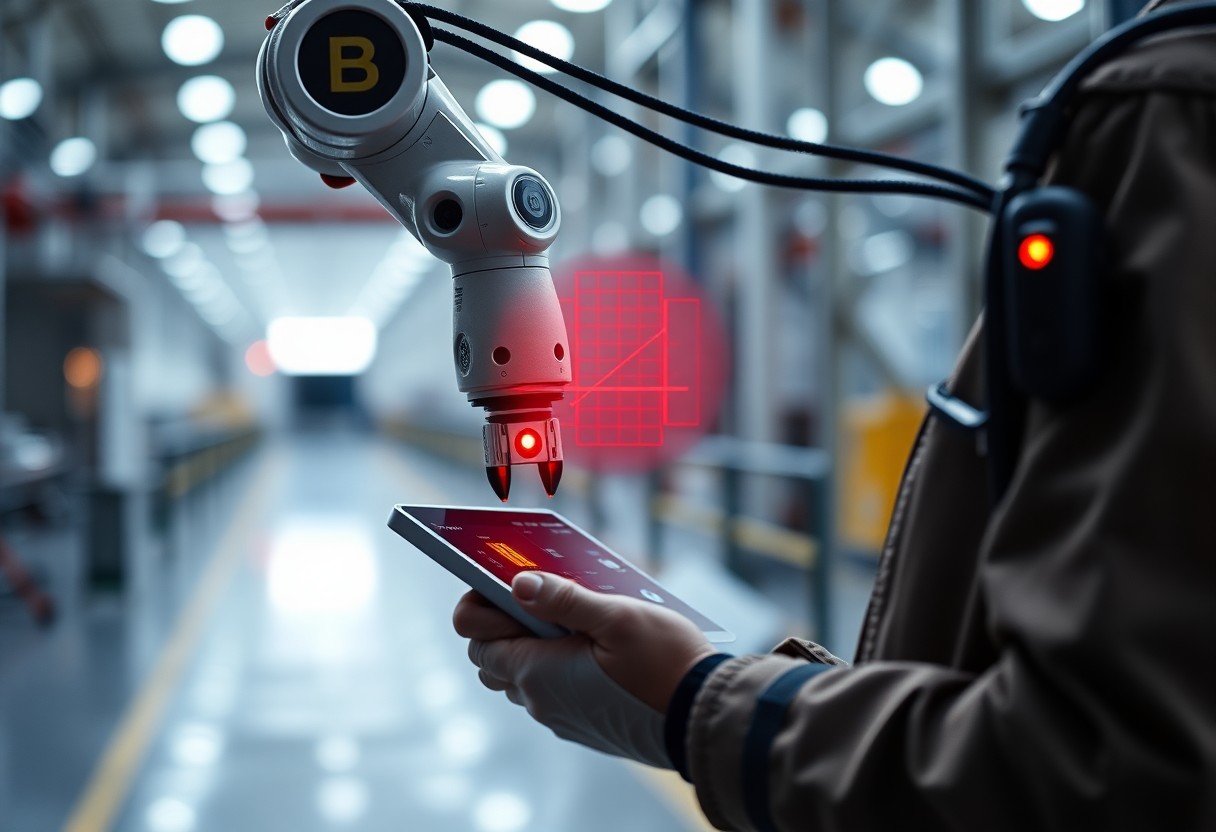
Safety in collaborative robotics is evolving as AI-driven sensing, predictive models, and adaptive control let you design systems that protect workers while maintaining productivity. By integrating vision, force sensing, and machine learning, your robot can predict human intent, adapt speed and trajectory, and enforce dynamic protective zones with provable performance. Implementing these systems requires rigorous validation, real-time monitoring, and clear human-machine interaction protocols to ensure reliable operation.
Overview of Collaborative Robots
Across production lines you encounter collaborative robots-compact, low-mass manipulators built to work beside people; typical payloads range from 3-20 kg with reaches up to ~1.5 m, and design/operation is governed by standards such as ISO/TS 15066. You’ll find them replacing repetitive tasks in electronics, food packaging, and small-batch assembly while vendors like Universal Robots and FANUC supply modular arms and turnkey cells.
Definition and Applications
You should view cobots as purpose-designed robots with force-limited joints, safety-rated monitored stops, and modes like speed-and-separation; common applications include pick-and-place in electronics, machine tending in automotive subassemblies, lab automation for sample prep, and depalletizing in warehouses where rapid redeployment and tool changes cut setup time from days to hours.
Benefits and Challenges
You gain flexibility, smaller footprints, and often faster ROI-typically cited at 6-18 months-while facing challenges in safety validation, sensor fusion, and human factors engineering; integrating vision, force sensing, and AI increases capability but also raises requirements for risk assessment, compliance documentation, and operator training.
You’ll need to validate systems against ISO 13849 and ISO/TS 15066, perform detailed risk assessments, and select hardware such as RGB‑D cameras (e.g., Intel RealSense), force‑torque sensors, and edge accelerators (NVIDIA Jetson or Intel Movidius) for on‑device inference; data labeling, model drift, and real‑time latency constraints are frequent bottlenecks during commissioning and long‑term maintenance.
The Role of AI in Safety Systems
AI lets you move beyond binary safety stops by fusing vision, force, and proximity data to detect humans and predict motion 0.5-2 seconds ahead, enabling graded interventions with millisecond-level inference; this reduces unnecessary downtime while meeting ISO/TS 15066 interaction limits and preserving safety integrity through redundant sensing and safety PLC enforcement.
AI Technologies Employed
You deploy convolutional neural networks for person detection at 30-60 FPS, LSTM/transformer models for short-term trajectory prediction, and sensor-fusion algorithms combining stereo vision, LiDAR, and force-torque inputs. Edge accelerators (NVIDIA Jetson, Intel Movidius) give sub-20 ms inference, and reinforcement learning or rule-based arbiters tune intervention thresholds integrated with ISO 13849 safety controllers.
Real-Time Decision Making
Real-time pipelines force you to keep perception-to-actuation under ~50-100 ms: sensing and preprocessing often take 1-10 ms, detection 10-30 ms, prediction 10-50 ms, and arbitration a few milliseconds. You compute dynamic risk scores from position, speed, and predicted overlap, mapping confidence bands (e.g., >0.9 normal, 0.6-0.9 slow, <0.6 stop) to graded responses while a safety PLC provides final hard enforcement.
During operation you implement redundancy and temporal filtering to lower false positives and maintain responsiveness: combine Kalman or particle filters with frame-to-frame smoothing, and fall back to capacitive or protective stops if visual confidence drops. When occlusion or high-velocity approach is detected, your system shortens prediction horizons and raises intervention sensitivity to keep mean time to intervention well below 100 ms. You validate these behaviors through hardware-in-the-loop and weeks-long shadow-mode trials, measuring metrics like stop-rate, unnecessary-stop reduction, and intervention latency to tune thresholds and ensure compliance with safety integrity levels.
Key Features of AI-Powered Safety Systems
You rely on a combination of perception, prediction, and control to keep collaborative robots safe in mixed human-robot workplaces. Expect millisecond-level response, multi-modal sensor fusion, and adaptive control laws that enforce ISO 10218/TS 15066-aligned limits. Vendors often expose telemetry and audit logs so you can verify behavior; the list below breaks down the concrete capabilities you should evaluate when upgrading your cell.
- Real-time perception and sensor fusion: combines RGB-D cameras, 3D LiDAR, and joint torque sensing at 10-200 Hz to build a <1 cm spatial accuracy occupancy map.
- Predictive collision avoidance: short-horizon trajectory prediction (0.5-2.0 s) using probabilistic models to reduce near-miss events and enable preemptive slow-downs.
- Human intent recognition: skeleton tracking and gesture classifiers (accuracy >90% in published benchmarks) to detect approach, reach, or hand-over behaviors.
- Compliant control and force/torque limiting: torque sensors with 0.01-0.05 Nm sensitivity and power-and-force limiting modes for safe contacts.
- Redundancy and fault tolerance: dual-sensor overlap, watchdogs, and fail-safe brakes providing deterministic safe-stop within 20-100 ms.
- Explainability and audit trails: event logs, model confidence scores, and scenario replay for post-incident analysis and regulatory audits.
- Standards and certification alignment: designed to support ISO 10218, ISO/TS 15066, and SIL/PL safety levels through validated architectures.
- Assume that the system will default to a verified safe state (monitored stop or retreat) within the certified latency bound when critical faults or sensor conflicts occur.
Sensor Technologies
You should expect heterogeneous sensing: stereo and RGB-D cameras (30-120 fps, depth to 5 m), 3D LiDAR (range 0.1-40 m, angular res ~0.1°), time-of-flight modules for low-light robustness, capacitive proximity arrays for close-range detection, and joint torque sensors for contact awareness. Integration typically runs sensor fusion at 10-200 Hz with latency budgets under 50 ms so that tracking, segmentation, and collision checks remain timely even on crowded shop floors.
Learning and Adaptability
You benefit from models that adapt via supervised fine-tuning, transfer learning, and online updates: perception networks pre-trained on large datasets then fine-tuned with 1,000-10,000 labeled local interactions, plus reinforcement learning for policy refinement in simulation before safe real-world rollout. Update cadences vary from continuous lightweight calibrations to weekly retraining, with model validation loops ensuring safety margins are maintained.
You should implement shadow-mode evaluation and human-in-the-loop labeling to validate adaptive behaviors: run updated policies in passive monitoring, measure false-positive/negative rates (target <5%), and only promote models after simulation-to-real verification and gated rollouts. Additionally, maintain conservative safety envelopes during initial deployment, log model confidence, and schedule periodic retraining (nightly for calibration, weekly for feature updates) to prevent drift while keeping your safety guarantees intact.
Case Studies of AI Safety Implementations
You’ll find concrete deployments that reduced incidents and boosted productivity: sensor-fusion perception, intent-prediction networks, and adaptive speed limits yielded results such as 72% fewer near-misses, median reaction times of 180-250 ms, and payback periods under 18 months across manufacturing and clinical sites.
- 1) Automotive assembly plant – Deployment: 120 collaborative cells; tech: LiDAR + 8 RGB cameras, CNN+LSTM intent model; outcomes: 84% drop in collision warnings, 35% throughput gain, median inference latency 180 ms, ROI 14 months.
- 2) Electronics contract manufacturer – Deployment: 60 cobot stations; tech: depth cameras + force-torque sensing, anomaly detection with isolation forests; outcomes: 58% reduction in stoppages, mean time between interruptions up 42%, safety-related downtime cut from 9% to 3%.
- 3) Food packaging line – Deployment: 24 lines; tech: thermal + vision fusion for human detection, dynamic speed limiting; outcomes: 72% fewer near-miss events, cycle time improved 12%, compliance with ISO risk controls verified in 6-week pilot.
- 4) Hospital logistics – Deployment: 3 hospitals, 15 transport cobots; tech: pose-estimation (200k-frame training set) + proximity LiDAR; outcomes: 56% drop in manual-handling incidents, average task time down 22%, adverse interaction rate 0.2% over 12 months.
- 5) Pharmaceutical packaging R&D – Deployment: single pilot cell; tech: multimodal sensors + online reinforcement learning for safe motion; outcomes: 92% classification accuracy for human intent, safety intercepts reduced by 70%, model updated weekly with transfer learning from 50 lab sessions.
Industrial Automation
In high-volume plants you can deploy multimodal safety stacks that combine 2-4 sensors per cell and intent models trained on 100k-500k labeled frames; pilots show you typically cut safety stoppages 40-80% while keeping cycle-time latency under 200-250 ms, enabling continuous operation without compromising risk controls.
Healthcare Collaborations
Across clinical settings you deploy collaborative robots for logistics and patient assistance using force limits, compliant controllers, and vision models trained on 150k-300k annotated poses; measured outcomes you see include 50-60% fewer handling incidents, 90-98% pose-estimation accuracy, and average response times below 120 ms in active care zones.
More detail: when you integrate these systems into hospitals, validation typically includes a 6-12 week phased trial, IRB-reviewed data handling, and performance metrics such as 0.2% adverse interaction rate, 22% reduction in staff ergonomic injuries, and model retraining cadence of 4-8 weeks to adapt to shifted patient demographics and workflow changes.
Regulatory Considerations and Standards
Regulatory frameworks increasingly shape your cobot deployments; standards like ISO 10218 and ISO/TS 15066 define protective measures and contact guidance, while the EU Machinery Directive (2006/42/EC) and ANSI/RIA guidelines govern risk assessment and guarding. You must align systems to those norms and to AI-specific guidance – see practical implementation advice at Revolutionize Workplace Safety with Cobots and AI.
Safety Standards for Collaborative Robots
Standards such as ISO 10218-1/-2 and ISO/TS 15066 specify collaborative modes, allowable contact forces, and safety-related control measures. You should integrate ISO 13849 or IEC 61508 practices for control reliability, apply speed and separation monitoring, and validate safety functions via documented risk assessments and tests to meet both manufacturer and regulatory expectations.
Compliance with AI Regulations
AI regulations add requirements around transparency, data protection, and risk classification; the EU AI Act uses a risk-based approach placing many cobot safety systems in “high-risk” categories subject to conformity assessments and fines up to €35 million or 7% of global turnover. You must adopt documentation, explainability, and human oversight practices, and follow NIST’s AI Risk Management Framework for operational controls.
Operationally, you should run formal AI risk assessments, label datasets, apply data minimization and anonymization, and retain provenance and versioning for models; perform simulated and live safety validation, log and trace all safety events, and implement continuous monitoring for model drift. Additionally, prepare technical documentation, post-market surveillance reports, and third-party conformity assessments to satisfy regulators and reduce liability.
Future Trends in AI-Powered Safety
Emerging AI-driven perception, edge inference, and runtime assurance are pushing safety beyond static guards; you can now deploy multimodal sensor fusion (depth cameras, LiDAR, radar) with on-device transformer models to predict human motion and prevent hazardous interactions. Digital twins let you validate scenarios virtually before shop-floor changes, and major vendors are bundling SDKs for quicker integration, shortening deployment cycles and enabling adaptive safety that scales across mixed human-robot production lines.
Emerging Technologies
You should consider self-supervised and transformer-based vision for gesture and intent recognition, plus reinforcement learning for compliant motion control. Edge accelerators like NVIDIA Jetson and Google Coral enable low-latency inference on-site, while formal verification and runtime monitors add provable safety layers. Practical deployments pair Intel RealSense or LiDAR sensors with these stacks to reduce false stops and simplify certification workflows in electronics and automotive assembly lines.
The Evolution of Collaborative Workspaces
Workspaces are moving toward modular, reconfigurable cells and wearable-aware layouts where your floor plans adapt to task flows; manufacturers report 10-20% productivity gains when combining modular cobot teams with AI-driven safety policies. You will integrate worker wearables for proximity and fatigue signals, allow dynamic safety zones, and let robots assume higher-assist roles while preserving clearly defined safe envelopes and human oversight.
To implement this you should map task flows into digital twins, run scenario-based testing to validate speed-and-separation strategies, and enforce data governance for worker biometrics. Case studies show up to 40% reduction in validation time using digital twins, and blending ISO/TS 15066 contact-force guidance with runtime intent prediction produces smoother compliance, fewer unplanned stops, and faster return on automation investment.
Summing up
Considering all points, you can rely on AI-powered safety systems to continuously monitor and adapt robot behavior, reducing risks while preserving productivity. By combining real-time sensing, predictive analytics, and human-aware planning, these systems let you integrate robots into shared workspaces with predictable responses and scalable safeguards. You should prioritize transparent models, rigorous validation, and operator training to maintain safe, auditable, and resilient collaboration.