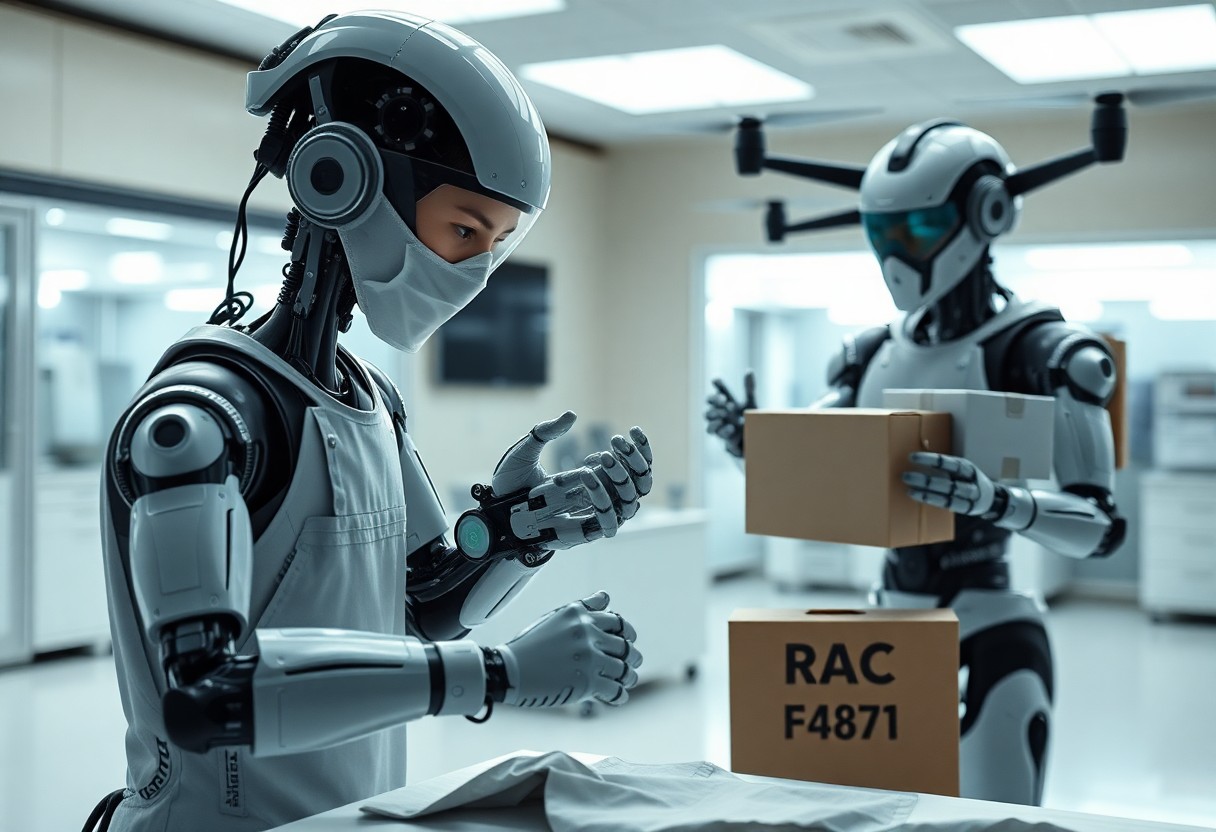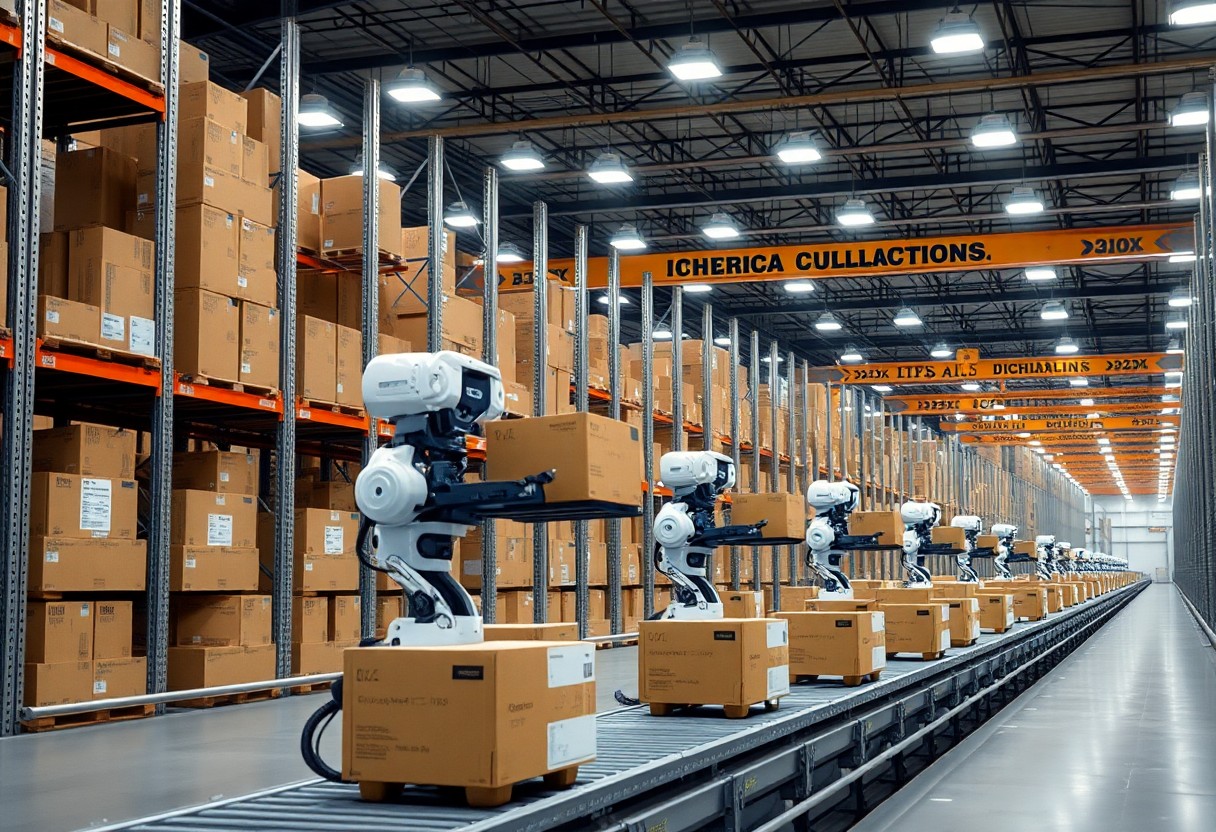
Automation is reshaping order fulfillment as high-speed picking robots accelerate throughput, reduce errors, and scale operations so you can meet surging customer expectations. By integrating vision systems and AI, these robots streamline pick-and-pack, optimize your warehouse layouts, and give you real-time inventory visibility to cut your costs and shorten your delivery windows.
Just as order volumes surge, high-speed picking robots streamline your fulfillment by accelerating pick rates, reducing errors, and enabling scalable throughput; you gain real-time inventory visibility, lower labor costs, and faster delivery windows while maintaining accuracy. This technology lets you reconfigure workflows quickly, integrate with warehouse management systems, and respond to peak demand without compromising service levels.
The Evolution of E-Commerce Fulfillment
Over the last two decades, you’ve seen fulfillment evolve from manual pick lines to dense, robot-driven micro-fulfillment centers: Kiva Systems (founded 2003) introduced mobile robots that Amazon acquired for $775 million in 2012, and companies like Ocado scaled grid-style automation; global e-commerce topped $4.9 trillion in 2021, forcing faster throughput, tighter SLAs, and a pivot toward goods-to-person architectures.
Historical Context
You can trace the shift to automation back to AS/RS and conveyor systems in the 1980s and pick-to-light adoption in the 1990s; human pick rates historically hovered around 50-120 picks per hour, so firms pursued automation to cut walking time, leading in the 2000s to mobile robots and modular cells that reduced footprint and improved order consolidation.
Current Challenges
You now contend with SKU proliferation-from hundreds to tens of thousands-shrinking labor pools and customer expectations for same-day windows; peak events like Black Friday can multiply demand 2-4×, while return rates in categories such as apparel often exceed 20%, stressing pick accuracy, buffering, and reverse logistics, plus integration with legacy WMS and capital constraints complicate rollouts.
You also must manage operational limits: many AMRs operate 8-16 hours per charge and need scheduled docking that affects shift planning; sensor occlusion in dense aisles, mixed-SKU handling for fragile items, and custom WMS APIs can delay full performance-one mid-size retailer reported a 30% labor cut after AMR deployment but required six months of software tuning and layout changes to hit target throughput.
The Evolution of E-Commerce Fulfillment
As you scale your fulfillment operations, you see how order volumes-global e-commerce topped over $5 trillion recently-forced rapid change in warehousing practices. Platforms that once tolerated multi-day lead times now compete on same-day delivery windows, pushing you to rethink layout, inventory velocity, and picking cadence. You’ll find that capacity planning, slotting algorithms, and robot-enabled micro-fulfillment centers are now front-line levers for meeting customer expectations and reducing shipping costs.
Historical Context
When you trace the shift, manual pick-and-pack dominated until conveyors, barcoding, and AS/RS systems began automating repetitive tasks in the 1980s-2000s. Amazon’s aggressive fulfillment expansion and its 2012 acquisition of Kiva Systems for $775 million accelerated mobile-robot adoption, while grocery pioneers like Ocado demonstrated high-density automation for perishable logistics. You experienced longer lead times and higher labor churn before these transitions became mainstream.
Technological Advancements
You now rely on a stack of innovations-AMRs and grid robots for dynamic picking, machine vision and grasping algorithms for heterogeneous SKUs, plus ML-driven demand forecasting that aligns replenishment with pick-path optimization. Edge computing and tighter WMS-robot APIs let you orchestrate thousands of concurrent tasks, turning manual bottlenecks into continuous flows and measurable throughput gains.
Dive deeper and you’ll see concrete implementations: AutoStore’s cube-based storage scales by adding robots to increase throughput without expanding footprint, and Ocado’s fulfillment centers use hundreds to thousands of bots to run dense, high-frequency picking for groceries. Your systems benefit when vision systems classify items in milliseconds and adaptive grippers switch from suction to mechanical grasp across SKU families. Integrations matter-WMS, OMS, and robotic fleet managers exchanging telemetry enable sub-second task reassignment during peak surges. Finally, digital twins let you simulate peak-day layouts and prove that incremental robot investments can raise picks per hour and lower pick travel distance, giving you predictable ROI paths rather than speculative gains.
High-Speed Picking Robots: An Overview
In high-volume bays you’ll find robots engineered to replace repetitive hand picks and dramatically shorten pick-to-pack cycles. These systems commonly deliver 300-1,200 picks per hour depending on SKU size and gripping tech, and they let you increase storage density while lowering travel time. Vendors pair mechanical speed with software orchestration so your peak-period throughput scales predictably, enabling same-day promises and tighter SLAs without linear headcount increases.
Technology Behind High-Speed Robots
At the core you see three tech pillars: high-speed end-effectors (delta and suction grippers), advanced machine vision and AI for dynamic grasping, and fleet orchestration software that integrates with your WMS. Deliberate design choices-short cycle times, predictive collision avoidance, and real-time task allocation-allow robots to sustain hundreds of picks per hour. Many systems also use sensor fusion and edge compute so your latency-sensitive pick decisions happen locally, preserving throughput under load.
Key Players in the Market
Market leaders span distinct niches: Amazon Robotics and AutoStore for dense goods-to-person and cube systems, Ocado Solutions for large-scale grid automation, Locus and GreyOrange for AMR fleets, Attabotics for vertical 3D storage, and ABB/FANUC for industrial high-speed delta arms. Meanwhile Covariant and RightHand focus on perception and grasping software that you’ll need when SKU variability challenges pure speed solutions.
AutoStore’s cube-based setups excel when your SKU mix favors small, high-density parts and have been deployed in hundreds of sites worldwide; Ocado’s grid robots demonstrate how thousands of units can coordinate in a single CFC to achieve continuous throughput. Locus cites measurable productivity uplifts in mixed-SKU picking by replacing walk-and-pick workflows, while ABB/FANUC delta systems are used in micro-picking stations reaching sub-second cycles for uniform items. You should match vendor strengths to your SKU characteristics and throughput targets when evaluating suppliers.
The Role of High-Speed Picking Robots
In high-volume fulfillment, these robots handle repetitive, time-sensitive picks so you can scale throughput without linear headcount increases; some systems achieve 500-1,000 picks per hour per robot and fleeted deployments from Amazon Robotics to Ocado process tens of thousands of orders daily. You’ll see peak-hour latency drop, more consistent SLA compliance, and smoother integration with upstream receiving and downstream shipping lanes.
Mechanisms and Functionality
They combine 2D/3D vision, force and tactile sensing, adaptive grippers (vacuum, soft-jaw, and multi-finger), and high-acceleration actuators, while centralized fleet orchestration runs SLAM-based navigation and ML-driven object recognition so you can orchestrate hundreds of units; modular conveyors and zone-based sortation link robot picks directly to packing stations for minimal handoffs.
Advantages Over Traditional Methods
You gain markedly higher throughput and utilization: many operators report 2-5× faster pick rates versus person-to-goods lines, error rates falling to well under 1% in controlled deployments, and storage density improvements up to 70% with goods-to-robot layouts, all translating to faster order-to-shipment cycles and more predictable capacity at peak.
Beyond raw speed, you realize labor redeployment toward exception handling and value-added work, faster seasonal scaling (add robots rather than hire hundreds), and clearer OEE metrics for continuous improvement; operators commonly cite 20-40% reductions in labor cost per order and typical capital payback windows of 18-36 months depending on SKU mix and throughput intensity.
Benefits of Implementing High-Speed Picking Robots
Across modern warehouses, you gain measurable gains: many deployments show 2-4x throughput and 25-50% faster order cycle times, while pilot programs report up to 70% fewer pick errors. You can consolidate dense storage, reduce walking time, and redeploy staff to exceptions; see How AI and Robotics Are Optimizing E-Commerce … for practical case studies and implementation guidance.
Increased Efficiency
By integrating these robots, you raise picks per hour dramatically-typical systems hit 500-1,200 picks/hour per cell-so you scale for peaks without hiring seasonal labor. You’ll shrink travel time, boost SKU density up to 3x, and shorten fulfillment lead times; one mid-size retailer moved from 10,000 to 30,000 daily orders after phased robot adoption.
Cost Reduction
On the cost side, you can cut total labor expenses roughly 20-40% and lower error-related returns, often reaching payback in 12-24 months. You’ll also reduce overtime, training costs, and required floor space-dense automation can reduce footprint needs by 10-30%, improving your cost per order.
You should model total cost of ownership over 3-5 years: initial CAPEX is offset by fewer FTEs, higher throughput, and lower return rates. Consider financing or subscription models that convert CAPEX to predictable OPEX, and budget for ~3-5% annual maintenance plus software fees; with those assumptions many operators report a 15-25% reduction in cost per order year-over-year.
Impact on Supply Chain Efficiency
Across your fulfillment network, high-speed picking robots compress lead times and smooth peak demand, often cutting order cycle time by 30-60% while boosting usable floor space so you can increase inventory density 2-4×; in practice, this lets you promise same‑day delivery more reliably, lower safety stock, and synchronize replenishment rhythms between DCs, which drives faster turnover and fewer stockouts across channels.
Speed and Accuracy Improvements
When you deploy these robots, throughput jumps-robotic cells commonly hit 300-500 picks per hour versus 60-100 for manual pickers-while accuracy climbs from roughly 98% to above 99.5%, lowering returns and rework; for example, a mid‑market apparel seller reported a 50% drop in picking errors and a 40% reduction in average order lead time after installing a clustered robotic picking system.
Cost-Effectiveness and ROI
You’ll see labor cost reductions of 30-50% and operating expense declines as automation reduces overtime, errors, and packing rework; typical payback windows range 12-24 months for greenfield implementations or 18-36 months for retrofit projects, and modular systems let you align capital deployment to demand peaks to preserve cash flow while scaling capacity.
For a concrete example, if your facility processes 20,000 orders per week and labor costs run $2.5M annually, a 40% labor reduction plus 25% fewer error‑related costs can yield ~$1.1M annual savings; against a $2.2M automation install, that equates to a two‑year payback. You can further improve ROI by using outcome‑based financing, reducing floorspace rental via higher density, and redeploying staff to higher‑value tasks that increase overall throughput and margin.
Case Studies of Successful Implementations
Across multiple fulfillment centers you see tangible performance improvements: pilots and live deployments report 20-60% faster pick rates, 25-50% reductions in labor per order, and compressed lead times that enable same‑day windows during peaks, translating into lower per‑order costs and higher throughput without proportional headcount growth.
- Amazon Robotics (Kiva): after acquisition in 2012, tens of thousands of mobile drive units operate in hundreds of FCs; case studies show up to ~50% less picker travel, 25-50% higher throughput, and a 20-30% increase in usable storage density per site.
- Ocado Smart Platform: customer fulfillment centers deploying 1,000-2,000+ robots report order throughput increases up to 2× and footprint reductions near 40% versus manual grocery DCs, enabling sub‑hour urban fulfillment for partners.
- JD.com Smart Warehouses: large‑scale sites with >1,000 robots handled millions of picks during peak campaigns, with pilot sites reporting 30-70% faster order cycle times and nationwide same‑day coverage gains.
- Locus Robotics (robot‑as‑a‑service): multi‑site rollouts consistently deliver 2-3× pick productivity and 20-50% labor cost reductions; many customers report payback in 6-12 months depending on throughput.
- DHL / 3PL Pilots: hybrid deployments combining picking and sortation robots achieved 15-35% throughput gains, halved certain replenishment times, and reduced variability during peak surges in multiple pilot sites.
Major Retailers
When you compare major retailers, Amazon, Walmart and other national chains use high‑speed robots to scale peaks: deployments typically cut cycle times by 20-50% and let your network handle 10-30% more peak volume without proportional seasonal hires, while increasing on‑shelf availability and shortening delivery promise windows.
Emerging Companies
You’ll find startups like Locus Robotics, GreyOrange, Berkshire Grey and RightHand offering focused picking solutions that deliver 2×-3× pick rates in pilots, reduce labor hours by 20-50%, and often show ROI within 6-18 months depending on order density and SKU mix.
In practice you benefit from flexible commercial models (robot rental, subscription, or capex), modular integrations with WMS/APIs, and rapid pilot-to-scale timelines; sensor fusion and ML improve first‑pass pick accuracy (commonly above 90% in deployments), so your ramp to sustained throughput is faster and more predictable.
Case Studies of Successful Implementations
Across multiple deployments you’ll see tangible performance jumps: fulfillment centers report dramatic throughput increases, quicker peak handling, and measurable labor shifts. These case studies highlight real metrics-order-per-hour, error rates, space savings-and show how phased rollouts and software tuning let you scale robots without disrupting daily operations.
- 1) Major US retailer: 500 robots in three sites raised pick throughput by 3.1x, cut average pick time from 14s to 4.5s, improved order accuracy to 99.85%, and achieved payback in 18 months.
- 2) European fashion e-tailer: 120 units reduced single-item pick time by 60%, processed 15,000 orders/day during peak, and lowered mis-picks by 70% after SKU bin reallocation.
- 3) Grocery delivery operator: 200 bots enabled same-day capacity to double, cut order lead time from 10h to 4h, and increased slot bookings by 45% on weekdays.
- 4) 3PL provider: 800 robots across three warehouses boosted throughput 4x, raised space utilization by 35%, and supported a 50% increase in client SKUs without new real estate.
- 5) Electronics retailer pilot: 50 robots handled peak surge +2.5x, reduced returns processing time by 45%, and demonstrated a projected ROI of 12-16 months when scaled.
Leading Retailers
You’ll find leading retailers adopting hybrid models: Amazon-style dense robot fleets for fast-moving SKUs, big-box chains using robots for sortation and replenishment, and specialty brands focusing robots on peak lanes-typical throughput improvements range 30-60% and you can expect similar gains if you align robots to your bottleneck tasks.
Challenges and Solutions
You’ll face integration hurdles, SKU heterogeneity, and peak variability; common fixes include phased rollouts, modular end-effectors, and WMS APIs that reduce go-live time. Many operators report cutting implementation timelines from 12 to 6 weeks with prebuilt integrations and achieving uptime targets above 95% through scheduled maintenance.
Digging deeper, you should plan for data-driven SKU stratification (ABC analysis) so robots handle the most volume-efficient picks while humans manage exceptions. Implement predictive maintenance-sensors and ML models can lower unplanned downtime by ~40%-and run shadow-mode validation before full cutover to validate error rates and throughput. Finally, model your ROI with peak-season scenarios; projects that include labor redeployment and space savings typically reach payback in 12-24 months, but your timeline will depend on order mix and integration complexity.
Future Trends in E-Commerce Automation
As peaks become more unpredictable, you’ll deploy modular, on-demand robotics to scale capacity rapidly-many sites target 20-60% increases in peak throughput and sub-hour order SLAs. Expect more mixed fleets and micro-fulfillment nodes integrated with carriers; for holiday deployment lessons and performance data see How Robotics Is Revolutionizing E-Commerce Fulfillment This Holiday Season.
Technological Advancements
You’ll see advances like 3D vision-guided end-effectors, soft-grip and vacuum hybrid grippers, and 2-4 m/s mobile platforms that cut cycle times by 25-40%. Cameras with sub-5 mm depth accuracy and real-time collision avoidance let robots pick dense totes and fragile SKUs at higher rates, while edge compute reduces latency for sub-100 ms pick decisions.
Integration with AI and Machine Learning
You can combine demand forecasting with dynamic tasking so robots prioritize high-margin orders; pilots report ML-driven slotting and batching can lower travel distance by 10-25% and improve on-time rates. Reinforcement learning optimizes pick sequences, and computer vision reduces mispicks to under 0.2% in mature systems.
In practice, you’ll feed live order streams, inventory telemetry, and conveyor states into models that reassign tasks every few seconds, enabling zone-to-zone handoffs and shuttle orchestration. Case pilots demonstrate 10-15% throughput uplift from adaptive route planning, and when paired with predictive maintenance (sensor telemetry + anomaly detection) robot uptime climbs above 98%, keeping your SLA commitments during peaks.
Future Trends in Robotics and E-Commerce
AI and Machine Learning Integration
Advances in reinforcement learning and computer vision let you move robots from rule-based pickers to adaptive collaborators; Ocado’s path-planning and Amazon’s ML-driven demand forecasting are practical examples. When you layer real-time optimization and anomaly detection, operations can shorten cycle times by up to 30% in pilots, lower mis-picks, and let you redeploy staff to exception handling and value-added tasks.
Expansion Beyond Warehousing
Retail-floor robots, autonomous delivery vehicles, and in-store automation are bringing fulfillment closer to the consumer: Simbe’s shelf-scanning bots, Nuro delivery pilots, and Amazon Scout trials show how you can cut manual audits and last-mile touches. Early deployments often report 15-30% labor-hour reductions and faster returns processing, enabling your network to stretch from DCs to curbside.
You should expect growth in micro-fulfillment and hybrid nodes-companies like Takeoff and Fabric are placing compact automated hubs inside urban footprints to enable sub-two-hour delivery windows. Meanwhile, autonomous trucks (TuSimple) and robot couriers let you consolidate loads and lower per-package costs on long-haul and last-mile legs, so your fulfillment topology becomes more distributed and demand-responsive.
Challenges and Considerations
You still face trade-offs around integration complexity, safety compliance, and measurable ROI when scaling high-speed pickers. For example, retrofitting a 100,000 sq ft fulfillment center can cost $500k-$2M and typical payback ranges from 12-36 months depending on SKU mix and throughput. You must plan for software integration with WMS, collision-avoidance validation to meet local safety standards, and capacity buffers so peak-day throughput remains predictable rather than assuming linear gains.
Workforce Impact
You will need to reskill and reassign staff as robots take over repetitive picks; many operations report 20-40% of picking tasks shifting to autonomous systems. Companies commonly run 4-12 week training programs to move pickers into robot maintenance, exception handling, and quality-control roles, and you should budget 5-10% of first-year labor costs for training and transition support to minimize disruption.
Maintenance and Upkeep
You must adopt a disciplined maintenance strategy combining preventive schedules and predictive analytics to keep uptime above 98%. Best practices include monitoring MTBF metrics, stocking critical spares, and targeting a technician ratio roughly 1 per 40-60 robots; without that planning you can see unexpected downtime that erodes the promised throughput improvements.
Operationally, implement daily diagnostics and vision-system cleaning, weekly calibration of servo systems, and monthly firmware patches with rollback plans. Anticipate consumable replacement-grippers and suction pads often need renewal every 6-12 months-and provision spares equal to 3-5% of your fleet. Financially, allocate roughly 5-10% of robot capex annually for maintenance, and stage hot-spare robots to cover peak-season failures.
Ethical Considerations and Workforce Changes
Ethical debates concentrate on worker welfare, data governance, and equitable access to new roles as robots scale; analyses from McKinsey and the OECD suggest 20-30% of warehouse activities could be automated in the next decade. You need transparent metrics for safety, anonymized performance data, and transition policies that tie automation gains to worker protections-for example, profit-sharing, phased redeployment, and clear timelines for tech rollouts to avoid abrupt job shocks.
Job Displacement Concerns
Automation often removes repetitive picking tasks first, and you may see 10-30% reductions in manual picking hours in early deployments; some pilots report pure-picker headcounts falling by roughly 10-20% within a year while maintenance and oversight roles rise. Anticipate short-term displacement in routine roles, plan for temporary hiring freezes in affected job classes, and quantify exposure by mapping which SKUs and routes robots will handle versus human tasks.
Reskilling and New Opportunities
You can mitigate displacement by funding reskilling: major players already do this-Amazon committed $700 million to upskill 100,000 employees by 2025-so you should adopt similar investments in mechatronics, controls, and data literacy. Prioritize short, competency-based certificates, employer-paid apprenticeships, and partnerships with community colleges to convert pickers into technicians, supervisors, or data operators within 3-6 months.
Operationally, focus reskilling on three tracks: technical (robot repair, PLCs, ROS basics), analytical (WMS analytics, KPI dashboards), and supervisory (workforce orchestration, safety management). Implement micro-credentialing with measurable outcomes-internal mobility rate, reduction in temp hires, and cost-per-order improvements-and offer paid on-the-job rotations plus stipends for external certifications to lower barriers and accelerate transition into higher-paying, durable roles.
Summing up
Upon reflecting, you can see that high-speed picking robots dramatically accelerate order throughput while improving accuracy and lowering per-unit labor costs, enabling your fulfillment center to scale with demand and offer faster delivery. By integrating these systems with your warehouse software and upskilling staff to manage automation, you preserve flexibility and extract strong ROI, positioning your operation to compete on speed, reliability, and cost efficiency.
To wrap up
Now you can see how high-speed picking robots reshape fulfillment: they cut cycle times, reduce errors, and scale operations so you meet peak demand while lowering costs. Adopting them requires workflow redesign, staff retraining, and data integration, but your ROI often accelerates as throughput and accuracy improve. Plan phased deployment and continuous monitoring to ensure the technology aligns with your service goals and keeps you competitive.