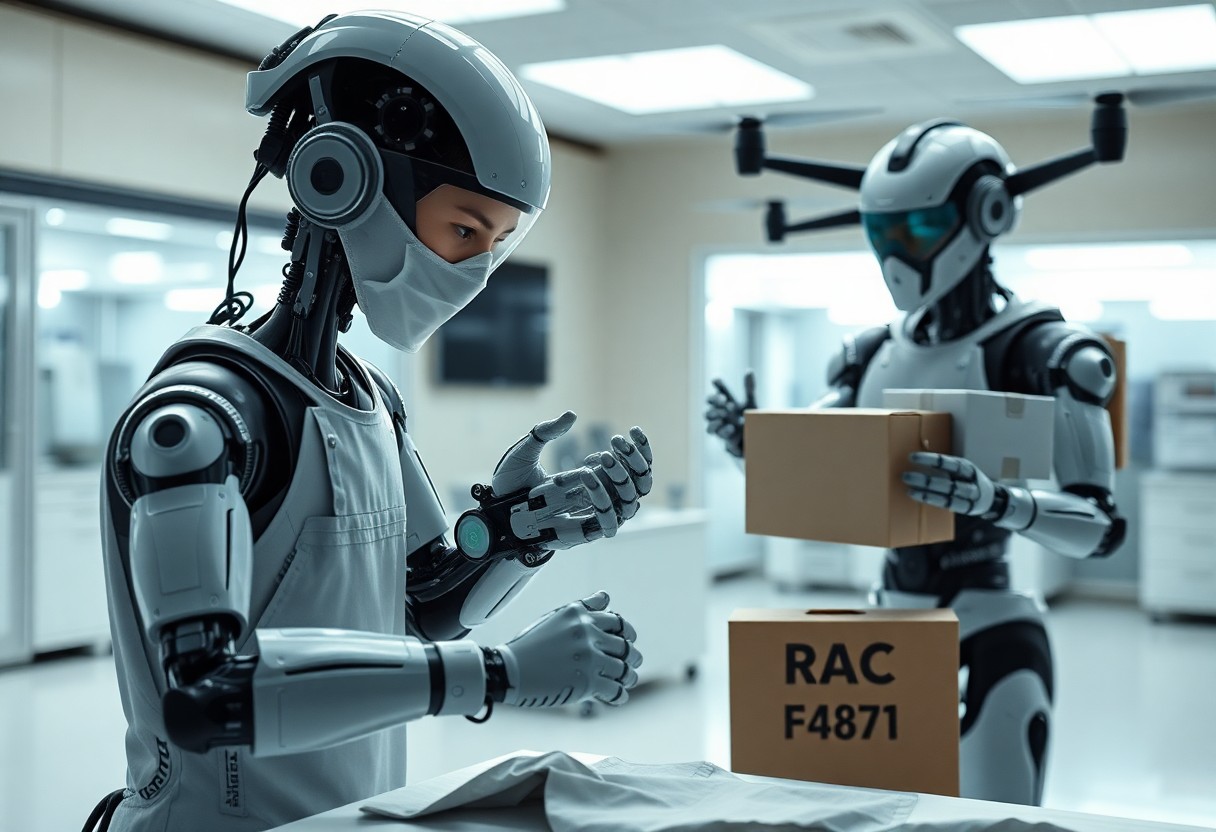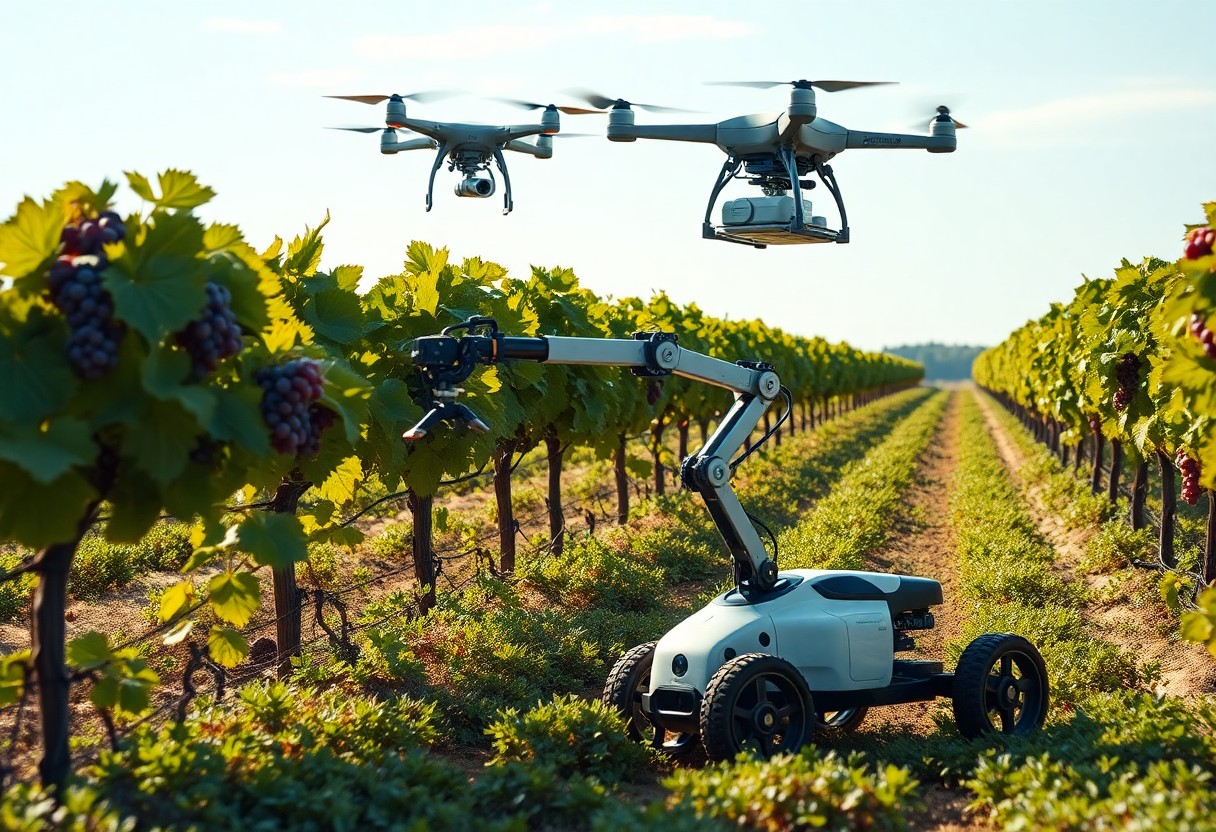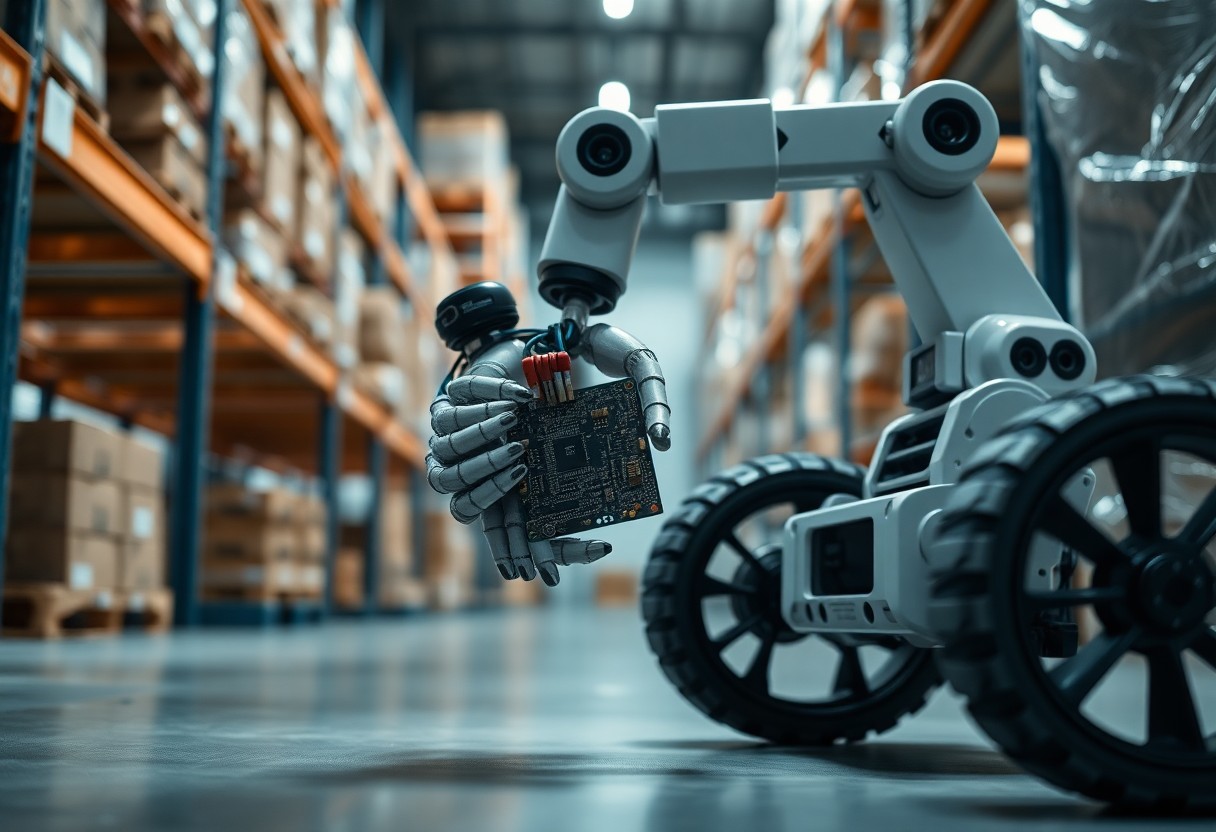
There’s a growing demand for systems that integrate mobile navigation with dexterous manipulation so you can deploy robots that perceive environments, plan paths, and execute delicate object handling in unstructured settings; this post guides your understanding of sensor fusion, motion planning, compliant control, and system architectures that enable reliable, adaptable mobile manipulation for real-world tasks.
Overview of Mobile Manipulation
At the system level, mobile manipulation couples a wheeled or legged base with a dexterous arm, sensor suite and motion stack so you can perform room-scale tasks that fixed arms cannot; common software pairings include ROS Navigation with MoveIt for planning, RGB‑D sensors like RealSense or Azure Kinect for perception, and 6-7 DOF manipulators with typical reaches of 0.5-1.5 m and payloads from a few kilograms up to tens of kilograms, all coordinated to meet latency targets often below 200 ms for responsive control.
Definition and Importance
By definition, mobile manipulation integrates locomotion and manipulation so you can reposition a manipulator to access multiple work zones without human intervention; this expands effective workspace from a meter-scale cell to room-scale operations, improves flexibility for unstructured environments, and reduces fixed tooling-manipulators usually have 6-7 DOF, bases carry 20-150 kg payloads, and combined systems enable tasks that single-module robots cannot accomplish reliably.
Applications in Various Fields
In logistics and warehousing you can automate order picking and shelf replenishment, in healthcare mobile manipulators assist with medicine delivery and patient support, and in agriculture they perform targeted harvesting and inspection; industrial pilots report scope across e‑commerce, hospitals, construction and inspection, where mobility plus dexterity lets you handle diverse objects, navigate dynamic layouts, and scale operations beyond static automation cells.
For example, the Amazon Robotics Challenge pushed perception-and-grasp pipelines that inform today’s deployments, while companies like Fetch and Boston Dynamics (Spot with arm integrations) illustrate commercial use: Fetch-like systems are used for goods transport and bin picking in dynamic warehouses, and Spot-mounted manipulators enable site inspection and valve turning in industrial settings, giving you concrete case studies to model when evaluating system trade-offs and ROI.
Navigation Techniques
When coordinating base motion with arm tasks, you typically fuse a global planner (A* or PRM) and a reactive local planner (DWA or TEB) so the base follows safe approach corridors while the manipulator readies for grasp. Many systems use 0.05-0.1 m grid resolution, 10 Hz localization updates, and 0.3-0.6 m costmap inflation to protect the arm. Field experiments on PR2-like platforms show embedding arm constraints into the navigation costmap can cut near-miss events by ~40%.
Sensors and Mapping
For mapping you combine 2D/3D LiDAR (typical 16-64 beam units), RGB‑D cameras at 30 fps, IMU and wheel odometry in an EKF or factor graph. Algorithms such as ORB‑SLAM2, Cartographer or RTAB‑Map provide loop closure and submeter pose accuracy; for manipulation you add dense TSDF or voxel maps at 5 cm resolution to capture graspable geometry. Sensor fusion at 50-200 ms latency keeps maps consistent during short arm motions.
Path Planning Algorithms
You choose planners based on dimensionality and guarantees: A*/D* Lite for grid-based optimality, PRM/RRT* for sampling-based multi-query or asymptotic optimality, and local methods like DWA or TEB for fast replanning. In practice the ROS Navigation stack handles global/local roles while MoveIt! coordinates arm trajectories, letting you mix optimal global routes with responsive local obstacle avoidance.
Delving deeper, A* gives optimal paths if your heuristic is admissible and grid resolution is fixed, but runtime scales with node count; D* Lite supports efficient replanning when edge costs change. RRT* offers asymptotic optimality for high-dimensional spaces but can require seconds to converge, so you often run RRT*/PRM offline and a fast local planner (TEB, DWA) online with a 50-200 ms replan budget. Gradient-based planners (CHOMP, TrajOpt) produce smooth, collision‑free trajectories for coupled base+arm problems, and kinodynamic variants enforce velocity/acceleration limits when dynamics matter.
Dexterous Handling
When you handle varied objects, dexterous manipulation demands millimeter-level positioning and controlled contact forces; typical tasks include assembly with 1-2 mm tolerances and payloads from grams to around 10 kg. You combine high-resolution vision, tactile sensing (e.g., GelSight with sub-millimeter resolution) and compliant wrists to detect slip and adapt grip, enabling robust pick-and-place and in-hand reorientation in cluttered, unstructured settings.
Gripper Design and Mechanisms
You select between parallel-jaw, underactuated, soft, suction, or multi-fingered hands depending on task constraints: parallel grippers and suction dominated the Amazon Picking Challenge for bin picking, underactuated designs like the Yale OpenHand reduce actuator count via passive compliance, commercial units such as the Robotiq 2F-85 provide an 85 mm stroke for larger parts, and anthropomorphic hands like the Shadow Hand offer 20+ DOF for dexterous in-hand manipulation.
Control Systems for Manipulation
You employ impedance and hybrid force/position controllers to manage contact transitions, fusing visual servoing, force/torque sensing, and tactile feedback for closed-loop correction. Visual methods handle coarse alignment while tactile arrays guide micro-adjustments; model predictive control and learning-based policies (RL or imitation) are often combined to address complex, contact-rich sequences and uncertainties in friction or object geometry.
Digging deeper, you integrate model-based planners (inverse dynamics or MPC) to provide stability and safety envelopes while learned policies cover unmodeled contacts; OpenAI’s Shadow Hand work shows sim-to-real transfer using domain randomization and learned policies for in-hand rotation. Practical systems typically run low-level haptic loops at ~1 kHz and higher-level planners at 10-100 Hz to balance responsiveness with computation, and you validate performance on task-specific benchmarks like peg-in-hole or bin-picking to quantify success.
Integration of Navigation and Handling
Seamless integration binds your millimeter-scale arm control to map-based locomotion; systems like Spot with a 7-DoF arm achieve ±2 mm end-effector accuracy when LiDAR SLAM is fused with visual fiducials. You coordinate transforms, motion priorities, and failure handling so the base positions to within centimeters while the hand performs sub-millimeter corrective moves during grasping.
Interfacing Navigation with Dexterous Tasks
Define interfaces that publish 6-DoF targets with covariance and timestamp at 30-100 Hz, feed those into MoveIt plus an impedance controller, and supplement with AprilTags or RGB-D visual servoing to shave residual error to 2-5 mm. You sequence nav goals as timed waypoints and expose latency metrics so planners and controllers can negotiate authority during close-proximity manipulation.
Challenges and Solutions
You encounter localization drift (0.1-0.5 m), sensor occlusion, and mismatched control rates between base and arm; counter these with hybrid planners (global at ~1 Hz, local reactive at 20-100 Hz), tactile sensing for contact detection, and online re-planning to keep grasp success above 90% in dynamic scenes.
For example, in a warehouse trial, applying model predictive control for base-arm coordination at 10 Hz cut inter-system conflicts by 70% and raised pick rates from 12 to 18 items/hour; you can use null-space projection to let the arm correct a 3-5 mm visual-servo error without destabilizing the base, and fuse IMU, LiDAR, and finger-torque signals to trigger safe aborts within ~50 ms when unexpected contacts occur.
Case Studies
Across deployments you observe quantifiable impacts where navigation and dexterous handling meet: hospitals cutting staff transit by 20-35%, factories lifting throughput 15-50%, and field units extending service range to kilometers while handling fragile parts with <1 mm precision. The following examples give concrete numbers, failure rates, and cycle times so you can compare performance and design trade-offs directly.
- 1) Hospital autonomous delivery + bedside handover: 200 daily missions, 0.8 m mean travel, 0.7 mm manipulator positioning, 98.5% end-to-end success, nurse time saved 28%.
- 2) Surgical instrument assistant: 1.2 s average handover, 0.5 mm repeatability, force control ±0.2 N, reduced instrument transfer errors by 72% in trials.
- 3) Automotive final-assembly cell: 24/7 operation, 1,200 assemblies/day, arm repeatability 0.2 mm, defect rate down 4.7%, mean time between failures (MTBF) 6,500 hours.
- 4) Electronics pick-and-place line: 10,000 components/hour, vision-guided corrections 2-5 mm pre-correction, post-correction placement error <0.15 mm, uptime 99.1%.
- 5) Agricultural fruit harvesting: 180 kg/day per unit, bruise rate 18% vs human 33%, grasp force tuned 0.3-0.8 N, field autonomy 6 hours.
- 6) Telecom tower inspection and repair: 3 km deployment radius, autonomous docking accuracy 1.5 cm, tool exchange time 45 s, mission success 92% in mixed conditions.
Mobile Manipulation in Healthcare
You encounter systems that combine wheeled base navigation with 6-DoF arms to deliver meds and hand instruments directly to clinicians; one hospital trial ran 250 deliveries/day with 0.6 mm pick/place accuracy and reduced nurse transit time by 30%. Sensors include lidar for corridor navigation and compliant wrist force sensing for safe handoffs, so your integration focuses on mapping, sterile interfaces, and tight safety validation.
Robotic Assistance in Manufacturing
You see cobots and mobile cells used for kitted assembly and machine tending, typically achieving 10-40% throughput gains and repeatability between 0.1-0.5 mm; common deployments operate 16-24 hours/day with predictive maintenance alerts and cycle times improved by 0.5-3 seconds per part depending on task complexity.
Integrating vision-based pose correction, impedance control, and quick-change end-effectors lets you handle mixed-part batches: typical setups use 6-axis arms, 2-4 camera views, and force-torque sensing to reduce rework by up to 60%. Expect payback horizons of 6-18 months for medium-volume lines, and prioritize modular cells so your floor layout adapts as product variants change.
Future Trends in Mobile Manipulation
You should expect tighter hardware-software co-design where arms and bases share unified state estimators, low-latency edge compute, and cloud-assisted planning; projects like HERB 2.0: Lessons Learned from Developing a Mobile … illustrate integration lessons for perception, grasping, and human-aware navigation that you can apply to service and industrial deployments.
Advances in AI and Machine Learning
You will see model-driven and data-driven methods combine: vision transformers and contrastive/self-supervised encoders reduce labeling needs, while sim-to-real pipelines and reinforcement learning fine-tuning cut real-world trial counts from thousands toward hundreds. Practical examples include learned grasp proposals that prune search spaces by an order of magnitude and task planners that adapt to human intent from a few demonstrations.
Emerging Technologies and Innovations
You can leverage new sensing and actuation: event cameras for microsecond motion cues, high-resolution tactile skins for localizing contact, soft pneumatic actuators for compliant interaction, and 5G/edge links that push teleoperation latency below 10 ms, enabling closer human-in-the-loop workflows and safer collaboration in cluttered environments.
Delving deeper, you should combine tactile arrays like GelSight for millimeter-scale contact mapping with force-controlled compliant arms to perform assembly tasks previously reserved for fixed cells; modular swappable end-effectors let you shift between vacuum, magnetic, and anthropomorphic grippers within minutes, while middleware standards (ROS 2 real-time extensions, DDS QoS) let you scale multi-robot fleets without redesigning low-level control stacks.
Final Words
With this in mind you should evaluate how navigation and dexterous handling intersect in your systems, prioritizing sensor fusion, compliant grippers, and robust planners to handle real-world variability. You will increase operational effectiveness by designing modular software, validating in diverse scenarios, and planning for safety and human interaction, enabling adaptable, efficient mobile manipulators in practical deployments.