Factory robot count hits 5 million as China takes 59% of installs
Five million industrial robots were working in factories around the world at the end of 2025. That is 9% more than the year before, and a record. The count comes from the International Federation of Robotics, an industry group based in Frankfurt. It published the number on September 24, 2026, as part of its yearly World Robotics count, and The Robot Report reported it. New installations also rose 11%. More than 600,000 robots were put to work last year.
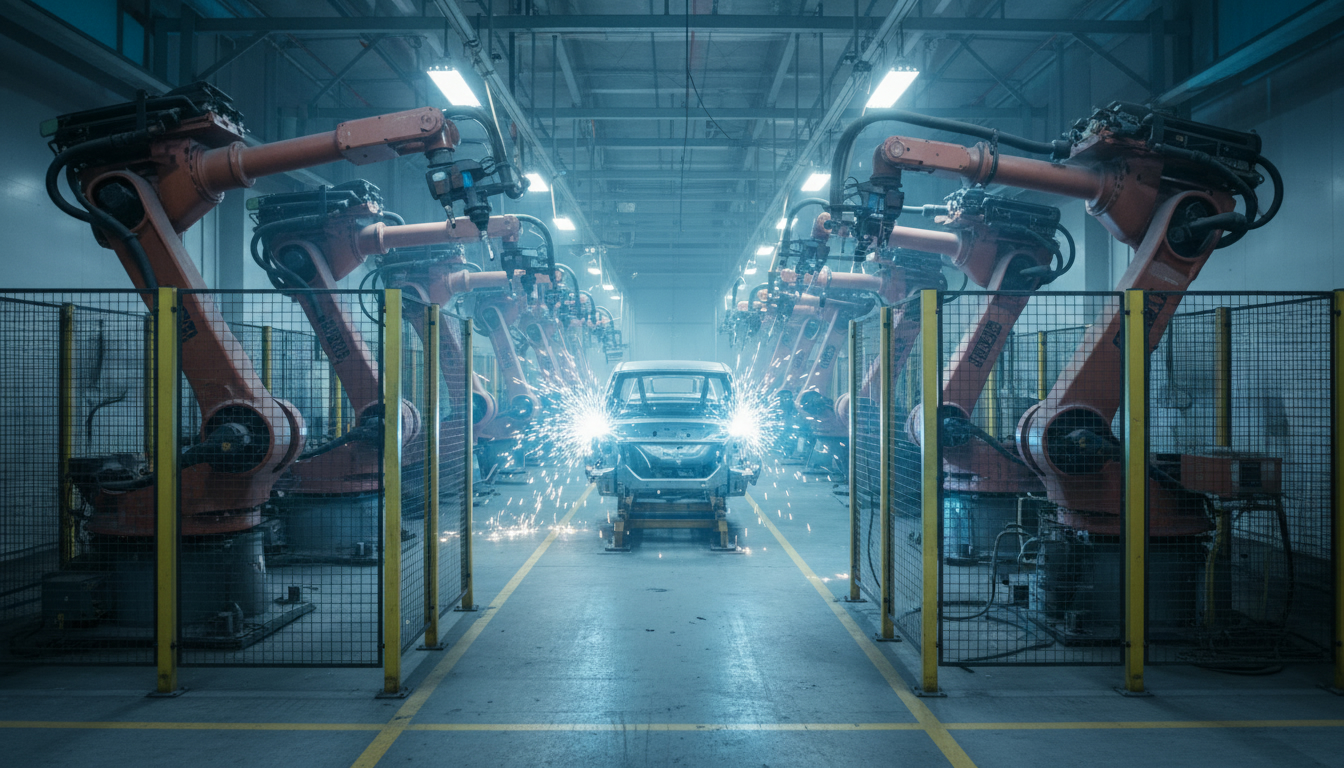
The two numbers mean different things. The 600,000 counts machines installed in one year. The 5 million is the federation’s estimate of how many robots are still running today. It adds up years of installations and subtracts the units it assumes have been scrapped. So it is an estimate, not a head count. It covers industrial robots only: the arms bolted to the floor that weld, paint, assemble and load machines. Warehouse robots, delivery robots and the human-shaped prototypes in the news are not included.
“Industrial automation is progressing at high speed,” IFR president Jane Heffner said in the group’s announcement. “The new mark of 5 million robots operational in factories worldwide is more than double the number seven years ago. The strongest growth is taking place in Asia, followed by Americas. Europe is moving ahead more slowly.”
China now accounts for nearly six in ten new robots
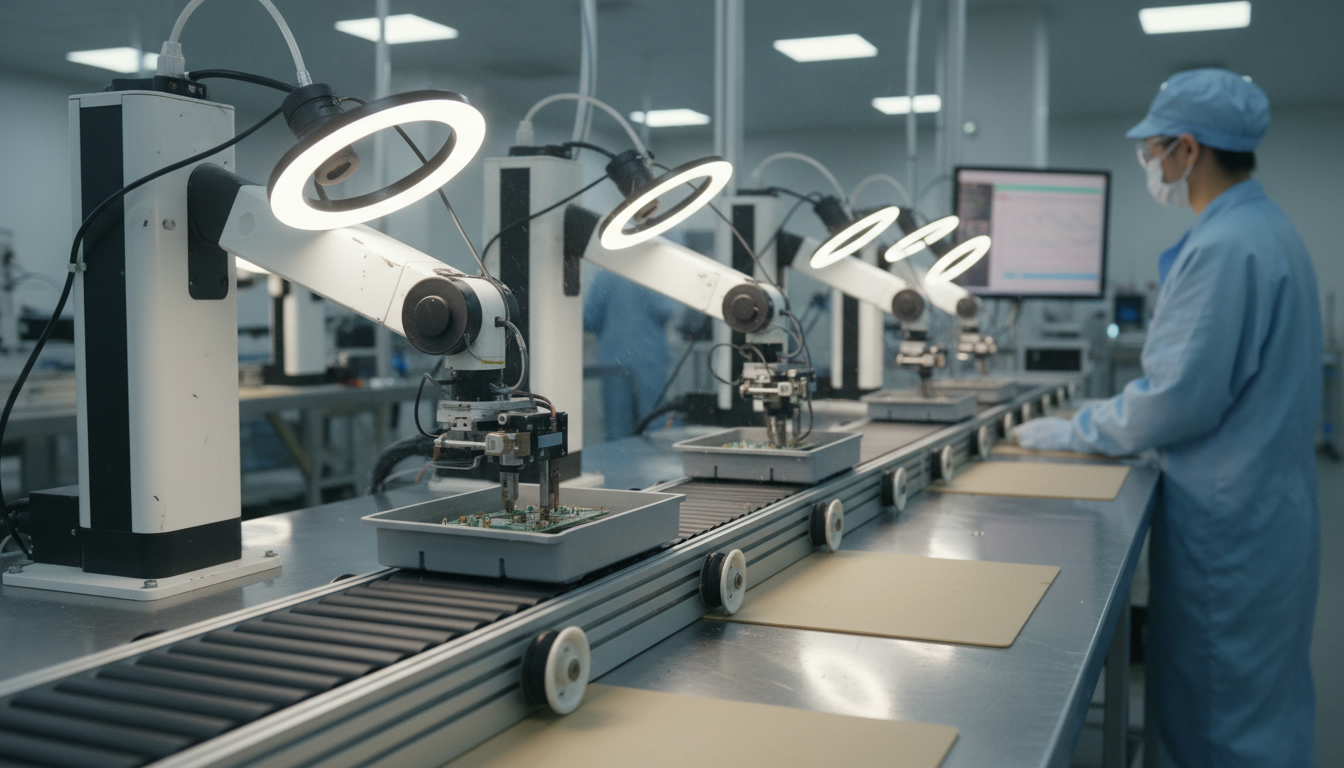
China installed 354,000 industrial robots in 2025. That is 20% more than the year before, and almost 60,000 more machines than in 2024. So one country took 59% of all the industrial robots installed on the planet.
Chinese robot makers won most of that business. They supplied 195,000 of those machines, up 15%. The federation says that gives them 55% of their home market, down a little from 57% in 2024. So Chinese firms sold more robots, but lost a sliver of share to foreign brands. Their home market simply grew faster than they did.
The rest of Asia looks very different. Japan installed 36,219 machines, a drop of 19%. That pushed Japan from second place in the world to third. South Korea installed about 30,000 units, down 1%. Its yearly numbers have barely moved since 2019. The federation expects new carmaker investments in 2027 and 2028 to change that at last. India installed almost 10,500 robots, up 15%, which puts it sixth in the world. The base is still small, but it has grown by an average of 27% a year since 2020.
The United States moves up to second place, Europe falls back
Installations in the United States rose 12% to almost 38,500 machines. The federation says that is the third-highest yearly figure it has ever recorded for the country. It was enough to push past Japan into second place worldwide. Canada rose 5% to almost 4,000 units. Mexico fell 7% to fewer than 5,200, its third drop in a row. Brazil jumped 38% to about 4,300 units, almost all thanks to carmakers. Car plants there installed roughly 2,100 robots, a rise of 212%. The federation says Chinese carmakers building factories in Brazil drove that jump.
Europe is the weak spot. Germany is the world’s fifth-largest market and easily the biggest in the European Union, with 41% of the bloc’s installations. Even so, its sales fell 8% to fewer than 25,000 units. Carmakers are still Germany’s biggest robot buyers, but their share is shrinking, the federation said. Italy fell 11% to about 7,800 units. France fell 8% to almost 4,500. Spain fell 15% to about 4,300.
What the forecast takes for granted
The federation expects installations to rise 9% to 655,000 machines in 2026, and to reach 806,000 by 2029. Its reasoning runs like this. Companies cannot find enough workers. Supply problems and trade rules are pushing firms to make things closer to home. Wages are higher there, and robots help cover that cost. “While this may shift the regional pattern of robot demand, there is no indication that the long-term growth trend in industrial robotics is coming to an end from a global perspective,” the group said. It also expects better cameras and sensors, plus easier programming, to make robots cheaper to set up.
Keep in mind who is forecasting. This is a trade group whose members sell robots. And its assumptions have already failed in several countries. Japan, Germany, Italy, France, Spain and Mexico all shrank in 2025. China’s 20% growth may stall, since a 59% world share leaves little room to climb. If it does, the global curve rests on the United States, India and Brazil. They have never carried that much before.
Jon Quick, chief executive of Launchpad Build AI, described the demand side to The Robot Report in terms of jobs nobody fills: “We have a problem where there are hundreds of thousands of open manufacturing and assembly jobs. It’s supposed to be 2 million by 2030. We just don’t have enough people willing to do these jobs.” He added: “Let’s have robots do the work that no one wants to do and the stuff that’s dangerous. We’re not looking to do everything a human does.”