One Drone Every 48 Seconds: Should a Delivery Hub Be Allowed Next Door?
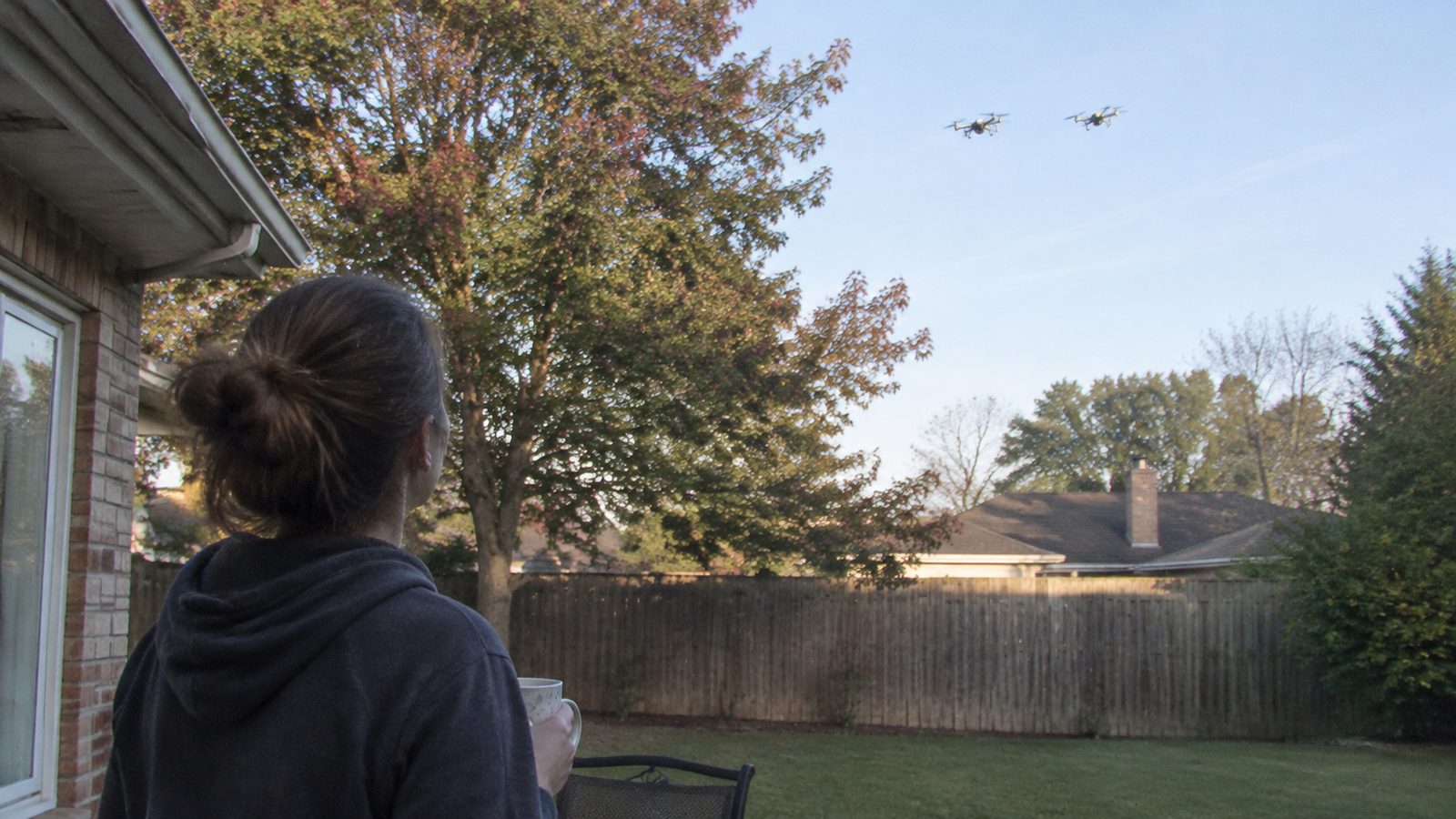
On a Saturday morning in Baton Rouge, Louisiana, Cristina Boone sat down and counted. For one hour, a delivery drone passed over her neighborhood every 48 seconds. Her neighbor Blake Fugler compares the sound to a weed whacker that runs for hours.
The drones come from an Amazon distribution center about two miles away, IEEE Spectrum reports. Another couple on the street, Rick and Marcia LeCompte, now spend less time outside. They have talked about moving. Marcia believes the drones drove off the hawks that used to sit in their sweet-gum tree.
The companies tell a different story. They say their drones are quiet, safe and save people trips to the store. Both sides have a point, and the fight is spreading fast.

The drone companies are planning thousands of hubs
This is no longer a small trial. According to IEEE Spectrum, Amazon serves about 85 US towns and cities and wants to reach 500 by the end of 2026. Wing, the drone company owned by Google’s parent Alphabet, aims for 270 US hubs by the end of 2027. Uber and Zipline say they want one million drone deliveries a day by the end of 2029.
The case for drones is simple. Zipline says it can drop an order in 5 to 10 minutes. It points to its medical work, flying blood and vaccines to more than 5,000 hospitals and clinics. Wing says its deliveries around Dallas-Fort Worth saved more than 1,000 tonnes of carbon, because nobody drove a car to fetch a small package.
The companies also say they listen. Wing says it redesigned its drones to be quieter and changed how its software picks flight paths. Amazon calls customer feedback “overwhelmingly positive.”
Neighbors say the noise never stops
The people under the flight paths are not complaining about one drone. They are complaining about hundreds. Amazon wants up to 1,000 delivery flights a day from a single site in North Haven, Connecticut, according to the drone news site DroneXL.
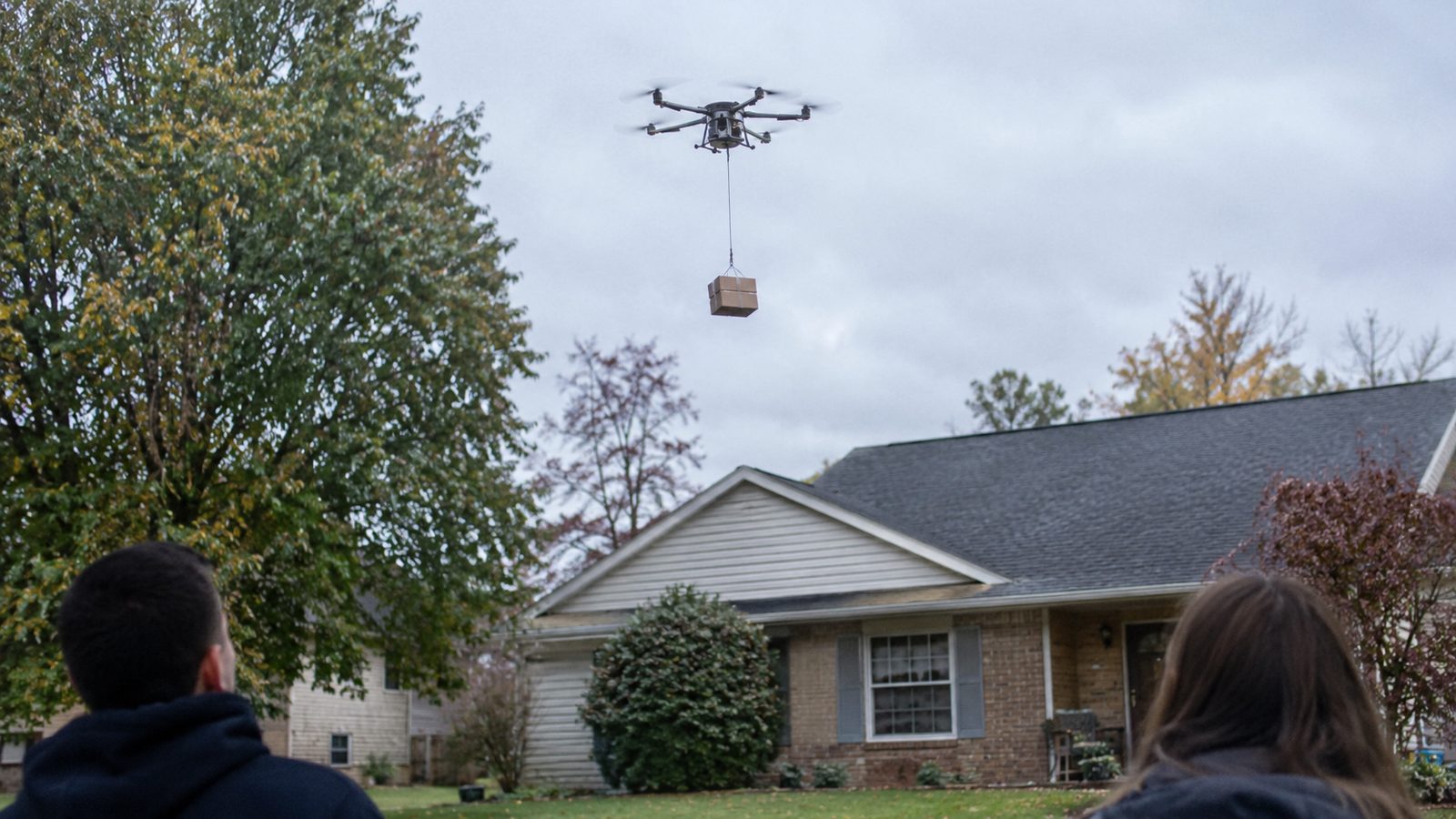
Size matters too. Amazon’s newest delivery drone weighs nearly 80 pounds. Wing’s largest weighs under 25 pounds with a package on board. Wing and Zipline lower parcels on a cable, so their drones can stay higher up. David Ison, who studies drones and land use for Washington State’s transportation department, told IEEE Spectrum that a heavier drone raises bigger worries if it ever falls.
Residents in Baton Rouge also raised drones over playgrounds, schools and a cemetery, plus the cameras on board. In April, commissioners in Cobb County, Georgia, voted 5-0 against a Walmart and Wing hub in a store parking lot surrounded by homes. “This is a land use case, not a drone case,” Commissioner Joan Birrell said, according to CBS News Atlanta.
Fifteen states are now suing the government over it
In July, the Federal Aviation Administration, the US agency that controls the airspace, made one big change. Instead of studying each new delivery area on its own, it signed off on drone delivery nationwide with a single environmental study. The agency says each local review used to take six to eight months.
On September 28, fifteen states and Harris County, Texas, sued. California’s attorney general, Rob Bonta, said the study “falls far short” of looking at what drones actually do to communities. The states point out that it covers future flights at places nobody has named yet.
What nobody has measured yet
Here is the weak spot on both sides. The IEEE Spectrum report gives no noise readings from the Baton Rouge streets. The companies call their drones quiet but publish no numbers in their announcements. So the argument runs on feelings and counts, not on decibels.
The law is just as unclear. Ison says nobody has firmly settled how far your property rights reach into the sky above your house. He expects courts to decide it.
The fairest reading: a few drones a day bother almost no one. A flight every 48 seconds over the same backyard is a different thing. If a hub is planned near you, ask how many flights a day, at what hours, and over which streets. Those three numbers will tell you more than any promise of quiet.