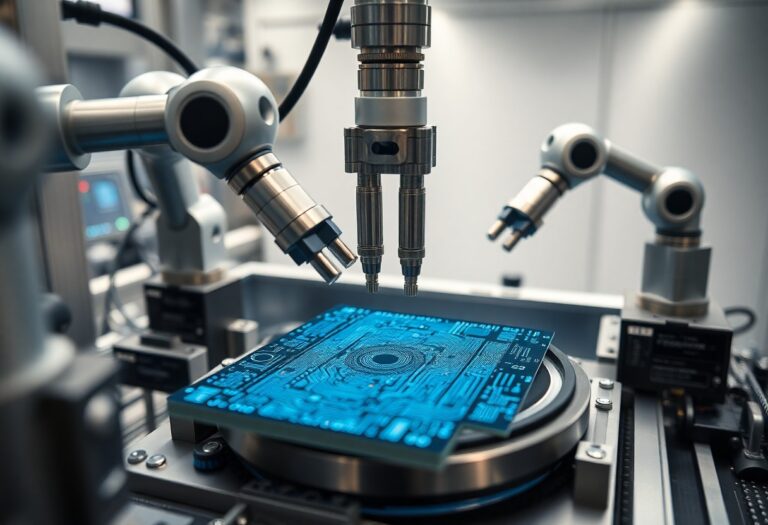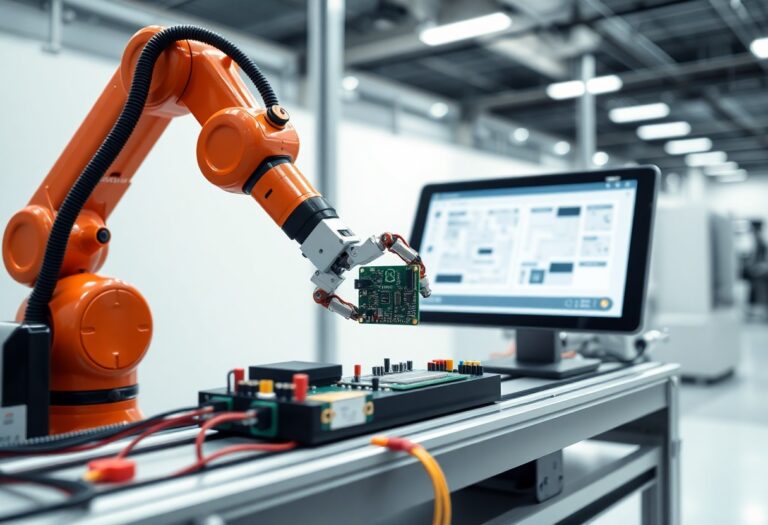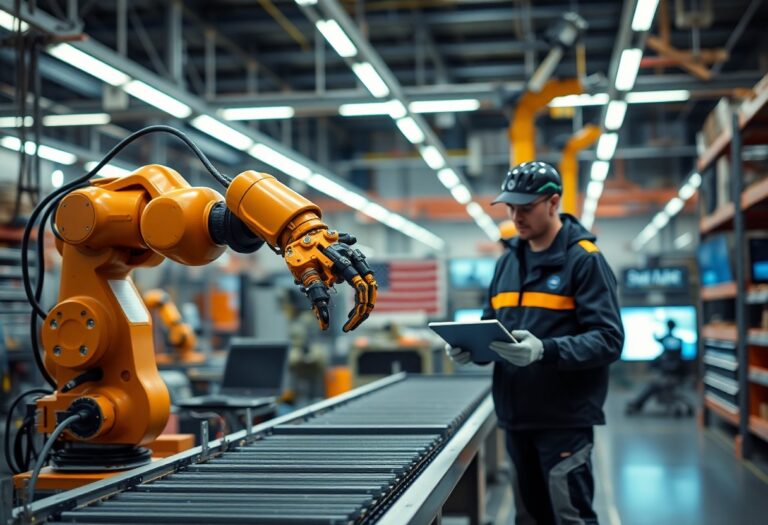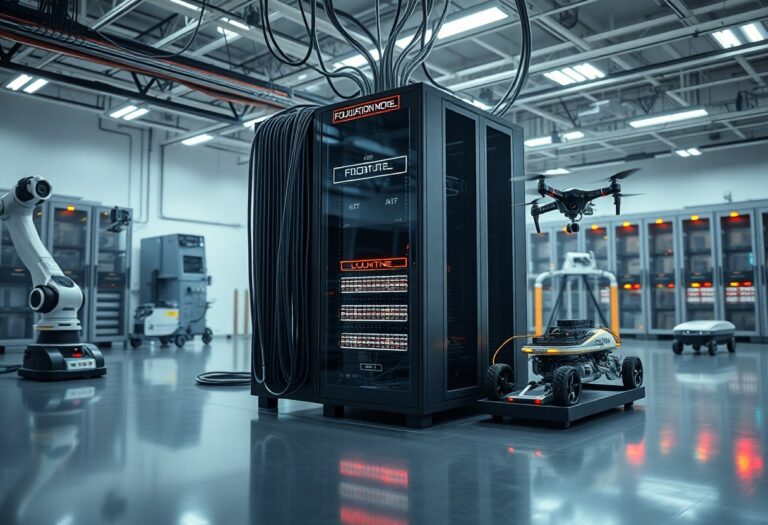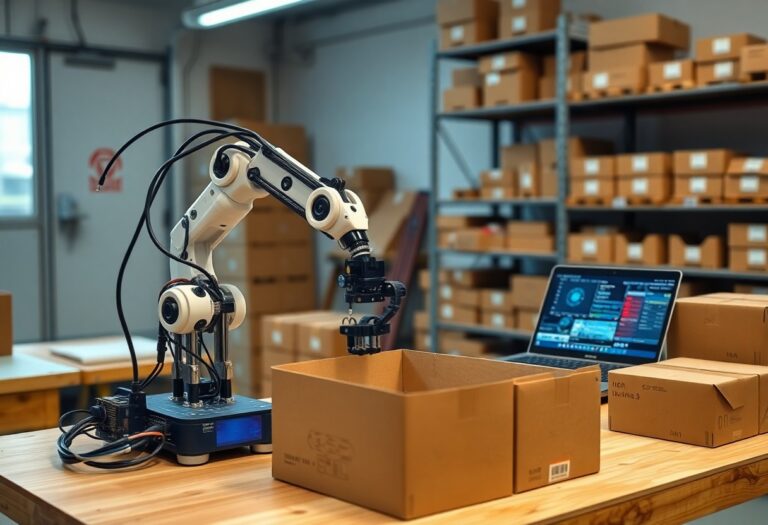

You rely on high-precision robotics to push semiconductor manufacturing beyond current limits, enabling nanometer-scale alignment, repeatable throughput, and adaptive motion control that reduce defects and increase yield. This post explains how advanced sensors, machine learning, and compact actuators integrate to automate lithography, wafer handling, and inspection, letting your fab scale performance while lowering variability and […]
Tag: Robotics
Cybersecurity for Robots – Protecting Autonomous Systems from Attack
Cybersecurity for robots requires you to integrate threat modeling, secure boot, authenticated firmware updates, encryption, and robust access controls so your systems resist tampering and data theft; you must enforce network segmentation, continuous monitoring, rapid patch management, and fail-safe behaviors while validating third-party components to keep autonomous systems reliable and safe under attack. Understanding Cybersecurity […]
Multi-Modal Perception – Seeing, Hearing, and Touching Robots
With advances in sensor fusion, learning algorithms, and tactile materials, you can enable your robots to perceive environments through sight, sound, and touch simultaneously; this multimodal approach improves reliability, situational awareness, and human-robot interaction by combining complementary cues, mitigating single-sensor failures, and enabling richer object understanding, navigation, and collaborative manipulation in real-world settings. The Basis […]
Zero-Programming Robotics – Automation Without Coding
You can deploy and manage robotic systems without writing code by using visual programming, drag-and-drop interfaces, and prebuilt modules; this lets you optimize your workflows, integrate sensors and actuators, and scale solutions rapidly while minimizing technical barriers and time to value. Understanding Zero-Programming Robotics Definition and Key Concepts You build robot behavior through visual tools-drag-and-drop […]
Robots Learning on the Job – Continuous Adaptation in Real Environments
Most robots increasingly learn on the job, and you should know how continuous adaptation uses online learning, sensor-driven feedback, and safety-aware updates to maintain performance in real environments; this post explains methods, evaluation metrics, and operational considerations so you can deploy and monitor adaptive systems effectively in your operations. The Importance of Continuous Learning In […]
AI-Powered Safety Systems for Collaborative Robots
Safety in collaborative robotics is evolving as AI-driven sensing, predictive models, and adaptive control let you design systems that protect workers while maintaining productivity. By integrating vision, force sensing, and machine learning, your robot can predict human intent, adapt speed and trajectory, and enforce dynamic protective zones with provable performance. Implementing these systems requires rigorous […]
Robotics in Food Processing – Automation Meets Customization
Automation is rapidly redefining robotics in food processing, enabling you to scale operations with precision, consistency, and improved hygiene while adapting lines to varied recipes and formats. Robotic vision, AI-driven control, and modular tooling let your facility handle high-mix, low-volume runs, shorten changeovers, and enhance traceability, quality control, and worker safety. Implemented strategically, robotics both […]
Flexible Manufacturing with Reconfigurable Robotic Cells
With reconfigurable robotic cells, you can rapidly adapt production lines to changing product mixes and volumes while minimizing downtime and capital expense. This approach empowers your engineering and operations teams to reassign tasks, scale automation, and integrate new tooling or software quickly, improving throughput, quality consistency, and responsiveness to market demand. You gain measurable flexibility […]
Learning from Simulation – Scaling Robotics with Synthetic Data
Many advances in robotics come from simulated environments where you generate vast, labeled synthetic data to train and validate models quickly and cheaply; by controlling physics, lighting, and variability, you accelerate iteration, reduce reliance on costly real-world trials, and explore edge cases, while techniques like domain randomization and sim-to-real transfer help your policies generalize to […]
Emotion-Aware Robots – Interpreting Human Behavior in Real Time
Many advances in sensor fusion, affective computing, and machine learning let robots perceive facial expressions, vocal tone, and body language in real time so you can deploy systems that adapt to your needs and improve interaction outcomes. This post explains the core methods, evaluation metrics, ethical constraints, and deployment challenges you must consider to build […]