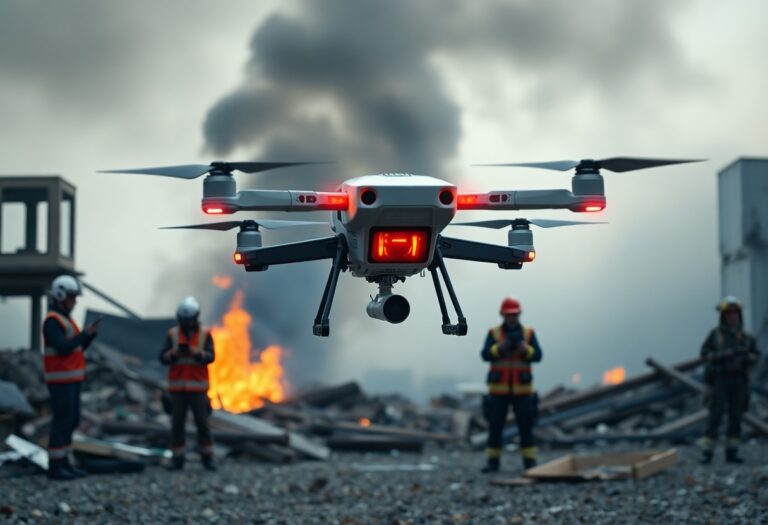
A robot that shoots fire retardant at your neighborhood — without asking
A startup wants to park an automatic launcher at the edge of your neighborhood. When a wildfire closes in, it fires capsules of fire retardant over the houses by itself. Nobody has to say yes first.
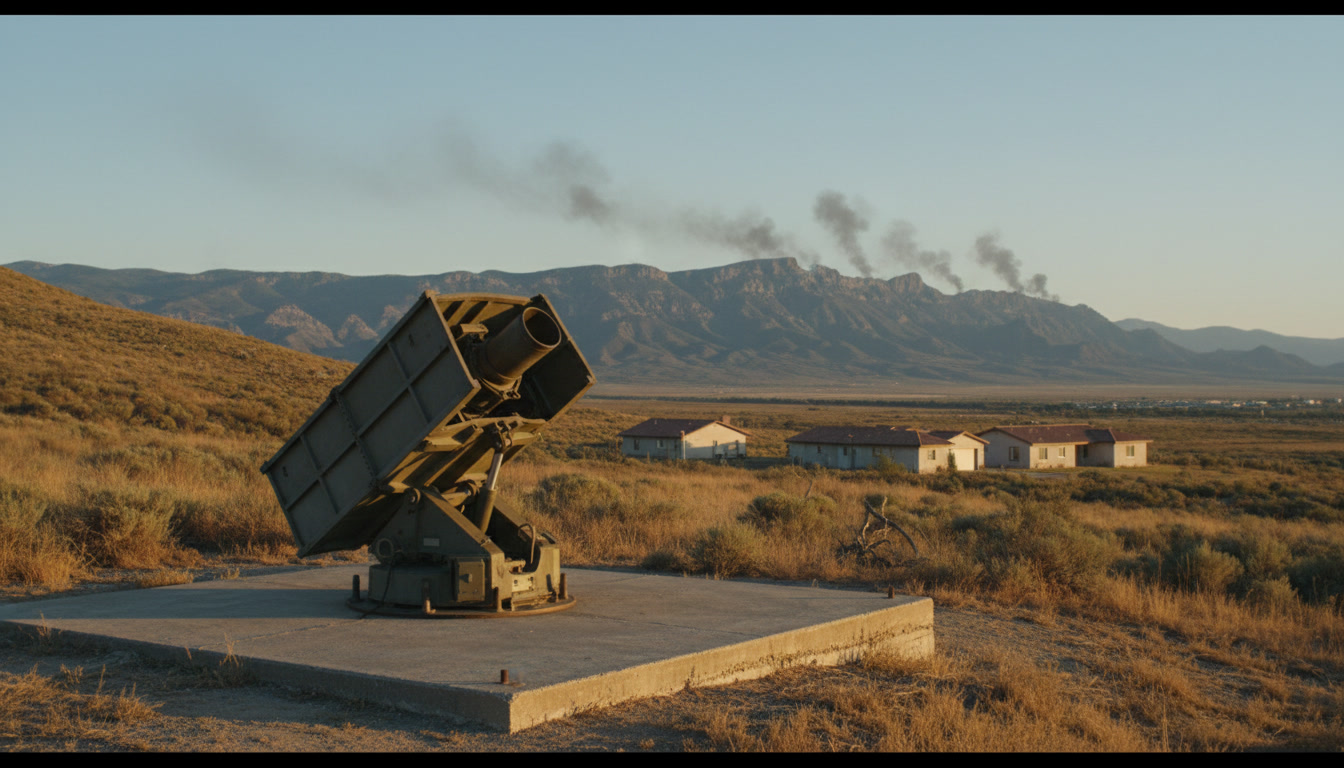
The company is FireDome. Its launcher sits on a concrete pad and turns in any direction. It throws capsules up to 1,000 feet, covering about 70 acres. That is roughly 53 football fields. Each capsule holds about 10 gallons of liquid, either water or retardant.
Co-founder and chief executive Gadi Benjamini told The Robot Report his system works like artillery support for firefighters. He started the company in 2024 with Dr. Adi Naor Pomerantz. The idea came from Israel’s Iron Dome rocket defense system, and one of that system’s founders advises the company.
The case for a machine that fires without waiting
Fires arrive at 2 a.m. Crews get split across several fronts. Benjamini’s argument is that nobody should be hunting for a property manager at that hour.
“The system is autonomous, and they can shut it off,” he told The Robot Report. Both the owner and the fire department can step in remotely once it starts.
He also says embers, not walls of flame, do the damage. In recent California fires, including the Los Angeles-area fires, he puts structure losses from wind-blown embers at 85% to 90%. One house catches, then throws burning pieces at the next one.
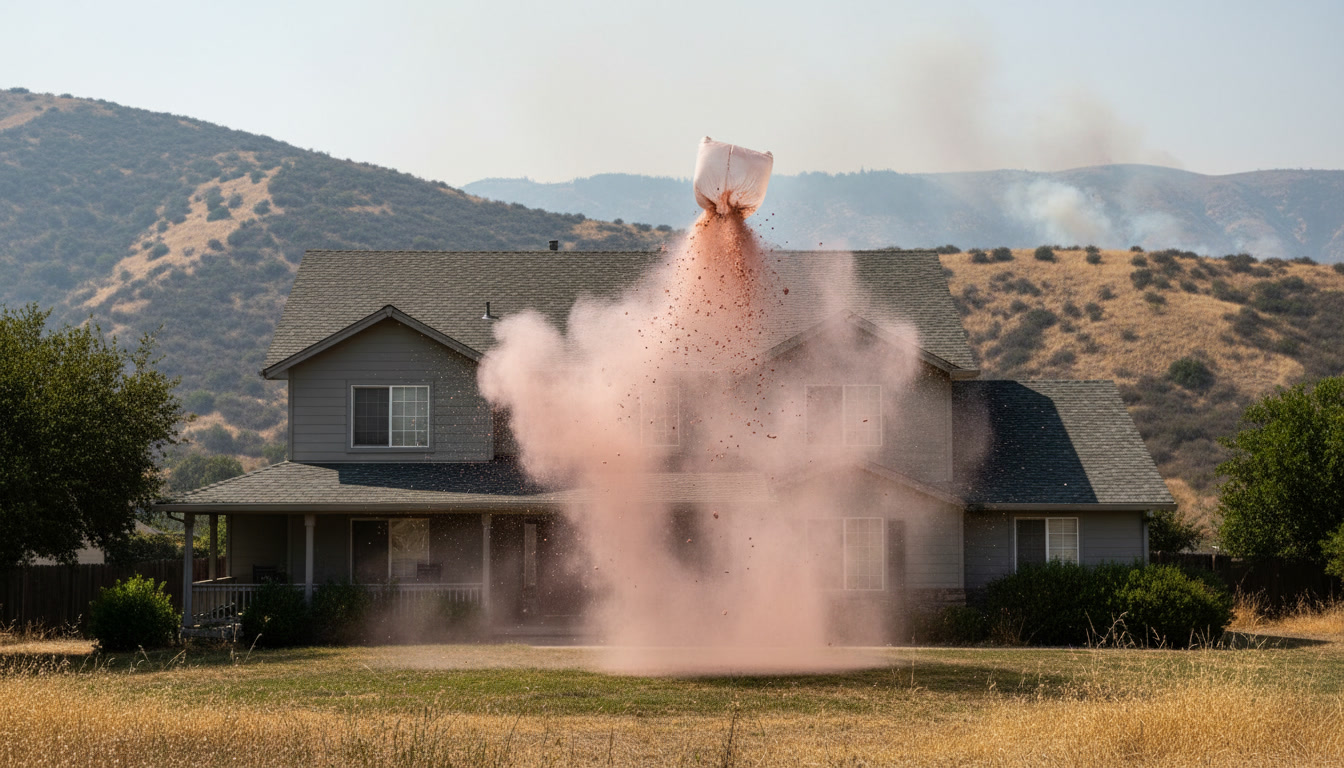
So the plan is to coat roofs and walls with retardant before the embers land. Capsules open a few feet to a few dozen feet above the ground. Each one wets an oval patch roughly 15 to 25 feet long. Overlap enough of them and you get a continuous line. Because they open low, the company claims almost nothing drifts away, unlike drops from aircraft high overhead.
The price tag is the real argument
FireDome is asking early customers for $10,000 to $15,000 a month. That is $120,000 to $180,000 a year for one launcher. The target buyers say everything: homeowner associations in fire country, resorts, data centers, oil and gas sites, solar farms.
The Robot Report’s Mike Oitzman, who lives in fire country in Northern California, describes the split already happening. His community does controlled burns and keeps affordable insurance. Neighbors just outside the boundary face non-renewals and soaring premiums.
A paid dome draws that line again, harder. The households already priced out of insurance are the least able to buy a launcher. That is not an engineering flaw. It is the thing worth arguing about.

And then there is what is inside the capsules
Retardant is not harmless. The news outlet LAist had researchers at the University of Southern California test Phos-Chek samples left behind by the Palisades and Eaton fires. The tests found lead, arsenic, cadmium and chromium.
Perimeter Solutions, which makes the product, told LAist the amounts were far below Environmental Protection Agency limits and not at levels that worry it for human health. FireDome says its capsules can carry eco-friendly retardant or plain water. It has not published what is in its own mix.
There is the hardware question too. Ten-gallon capsules would be flying over a neighborhood while people evacuate and aircraft work above. The company says the launcher is not a gun, uses no explosives, and opens the capsule mechanically rather than on impact. Those are its words. No independent safety test has been made public.
Where the evidence runs out
The ember figure comes from the chief executive, not from a study you can read. One full demo system exists, at a site in Yuba County, California. No results from it have been published.
Nobody has shown that a coated roof survives a real ember storm. No insurer has promised a discount for having one. Benjamini himself said after the Los Angeles fires that it was too early to draw conclusions.
My read: coating roofs before the embers arrive is the most sensible unproven idea in wildfire technology right now, and it deserves a hard test. FireDome plans to build its first production units for deployment in spring 2027. Watch two things. Whether a treated house actually survives, and whether anyone but a resort can afford the machine that treats it.