Over 1,000 drones are now deployed weekly by Ukrainian units alone, transforming how modern combat unfolds across Eastern Europe. You are witnessing a live laboratory of battlefield robotics, where necessity drives rapid iteration, and civilian engineers code guidance systems in repurposed basements. This war moves faster than doctrine, rewriting military innovation in real time.
The Iron Birds
Unmanned aerial systems have become central to modern battlefield dynamics in Ukraine, reshaping reconnaissance and strike capabilities. You operate in an environment where small, agile drones provide real-time intelligence, often determining the success of ground maneuvers. Commercial models, modified for military use, now perform missions once reserved for advanced aircraft.
Flight over the Trenches
A DJI Mavic, stripped of consumer firmware and fitted with encrypted controls, climbs above the eastern front lines. You track its feed as it skirts the edge of a tree line, identifying movement near a trench network. Thermal overlays reveal heat signatures in a camouflaged position, data relayed within seconds to an artillery unit ten kilometers west.
The Drop and the Flash
The drone releases its payload-a modified grenade-over a forward observation point. You watch the feed cut to static as the explosion disrupts the signal. Seconds later, confirmation arrives: the target is neutralized, with minimal collateral damage recorded in post-strike assessment.
Guided by GPS coordinates inputted minutes before launch, the drone’s release mechanism triggers at precisely 42 meters altitude, ensuring the grenade arms safely before impact. You rely on this timing, refined through dozens of similar missions, to maintain effectiveness while reducing risk to nearby friendly units. Some models now deploy multiple munitions in a single sortie, increasing pressure on enemy positions without requiring additional sorties.
The Treads of the Steppe
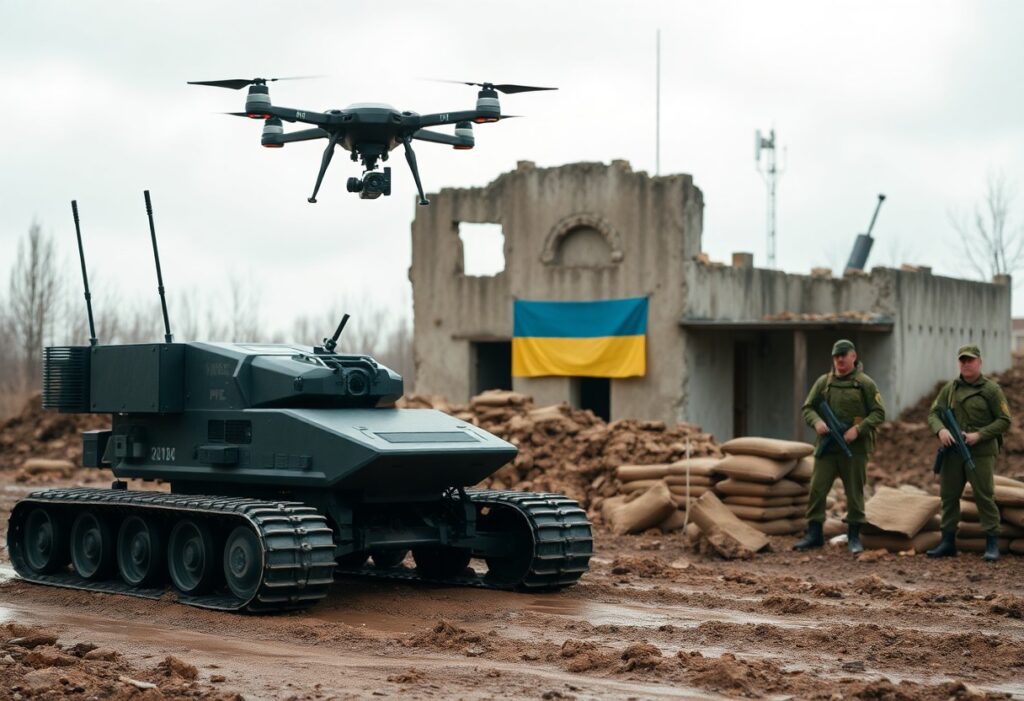
Across the open plains of eastern Ukraine, tracked platforms have become fixtures in frontline operations, adapting to mud, snow, and shell-cratered terrain where wheeled systems falter. You rely on their durability for sustained advances and defensive repositioning, often integrating them with thermal targeting and reactive armor packages tailored to the region’s combat rhythms.
Small Wheels in the Dirt
Light robotic scouts on small wheels move ahead of infantry, navigating trenches and plowed fields with quiet electric motors. You deploy them to probe ambush sites or deliver supplies under fire, their compact size making them hard to spot in the grain stubble and scrub.
The Remote Fire
Gun-equipped drones now deliver suppressive fire from unexpected angles, operated from concealed positions hundreds of meters away. You use them to pin down enemy squads during assaults, reducing exposure for your own troops while maintaining pressure.
These remote firing platforms often mount modified PKM or GP-25 systems, stabilized on tracked or wheeled bases built in Ukrainian workshops. Some include laser rangefinders and encrypted video links, allowing precise engagement in low visibility. You’ve seen units in Kherson use one such rig to neutralize a Russian observation post after a three-hour crawl through flooded farmland, all without exposing a single soldier.
The Invisible Fight
Electronic warfare now shapes the outcome of engagements as decisively as artillery, with Ukrainian units relying on rapid adaptation to maintain drone operations amid relentless signal disruption. You gain critical advantage not just by building drones, but by keeping them functional when jamming cuts through standard frequencies, as detailed in Inside Ukraine’s Battlefield Innovation Loop.
The Broken Signal
Radio frequency jamming routinely disables consumer-grade drones within key frontline zones, forcing operators to adopt frequency-hopping protocols or shift to pre-programmed flight paths that bypass real-time control.
The Ghost in the Air
Some reconnaissance drones now fly without emitting detectable signals, relying on stored GPS coordinates and autonomous triggers to capture footage and return, making them nearly invisible to electronic surveillance.
Autonomous navigation allows these drones to operate in zones saturated with Russian EW systems, particularly near Bakhmut and Avdiivka, where signal detection often precedes artillery strikes. You rely on firmware-level modifications that limit emissions, using delayed data retrieval instead of live transmission to preserve operational secrecy and pilot safety.
The Cellar Factories
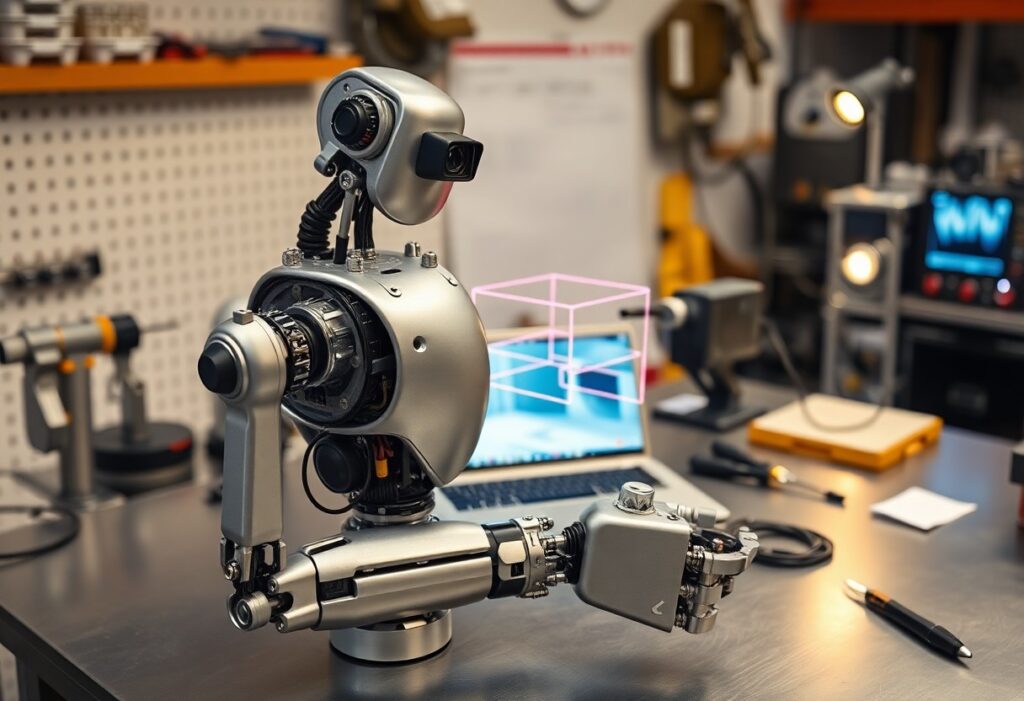
Hidden beneath residential buildings and repurposed warehouses, small teams assemble drones and repair damaged units far from supply chain bottlenecks. You operate in shifts around the clock, often with scavenged parts and improvised tools, turning basements into functional micro-factories that sustain frontline operations through decentralized production.
The Soldering Iron
A single technician can rework a flight controller board in under twenty minutes using a temperature-controlled iron and a steady hand. You rely on precision over automation, repairing critical components that keep reconnaissance drones airborne despite limited access to factory-fresh replacements.
The Plastic Part
A cracked drone housing, 3D printed from recycled filament in a Kyiv basement, returns to service within hours of failure. You accept minor imperfections in form to maintain function, knowing that even non-structural plastic components can determine whether a mission proceeds or stalls.
Each plastic component begins as a digital file shared across encrypted channels, then printed on modified consumer-grade machines running nearly continuously. You prioritize geometric accuracy over material strength for non-load-bearing casings, allowing rapid iteration when battlefield feedback demands design tweaks. A single redesign of a camera mount, for example, improved thermal stability during night flights over forested terrain.
The Cold Logic
Decisions on the battlefield increasingly emerge from code, not instinct. You see this in autonomous targeting systems that process sensor data faster than any human operator, filtering threats from noise with unblinking precision. Algorithms now prioritize targets, adjust trajectories mid-flight, and even abort missions based on real-time conditions. This shift replaces hesitation with calculation, where milliseconds are won through mathematics.
The Math of the Strike
Each drone’s path to impact is a solved equation balancing speed, fuel, and detection risk. You rely on probabilistic models that simulate hundreds of flight variations before launch, selecting the one with the highest success likelihood. These computations factor in wind, radar coverage, and enemy response patterns, turning ambushes into predictable outcomes.
The Metal Soldier
Ground units now include robotic platforms that advance ahead of infantry, drawing fire or delivering explosives with no risk to human life. You deploy these machines in urban assaults, where their compact frames navigate rubble and doorways too dangerous for soldiers. They operate on preloaded routes, responding only to immediate obstacles, not command.
A Ukrainian unit near Bakhmut used a modified tracked robot to breach a fortified basement, loading it with charges and guiding it through a collapsed market street. The machine absorbed two RPG hits before detonating, collapsing the structure and neutralizing the position. No soldier had to enter the kill zone, and the operation concluded in under nine minutes from initiation to explosion.
Summing up
You operate in a war where drones spot artillery targets within minutes and autonomous systems decide strike patterns without human input. Ukrainian engineers repurpose civilian components into battlefield tools faster than formal procurement cycles can respond. You see 3D-printed grenade launchers deployed from modified quadcopters, and AI-guided thermal targeting used in trench raids. This conflict proves that agility and decentralized innovation now rival traditional military scale.