A Robot Took 46,686 Patient Questions. Should It Be the First Thing You Meet at the Hospital?
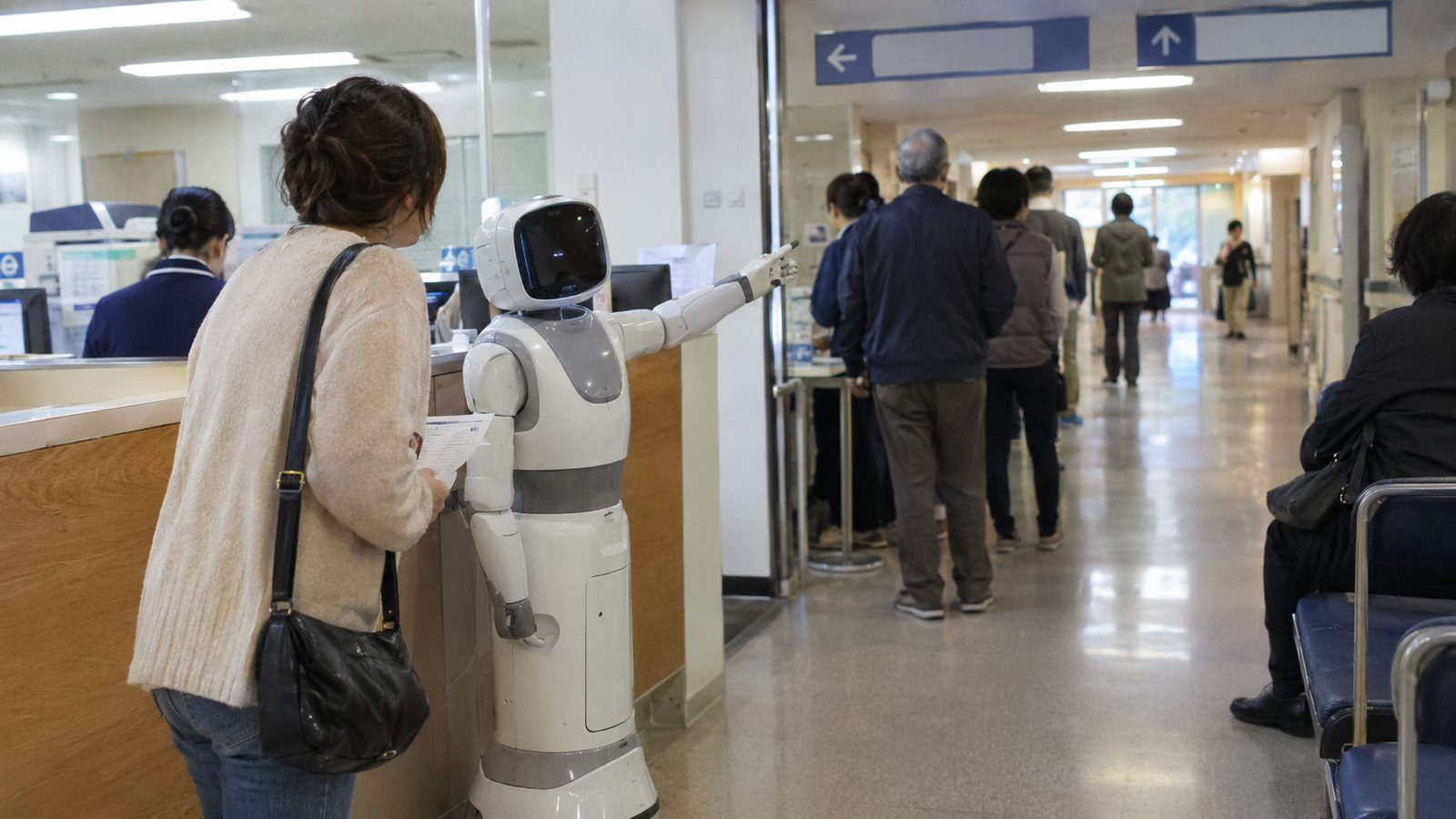
A half-size humanoid robot spent 66 working days behind an information desk in a Beijing hospital lobby. It answered 46,686 questions. On its busiest day it took 1,420 of them.
The machine is the Lingxi X2, built by the Shanghai company AgiBot. It stands at the outpatient help desk of Peking University People’s Hospital, one of the city’s biggest. The hospital’s own operations figures, released by the companies in mid-October, cover the period up to 30 September.
Its answers come from an artificial-intelligence medical assistant made by Ant Group, the finance company behind the Alipay payment app. The hospital also plugged in its own internal information, so the robot can say which clinic is open and where it is.
What it actually does at the desk
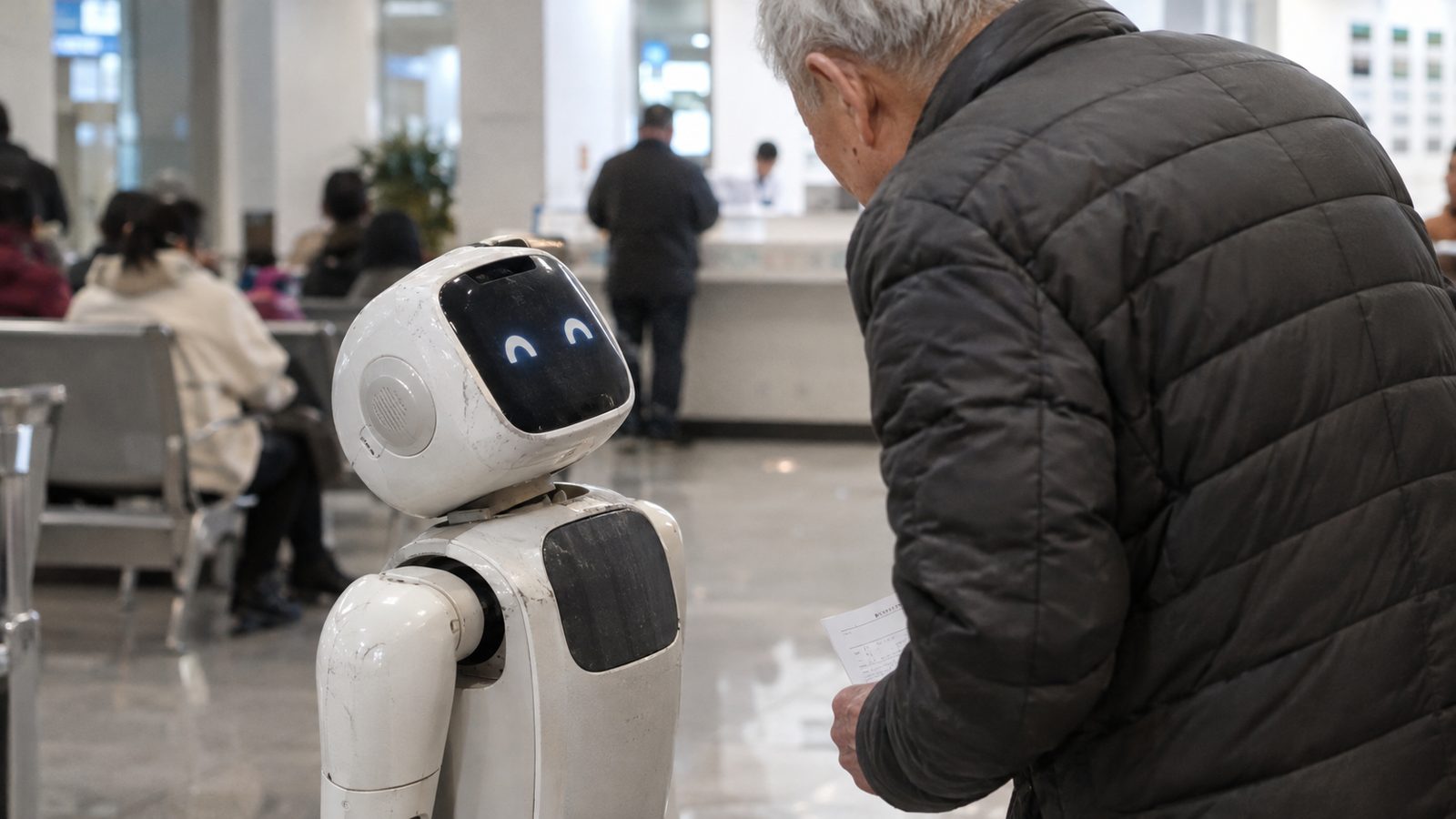
The robot is about 1.31 metres tall and weighs roughly 35 kilograms, according to AgiBot’s published specifications. That is chest height on most adults. It has cameras, a screen for a face, and 25 to 30 moving joints, so it can turn its head and point down a corridor.
The questions are the ordinary ones. Which department should I see for stomach pain. How do I get to gastroenterology from here. Does this doctor have a clinic today. What does my insurance cover.
Spread over an eight-hour day, 707 questions is about three every two minutes. On the peak day it was closer to three a minute. That is the pace of a busy counter, not a science demo.
The case for putting a machine at the door
At peak hours, the help desk is one of the most strained posts in the whole building, the 21st Century Business Herald reported. The same four or five questions arrive hundreds of times a day. People get tired and short-tempered. The robot does not.
Because its answers are pulled from the hospital’s own records, every patient gets the same version. There is also a quieter argument. Plenty of hospitals already have a touchscreen in the lobby, and plenty of people walk straight past it. Something that speaks and gestures gets approached.
AgiBot and Ant say the robot assists the human staff with repetitive basic questions rather than replacing them. That is the companies’ framing, and no one has reported any desk jobs being cut.
The case against: a chatbot with legs
“Which department for stomach pain” is a medical judgement wearing ordinary clothes. Send someone to the wrong clinic and they lose a registration fee and most of a day. Neither company has published how often the robot gets it wrong.
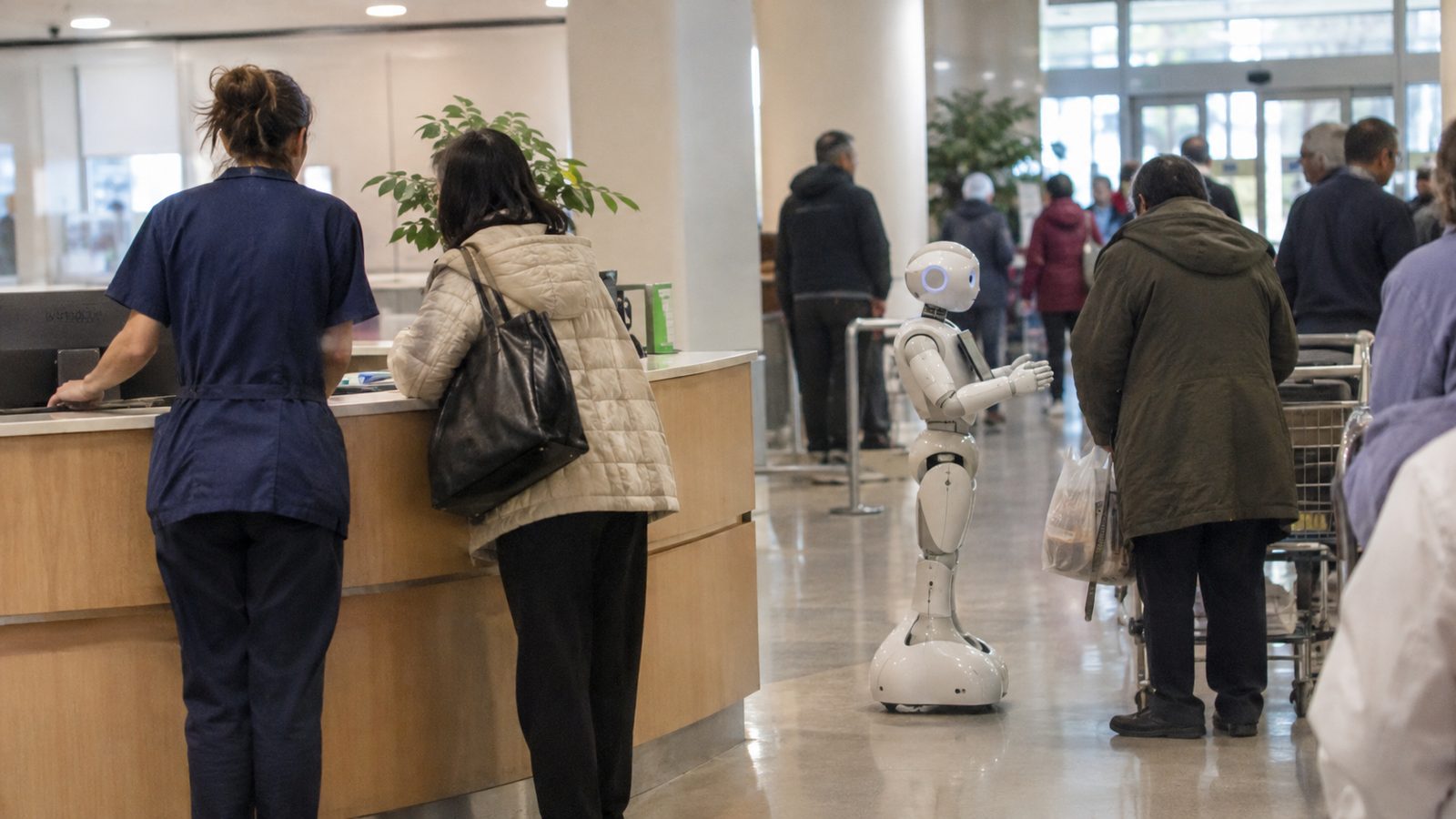
There is also the lobby itself. To use the robot you say your symptoms out loud, in a hall full of strangers. A whispered sentence to a nurse is not the same transaction.
And a crowded hall is a hard place to hear. Older patients, thick accents, hearing aids and background noise are exactly the conditions where voice systems fall over, and exactly the patients who need the desk most.
What nobody has measured yet
46,686 is a count of interactions, not of problems solved. Ask the same thing three times and the counter moves three times. There is no published satisfaction score, no error rate, and no side-by-side comparison with a human at the same desk.
The 21st Century Business Herald, which is sympathetic to the project, made the same point bluntly: by the standards of the guide-robot business these numbers are not startling, and the real test is whether patients still want to talk to it at the next rush. One of the few independent tests under way is in Italy, where a geriatric hospital in Ancona is running a trial with 200 older patients and two reception robots at its entrance. Those results are not in.
Here is where I land. For directions, opening hours and paperwork, a talking robot at the door is a sensible upgrade on a sign. For sorting symptoms into departments, a human should stay within arm’s reach until somebody publishes the error rate. And this is not cheap help: AgiBot’s Lingxi business chief, Wei Qiang, put the robot’s price between 100,000 and 400,000 yuan depending on version, roughly $14,000 to $56,000.
Sources
- AgiBot's Lingxi X2 Handles 46,686 Patient Queries at Peking University People's Hospital Front Desk – Pandaily
- 人形机器人站上三甲医院导诊台,"硅基接待员"日均答复七百问 – 21财经
- 智元与蚂蚁阿福合作案例落地北京大学人民医院 – 投资界
- 智元灵犀X2落地北京大学人民医院,日均交互约707次 – 新浪财经
- 智元机器人魏强:灵犀X2下半年实现规模化出货 – 界面新闻
- 骑自行车的智元灵犀X2公布售价区间 – 澎湃新闻
- Evaluating a Social Robot Reception Service in an Italian Geriatric Hospital (HOSPER Study) – PubMed