Would You Let a $3,555 Robot You Trained Yourself Loose in a House With Kids?
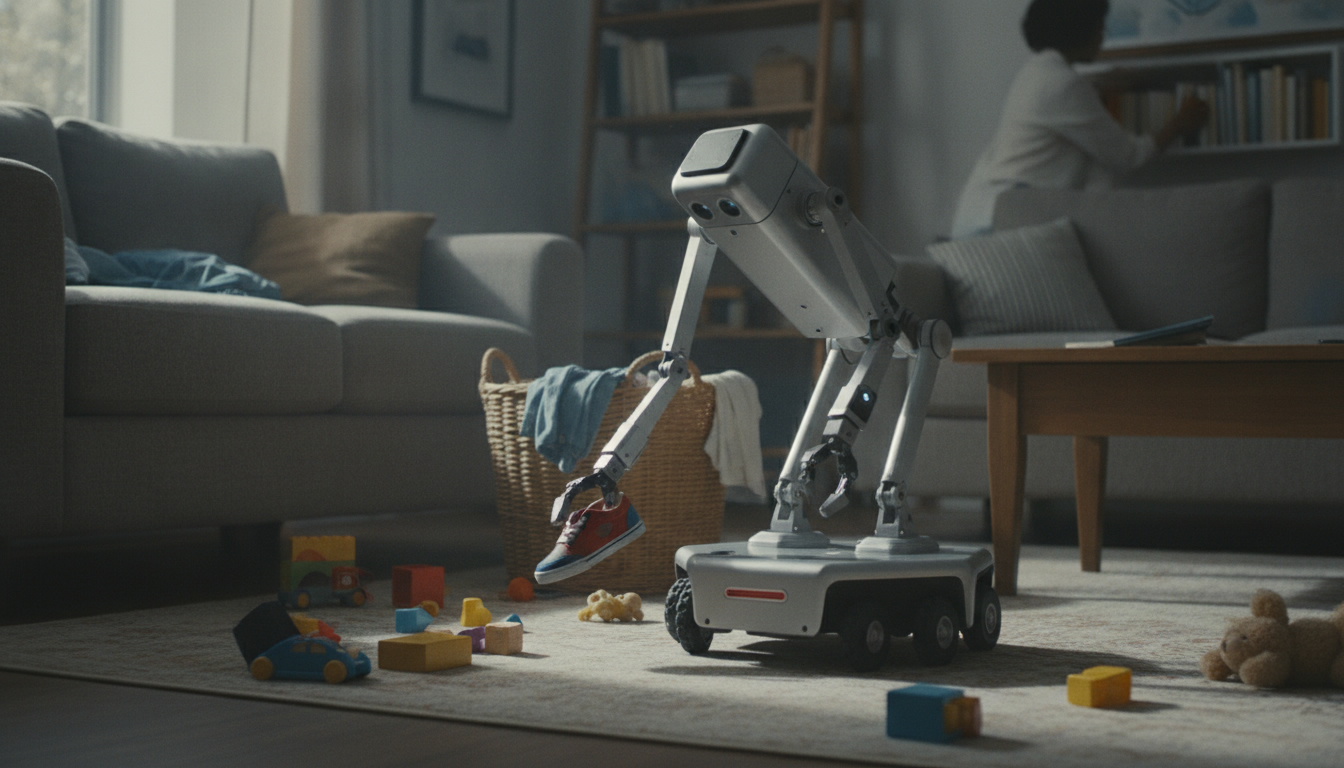
A startup split between San Francisco and Paris is selling exactly 50 home robots, at $3,555 each. The machine stands 3 feet 7 inches tall, weighs 44 pounds, rolls on six wheels and has two arms. You teach it a chore by holding your phone and waving it around for half an hour.
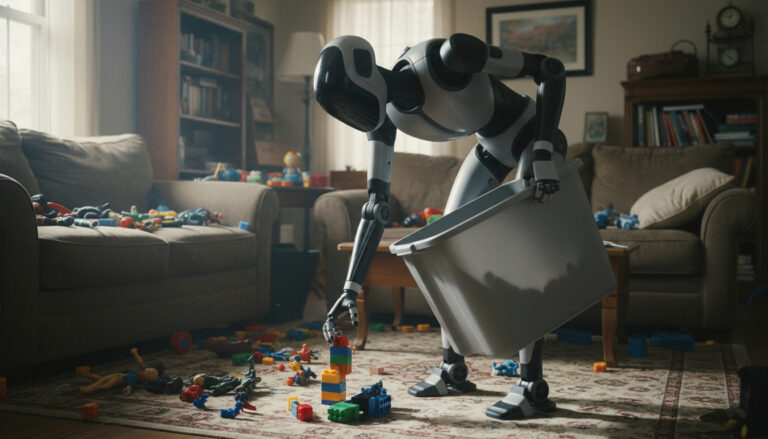
The company is called Flourish, and its sales page says the first units ship in December 2026. The pitch goes straight at parents: shoes put away, litter box scooped, counters cleared after dinner. The argument worth having is whether a house with kids in it is the right place to test a machine this new.
What it does, and what it flatly cannot do
Each arm lifts about 4 pounds. That covers a shoe, a mug, a toy or a snack. The company says the arms run for 12 hours on a charge, and that the robot reaches from the floor up to 35 inches, so about kitchen-counter height.
It is not waterproof. Founder Antoine Marcel told The Robot Report that this first version will not wash dishes or hose down the dog. Tidying, taking out trash and wiping a table are in. Anything fiddly is out.
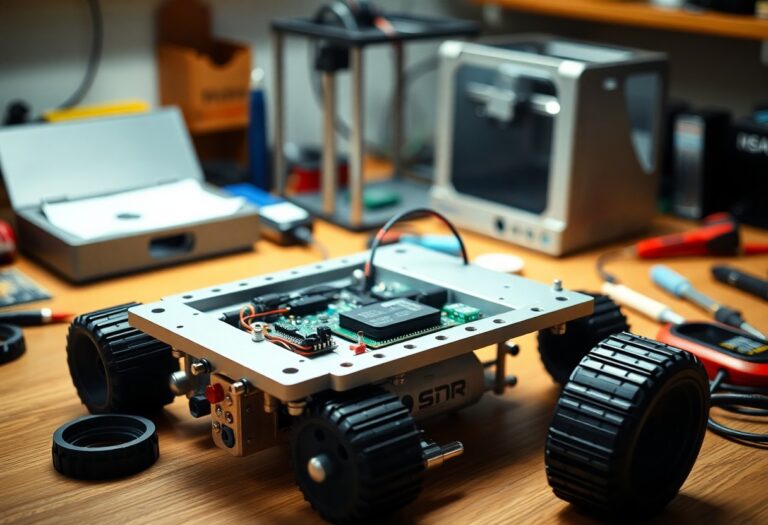
The cheap part is the brain. A hobbyist computer board (a Raspberry Pi) sits inside, and the hard thinking happens on rented computers over the internet. Marcel said fitting a powerful graphics chip into the robot “would immediately double the cost”.
The case for handing over your chores
Marcel’s argument is that no single robot brain will ever fit every home. Your kitchen, your mess and your standards are not mine. So instead of waiting for one clever all-purpose model, the robot learns each job in your house, from you.
“The way I tidy my apartment is not the same as you do in your house,” he told The Robot Report. “You’re going to show it for 30 minutes how to water your plants.”
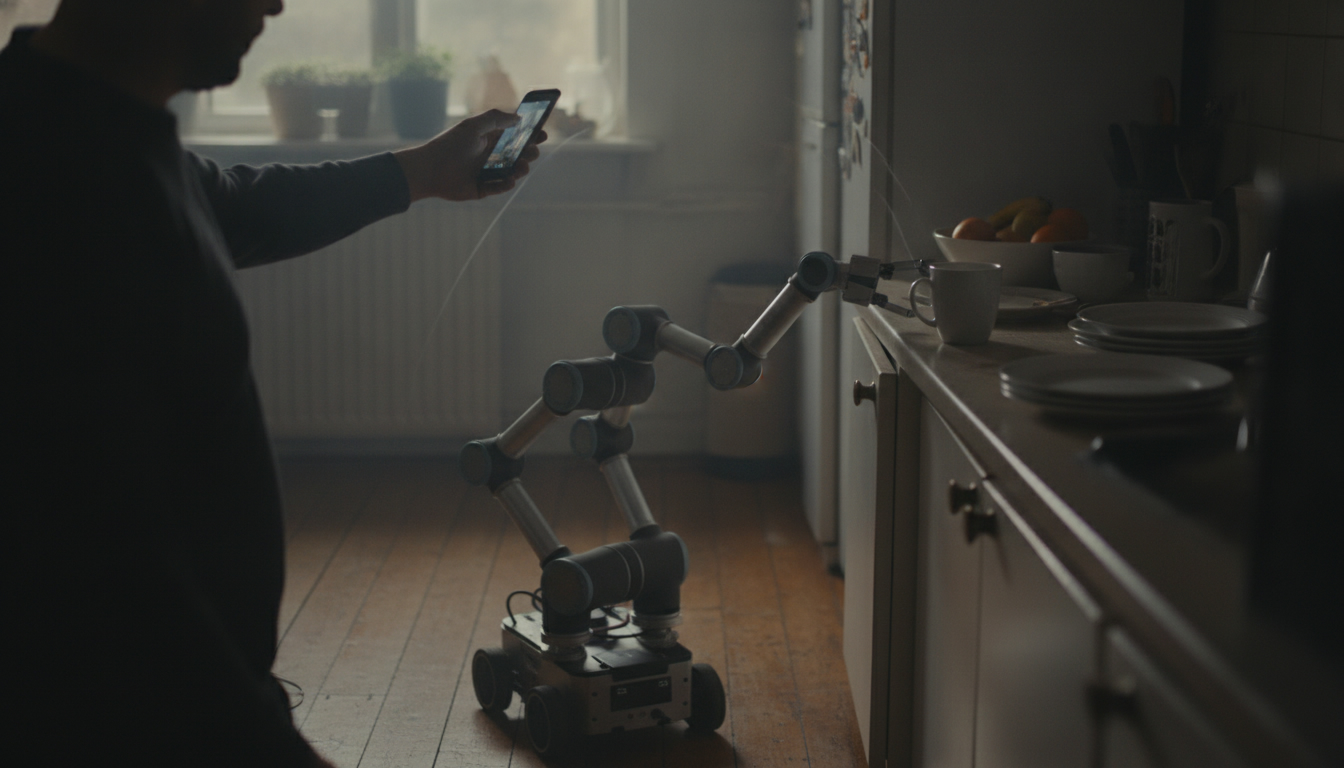
Teaching works like a puppet show. You drag the steps into an app, then drive the arms by moving your phone through the air. An hour later the robot has the skill, and you can hand it a time slot and forget it. The company also plans a store where one owner publishes a taught chore and everyone else installs it in five seconds.
Progress looks real, by the company’s count. Its own page says a taught task worked 60% of the time a year ago and works 80% now, with 99% as the target.
The case for letting someone else go first
Eighty percent means one try in five goes wrong. In a home, a wrong try is a dropped glass, a knocked-over bowl or a 44-pound machine stuck in a doorway. Nobody outside the company has lived with one of these for a month and written up what happened.
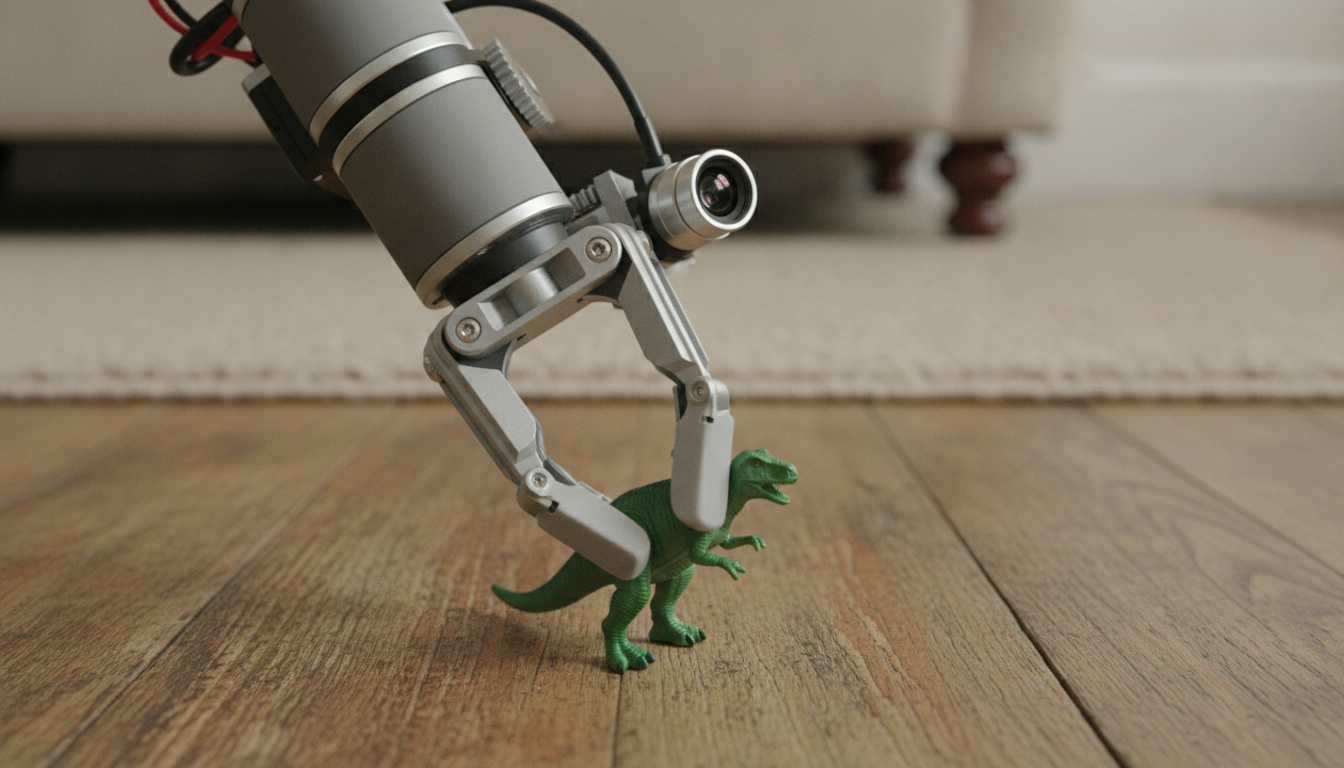
Then there are the cameras. Each grip has a camera at the wrist, and a small laser scanner near the floor watches for obstacles. The robot needs an internet connection to think, so what it sees leaves the house. Neither page says what gets stored, or for how long.
The money is not fully settled either. The sales page says advanced tasks need extra computing power, from your own graphics card or a company plan, with details promised later. You are buying a $3,555 robot with an unpriced subscription attached.
Where the evidence runs out
Every success number here comes from the company. There is no independent test, no safety certificate mentioned, and nothing about testing around toddlers or pets. The firm was founded in January 2026 and is hand-building these 50 units, so there is no service history to check.
My read: this is a paid pilot, and Flourish is honest enough to say so. Its own page tells buyers they would be pioneers rather than customers. If you want a robot that reliably saves you an hour a night, wait for owner reports. If you want a front-row seat and can afford to lose the money, that is a fair reason to buy one. Either way, I would not leave it working in a room with a small child unwatched.