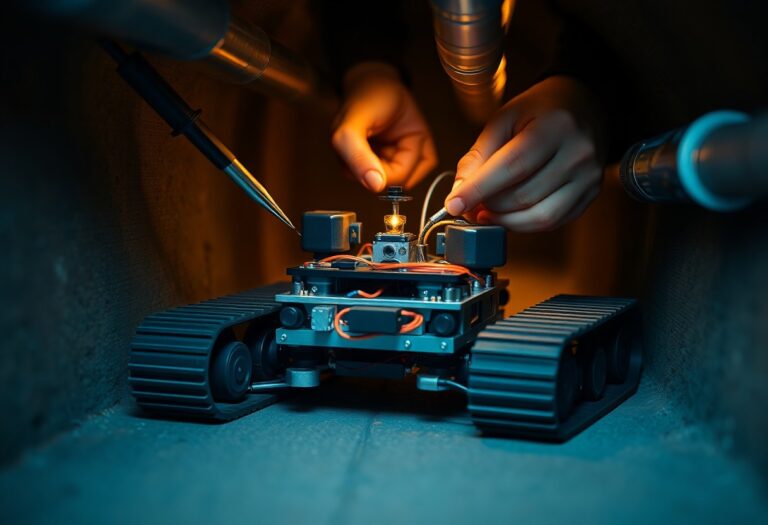
Spaces within machinery and ducts force you to design compact robots that fit, maneuver, and perform tasks efficiently. Design Principles for Miniaturization You focus on minimizing footprint by integrating functions, reducing tolerances, and planning thermal and power paths early, ensuring the compact robot fits tight spaces while maintaining performance. Spatial Optimization and Component Layout Arrange […]
Month: March 2026
Lessons Learned from Failed Robot Builds
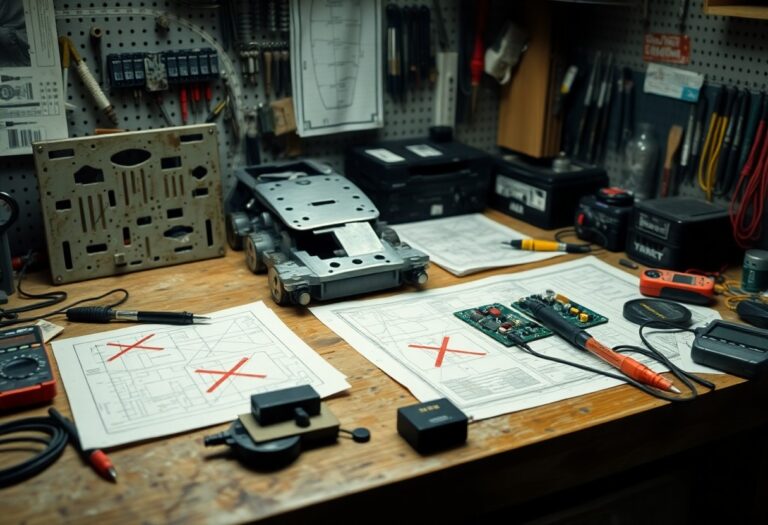
Robotics failures teach you practical debugging, design trade-offs, and testing discipline so you can refine prototypes faster and avoid repeated mistakes. Mechanical Integrity and Structural Design Structural design failures teach you to prioritize joint strength, correct load paths, and redundant supports so your robot survives impacts and sustained operation. Material Stress and Fatigue Limits Testing […]
Design for Manufacturability in Robotics
There’s clear benefit when you adopt manufacturability-focused design: you lower costs, simplify assembly, improve yield, and accelerate time-to-market for robotic systems by selecting standard components, minimizing part count, and designing for repeatable processes. Core Principles of Robotic DfM You should focus on reducing part count, standardizing interfaces, and designing tolerances for predictable assembly so manufacturing […]
Constructing Robots for Continuous Operation
It’s your task to design robots for nonstop service by ensuring reliable power systems, modular maintenance access, redundant sensors, and fault-tolerant control so you can maintain uptime, schedule predictive repairs, and optimize long-term performance in demanding environments. Energy Storage and Power Management Power architecture must prioritize predictable runtime, thermal handling, and scalable capacity so you […]
Scaling a Prototype into a Production-Ready Robot
Over iterations, you refine hardware, harden software, standardize assembly, optimize supply chains, and validate safety to transition a prototype into a production-ready robot. Hardware Hardening and Design for Manufacturability Hardware testing reveals failure modes you must address early: shock, moisture, EMI, and thermal cycling; update enclosures, connectors, and PCB coatings to meet field longevity requirements […]
Environmental Protection – Dust, Water, and Shock Resistance
Protection from dust, water, and shock helps you maintain equipment reliability, extend service life, and meet safety requirements in demanding environments. Understanding Ingress Protection (IP) Ratings IP classifications tell you how devices resist solids and liquids under standardized tests, helping you choose gear rated for job conditions. You can read two digits: the first for […]
Building Redundancy into Robotic Systems
You design systems with redundant sensors, parallel controllers, and independent power paths to sustain operation during failures, applying fault-detection algorithms and graceful degradation to preserve mission objectives. Hardware Redundancy and Mechanical Over-Actuation You distribute extra actuators and parallel load paths so the robot maintains motion after component failure, enabling graceful degradation and controlled fallback without […]
Testing Procedures for Newly Constructed Robots
Just follow systematic functional, safety, and performance tests to verify your robot’s sensors, actuators, control algorithms, and fail-safes before deployment. Mechanical Integrity and Structural Analysis Inspect the robot’s frame for microfractures, weld defects, and material fatigue using visual, ultrasonic, and radiographic methods so you verify structural soundness before functional testing. Load Bearing and Stress Capacity […]
Cable Management Best Practices in Robotics
Robotics systems require disciplined cable routing so you avoid interference, reduce wear, and simplify maintenance; you should use proper strain relief, color-coded labeling, secured cable channels, and regular inspections to maintain performance and safety. Dynamic Motion and Bend Radius Requirements Motion profiles determine minimum bend radii and dynamic fatigue factors you must plan for to […]
Constructing Autonomous Robots – Navigation and Control
Just use sensor fusion, SLAM-based mapping, precise localization, path planning, and closed-loop control so your robot follows safe routes, avoids obstacles, and adapts to changing environments. Sensor Integration and Perception Sensors must be harmonized so you can interpret conflicting streams, aligning timestamps, compensating for drift, and prioritizing data quality to keep perception reliable in varied […]