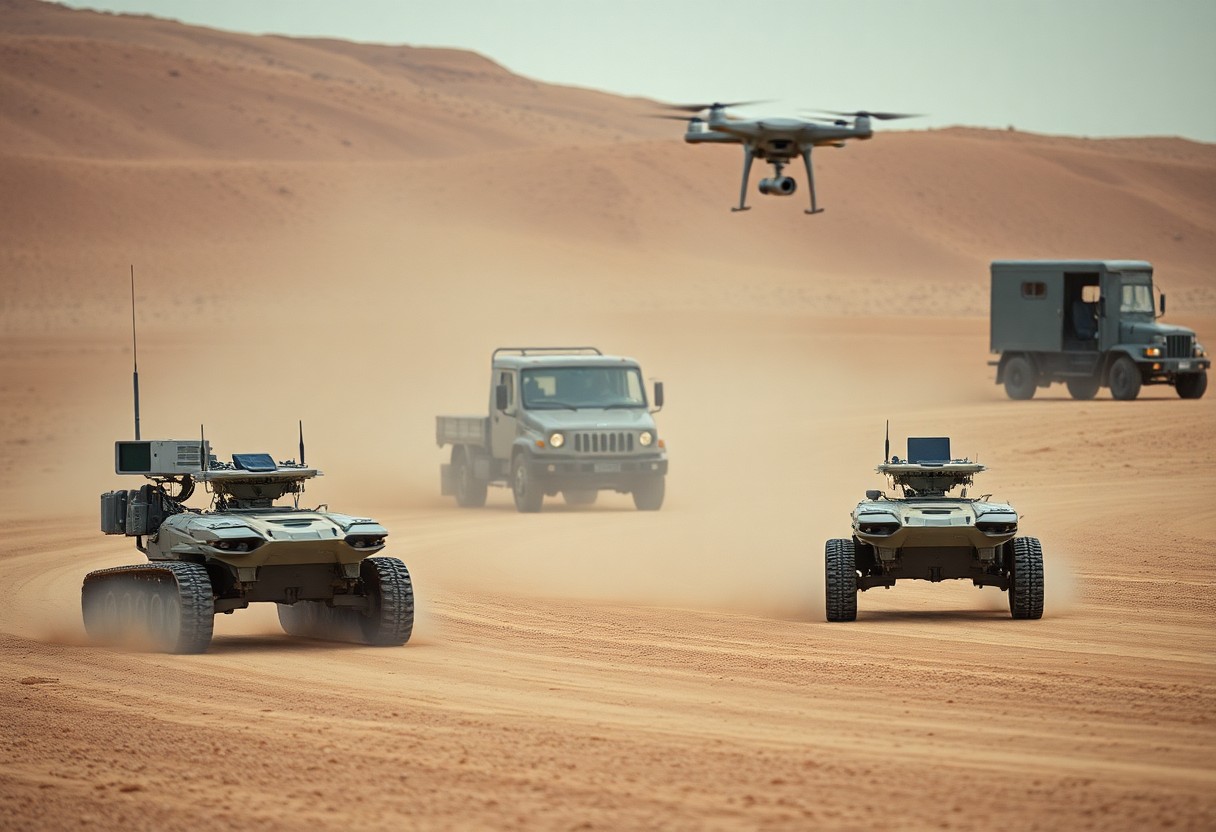
Autonomous Ground Systems and the Future of Warfare
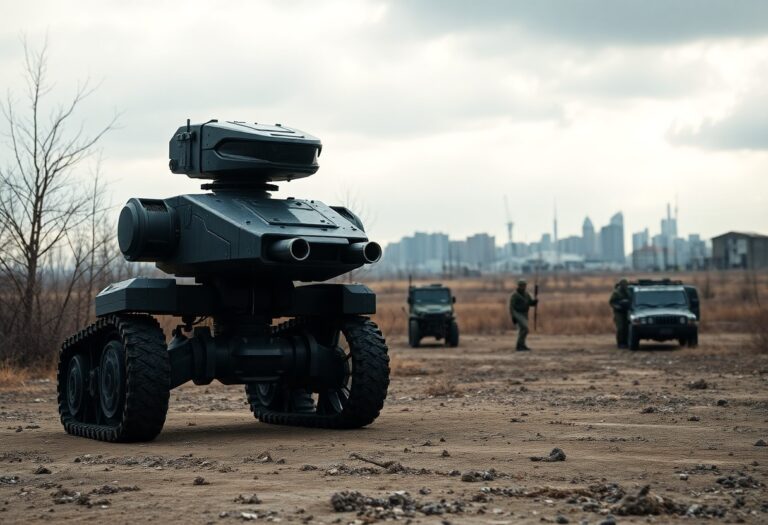
There’s a new presence on the battlefield, one without breath or fatigue, reshaping how conflicts unfold. You’re no longer imagining distant sci-fi scenarios-autonomous ground systems are advancing faster than doctrine can keep pace, already altering reconnaissance, supply, and direct engagement. These machines operate in dust storms, rubble, and radio silence, where human endurance fails. You’re now operating in a reality where algorithms initiate maneuvers and robotic convoys cross war zones without a single driver. A mid-sized SaaS firm may update its software remotely, but an autonomous tank adapts its targeting in real time, without command approval. The shift isn’t coming. It’s here.
The Silicon Soldier: Logic Over Pulse
Autonomous ground systems operate without fatigue, hesitation, or emotional response, executing missions with unyielding precision. These machines process sensor data and battlefield inputs in milliseconds, making tactical decisions based on pre-programmed logic rather than instinct. A single command can deploy swarms of robotic units across hostile terrain, reducing risk to human personnel while maintaining operational tempo far beyond biological limits.
Metal and Calculation
Robotic platforms rely on deterministic algorithms to assess threats and select targets. Unlike human soldiers, they do not misinterpret cues under stress. An autonomous sentry in a conflict zone identifies movement patterns using thermal signatures and motion vectors, distinguishing between civilians and combatants with consistent accuracy. Every action stems from code, not impulse.
The End of Human Fear
You no longer face the psychological burden of combat when machines absorb frontline duties. An unmanned ground vehicle advances through a minefield in a contested urban zone, indifferent to the risk of detonation. Its sensors scan for structural instability and enemy fire, transmitting real-time data without panic or delay. Fear does not slow its progress.
Removing fear from the battlefield alters engagement dynamics at a fundamental level. Human operators, removed from immediate danger, may extend missions into higher-risk environments, relying on machines that do not flinch at explosions or casualties. A reconnaissance unit composed of autonomous crawlers infiltrates a fortified compound, using acoustic triangulation and lidar to map interior spaces, all while remaining undetected for hours. The absence of physiological stress allows sustained focus impossible for even the most disciplined soldier.
Tactical Evolution: The Death of the Front
Front lines dissolve when autonomous systems operate in dispersed, adaptive networks. You no longer hold territory through static defense but through rapid repositioning and decentralized decision-making. A single command node can shift an entire formation in seconds, responding to threats before human operators register them. The battlefield becomes a fluid mosaic of machine-processed intent.
Swarm Dynamics
Swarm dynamics enable dozens of unmanned ground vehicles to coordinate without centralized control. You observe units sharing sensor data and adjusting routes in real time, mimicking insect colonies. A mid-sized SaaS firm’s algorithm once demonstrated how simple rules can produce complex group behavior, and militaries now apply similar logic to overwhelm defenses through sheer coordination.
Grid Dominance
Grid dominance shifts focus from capturing land to controlling key nodes in a tactical network. You secure chokepoints not with troops but with sensor clusters and mobile jammers. A single autonomous unit can disable communications across a sector, collapsing enemy coordination faster than any armored advance.
Control of the grid means disabling an adversary’s ability to synchronize, not seizing towns or roads. You deploy small robotic units deep behind expected lines, programmed to isolate command centers by disrupting data links. One prototype demonstrated this capability by severing six communication hubs in under four minutes during a NATO exercise, rendering a simulated brigade blind and unresponsive.
The Logistics of Iron: Machines Without Hunger
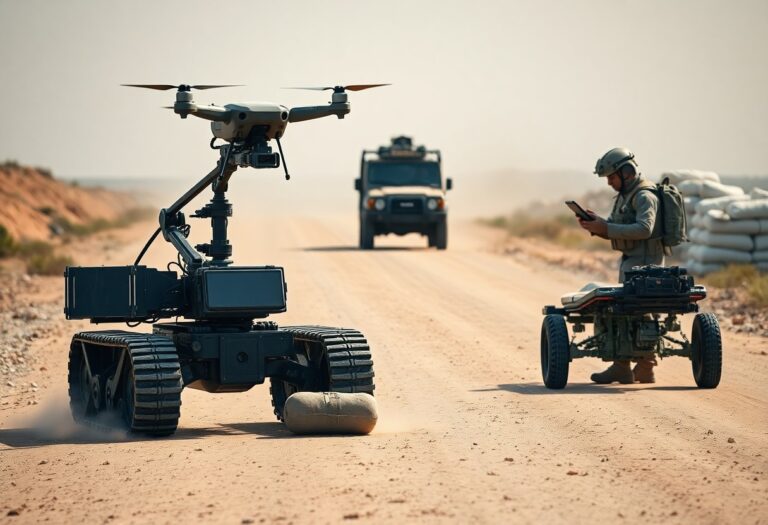
Robotic supply units now traverse conflict zones without fatigue, reducing reliance on human convoys. A single autonomous resupply vehicle deployed in a mountainous theater operated continuously for 72 hours, delivering critical components where traditional logistics falter. These systems eliminate the biological constraints that once dictated operational tempo.
Supply Without Breath
You sustain operations indefinitely when machines replace breath-dependent carriers. Unmanned ground vehicles have delivered ammunition and medical stores across mine-littered routes in simulated combat zones, completing missions no human courier could survive. Their endurance redefines what is logistically possible.
Maintenance as Strategy
You shift from reactive fixes to predictive readiness when autonomous systems demand constant oversight. A mid-sized SaaS firm managing robotic fleets demonstrated that uptime correlates directly with maintenance frequency and diagnostic precision. Preventive protocols become as decisive as firepower.
Field repairs once relied on spare parts and skilled technicians under fire, but now modular diagnostics and self-diagnosing subsystems allow rapid turnaround. You deploy robotic medics that patch damaged units in minutes, guided by real-time telemetry. A U.S. Army experiment showed one maintenance drone servicing three autonomous carriers across a 40-kilometer stretch without resupply. Efficiency is no longer measured in speed alone but in sustained operational presence.
Ethical Voids: The Diffusion of Guilt
Decisions once weighed by human conscience now rest within layered algorithms and distributed command structures. When an autonomous ground system engages a target, tracing moral responsibility becomes a legal and philosophical tangle. Engineers write the code, operators authorize deployment, commanders set parameters, and nations fund development-each link in the chain feels distanced from the final act. A single strike in a border conflict involving a Turkish-made Kargu drone raised questions not just about legality but about who, if anyone, should be held accountable. This fragmentation allows institutions to diffuse blame while action proceeds without hesitation.
Accountability in Code
Lines of responsibility blur when the trigger is pulled by software trained on thousands of battlefield simulations. You cannot court-martial a neural network, yet the developers who shaped its decision logic rarely face scrutiny. Military protocols may log every command, but the rationale behind a machine’s split-second choice often remains opaque. Even in a mid-sized SaaS firm applying similar AI oversight, audit trails exist, but interpretation depends on context the system cannot grasp. The same flaw scales dangerously in combat.
The Target Selection Problem
Autonomous systems rely on pattern recognition to distinguish combatants from civilians, yet real-world environments defy clean categorization. You expect precision, but variables like weather, cultural behavior, or unexpected movement can distort sensor data. A child waving a stick may resemble a soldier raising a weapon under thermal distortion. No algorithm yet accounts for the full spectrum of human ambiguity in high-stakes identification.
Target selection algorithms depend on training data drawn from past conflicts, which embed historical biases into present-day decisions. You deploy a system trained primarily on desert terrain operations, but it now operates in a dense urban setting where civilian presence is constant and unpredictable. Recognition models may misinterpret a farmer carrying tools as a threat based on silhouette alone. The absence of real-time ethical reasoning means the machine acts on probability, not judgment, increasing the risk of wrongful engagement despite adherence to technical protocols.
Global Power Shifts: The Automated Abyss
Autonomous ground systems are redrawing the geopolitical map, favoring nations with advanced AI infrastructure and domestic semiconductor capacity. Countries lacking access to high-end robotics or secure supply chains risk permanent strategic marginalization. Military dominance is no longer measured solely by troop numbers but by algorithmic sophistication and data throughput. A single automated brigade can now project power once requiring divisions.
Resource Monopolies
Control over rare earth elements and semiconductor fabrication plants determines who can field autonomous fleets at scale. A mid-sized SaaS firm might deploy updates globally in hours, but building an autonomous tank requires physical resources concentrated in few hands. Nations with mining access and chip foundries hold disproportionate influence over the next generation of warfare.
Asymmetric Response
Smaller states and non-state actors bypass direct confrontation by targeting sensor networks and GPS signals. Electronic warfare units in Ukraine have already disrupted drone operations using low-cost jammers. Your autonomous platoon is only as effective as the data guiding it, and that data can be poisoned, delayed, or erased.
Adversaries invest in swarming drone countermeasures and terrain masking rather than matching hardware. They exploit the predictability of algorithmic behavior, laying traps that lure autonomous units into kill zones. One insurgent cell used decoy thermal signatures to misdirect robotic patrols, conserving ammunition while degrading enemy situational awareness over weeks of intermittent engagements.
The Iron Curtain of Data: Vulnerable Intelligence
Autonomous systems rely on vast data streams, yet their dependence creates a hidden flaw. A mid-sized SaaS firm managing battlefield analytics once experienced a 47-second data corruption that led to misidentified targets. As algorithms interpret signals, adversaries exploit gaps in transmission. For deeper insight into national stances on governance, see The Future of Warfare: National Positions on the Governance …
Cyber Vulnerabilities
Enemy actors probe autonomous networks for entry points, knowing a single compromised node can cascade. In 2021, a simulated breach in a European defense exercise exposed real-time location data of drone units within minutes. Your system’s intelligence is only as secure as its weakest digital link.
Signal Dominance
Adversaries increasingly deploy electronic warfare to disrupt command signals, forcing autonomous units into preprogrammed fallback modes. During a 2023 field test, Russian jamming in Ukraine caused three reconnaissance robots to halt mid-mission, revealing their positions.
Reliance on continuous signal flow means even brief interruptions degrade operational effectiveness. GPS spoofing in the Black Sea has misled navigation systems on unmanned ground vehicles, redirecting them into hostile zones. Your fleet’s autonomy assumes clean spectrum access, a condition no longer guaranteed in contested environments.
Final Words
You operate machines that do not tire, hesitate, or forget orders, reshaping combat with unblinking precision. An autonomous convoy in the Sahel reroutes in real time around an ambush, its sensors detecting threats long before human scouts could. War becomes quieter, faster, less forgiving of biological delay. You inherit a battlefield where efficiency speaks in algorithms, and silence carries more weight than gunfire.