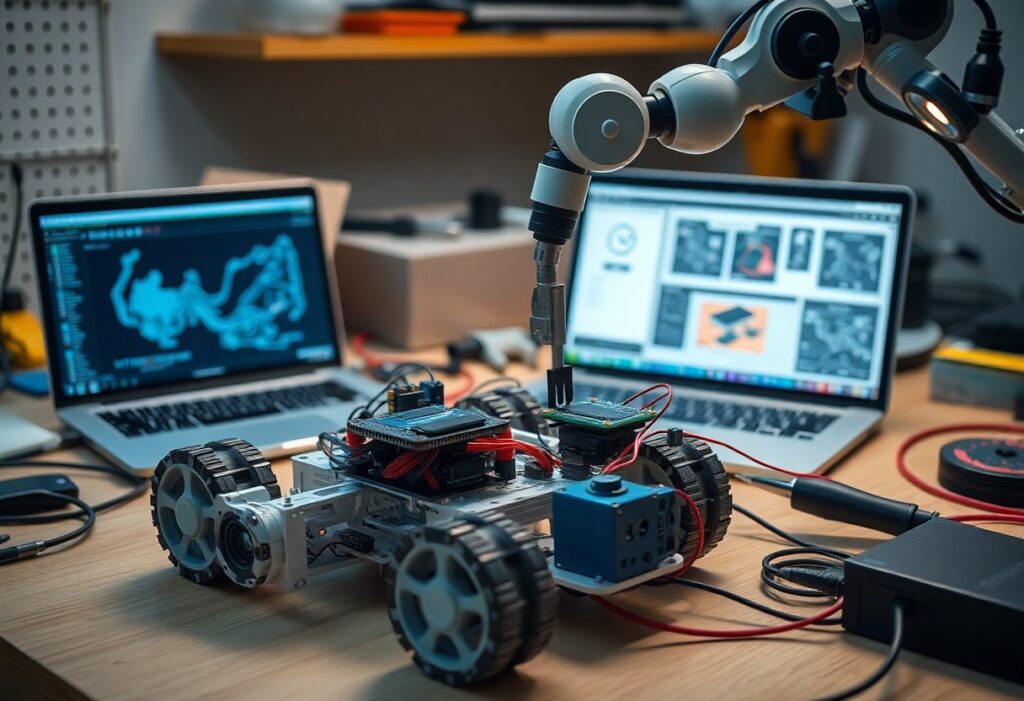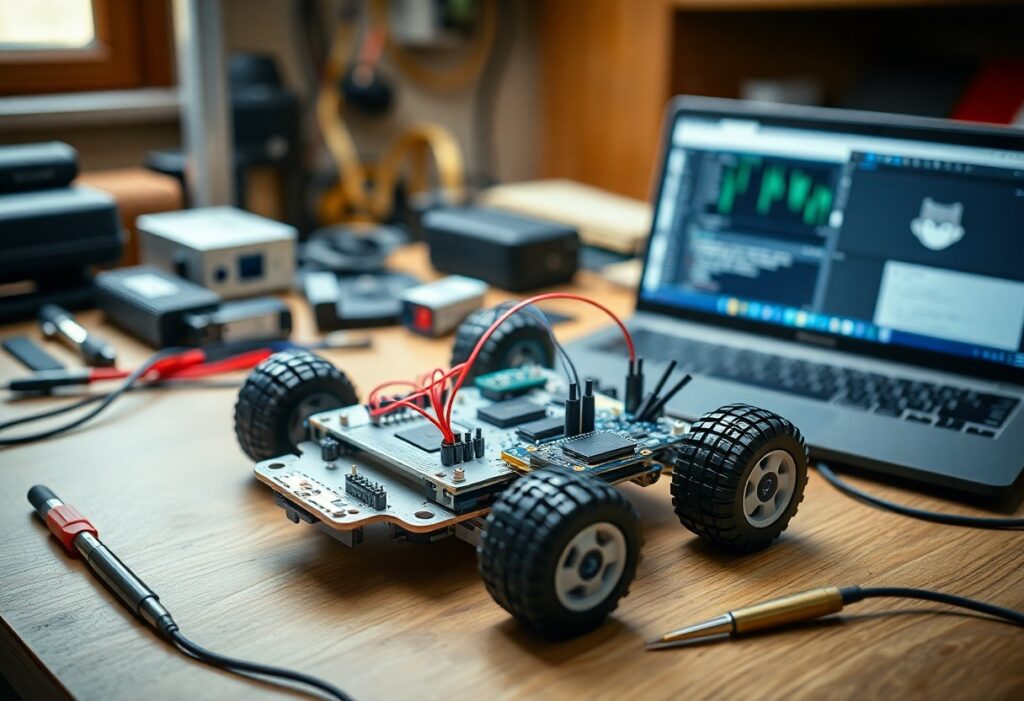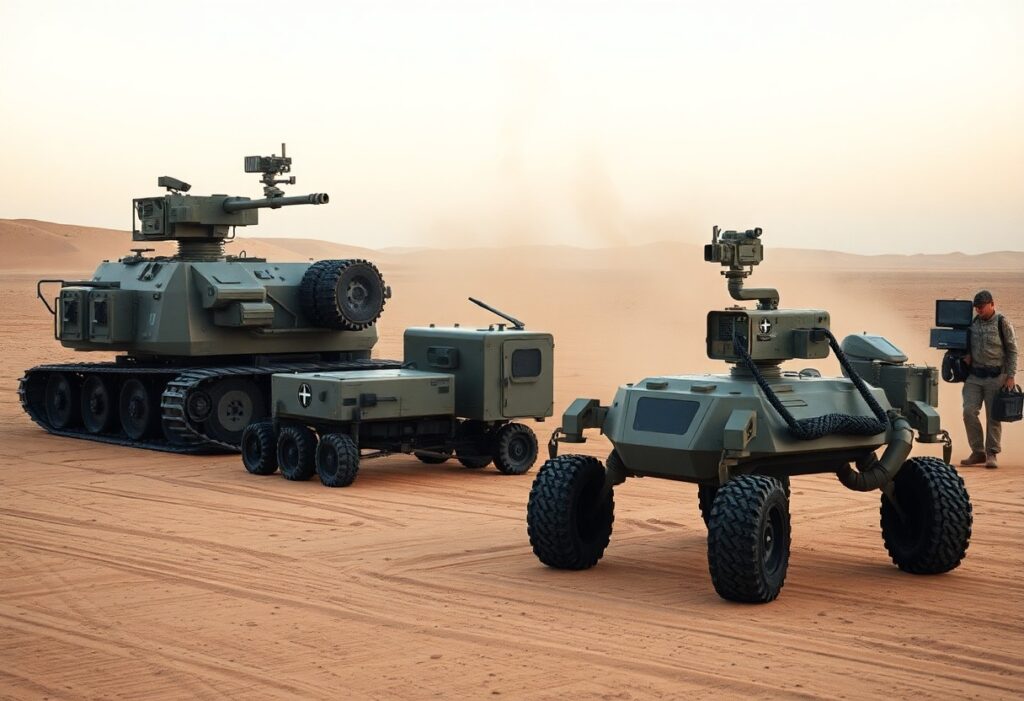
Many associate military robotics solely with aerial drones, yet you operate in a world where ground-based machines are reshaping combat and support roles. Unmanned Ground Vehicles (UGVs) now perform bomb disposal, reconnaissance, and supply transport in high-risk environments. A mid-sized SaaS firm might rely on cloud infrastructure, but modern brigades rely on UGVs to reduce soldier exposure and extend operational reach. These systems move silently through rubble, scale inclines, and carry payloads once requiring entire convoys. You see them in action from conflict zones to training grounds, where their presence grows harder to ignore.
The Mechanical Vanguard
You now see unmanned ground vehicles (UGVs) leading reconnaissance missions in urban combat zones, such as the THeMIS deployed by Estonian forces in NATO exercises. These systems operate in high-risk environments, reducing human exposure while maintaining operational tempo. Their presence marks a shift from aerial dominance to ground-based autonomy, with platforms like the U.S. Army’s RCV-L demonstrating payload capacities exceeding 10 tons. You observe how modular designs allow rapid reconfiguration for breaching, EOD, or casualty extraction.
Mastery of the Earth
Unmanned Ground Vehicles (UGVs) allow you to operate in terrain too hazardous for personnel, from rubble-strewn urban zones to mine-infested fields. You rely on tracked and wheeled platforms equipped with articulated arms to disarm explosives, reducing risk in counter-IED operations. A U.S. Army EOD unit deployed Talon robots in Afghanistan to inspect over 1,200 suspect packages without a single fatality among technicians.
Precision Firepower
Your targeting systems now integrate real-time ballistic calculations, allowing UGVs to engage moving targets at distances exceeding 2,000 meters with sub-meter accuracy. A single tracked platform, such as the Russian Uran-9, deploys a 30mm autocannon and anti-tank guided missiles, enabling engagement across multiple threat types without repositioning. Sensor fusion from thermal, optical, and laser rangefinder inputs ensures first-round hit probability under adverse conditions, reducing collateral risk in urban environments.
The Burden of Logistics
Supplying frontline units with ammunition, fuel, and medical supplies often exposes personnel to unnecessary risk, especially in contested or mined terrain. You rely on unmanned ground vehicles to reduce that exposure, using platforms capable of following convoys or operating autonomously through dangerous zones. In Ukraine, operators have deployed UGVs to deliver critical cargo to trenches, proving their worth in real combat conditions. Learn more about these developments at Ukraine’s Robot Army: The Rise of Unmanned Ground Vehicles in Modern Warfare, where small, adaptable robots are redefining battlefield resupply.
The Global Front
Multiple nations now deploy UGVs in active operations, from reconnaissance in Eastern Europe to explosive ordnance disposal in the Middle East. You operate alongside units equipped with robotic platforms capable of enduring extreme environments and prolonged missions without fatigue. Russia’s Uran-9 has seen combat testing in urban warfare scenarios, while U.S. Army units integrate the Common Robotic System-Individual for frontline surveillance. These deployments reflect a strategic shift, where ground robots are no longer experimental assets but integral components of modern maneuver forces across continents.
Summing up
You operate in an era where unmanned ground vehicles are no longer experimental prototypes but active participants in modern defense strategies. A mid-sized SaaS firm specializing in battlefield coordination software now integrates UGV telemetry into real-time command dashboards, reflecting how deeply these systems are embedded in operational planning. You rely on their ability to perform under fire, reduce risk to personnel, and extend mission endurance beyond human limits.